Main Facts
In the rarefied air of ultra-high-end analog audio, a $19,000 price tag usually signals the arrival of a complex mechanical leviathan. Audiophiles are accustomed to multi-chassis power supplies, massive pneumatic isolation platforms, complicated air-bearing arms, and endless hours of micro-adjustments requiring engineering degrees just to play a single 180-gram LP.
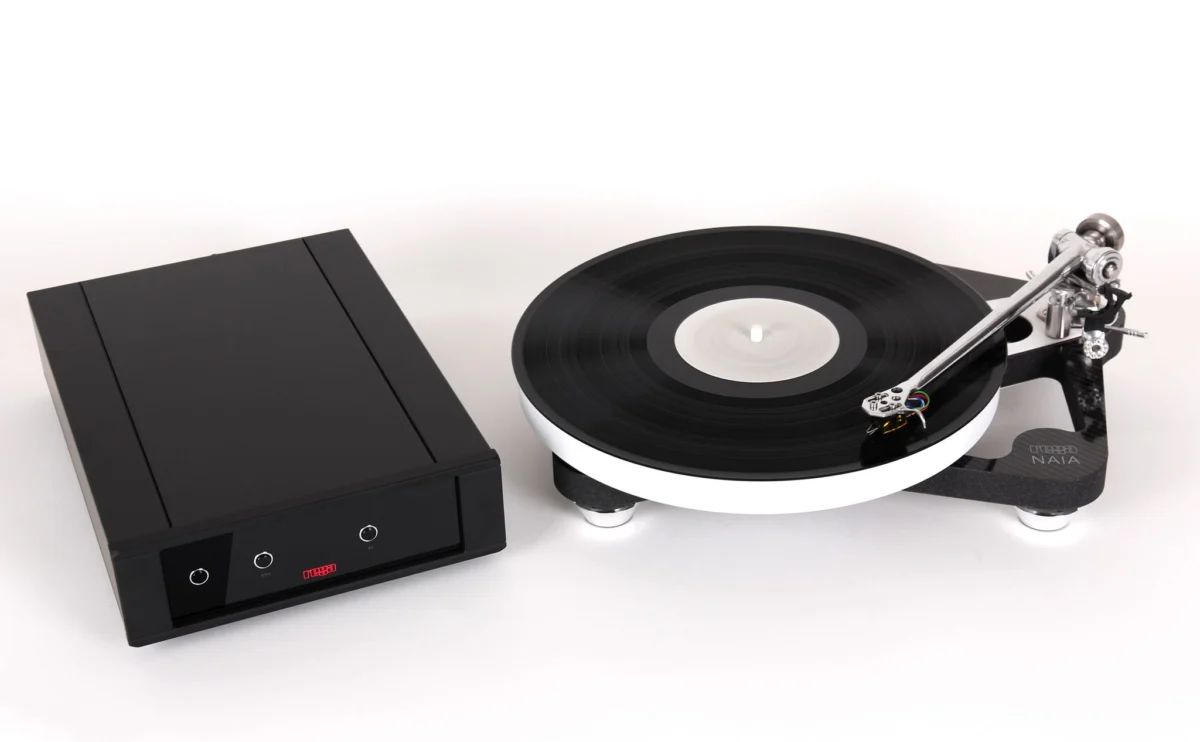
Enter the Rega Naia flagship turntable, paired with the matching Aphelion 2 moving-coil (MC) cartridge—courtesy of North American distributor The Sound Organisation.
At a cool $19,000 (though available sans cartridge for a slightly lower figure), the Naia challenges conventional high-end dogma. Rather than demanding a ritualistic, stressful setup process, the Naia delivers what reviewers are calling "fiddliness factor zero." It is an engineering marvel that asks the listener to do almost nothing beyond unboxing, setting the tracking force, and lowering the stylus into the groove.
While its minimalist, low-mass silhouette shares visual DNA with Rega’s more affordable Planar 8 (P8) and Planar 10 (P10) decks, every single molecule of the Naia has been meticulously re-engineered, refined, and optimized beyond anything the British manufacturer has ever attempted. It is the spiritual commercial successor to the ultra-exclusive, limited-edition Naiad prototype that lived on Rega founder Roy Gandy’s listening room wall two decades ago. Now, it has arrived in the real world to redefine what flagship vinyl playback can—and should—be.
Chronology: From Wall-Mounted Prototype to Modern Flagship
To truly understand the significance of the Rega Naia, one must look back at the decades-long timeline of its development. The story of Rega’s ultimate turntable is not a sudden product launch; it is a 20-year-long labor of obsessive acoustic engineering.
- Two Decades Ago: Rega founder Roy Gandy first conceptualizes the ultra-high-end turntable architecture that would become known as the Naiad. At this stage, early prototypes hang on the wall of Gandy’s listening room—existential design exercises exploring how far low-mass, high-rigidity principles could be pushed.
- The Limited Edition Phase: Years of research trickle down into mainstream hits like the RP8, RP10, and eventually the current Planar 8 and Planar 10 models. Concurrently, a microscopic number of ultra-costly, hand-built Naiad turntables are produced as strict, ultra-limited editions, serving as rolling laboratories for advanced aerospace materials.
- The Transition to Series Production: Lessons learned from the Naiad—specifically regarding advanced carbon-fiber plinths, ceramic bracing, and ceramic sub-platters—are refined for scalable manufacturing. This bridges the gap between unobtainable laboratory concept and a finished commercial product.
- Present Day (Two Weeks Prior to Press): The production-ready Rega Naia, equipped with the Aphelion 2 MC cartridge, arrives at testing facilities for initial evaluations. Early listening sessions confirm that the two-decade wait was entirely justified, with critics praising its dynamic range, tonal body, and effortless musicality.
Supporting Data and Technical Architecture
When evaluating a turntable that commands nearly $20,000, consumers naturally ask what justifies the cost if the deck looks deceptively simple. The answer lies in materials science and uncompromising execution.
The Low-Mass, High-Rigidity Philosophy
While traditional high-end audio design often equates heavy, massive plinths with better vibration damping, Rega has long championed the opposite philosophy: mass absorbs energy, and energy lost is music lost.
- The Plinth: The Naia utilizes a skeleton plinth crafted from Graphene-impregnated carbon fiber. This material offers astonishing structural rigidity while maintaining an featherlight mass.
- Tungsten Balance: To maintain balance and rotational stability without adding harmful bulk, the design integrates heavy tuning elements made from aerospace-grade materials.
The Aphelion 2 MC Cartridge Match
While buyers can technically purchase the Naia as a standalone deck and save roughly $4,000, industry experts strongly advise against it. The Aphelion 2 moving-coil cartridge is custom-tailored for this specific tonearm and platter assembly.
- Evolution: Representing a major technological leap over its predecessor (the Apheta 3), the Aphelion 2 delivers significantly heightened refinement, a fuller tonal body, and a sprawling dynamic range.
- Zero Setup Hurdles: Because the cartridge is engineered specifically for the table, integration is seamless, bypassing the agonizing alignment, VTA (vertical tracking angle), and azimuth tweaks that usually plague high-end analog setups.
Comparative Cost Analysis
Industry critics have suggested an alternative perspective on the Naia’s pricing structure:
"Don’t think about it as a $19,000 Rega. Think of it as a $50,000 table that you don’t need to fuss with—ever."
When factoring in the hidden costs of ultra-high-end audio—such as aftermarket tonearms, specialized isolation feet, external motor controllers, and countless hours spent troubleshooting mechanical resonance—the Naia’s all-inclusive, plug-and-play competence presents a surprisingly high-value proposition in the ultra-luxury tier.
Official Responses and Industry Reception
The audio community has reacted to the arrival of the Naia with a mix of awe and validation. Because the project has such deep historical roots within Rega, its commercial realization is viewed as a landmark moment in British hi-fi history.
Representatives from The Sound Organisation, Rega’s long-standing North American import partner, have emphasized the overwhelming demand and curiosity surrounding the flagship release. High-end audio dealers and reviewers who have spent decades wrestling with temperamental, finicky turntables are finding the Naia’s user-friendly nature refreshing.
Furthermore, initial feedback from early review samples points toward unanimous critical acclaim. Industry insiders who witnessed the evolution of the original Naiad prototype note that the production Naia successfully captures the acoustic ambitions of Roy Gandy’s original vision without succumbing to the impracticalities that often hinder prototype-to-production transitions. Reviewers have already signaled that major industry awards are practically guaranteed once comprehensive long-term testing concludes.
Implications for Audiophiles and the High-End Market
The launch of the Rega Naia carries several profound implications for the high-end audio market, touching on consumer psychology, domestic harmony, and the shifting definition of "luxury" in home audio.
1. Challenging the "Complexity Equals Quality" Bias
For decades, high-end audio marketing has conditioned consumers to believe that gear must be complicated, heavy, and intimidating to operate in order to sound exceptional. The Naia dismantles this narrative. By proving that elite acoustic performance can coexist with a streamlined, user-friendly unboxing experience, Rega is challenging competitor brands to rethink their engineering priorities.
2. The "Stealth Upgrade" Factor for Domestic Bliss
In the realm of high-end audio, equipment upgrades are frequently met with friction from spouses or family members due to the sheer visual obtrusiveness of new gear. Because the Naia shares its foundational silhouette with the much more common Rega Planar 8 and Planar 10, it flies completely under the radar. As early reviewers playfully note:
"If you happen to have a P8 or a P10 and you’ve been itching for an upgrade, this might just be a way to slip it past whoever you live with, without them even knowing you’ve bought a new table. Fein ignorance."
This aesthetic stealth factor solves a very real, albeit lighthearted, domestic dilemma for serious hobbyists.
3. Redefining Value at the Very Top
Ultimately, the Naia bridges a critical gap in the market. It offers the peerless sonic resolution, micro-detail retrieval, and pitch stability of a no-holds-barred $50,000 reference system, but packages it in a format that respects the user’s time and patience. As full, long-term reviews roll out in the coming weeks, the Rega Naia is poised to cement its legacy not just as a triumphant flagship for its maker, but as a disruptive benchmark for the entire luxury audio industry.