LAS VEGAS, NV — As the neon lights of the Las Vegas Strip signaled the height of the 2026 tech season, the professional audiovisual (AV) industry gathered at InfoComm to confront its most daunting paradox: the rise of Artificial Intelligence. Amidst a sea of automated hardware and self-optimizing software, the most critical conversation of the week didn’t center on the power of the algorithms, but on the necessity of the people behind them.
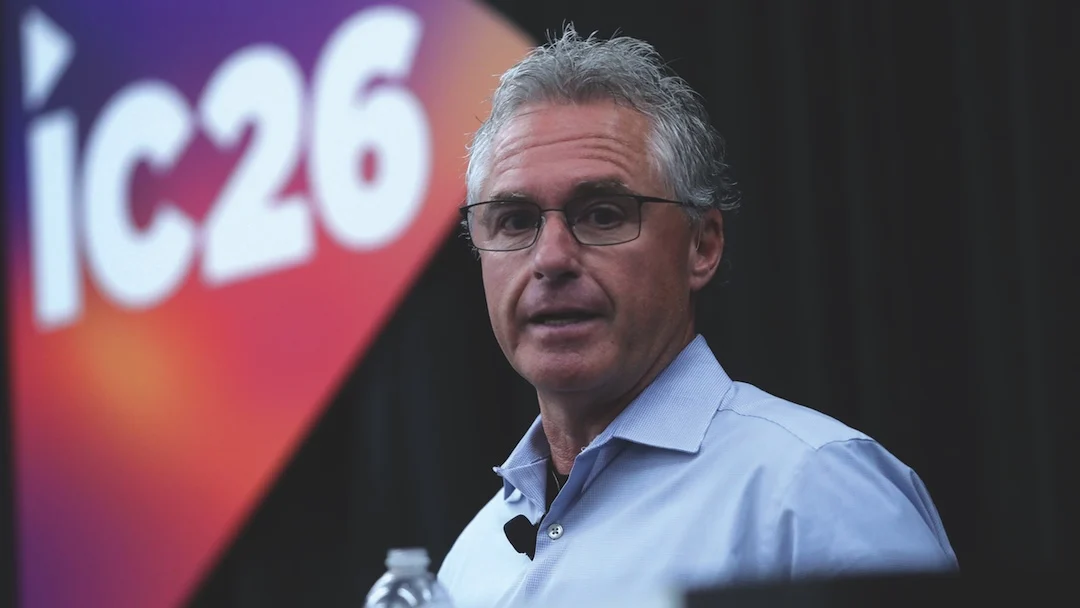
At the center of this dialogue was Bill Fons, President of AI Initiatives and Regional Vice President for the Midwest at CTI. Delivering a keynote titled "Human Oversight and Validation in AI-Enabled AV Projects" as part of the AVIXA AI Accelerator series, Fons addressed a room filled with both eager early adopters and skeptical veterans. His message was clear: while AI is an unstoppable force in AV design and installation, it remains a tool that requires a master’s hand. Without human checkpoints and rigorous accountability, AI is not an asset—it is a professional liability.
Main Facts: The Accountability Mandate
The core of the presentation at InfoComm 2026 revolved around the shift from AI experimentation to AI implementation. In previous years, the industry focused on what AI could do; Fons shifted the focus to what AI should be allowed to do without supervision.
The primary takeaway from the session was the concept of the "Human Firewall." Fons argued that as AI-generated materials—ranging from complex system designs and wiring diagrams to sales proposals and automated programming—become more prevalent, the risk of "silent failure" increases. A silent failure occurs when an AI produces a deliverable that looks correct on the surface but contains fundamental engineering flaws that could lead to project delays, safety issues, or financial loss.
Fons emphasized that "AI doesn’t check its own homework." This lack of self-awareness in large language models (LLMs) and generative design tools means that the burden of truth remains squarely on the shoulders of the human professional. The session established a new industry mantra for the AI era: The expert is no longer the person who performs the task, but the person who validates the outcome.
Chronology: From Jurassic Park to the Modern Boardroom
To illustrate the industry’s current crossroads, Fons took the audience back to a pivotal moment in cinematic history: the production of Steven Spielberg’s Jurassic Park in the early 1990s.
Initially, the film’s dinosaurs were to be created using traditional stop-motion animation, overseen by masters of the craft. However, mid-production, fledgling computer-generated imagery (CGI) proved it could produce more fluid, realistic movement. This created a rift. Some experts, like legendary animator Phil Tippett (who famously quipped, "I think I’m extinct"), chose to adapt, applying their deep knowledge of animal movement and skeletal structure to the new digital medium. Others refused to change and eventually left the industry.
Fons used this historical pivot to frame the 2026 AV landscape. "Maybe it’s better to become an expert in the outcome rather than an expert in the technique," Fons posited. He noted that the AV industry is currently in its "Spielberg Moment." The techniques of the past—manual CAD drafting, hand-coded control systems, and traditional site surveys—are being augmented or replaced by AI.
The chronology of AI’s integration into AV has moved rapidly:
- 2023-2024: The era of curiosity and transcription. AI was used primarily for meeting notes and basic language tasks.
- 2024-2025: The rise of generative design. Tools began assisting in heat mapping, acoustic modeling, and preliminary equipment lists.
- 2026: The era of full-scale integration. AI now handles room and space analytics, predictive maintenance monitoring, and complex system programming.
Fons’ presentation served as the definitive guide for this third era, moving the conversation from "how to use it" to "how to govern it."
Supporting Data: The Mechanics of Validation
Fons did not merely warn against unchecked AI; he provided a technical framework for how firms can implement human checkpoints. He introduced several key methodologies that are becoming the standard for high-level AV integration:
1. The Use of "Golden Sets"
One of the most robust methods discussed was the implementation of "Golden Sets." These are verified, high-quality data sets from past successful projects. When an AI generates a new design or proposal, it is tested against these Golden Sets to see if the logic holds up. If the AI’s output deviates significantly from proven historical engineering standards without a clear reason, it triggers a manual human review.
2. Cross-Model Verification
Fons suggested that professionals should never rely on a single AI model. By running the same prompt or design requirement through two different models (e.g., a specialized engineering AI and a general-purpose LLM), designers can look for discrepancies. Where the models disagree, the human expert finds the "hallucination."
3. Shadowing and Iterative Testing
For firms just beginning to trust AI, Fons recommended "shadowing." This involves having a human expert complete a task manually while the AI does it simultaneously. The results are compared, and the human provides "notes" to the AI’s output. Over time, this builds a reliability score for the AI tool, allowing for more autonomy only after a proven track record of accuracy.
4. The Update Loop
A critical data point shared was the volatility of AI models. Because AI developers frequently update their algorithms, a tool that worked perfectly on Monday might produce errors on Tuesday. Fons advocated for a "re-test after every update" policy, ensuring that the tool’s logic remains consistent with the firm’s engineering standards.
Official Responses: Industry Leaders Weigh In
The presentation sparked a wave of responses from industry leaders attending InfoComm. AVIXA (the Audiovisual and Integrated Experience Association), which hosted the AI Accelerator series, has been vocal about the need for professional certification to evolve alongside these technologies.
"We are moving into a period where the ‘V’ in ‘AV’ could just as easily stand for ‘Validation,’" said one AVIXA representative during a post-session panel. "Our certification programs, like the CTS (Certified Technology Specialist), will likely begin to incorporate modules on AI oversight. We aren’t training people to code AI; we’re training them to audit it."
CTI, the firm where Fons serves as a leader, has already begun implementing these "human-in-the-loop" protocols. According to company insiders, this approach has actually increased their speed to market. By trusting the AI to do the "heavy lifting" while empowering humans to be the final arbiters of quality, they have reduced the time spent on rote tasks without sacrificing the "Gold Standard" of their brand.
Implications: Your Logo, Your Liability
The most sobering part of Fons’ lecture dealt with the legal and ethical implications of AI in the workplace. He was blunt: "An unchecked AI deliverable isn’t a time-saver; it’s a liability with your logo on it."
In the professional world, a signature on a blueprint or a stamp on a schematic is a legal guarantee of safety and functionality. If an AI suggests a power distribution layout that results in a fire, or an acoustic design that fails to meet ADA requirements for hearing assistance, the "AI made a mistake" defense will not hold up in court.
The Workforce Shift
The implications for the workforce are profound. The fear that AI will replace entry-level designers is real, but Fons’ perspective offers a different path. Entry-level roles may shift from "creators" to "first-level validators." This requires a new type of education—one that focuses on critical thinking and a deep understanding of why a system works, rather than just how to draw it.
Trust as a Competitive Advantage
Ultimately, Fons concluded that the firms that thrive in the late 2020s will be those that build the highest levels of trust with their clients. In an age where anyone can use AI to generate a professional-looking proposal, the premium will be placed on the "Human Seal of Approval."
Clients will pay for the certainty that a human expert has scrutinized every line of code and every cable run. By providing oversight to AI, professionals aren’t just protecting their jobs; they are protecting the integrity of the built environment.
As InfoComm 2026 drew to a close, the buzz in the halls suggested that Fons’ message had landed. The future of AV isn’t just about the brilliance of the machine—it’s about the accountability of the person who turns it on. In the high-stakes world of professional integration, the most important component in the rack remains the human brain.