
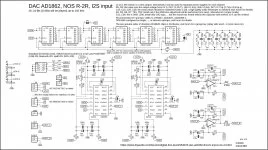
In the rapidly evolving world of digital audio, where multi-bit delta-sigma conversion has dominated the consumer landscape for decades, a dedicated subculture of audiophiles and engineers remains steadfast in their pursuit of the "pure" sound of yesteryear. At the center of this movement lies the Analog Devices AD1862, a legendary R-2R ladder DAC chip that has become a cult object among DIY enthusiasts. As the supply of new-old-stock (NOS) chips begins to reach its final exhaustion point, a community-driven effort has emerged to preserve the legacy of this component, culminating in an ambitious series of group buys and open-source hardware designs.

Main Facts: Why the AD1862 Still Matters
The AD1862 is not merely a digital-to-analog converter; for many in the high-end audio community, it represents a benchmark of transient response and musicality that modern chips struggle to replicate. Unlike modern sigma-delta architectures, which rely on complex noise-shaping algorithms and high-frequency oversampling, the AD1862 is a true 20-bit R-2R ladder converter. This architecture provides a direct, linear relationship between the digital word and the analog output, a design philosophy that proponents argue preserves the temporal integrity of the audio signal.

The ongoing "AD1862 Group Buy" project, spearheaded by enthusiasts on platforms like DIYAudio, is not just about procurement. It is an act of digital archaeology. As production of these chips ceased years ago, the dwindling supply has triggered a frantic effort to consolidate remaining stocks from industrial warehouses and private collections. This project, which has seen several successful iterations, serves as a bridge between the high-performance engineering of the 1990s and the modern demands of high-resolution, modular audio systems.
Chronology: A Movement Built on Community
The resurgence of the AD1862 began in earnest as enthusiasts grew disillusioned with the "analytical" and often fatiguing sound profile of modern, integrated DAC solutions.

- 2020: Early forum discussions on DIYAudio highlighted the scarcity of high-grade, unused AD1862N and AD1865N chips. Users like "miro1360" began developing simplified, accessible PCB designs that allowed home builders to assemble their own R-2R DACs without needing a degree in electrical engineering.
- 2020-2023: The "Group Buy #92" initiative, credited to user @Paddy Garcia, became a landmark event in the community, successfully sourcing enough authentic chips to sustain the hobbyist market for several years.
- 2026 (Present): The project has matured into a sophisticated ecosystem. Beyond just buying chips, the community is now debating output stages, I/V (current-to-voltage) conversion topologies, and power supply design, effectively creating a "living" research project around the AD1862’s capabilities.
Supporting Data and Technical Considerations
The technical discourse surrounding the AD1862 reveals a deep divide between those who prefer the "plug-and-play" nature of modern components and those who value the granular control of modular, discrete, or legacy designs.
The I/V Conversion Debate
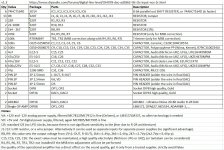
One of the most contentious topics in the community is the implementation of the I/V stage. Because the AD1862 is a current-output device, the signal must be converted to voltage before it can drive an amplifier.
- Op-Amp Implementation: While convenient and electrically stable, some enthusiasts argue that standard op-amp implementations limit the "breath" of the sound.
- Discrete and Tube Stages: Advanced users are now experimenting with discrete transistor stages (such as the OPA861) or even tube-based output stages. The consensus is that while the chip itself is the "heart" of the DAC, the I/V stage is the "lungs," significantly influencing the final sound signature.
Protection and Longevity
A vital piece of technical advice that has circulated through the community is the importance of proper handling. Because these chips are now rare, the risk of damage is a significant concern. Developers have emphasized:
- Capacitor Discharge: Before inserting a chip into a socket, capacitors must be discharged using a resistor (typically 100R) to prevent voltage spikes from frying the delicate internal circuitry.
- I2S Connectivity: Common pitfalls in DIY PCB designs, such as missing ground connections on the 8th pin of the I2S header, have been identified and documented, preventing the destruction of many units by novices.
Official Responses and Industry Perspectives
While Analog Devices has long since moved on from the AD1862 to more efficient, integrated solutions, the "official" legacy of the chip remains high in the engineering community. High-end audio manufacturers—particularly those in the boutique R-2R sector—often cite the architecture of the AD1862 as the "gold standard" for what they attempt to emulate with modern, precision-resistor arrays.
The DIY community, however, has become the primary custodian of this technology. By creating open-source schematics, hosting board-layout files on sites like GitHub or personal blogs (such as ElectroDAC), and providing communal support via forums, these hobbyists have essentially bypassed the need for corporate support. They have created a decentralized ecosystem where technical knowledge is shared freely, and the "official" support channel is replaced by the collective wisdom of thousands of contributors.
Implications: The Future of "Vintage" Digital
The AD1862 project raises profound questions about the nature of audio equipment longevity. As we move toward a future of software-defined hardware and ephemeral digital services, the obsession with the AD1862 represents a desire for "permanence."

The Sustainability of High-End Audio
The implication for the broader audio market is clear: there is a significant, unmet demand for hardware that is modular, repairable, and based on "tried and true" architectures. When a community can source its own parts, design its own PCBs, and support its own infrastructure, it effectively makes the product immortal. The AD1862 will likely continue to be used in high-end systems for decades, long after the modern chips currently in smartphones and mass-market receivers have been relegated to e-waste.
Technical Evolution vs. Preservation
Some critics argue that the community is wasting time on an obsolete chip, suggesting that modern multi-bit converters or even advanced delta-sigma designs have surpassed the AD1862 in measurable performance. However, the movement is not primarily about "specs." It is about the subjective experience of music reproduction. The AD1862 provides a unique, warm, and highly resolving character that many find more "human" than the clinical precision of modern silicon.

Conclusion
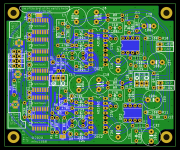
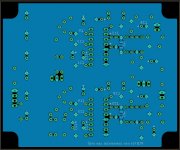
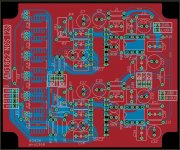
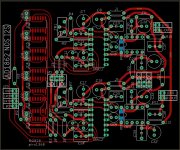
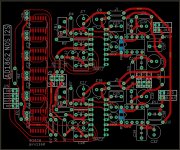
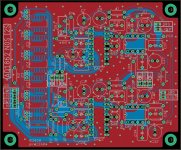
The story of the AD1862 is a testament to the power of community-driven engineering. What started as a few forum posts about finding spare parts has blossomed into a global, grassroots effort to preserve a specific iteration of audio history. Whether through the meticulous development of four-layer PCBs or the intense debates over the sonic merits of various capacitors and I/V stages, the participants in this movement are doing more than building DACs—they are curating an experience.
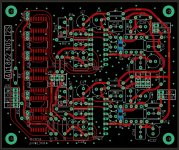
As the supply of these chips finally nears its absolute end, the work being done now to document the design, the schematics, and the best-practice implementation will ensure that the "AD1862 sound" remains a reference point for audiophiles for generations to come. In an age of disposable technology, this pursuit of sonic perfection through legacy hardware is a refreshing reminder that, in the world of high-end audio, the newest solution is not always the best one.

Key Technical Summary for DIY Builders:
- Architecture: 20-bit R-2R Ladder.
- Critical Handling: Always discharge output capacitors using a 100R resistor before chip insertion.
- Design Flexibility: Modern modular designs allow for either basic op-amp I/V stages or high-end discrete/tube alternatives.
- Procurement: Group buys remain the most reliable method for sourcing verified, unused (NOS) components.
- Documentation: Resources are available via DIYAudio project threads and specialized hobbyist blogs, offering gerber files for custom PCB fabrication.


