Main Facts: A Transnational Anthem
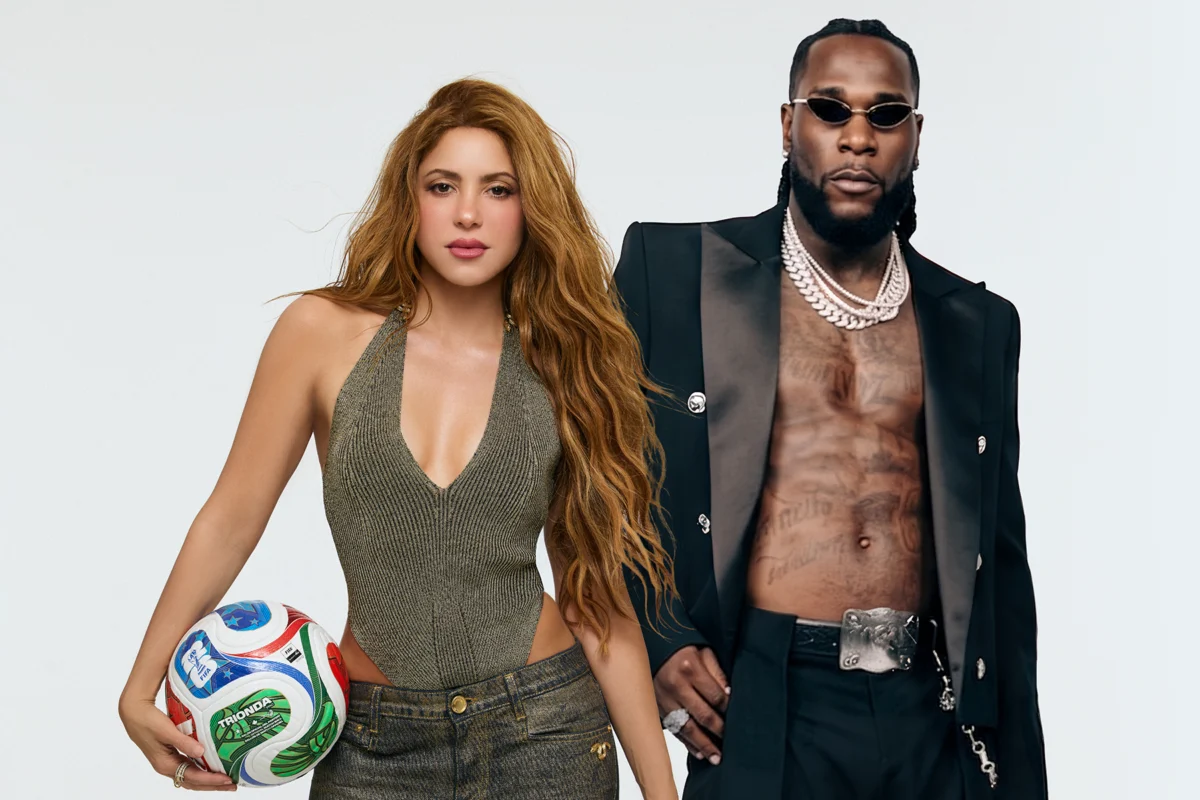
The 2026 FIFA World Cup has found its definitive pulse. The official tournament anthem, "Dai Dai," featuring global superstars Shakira and Burna Boy, has officially ascended to the summit of the international music charts. As of the July 18-dated Billboard Global 200, the track holds the No. 1 position, marking its dominance as the most consumed song on the planet. Simultaneously, the song has secured its third consecutive week at the top of the Billboard Global Excl. U.S. chart, underscoring its profound resonance with international audiences.
The song’s success is a masterclass in modern cross-cultural collaboration. By blending the rhythmic sensibilities of Afrobeats—championed by Burna Boy—with the infectious, high-energy reggaetón flair synonymous with Shakira, "Dai Dai" transcends linguistic and geographic borders. While the song is currently climbing the U.S.-based Billboard Hot 100, its trajectory there remains modest compared to its global footprint. This creates a compelling paradox: a song that is effectively the world’s most popular piece of music is experiencing a unique "domestic-international disconnect," where its reception in the United States does not fully reflect its overwhelming dominance elsewhere.
Chronology: From Launch to Global Hegemony
The journey of "Dai Dai" from a promotional track to a cultural monolith has been marked by steady, relentless growth.
- May 15, 2026: The track is released globally. Its initial impact is immediate but contained, debuting at No. 114 on the Billboard Global 200.
- Late May – Mid-June: As the FIFA World Cup tournament commences, the song begins to integrate into the fabric of the broadcasts. Streaming numbers begin to swell, particularly in nations with high-performing teams.
- Late June – Early July: The track experiences a massive surge in consumption. By the week ending July 9, "Dai Dai" accumulates 94.3 million official on-demand streams worldwide, according to data provided by Luminate.
- July 18: The song officially reaches the No. 1 spot on the Billboard Global 200, cementing its status as the anthem of the 2026 games.
- Present Day: The track continues to show upward momentum, with an 8% increase in global streams in the most recent tracking period, leading up to the July 19 championship final between Argentina and Spain.
Supporting Data: The Anatomy of a Hit
To understand the success of "Dai Dai," one must look at the data, which reveals a complex landscape of streaming habits. Typically, a massive global hit draws 25% to 30% of its total streaming volume from the United States. However, "Dai Dai" paints a different picture: less than 8% of its total streams originate from the U.S. market.
The Population-Adjusted Metric
While the U.S. remains the largest single contributor in terms of absolute volume—accounting for 7.5 million streams in the latest tracking week—this figure is largely a function of the U.S.’s massive market size. When data is adjusted for population density, the U.S. ranks a distant 37th, with only 0.02 streams per capita.
In contrast, the European market has embraced the track with fervor. Norway currently leads the world in per-capita consumption, boasting 0.16 streams per person—seven times the rate of the average American listener. Other top-tier markets include:

- Norway (0.16)
- Luxembourg (0.13)
- Netherlands
- France
- Spain
These rankings are inextricably linked to the success of national teams in the World Cup. Data shows that of the top 10 markets adjusted for population, five were still active in the tournament during the July 9 tracking week.
Exponential Growth in Key Regions
The growth patterns across different nations reveal how the World Cup acts as a force multiplier for the song’s reach. South Africa has witnessed an astounding 1,578% increase in streams since the track’s release. Similarly, markets like Japan, India, France, and Malaysia have all seen growth exceeding 1,000%.
France, in particular, provides a case study in how national pride fuels digital consumption. In the song’s opening week, France ranked seventh in overall volume. By the week of July 3–9, it climbed to second place globally, with its share of the song’s total streaming pie doubling from 3.87% to 7.74%.
Official Responses and Strategic Context
Industry analysts suggest that the song’s under-indexing in the U.S. is not a failure of the track, but rather an indicator of the distinct cultural tastes of the American audience. While the U.S. is a major music market, the blend of Afrobeats and reggaetón—while massively popular globally—has yet to penetrate the American mainstream with the same intensity as domestic hip-hop or pop.
Furthermore, soccer’s status in the U.S. is distinct from its status in Europe, South America, or Africa. Even though the U.S. is hosting the bulk of the tournament, the "soccer-as-religion" paradigm is less prevalent in American daily life. This nuance is reflected in the streaming data: in countries where soccer is the primary cultural export, the anthem becomes an extension of the game itself, played in households, bars, and public squares during every match.
Implications: The Future of Global Music Marketing
The success of "Dai Dai" offers several key takeaways for the music industry:

1. The Power of "Event-Based" Music
"Dai Dai" proves that global event tie-ins, when executed with high-caliber talent like Shakira and Burna Boy, can bypass traditional radio-driven marketing. The song did not need to win over the U.S. radio market to be the biggest song in the world; it relied on the organic, communal enthusiasm of the global sports audience.
2. The Shift Toward Per-Capita Success
Moving forward, labels may begin to prioritize per-capita engagement over sheer volume. The fact that Luxembourg—a nation with a population of just 660,000—ranks second globally in per-capita streams highlights the importance of deep, concentrated fan engagement in smaller markets.
3. Cultural Synergy as a Global Bridge
The linguistic blend of the track—incorporating English, Spanish, and regional African vernacular—has acted as a "passport" for the song. By not catering solely to a single demographic, the song allowed fans in diverse regions to claim it as their own. As the industry becomes more globalized, the "Dai Dai" model of inclusive, multi-lingual production will likely become the blueprint for future international anthems.
4. The Sustainability of Momentum
Finally, the "Dai Dai" phenomenon illustrates that a song can maintain growth throughout the duration of a tournament if it is properly integrated into the experience. The 8% increase in global streams during the final week of the competition suggests that as the stakes of the World Cup rose, the appetite for the song grew in lockstep.
As the tournament concludes and the world looks back on the summer of 2026, "Dai Dai" will be remembered not just as a piece of marketing collateral for FIFA, but as the rhythmic heartbeat of a tournament that united millions. While it may not have conquered the American charts in the conventional sense, it has achieved something far more rare: it has conquered the world, one stream, one match, and one nation at a time.