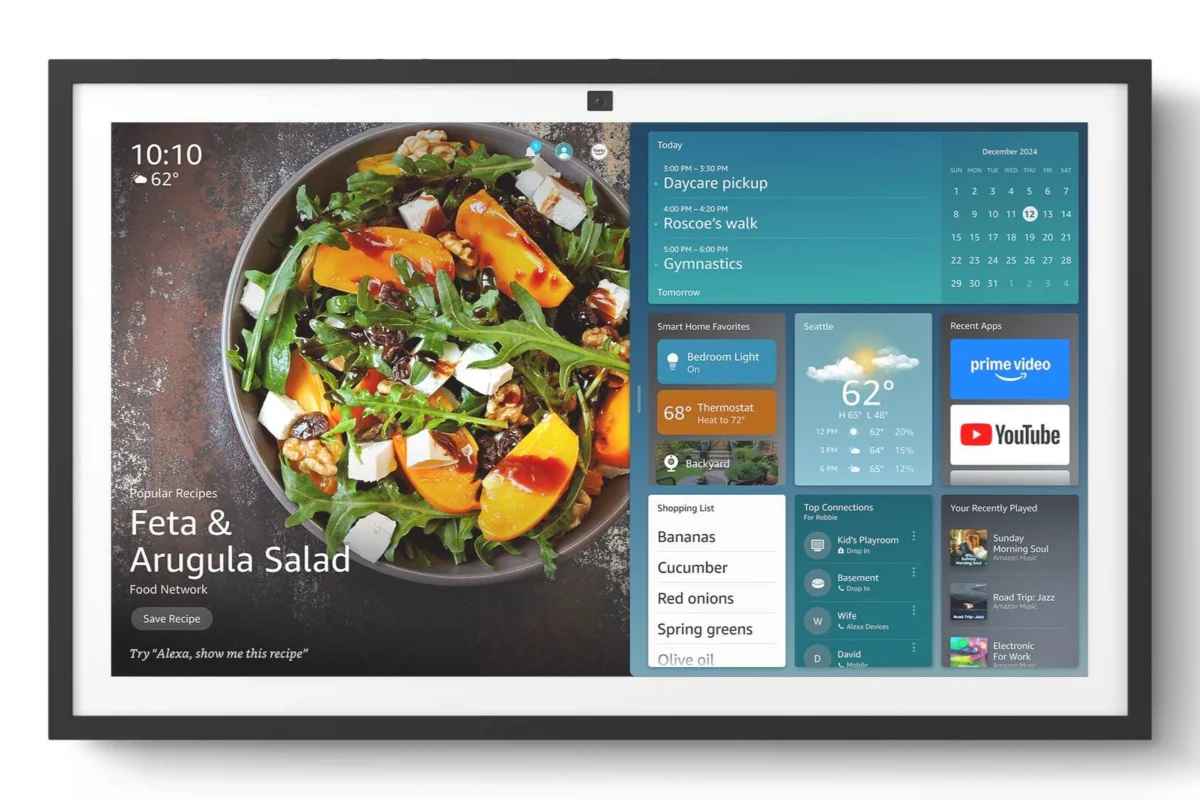
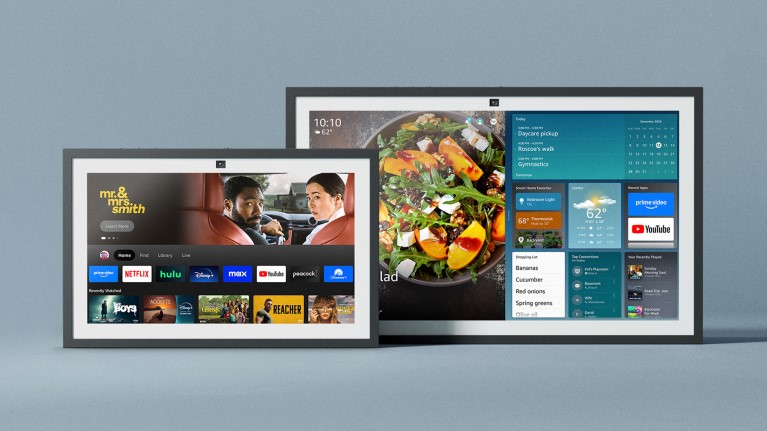
In the rapidly evolving landscape of the smart home, Amazon has long positioned its Echo Show lineup as the central nervous system of the modern household. Today, the tech giant has taken a significant leap forward, announcing the launch of its largest, most capable, and most versatile smart displays to date: the refreshed Echo Show 15 and the all-new, gargantuan Echo Show 21.
By addressing long-standing criticisms regarding audio fidelity, smart home connectivity, and hardware responsiveness, Amazon is clearly aiming to transform these wall-mountable devices from mere kitchen novelties into essential command centers for the automated home.
The Core Facts: A New Era for Alexa Displays
Amazon’s latest hardware drop represents a strategic pivot toward premium performance. The Echo Show 15 (priced at $299.99) and the Echo Show 21 (priced at $399.99) are designed to bridge the gap between a standard smart display and a high-definition media hub.
The standout feature is, undeniably, the screen size. The Echo Show 21 offers a massive 21-inch display, providing nearly double the screen real estate of its smaller sibling. While the original Echo Show 15 was praised for its innovative wall-mounting capabilities, it often felt like a restricted tablet. These new iterations, however, are built with a more robust internal architecture, prioritizing high-fidelity audio and seamless smart home integration.
Both devices now feature:
- Dual 2-inch woofers: A major upgrade designed to deliver double the bass performance of previous models.
- Room Adaptation Technology: An intelligent audio calibration feature that tunes sound output based on the unique acoustics of the room.
- Unified Smart Home Connectivity: The inclusion of both Zigbee and Thread radios, enabling them to act as full-fledged Matter smart home hubs.
- Advanced Connectivity: The first Amazon Echo devices to utilize Wi-Fi 6E, ensuring faster, more stable streaming and lower latency.
- Enhanced Video Calling: A redesigned, auto-framing camera with an expanded field of view and 65% more zoom capability, complemented by active noise cancellation.
A Chronology of the Echo Show Evolution
To understand the significance of this launch, one must look at the trajectory of Amazon’s display strategy over the last three years.
The 2021 Genesis
In 2021, Amazon disrupted the market with the original Echo Show 15. It was the first device of its kind designed specifically to be hung on a wall like a piece of art or a digital picture frame. It was marketed heavily toward families, featuring "widgets" for calendars, sticky notes, and grocery lists. However, while the concept was visionary, the execution left tech reviewers wanting more.
The 2022 Critique
In our 2022 review of the original Echo Show 15, we identified several "deal-breakers" that prevented it from being a true flagship device. The audio was thin, the screen resolution felt dated for a panel of that size, and, most crucially, it lacked the integrated smart home hubs found in the Echo Show 10 or Echo Studio. Users who wanted to control Zigbee-enabled light bulbs or locks still had to purchase an external hub, a confusing requirement for a device marketed as a "command center."

The 2024 Refinement
The new Echo Show 15 and 21 are the direct result of years of consumer feedback. By integrating Matter support, Zigbee, and Thread, Amazon has finally delivered the "all-in-one" hub that enthusiasts have been requesting since 2021. The jump to Wi-Fi 6E also indicates that Amazon is preparing these devices for a future of high-bandwidth usage, such as multi-room audio streaming and high-definition video calls.
Supporting Data: Why "Bigger" Matters
In a world dominated by smartphones and tablets, why would a consumer opt for a 21-inch wall-mounted display? The answer lies in shared utility.
Data from recent home automation surveys suggests that families are increasingly looking for "frictionless" interfaces. While a smartphone is a personal device, the Echo Show 21 acts as a communal information hub.
Comparative Specs at a Glance:
| Feature | Echo Show 15 (New) | Echo Show 21 |
|---|---|---|
| Display Size | 15.6 inches | 21 inches |
| Audio | Dual 2" Woofers | Dual 2" Woofers |
| Hub Support | Zigbee, Thread, Matter | Zigbee, Thread, Matter |
| Wi-Fi | Wi-Fi 6E | Wi-Fi 6E |
| Mounting | Wall-mount included | Wall-mount included |
While the Skylight Calendar Max exists as a competitor in the "large screen" market, it functions primarily as a static digital calendar. It lacks the internal cameras, sophisticated speakers, and the vast Fire TV ecosystem found in the Echo Show 21. Amazon is positioning the Echo Show 21 not just as a calendar, but as a multipurpose media consumption device that can stream YouTube, Max, Peacock, and Paramount+, alongside providing professional-grade video conferencing.
Official Responses and Strategic Vision
Amazon’s product teams have emphasized that these devices are meant to adapt to the "lived-in" home. The "Room Adaptation" technology is a direct response to the reality that these displays are often placed in kitchens with high levels of ambient noise and hard surfaces that reflect sound.
"We wanted to build something that felt less like a gadget and more like a permanent fixture of the home," a representative noted during the announcement. "By adding the Thread and Zigbee radios, we are essentially saying that this device is now the heart of your smart home network."
The company is also leaning into customization. Understanding that a 21-inch screen is a significant visual presence, they have introduced aesthetic accessories, including light brown and white frames ($34.99) and a premium counter stand ($99.99). This acknowledges that, for many users, technology must be as stylish as it is functional.
Implications: The Future of the Smart Home
The implications of this launch are twofold:
1. The Consolidation of the Smart Home
By turning the Echo Show into a Matter-certified hub, Amazon is effectively killing the need for multiple proprietary hubs. This makes the "entry cost" to a sophisticated smart home much lower. If you have a house full of smart lights, sensors, and locks, the Echo Show 21 can manage them all locally. This reduces dependency on cloud-based processing and makes the home feel more responsive.
2. The Rise of "Ambient Computing"
The shift toward larger, wall-mounted displays signals a move away from "active" computing (picking up a phone, opening an app) toward "ambient" computing. The goal is for information—your next meeting, the weather, your front door camera feed, or your meal kit recipe—to be available at a glance. The Echo Show 21 is the ultimate realization of this philosophy.
3. The Competitive Landscape
This launch places immense pressure on Apple and Google. While Apple has long been rumored to be working on a wall-mounted "HomePad" device, Amazon has now set the benchmark for hardware size and feature density. For users already embedded in the Alexa ecosystem, these devices are a compelling upgrade that finally solves the hardware limitations of the past.
Conclusion: A Worthy Upgrade?
As we prepare for our in-depth, hands-on reviews of both the Echo Show 15 and 21, the initial indicators are strong. Amazon has listened to its critics, resolved the connectivity issues that plagued the original model, and doubled down on the "kitchen hub" form factor.
Whether the jump to a 21-inch display is right for your home will depend on your wall space and your appetite for media consumption, but one thing is clear: the Echo Show has finally grown up. It is no longer just a digital photo frame that plays music; it is becoming the sophisticated, high-performance nerve center that the smart home industry has been promising for years.
Stay tuned for our full, exhaustive testing, where we will dive into the nuances of the audio performance, the reliability of the Matter integration, and how these devices hold up under the daily rigors of a busy household.