The digital landscape for podcasters is shifting beneath their feet. As audio-only content faces an increasingly crowded market, creators are looking toward a new frontier for audience growth: YouTube. This transition is not merely a trend; it is a fundamental restructuring of how listeners discover, consume, and interact with the spoken-word medium. As platforms like Podeo.ai emerge to bridge the gap between static audio and dynamic visual storytelling, the industry is entering an era where "video-first" is becoming the gold standard for discoverability.
The Main Facts: Bridging the Audio-Visual Divide
The core challenge facing independent podcasters today is discoverability. With millions of active podcasts, standing out in the Apple Podcasts or Spotify charts is a Herculean task. While industry veterans have long relied on RSS feeds and standard audio distribution, the modern listener is increasingly searching for content on visual-centric platforms, most notably YouTube.
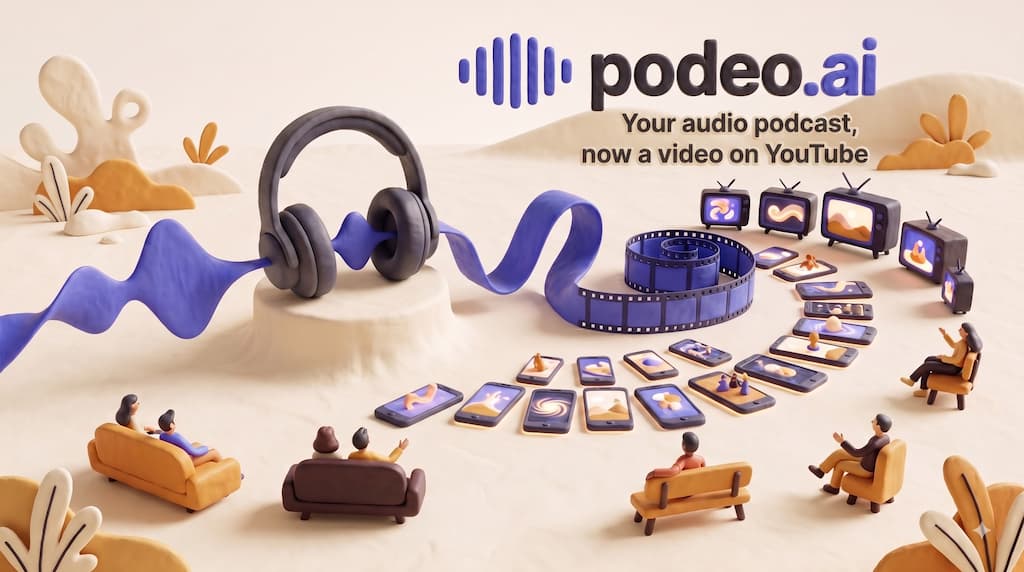
The rise of "dynamic video" represents a technological turning point. Rather than requiring creators to set up expensive lighting, professional cameras, and high-end video editing suites, AI-driven tools are now automating the process. By analyzing the narrative arc of an episode, these platforms can generate synchronized visuals—spanning stock footage, motion graphics, and relevant imagery—that transform a static MP3 into a compelling video experience. This development democratizes high-quality video production, allowing creators to compete with major production houses without the associated overhead.

Chronology of a Shift: The Path to Multi-Format Distribution
The transformation of the podcasting industry did not happen overnight. The timeline of this evolution illustrates a clear path toward the integration of visual media:

- The Early Era (2004–2012): Podcasting was defined strictly by the RSS feed. Discovery was manual, and consumption was relegated to specialized apps like iTunes.
- The Aggregator Boom (2013–2018): Increased mobile adoption and the entry of major players like Spotify turned podcasts into a mainstream commodity. However, the medium remained tethered to audio.
- The YouTube Pivot (2019–2023): Major creators began uploading full-length video recordings of their shows. The industry realized that YouTube’s search algorithm was a significantly more powerful discovery tool than traditional podcast directories.
- The AI Integration Phase (2024–Present): With the introduction of sophisticated AI tools like Podeo.ai, the barrier to entry for video production has collapsed. Creators can now transform their existing audio backlogs into video assets in minutes, effectively "unlocking" their archive for a new audience segment.
Supporting Data: The Current State of the Charts
To understand the scale of the podcasting landscape, one must look at the current market leaders. As of October 2026, the charts remain dominated by high-production-value shows that have successfully bridged the gap between audio and video:

- United States: The Daily remains the top show on Apple Podcasts, while The Joe Rogan Experience continues to hold the #1 spot on Spotify—a clear testament to the power of video-enhanced content.
- United Kingdom: The Rest Is Science is currently leading the Science category, demonstrating that even niche, information-dense shows can maintain top-tier rankings through consistent output.
- Australia: On Purpose with Jay Shetty leads in the Health & Fitness category on Spotify, highlighting the effectiveness of personality-driven, video-friendly content.
These data points illustrate that while audio quality is the foundation, visual presentation is the catalyst for scaling an audience to the top of the charts.

Implications for Independent Creators
The move toward video is not merely a stylistic choice; it has profound economic and logistical implications for the average podcaster.

1. The Death of the "Static" Episode
For years, the podcast industry operated under the assumption that listeners would tolerate a static image (the podcast cover art) while listening. Today, the attention economy is unforgiving. If a potential listener clicks a link on YouTube and sees a stationary image for 60 minutes, they will likely churn within seconds. The transition to motion graphics and thematic video is no longer a luxury—it is a retention strategy.

2. Efficiency as a Competitive Advantage
Tools that allow for the rapid conversion of audio to video—like Podeo.ai—change the cost-benefit analysis of production. By leveraging "Copilot" features to refine intros or optimize pacing, creators can focus on content creation rather than technical post-production. A 60-minute episode that once took an entire weekend to edit for video can now be prepared in approximately 20 minutes, allowing creators to maintain a rigorous release schedule.

3. Negotiating the New Legal Landscape
As highlighted by shows like High Notes, the rise of AI voice replication and video generation is creating a complex legal environment. Creators must now consider how their intellectual property—their voice and their content—is protected when used by AI systems. Understanding licensing, voice protection, and the evolving laws surrounding AI-generated media is now a core competency for modern podcasters.

Official Responses and Industry Perspectives
The sentiment across the industry is one of cautious optimism tempered by the pressure to adapt. Producers are increasingly being asked by platforms to provide video assets, and those who fail to do so are finding their growth stunted.

"Your next listeners are on YouTube," is the prevailing sentiment shared by industry service providers. The feedback from early adopters of AI-generated video indicates that the conversion rate from a YouTube video click to a loyal listener is significantly higher than from a standard social media post.

However, there remains a contingent of traditionalists who argue that the intimacy of audio is lost when forced into a video format. The counter-argument, championed by innovators in the space, is that video is simply the "packaging" for the audio, not a replacement for it. By providing a dynamic visual experience, creators are simply meeting the audience where they are: scrolling, searching, and consuming in a multi-modal environment.

Exploring New Frontiers in Podcasting
Beyond the technological shift, the diversity of content continues to expand. Recent notable entries highlight the breadth of the medium:

- Cultural History: The BBC’s Eras podcast, celebrating 30 years of the Spice Girls, showcases how audio archives can be repurposed into high-value cultural commentary.
- Environmental Narrative: Stroud’s Wild Valleys illustrates the power of local, community-focused storytelling that resonates globally through high-quality production.
- Scripted Comedy: The rise of indie sitcoms like Matters Arising proves that the scripted audio market is finding a new foothold, even as the broader industry pivots to video.
Conclusion: The Path Forward
The podcasting industry is at a crossroads. The choice is no longer between "audio" or "video," but rather between "stagnation" or "evolution." For the independent creator, the tools are now available to compete on a global stage. By embracing AI-driven video production, maintaining a focus on high-quality narrative, and staying informed about the shifting legal and platform landscapes, podcasters can ensure their voices are heard in an increasingly visual world.

As we look toward the remainder of 2026 and beyond, the winners will be those who treat their audio as the heart of their show and their video as the heartbeat of their discovery strategy. The technology is here, the audience is waiting on YouTube, and the barriers to entry have never been lower. The only remaining variable is the creator’s willingness to adapt.