In the sprawling, complex theater of the war in Ukraine, a diverse array of international volunteers has emerged. While much of the global media focus has remained on European, North American, or Georgian volunteers, a significant and largely overlooked cohort has arrived from Latin America. They are men and women who have traded the familiarity of their home countries—from Colombia and Chile to Venezuela and beyond—for the brutal, freezing, and life-altering trenches of Eastern Europe.
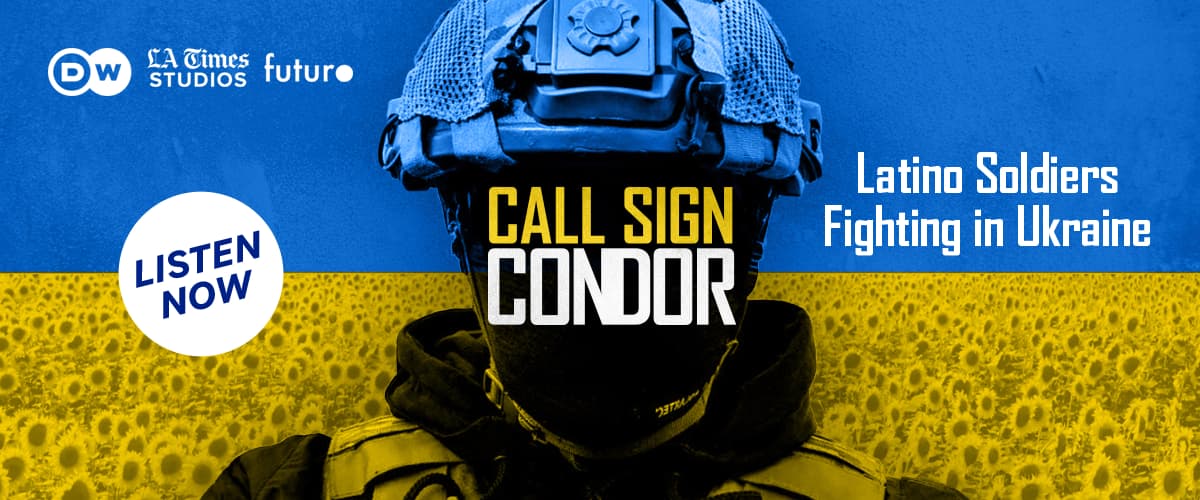
The new four-part podcast series, Call Sign Condor (or Alias Cóndor in Spanish), produced through a collaborative effort between DW, LA Times Studios, and Futuro Studios, seeks to pull back the curtain on this phenomenon. Hosted by Carolina Chimoy, the series offers an intimate look at why these individuals are risking everything for a country that, for many, is a continent away.

Main Facts: The Human Face of a Foreign War
The core of Call Sign Condor is the story of its titular protagonist, a Latin American soldier who has spent years in the thick of the fighting. The series is not a sterile military analysis; it is a character-driven narrative that explores the motivations of those who join the International Legion for the Territorial Defense of Ukraine.
Why would a soldier from a nation thousands of miles away choose to fight in a conflict they have no ancestral ties to? The podcast argues that the motivations are as multifaceted as the volunteers themselves. For some, it is a pursuit of a higher moral calling—a fight for democracy and sovereignty against an aggressor. For others, it is a search for belonging, a desire to test their mettle, or, in the most harrowing cases, an escape from the instability or economic malaise plaguing their home nations.
The series documents the daily reality of these soldiers: the crushing weight of fear, the grief of losing comrades, and, perhaps most surprisingly, the capacity to find love and humanity amidst the ruins of war. By centering the story on the lived experiences of "Condor," Chimoy provides a lens through which listeners can view the universal struggle of the soldier—the longing for home, the burden of duty, and the search for purpose in the most extreme of circumstances.
Chronology: From Departure to the Frontlines
The narrative of the Latin American volunteer in Ukraine is not a single event but a slow-motion migration.

Phase One: The Decision
The journey often begins with an online recruitment process. Many volunteers are veterans of their own national militaries, possessing specialized skills in infantry, logistics, or medical support. The initial phase is characterized by intense isolation; the volunteers leave their families, often without explaining the true nature of their departure, fearing the reaction of loved ones to the gravity of their choice.
Phase Two: Arrival and Integration
Upon arriving in Ukraine, the volunteers face the immediate challenge of the "culture gap." Language barriers, climate differences, and the reality of high-intensity, peer-on-peer conventional warfare—a far cry from the counter-insurgency operations many are accustomed to—create a steep learning curve. The podcast details how these individuals integrate into Ukrainian units, often serving as the backbone of specialized squads.

Phase Three: The Long Haul
Unlike volunteers who stay for a few months, the characters in Call Sign Condor have been there for years. The chronology of their service is marked by the shifting seasons—the "mud season" of spring and the brutal, sub-zero winters that define the tactical pace of the war. Over time, the volunteer ceases to be a guest and becomes a fixture, their identity increasingly tied to the unit, the flag, and the territory they defend.
Supporting Data: The Scale of Participation
While precise numbers are difficult to verify due to the sensitivity of military operations, international observers and reporting from organizations like the LA Times and DW suggest that the number of Latin American volunteers in Ukraine is in the thousands.

Data points from the conflict suggest:
- Professional Backgrounds: A significant majority of these volunteers are former members of professional militaries, with Colombia notably providing a high percentage of volunteers, owing to the country’s decades-long history of internal armed conflict.
- Geographic Diversity: While Colombia is a primary source, participants hail from a broad range of nations, including Brazil, Argentina, and Chile, highlighting the global reach of the conflict’s ideological pull.
- Duration of Service: Unlike early-war volunteers who left after a single rotation, many Latin American soldiers have signed long-term contracts, reflecting a deep, personal commitment to the Ukrainian cause.
These figures illustrate that the war in Ukraine has become a global nexus point, attracting those who view the struggle as a defining battle for the international order.

Official Responses and Geopolitical Implications
The presence of Latin American nationals in a European war zone presents a complex diplomatic landscape.
Diplomatic Tensions
Most Latin American governments have maintained a policy of official neutrality or cautious support for international law regarding the war. The departure of their citizens to fight as private volunteers creates a "gray area" for their respective ministries of foreign affairs. While there is no formal law prohibiting citizens from volunteering for the Ukrainian military, it complicates relations with Russia and places these individuals in a precarious legal position should they ever return home.

The Recruitment Narrative
Russia has, at various points, characterized foreign volunteers as "mercenaries," attempting to delegitimize their presence and deny them the protections afforded by the Geneva Convention. In contrast, Ukraine frames these individuals as integral members of the International Legion, emphasizing their role as defenders of international sovereignty. The podcast touches on these tensions, showing how the individual soldier is often reduced to a political pawn in the wider diplomatic chess game.
Implications: A New Era of Volunteerism
The existence of the Latin American contingent in Ukraine holds profound implications for the future of warfare and international relations.

The Globalization of Conflict
The war in Ukraine has effectively globalized the concept of the "foreign fighter." While history is full of examples of international volunteers—from the International Brigades in the Spanish Civil War to those in the Middle East—the scale and logistical support provided by the modern, interconnected internet age are unprecedented.
The Psychological Toll
The long-term implication for these volunteers is a subject the podcast probes deeply. What happens to a man or woman who has spent years in a foreign trench, fighting for a land that is not theirs? The "Condor" series suggests that the return to civilian life, or even the continuation of service, creates a permanent state of displacement. These soldiers are forever changed, existing between two worlds: the one they left behind and the one they fought to save.

Conclusion
Call Sign Condor is more than just a military report; it is a testament to the human condition under extreme pressure. By focusing on the Latin American experience, the podcast fills a critical gap in our understanding of the war. It reminds us that behind every headline and every military statistic is a human story—a choice made, a risk taken, and a life transformed.
As the war continues to unfold, the stories of these soldiers will remain a vital, if often overlooked, chapter in the history of the conflict. For listeners looking to understand the true cost of the war, and the strange, compelling forces that drive people to fight for a cause not their own, Call Sign Condor offers an essential and deeply moving perspective. It is available now in both English and Spanish, providing a vital bridge between the battlefields of Ukraine and the global consciousness.