In the high-speed race of modern science, Artificial Intelligence (AI) has emerged as the ultimate accelerator for theoretical discovery. Systems like Google DeepMind’s AlphaFold have fundamentally transformed biology, turning what was once a decade-long slog of protein structure determination into a matter of hours. Yet, as we stand on the precipice of a new era of innovation, a stark reality remains: science is not just an intellectual pursuit; it is a physical, tactile, and often frustratingly error-prone endeavor.
While AI can dream up revolutionary drug candidates and model the molecular machines of life with superhuman precision, those ideas remain locked in the digital ether until they are validated in a "wet lab." This fundamental divide—the friction between computational brilliance and experimental execution—is the next great challenge for the scientific community.
The Foundation: Deciphering the Language of Life
To understand the gravity of the current technological shift, one must first appreciate the complexity of the biological world. Human DNA encodes roughly 20,000 genes, each acting as a blueprint for proteins. These proteins are the molecular machines that drive life, functioning as catalysts, structural scaffolds, and signaling molecules.
The process of creating a protein is a marvel of biological engineering. A sequence of four chemical bases—Adenine (A), Cytosine (C), Guanine (G), and Thymine (T)—is read in triplets called codons. Each codon dictates an amino acid, which the cell links together into a long, linear chain. This chain then undergoes a miraculous transformation, folding into a specific 3D structure governed by complex electrostatic forces, hydrogen bonding, and hydrophobic interactions.
Because a protein’s biological function is dictated by its shape, the "protein folding problem" has been the central puzzle of biology for decades. Traditional methods of determining these shapes—such as X-ray crystallography, NMR spectroscopy, and cryo-electron microscopy—are notoriously labor-intensive, often requiring years of dedicated research for a single protein. AlphaFold changed the calculus by utilizing deep learning to predict these structures in minutes, proving that AI could master the "thinking" component of biology.
The Crisis of Reproducibility
Despite the power of tools like AlphaFold, the broader life sciences are facing a silent crisis: the "reproducibility gap." A landmark survey of research centers in the UK and the US, reported in the journal Nature, revealed a disturbing trend: over 70% of researchers reported failures in reproducing the experiments of their peers, and more than 50% struggled to reproduce their own experimental results after only a few months.
This lack of consistency acts as a massive bottleneck to innovation. If a laboratory cannot reliably replicate its own data, the transition from a computer-generated hypothesis to a tangible, life-saving therapy becomes infinitely more difficult. As Dr. Le Cong, an Associate Professor at Stanford University, puts it, we are suffering from a persistent "execution gap."

In the laboratory, procedures are often manual and artisanal. They rely on the steady hands and precise judgment of technicians who are subject to fatigue, human error, and subtle environmental variations. AI can analyze vast datasets, but if a technician inadvertently uses the wrong reagent, contaminates a sample, or skips a critical incubation step, the entire experiment is compromised before the data even reaches the screen.
LabOS: An AI-XR Co-Scientist
In response to these systemic failures, Dr. Le Cong and his colleagues have developed LabOS, an AI-XR (Extended Reality) platform designed to act as a "co-scientist" in the lab. By integrating Artificial Intelligence with Augmented and Mixed Reality, LabOS provides a digital safety net for physical experimentation.
The Mechanism of Assistance
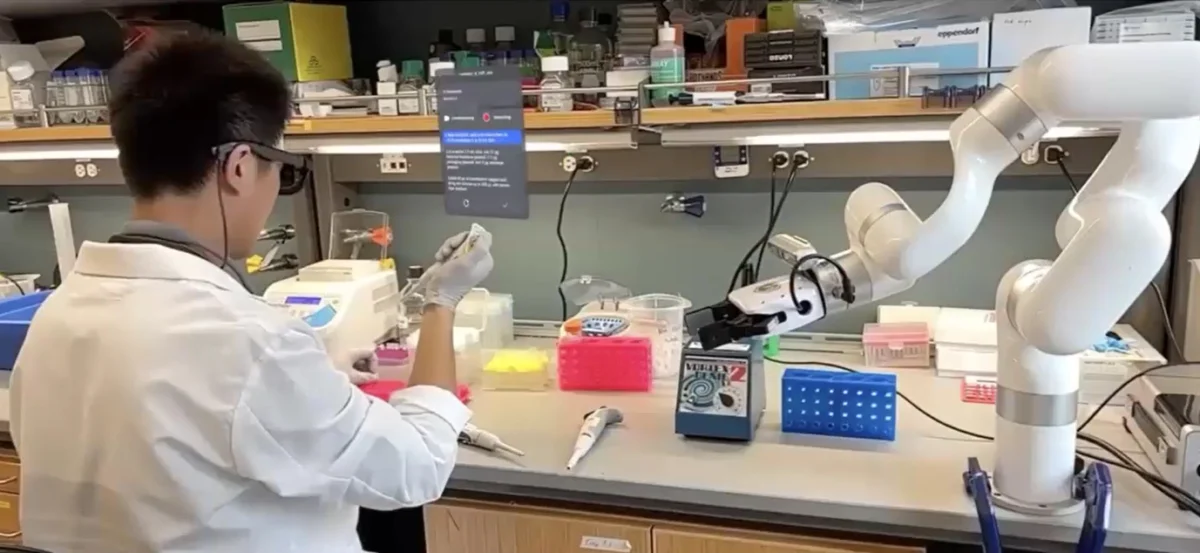
In a typical laboratory setting, a researcher performing a CRISPR gene-editing experiment must constantly toggle between complex written protocols and their physical tasks. With LabOS, the scientist wears smart glasses that project the protocol directly into their field of view.
However, this is not merely a "heads-up display" of a PDF. The system utilizes the glasses’ cameras to observe the user’s actions in real-time. The AI understands the context of the experiment: it knows which beaker is being touched, which liquid is being dispensed, and which step of the protocol is currently underway. When a task is completed, the system automatically advances to the next instruction, providing verbal guidance that mimics an experienced mentor standing at the bench.
Future Implications: From Guidance to Intervention
The current iteration of LabOS is focused on guidance, but the roadmap for the technology points toward active intervention. The next generation of these systems will be capable of detecting errors as they happen.
Imagine an AI assistant that monitors the temperature, timing, and chemical composition of a reaction with absolute precision. If a technician reaches for the wrong reagent or leaves a sample in a centrifuge for five seconds too long, the AI can intervene immediately: "Stop. Something isn’t right." By preventing these small, "invisible" errors, the system ensures that the final data is pristine, effectively closing the reproducibility gap that has haunted scientific research for decades.
MedOS: Expanding the Scope to Clinical Care
The implications of this technology extend far beyond the laboratory bench. Once an AI system can observe human actions, understand intent, and provide real-time guidance, the transition to the clinical environment becomes the logical next step. This is the vision behind MedOS.

Modern healthcare places a staggering cognitive burden on clinicians. Physicians and nurses must constantly manage patient data, follow strict protocols, and document interventions, all while maintaining the manual dexterity required for physical examinations and procedures. MedOS acts as a cobot (collaborative robot) platform that reduces this cognitive load, serving as an intelligent partner that handles the "background processing" of a clinical encounter.
The Role of Tactile Intelligence
The frontier of this field is the integration of electronic skin and force-sensing technologies. During his discussions, Dr. Cong emphasized that for AI to truly assist in medicine, it must understand not just what it sees, but what the practitioner feels.
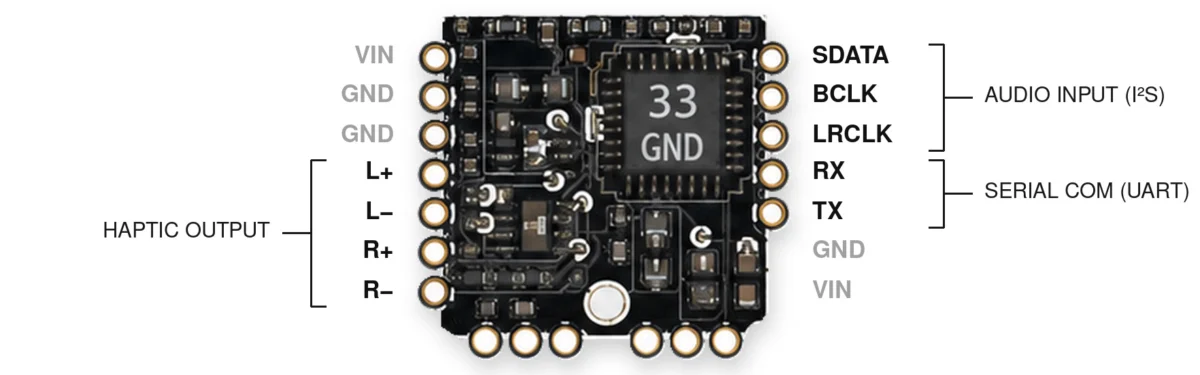
Delicate medical procedures—such as suturing, ultrasound-guided biopsies, or catheter insertions—rely on subtle tactile feedback. By capturing, analyzing, and digitizing this "tactile expertise," MedOS aims to provide a layer of support that has previously been impossible to replicate. If a surgeon or technician is performing a task, the system could analyze the pressure being applied, providing haptic feedback or warnings to prevent tissue damage or procedural error.
A Unified Future: Accelerating "Doing"
When viewed holistically, the transition from AlphaFold to LabOS and MedOS represents a fundamental shift in how we approach the scientific and medical arts.
- The Era of Thinking (AlphaFold): AI successfully solved the computational problem of protein structure, demonstrating that we can model the complexities of biology with extreme accuracy.
- The Era of Doing (LabOS/MedOS): We are now entering a phase where AI is being brought out of the computer and into the physical world to ensure that our practical execution matches our theoretical ambitions.
This is the convergence of intelligence and action. Whether it is a graduate student performing gene editing at a lab bench or a trauma surgeon working in a high-pressure environment, the goal is the same: to reduce the human variability that often leads to error. By augmenting human capability with real-time AI observation and tactile understanding, we are not replacing the human element of science—we are empowering it.
As these systems evolve, the "execution gap" will likely shrink, allowing the next generation of researchers and clinicians to focus less on the mechanics of their tasks and more on the creative and compassionate aspects of their work. We are witnessing the birth of the "AI-enhanced professional," a scientist or clinician who is never alone in the lab or the operating room, but rather, is supported by a silent, watchful, and infinitely knowledgeable digital partner. The future of science, it seems, will be defined by how well we can teach our machines to help us work with our hands.