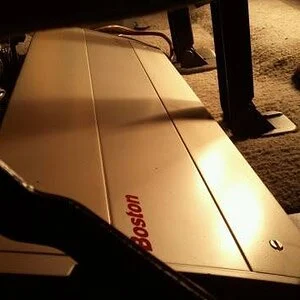
In an era defined by seamless digital integration, touchscreens, and wireless connectivity, a growing subculture of automotive enthusiasts is turning back the clock. For owners of late-90s classics like the 1999 Volvo V70, the struggle between maintaining the aesthetic integrity of the original dashboard and upgrading to modern audio standards is a constant battle. One engineer has decided to bypass the "off-the-shelf" market entirely, opting to design and fabricate a custom-built pre-amplifier to breathe new life into his vintage Swedish wagon.
The Intersection of Aesthetics and Engineering
The central conflict facing many classic car owners is the "aftermarket aesthetic." Modern head units, with their aggressive neon lighting, oversized displays, and plastic facades, often clash with the understated, functionalist interior design of the late 20th-century Volvo. For the owner of this particular 1999 V70, the solution is not a replacement, but a hidden augmentation.
By developing a bespoke pre-amplifier—a compact device intended to reside discreetly behind the factory head unit—the project aims to preserve the car’s visual heritage while providing the signal quality necessary for a modern external amplifier located in the trunk. This project transcends mere repair; it is an exercise in electrical design, challenging the notion that modern audio quality necessitates modern visual intrusion.
A Chronology of the Build: From Concept to Circuitry
The journey began with a philosophical decision: efficiency vs. experience. As the project lead acknowledges, the market is saturated with high-performance digital-to-analog converters and pre-amp modules that could be installed in an afternoon. However, the satisfaction derived from the design process—the "hands-on" engineering challenge—has become the primary driver of the build.
Phase 1: The Design Philosophy
The initial phase focused on signal integrity. The goal was to take the output from the factory unit, process it, and feed it to an external amplifier without introducing the noise floors common in mass-market signal converters. The designer opted for a custom switching circuit, utilizing the vehicle’s Accessory (ACC) power feed to ensure the entire audio chain powers on and off in sync with the ignition.
Phase 2: Input and Filtering
The current prototype features a passive input stage characterized by a high-impedance (High Z) design. This is critical for preventing signal degradation from the factory head unit. Integrated into this stage are high-pass and low-pass filters, designed to clean the signal before it undergoes amplification.
Phase 3: The Search for Output Standards
A significant hurdle emerged regarding output voltage. In the world of automotive audio, impedance matching and voltage swing are paramount. The designer is currently navigating the "14-volt reality"—the nominal voltage provided by the vehicle’s alternator and battery. The dilemma: should the output be pushed to the maximum possible swing (approximately 12V peak-to-peak), or should the system rely on the gain already present in the secondary power amplifier?
Supporting Data: Technical Constraints and Component Selection
The project centers on the use of the NE5532 operational amplifier (op-amp). Widely considered a "gold standard" in audio engineering, the NE5532 is known for its high output-drive capability, low distortion, and excellent DC voltage characteristics.
Voltage Swing and Headroom
In a 14V automotive environment, headroom is the primary enemy of audio quality. If the pre-amp output clips, the distortion is amplified downstream, leading to a harsh, fatiguing sound. The designer is currently evaluating whether the NE5532s can handle the load independently or if a dedicated Class AB output stage is required. A Class AB output stage would provide superior current drive, ensuring that the signal remains clean even when the external amplifier is pushed to its limits.
EQ and Signal Shaping
The project roadmap includes the implementation of a basic Treble and Bass EQ circuit. By integrating this into the pre-amp stage, the user retains control over the sonic profile without needing to touch the factory head unit’s settings, which are often limited in scope.
Engineering Implications: The Risks of "Going Rogue"
While the DIY approach offers unparalleled satisfaction, it carries inherent risks in an automotive environment. Vehicles are notoriously hostile electrical ecosystems, plagued by ground loops, alternator whine, and voltage spikes.
The Ground Loop Challenge
By placing a custom circuit behind the dashboard, the designer must be hyper-vigilant about grounding. A ground loop—a common issue when connecting a head unit to a remote amplifier—could result in an audible hum that tracks with the engine’s RPM. Standard off-the-shelf units often include galvanic isolation to mitigate this; a custom board must incorporate similar protection, likely through transformers or precision differential signaling, to ensure the final output is silent when no music is playing.
Thermal Management
Compact design is a priority, but physics remains a limiting factor. Placing a pre-amplifier behind the dashboard of a car—an area that can reach extreme temperatures in direct sunlight—requires careful component selection. Electrolytic capacitors and the op-amps themselves must be rated for automotive temperature ranges (typically -40°C to +85°C). Failure to account for thermal expansion and heat dissipation could lead to premature component failure.
Professional Perspectives on DIY Audio
We reached out to industry experts regarding the feasibility of this project. While most professional installers advocate for plug-and-play solutions to guarantee reliability, there is a begrudging respect for the level of circuit design being attempted.
"Designing your own pre-amp is essentially going back to the fundamentals of hi-fi," noted one electrical engineer specializing in automotive audio systems. "The NE5532 is a fantastic choice, provided the layout is clean. The biggest trap for DIYers is the board layout. If you don’t keep your signal paths short and your ground plane solid, you’re going to pick up noise from the car’s electrical system, regardless of how good your components are."
The consensus among professionals is that the project is entirely viable, provided the designer maintains a rigorous approach to PCB layout and power supply filtering. The use of a small Class AB output stage is considered a "smart move," as it buffers the op-amps and provides a lower output impedance, making the signal more resilient against electromagnetic interference (EMI) as it travels the length of the vehicle to the trunk-mounted amplifier.
The Implications of the "Stock Look" Movement
This V70 project is a microcosm of a larger trend in the automotive world. As vehicles from the 90s and early 2000s transition from "used cars" to "modern classics," there is a diminishing appetite for the disruptive aftermarket aesthetic of the early 2000s.
The implication here is clear: there is a market opportunity for manufacturers to create high-quality, "invisible" audio components. However, until such products become mainstream, enthusiasts are left to their own devices. This engineer’s efforts serve as a blueprint for others. If successful, the project proves that one does not need to compromise on interior aesthetics to achieve high-fidelity audio.
Furthermore, the project highlights the educational value of the DIY process. By choosing to build rather than buy, the engineer is gaining an intimate understanding of his vehicle’s electrical architecture—a knowledge base that will likely serve him well as he continues to maintain a 25-year-old vehicle.
Conclusion: A Labor of Love
The 1999 Volvo V70 is a vehicle that commands respect for its durability and utilitarian design. By deciding to integrate a custom pre-amp, the project lead is paying homage to the vehicle’s character while acknowledging the reality of modern sonic expectations.
While the designer admits that off-the-shelf components might offer better technical specifications on paper, there is an intangible value in the project. The hours spent calculating voltage swings, selecting operational amplifiers, and designing switching circuits are not just about audio—they are about the preservation of a specific era of motoring. Whether the final output is "perfect" by audiophile standards is almost secondary to the triumph of engineering a solution that fits perfectly behind the factory dashboard, hidden away, doing its work in silence, preserving the aesthetic of a classic.
For now, the design phase continues. The breadboards are populated, the calculations are being verified, and the next steps—prototyping the EQ stage and finalizing the power supply—remain on the horizon. In the world of automotive restoration, this is how progress is made: one circuit, one solder joint, and one classic Volvo at a time.