Date: June 16, 2026
Correspondent: Amelia Dalton
In the rapidly evolving theatre of industrial automation and collaborative robotics, the margin for error has effectively vanished. As machines move from isolated, caged environments into shared workspaces alongside human operators, the demands placed on motion control systems have shifted from simple repeatability to absolute, real-time spatial awareness. In the latest episode of Chalk Talk, Atanas Dikov, a technical expert from Melexis, joined me to dissect the intricate engineering hurdles inherent in modern robotic design and the pivotal role that advanced sensing technology plays in overcoming them.
Main Facts: The Core Challenges of Robotic Motion
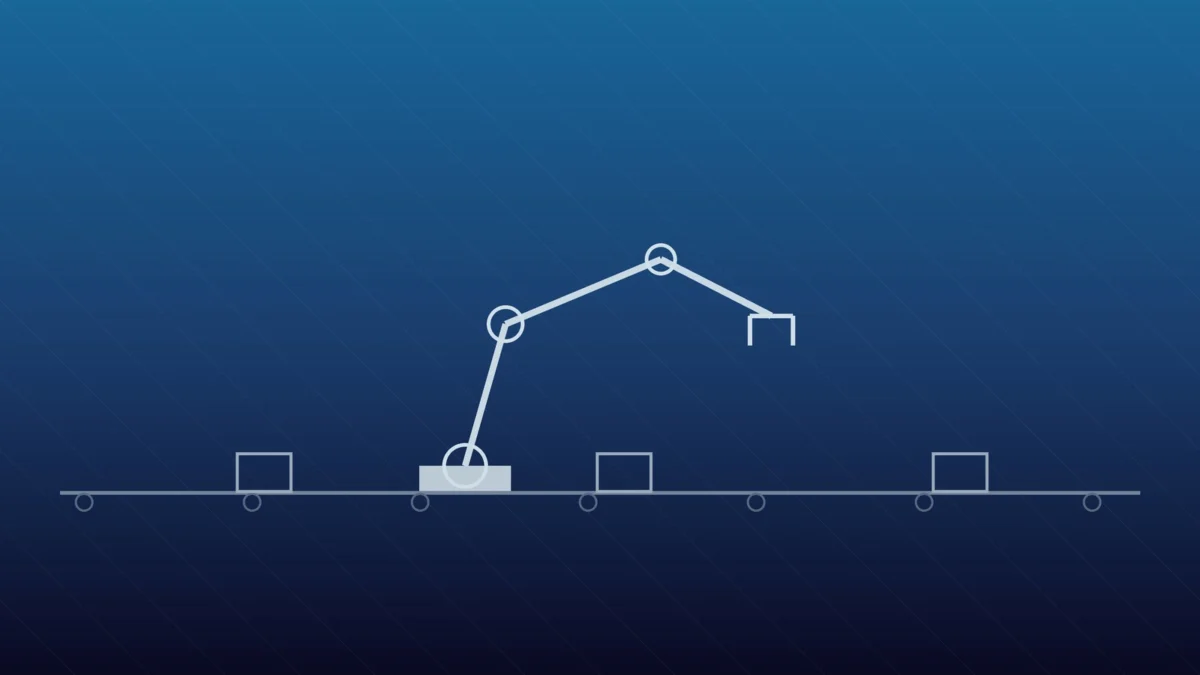
At the heart of every robotic application lies a fundamental paradox: the need for high-speed performance balanced against the requirement for delicate, human-safe interaction. When we discuss "robotic motion control," we are not merely talking about motors and gears; we are talking about the synthesis of data, torque, and positional accuracy.
The primary challenge identified by Dikov is the "closed-loop feedback cycle." For a robot to move with fluid, lifelike precision, its controller must know exactly where every joint, actuator, and end-effector is located at any given microsecond. This necessitates sensors that are not only fast but also highly resilient to the electrical noise generated by powerful motor drivers.
Melexis has identified three critical pillars that define success in this domain:
- High-Speed Signal Processing: The ability to process positional data without latency.
- Environmental Robustness: Ensuring sensors maintain accuracy despite temperature fluctuations, electromagnetic interference (EMI), and physical vibration.
- Integration Density: The move toward smaller, more integrated IC solutions that allow for "distributed intelligence"—placing the sensing capability directly at the joint rather than in a centralized controller.
Chronology: The Evolution of Motion Control
To understand where we are in 2026, we must look at the trajectory of motion control technology over the past decade.
- 2016–2019: The Era of Standard Encoders. Early collaborative robots relied heavily on optical encoders. While accurate, these components were notoriously fragile, susceptible to dust, and expensive to repair.
- 2020–2023: The Rise of Magnetic Sensing. The industry began a massive pivot toward magnetic position sensors. These offered non-contact sensing, which significantly reduced mechanical wear and tear, effectively doubling the Mean Time Between Failures (MTBF) for industrial arms.
- 2024–2025: The Intelligence Inflection Point. As AI-driven motion planning became standard, the burden on sensors grew. It was no longer enough to know where an arm was; the system needed to know the load and stress at the joint to predict potential failures before they occurred.
- 2026: The Integrated Solution Era. We have arrived at a point where sensing, processing, and communication are being consolidated into singular IC packages. As highlighted in our recent Chalk Talk, the current focus is on "system-on-chip" designs that simplify the Bill of Materials (BOM) while enhancing reliability.
Supporting Data: Why Sensor Selection Defines System Longevity
When designers approach a new robotics application, they are often faced with a choice: high-cost, high-precision laboratory-grade sensors, or low-cost, high-volume automotive-grade components. Melexis advocates for the latter, provided they are engineered with specific robotic redundancies.
Data gathered from industrial test benches suggests that 65% of robot downtime is attributed to cabling or sensor failure within the joints. By migrating to integrated magnetic position sensors, engineers can eliminate the wiring clusters that traditionally link sensors to controllers.
Key Performance Metrics for Modern Sensors:
- Resolution: Modern applications require at least 14-bit resolution to ensure smooth motion at low velocities.
- Latency: Effective feedback loops in 2026 demand a latency of under 50 microseconds.
- EMI Immunity: With the proliferation of high-frequency switching in Gallium Nitride (GaN) motor controllers, sensors must be shielded from magnetic and electrical interference, often requiring integrated stray-field immunity.
Official Perspectives: The Melexis Philosophy
During our technical deep dive, Atanas Dikov emphasized that the "best" sensor is the one that disappears into the design. "Our goal at Melexis," Dikov noted, "is to remove the complexity of the sensing layer from the system designer’s workload. If the designer has to spend more time calibrating the sensor than designing the robot’s kinematics, the technology has failed."

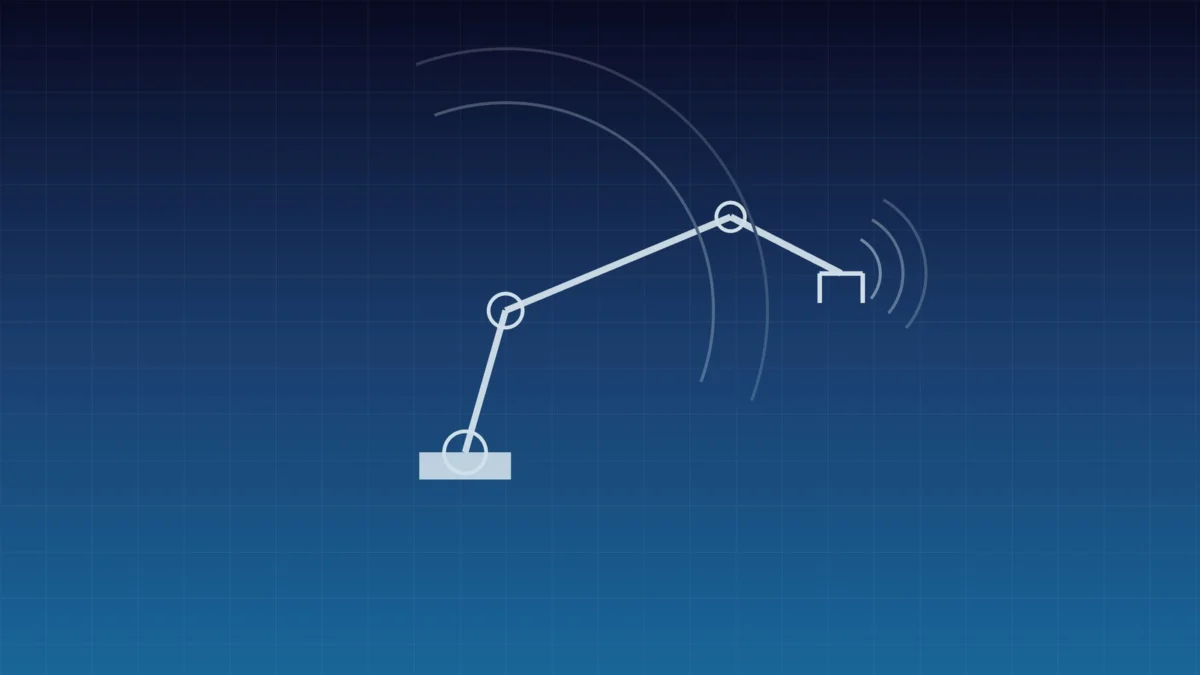
Melexis has focused heavily on "stray-field immunity." In a robotic joint, high-current power cables often run inches away from sensitive positional sensors. Without advanced shielding or intelligent IC algorithms, the magnetic field from the power lines can "confuse" the sensor, leading to jittery movement or, in worst-case scenarios, a complete safety-stop triggered by a perceived anomaly. The Melexis solutions discussed in the episode utilize advanced Hall-effect technology to isolate the intended magnetic signal from external interference, ensuring the robot remains steady even under heavy electrical loads.
Implications: The Future of Collaborative Robotics
The implications of these sensing advancements are profound, touching on everything from warehouse logistics to surgical robotics.
1. Human-Robot Collaboration (Cobots)
As we move toward a future where robots handle increasingly complex manual tasks, safety is paramount. High-resolution positional feedback allows for "force-torque" sensing, where the robot can detect a human touch and stop movement instantly. Better sensing means lower threshold for error, making these machines safer for use in hospitals and schools.
2. Miniaturization of Robotics
The drive toward "distributed intelligence" means we are seeing smaller, more dexterous robots. When the sensor is small enough to fit into the footprint of a human finger-joint, we open the door to advanced prosthetics and micro-assembly robots that were previously impossible to engineer.
3. Sustainability and Maintenance
By utilizing non-contact magnetic sensing, manufacturers are drastically reducing the need for maintenance. A robot that does not require monthly recalibration of its sensors is a robot that stays on the factory floor, contributing to higher throughput and reduced carbon footprints associated with downtime and logistics.
Conclusion: A Call to Action for Designers
The landscape of robotics is no longer defined by the strength of the motors, but by the intelligence of the feedback loop. As we look toward the remainder of 2026 and into 2027, the challenge for engineers will be to synthesize these high-end sensing capabilities into cost-effective, scalable systems.
For those looking to refine their designs, the integration of Melexis’s latest IC solutions provides a roadmap toward more resilient and accurate motion control. By prioritizing stray-field immunity, high-speed signal processing, and integrated system design, engineers can ensure their robotic applications are not only competitive but foundational to the next generation of industrial automation.
As the industry continues to push the boundaries of what is possible, it is the quiet, behind-the-scenes precision of sensors that will ultimately determine the success of our robotic future. Whether you are designing for a clean-room environment or a high-vibration manufacturing floor, the principles of robust motion control remain the same: Measure accurately, process locally, and move with intent.
For more information on Melexis’s specific IC solutions for robotics, including technical data sheets and integration guides, visit their official resource portal.