For decades, the global IT services industry has operated on a foundational, predictable business model: headcount-driven scale. Firms like Infosys, TCS, and Wipro built empires by acting as the global engine room for enterprise software, deploying thousands of developers to customize, integrate, and maintain complex systems. It was a model of linear growth—more projects required more bodies.
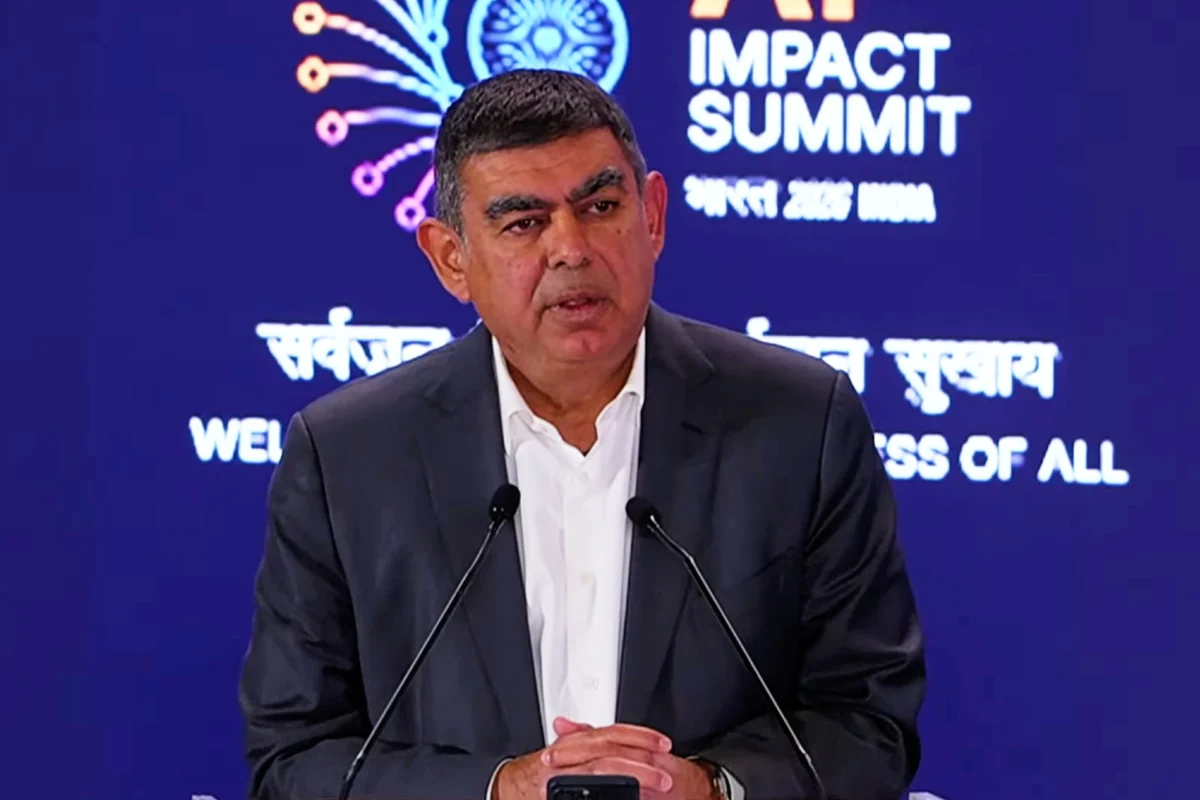
Vishal Sikka, the former CEO of Infosys and a veteran of SAP and Oracle, believes that era is rapidly drawing to a close. His new startup, Hang Ten Systems, has emerged from stealth with a $32 million seed round, signaling a bold bet that artificial intelligence is no longer just a tool for productivity, but a fundamental replacement for the manual labor that defined the IT services sector for thirty years.
The Genesis of Hang Ten Systems
Hang Ten Systems represents a departure from the traditional consulting firm. Headquartered in the Bay Area, the company is built on a premise of “AI-native project delivery.” Rather than utilizing AI to assist human developers, Hang Ten aims to leverage agentic code generation, reusable AI skills, and deep domain expertise to automate the lifecycle of enterprise software.
The seed round, announced this Wednesday, was led by venture capital firm Mayfield. It includes strategic participation from Aramco Ventures, underscoring the high-stakes interest in how AI will reshape industrial-scale enterprise operations. The startup’s board is anchored by high-profile industry veterans, including Yahoo co-founder Jerry Yang, lending significant weight to Sikka’s latest venture.
A Chronology of Vision and Transition
To understand the significance of Hang Ten, one must look at the trajectory of Vishal Sikka’s career. A titan of enterprise software, Sikka spent 12 years at SAP, where he served as CTO and was a pivotal architect of the HANA platform. His subsequent tenure as the CEO of Infosys—the first outsider to lead the Indian giant—was marked by his efforts to pivot the company toward automation and artificial intelligence, a vision that often met with internal cultural friction.
Following his departure from Infosys in 2017, Sikka founded VianAI. That company focused on the application layer—helping enterprises use AI for decision-making and data analytics. It secured $50 million in seed funding in 2019 and later raised $140 million from the SoftBank Vision Fund 2 in 2021.
However, Hang Ten is distinct. According to Mayfield managing partner Navin Chaddha, while VianAI was an application-focused endeavor, Hang Ten is a structural pivot. It is an "AI-native services company." The startup, which has already begun working with enterprise giants like Siemens Gamesa Renewable Energy and Fresenius, is moving with startling speed. Chaddha noted that the firm, which officially commenced operations only a month ago, is already demonstrating early market traction, a rarity for a company in such an early stage of development.
The Economic Implications: Linearity vs. Leverage
The most profound shift introduced by Hang Ten is the move away from "headcount-based" revenue. In the traditional IT services model, an increase in revenue usually necessitates an increase in hiring. Profit margins are squeezed by rising labor costs and the friction of managing thousands of employees.
Mayfield’s investment thesis centers on the idea of non-linear scaling. "Traditional services scale linearly with headcount," Chaddha told TechCrunch. "Hang Ten is built so its leverage grows with every project."
In this model, the software—not the programmer—does the heavy lifting. By utilizing "agentic" systems—AI agents capable of autonomous decision-making and code generation—Hang Ten intends to build, modify, and operate software at a fraction of the traditional cost and time. If successful, this would fundamentally break the pricing model of the $1 trillion global IT services market.
The Industry Under Siege: A Debate on Disruption
The launch of Hang Ten arrives at a moment of existential crisis for traditional IT services firms. As AI capabilities evolve, analysts and investors are engaged in a fierce debate: Will AI expand the market, or will it cannibalize the existing service-provider business model?
Jefferies analysts have recently argued that IT services could be among the first sectors to face “meaningful AI disruption.” The logic is clear: if an AI agent can perform the tasks of ten junior developers, the billing hours that form the backbone of the IT industry will evaporate.
Conversely, incumbents are attempting to frame the disruption as a massive growth opportunity. Infosys, under the guidance of chairman Nandan Nilekani, has publicly claimed that “AI-first services” could represent a market opportunity of $300 billion to $400 billion by 2030. Infosys has aggressively pursued partnerships with OpenAI and Anthropic to maintain relevance. However, the market remains skeptical; Infosys shares have faced significant downward pressure, dropping over 35% this year as investors weigh the risks of transition against the potential for growth.
The "Hang Ten" Strategy: Building the Team
The "early crew" at Hang Ten comprises a tight-knit group of Sikka loyalists. Key figures include:
- Navin Budhiraja (CTO): A veteran of Sikka’s previous ventures, bringing deep expertise in enterprise-grade software architecture.
- Sanjay Rajagopalan (Chief Design Officer): Focused on the human-computer interface of AI-native services.
- Tao Liu (SVP of Forward Deployed Engineering): A critical role in a company where the “product” is the service delivery itself.
By staffing the firm with executives who have worked with Sikka across SAP, Infosys, and VianAI, the company is attempting to hit the ground running with a proven internal culture. The company is currently on an aggressive hiring spree across the Bay Area and plans to expand globally to meet the demand for what Sikka describes as the "biggest wave of our lifetimes."
Implications for the Future of Enterprise Software
The success of Hang Ten will likely serve as a bellwether for the broader IT industry. If a startup can deliver complex enterprise software projects using AI-driven automation that legacy firms require thousands of consultants to complete, the entire value proposition of the IT consulting sector will be forced to evolve.
For the enterprise client, this is a win. The prospect of faster, cheaper, and more accurate software delivery is enticing. However, for the millions of workers in the global IT services sector, the implications are more sobering. The transition to AI-native development will not only change how software is built; it will change who builds it.
As Sikka noted in his blog post, the goal is to “hang ten” on the wave of AI. For the rest of the industry, the question remains whether they can catch the same wave, or if they will be swept away by the current of automation. With a war chest of $32 million and the backing of Silicon Valley’s most influential investors, Hang Ten is positioning itself not just to participate in this transformation, but to lead it. The coming quarters will reveal whether the promise of non-linear, AI-driven scaling can hold up under the weight of real-world, enterprise-grade demands.