LONDON, U.K. — October 23, 2026 — In the high-stakes world of international touring, where the acoustic demands of legendary performers meet the unforgiving nature of massive arena environments, the choice of mixing console is more than a technical preference—it is the foundation of the artist’s legacy. Jonny “Famous” Williams, a veteran front-of-house (FOH) engineer with a pedigree that spans from the gritty streets of London hip-hop to the polished pop stages of global icons, has solidified his commitment to sonic excellence by transitioning to the Solid State Logic (SSL) Live L650 console for his current tour dates with Rod Stewart.
This move marks a significant evolution in the production workflow for Stewart’s live performances, signaling a shift toward a hybrid analog-digital ecosystem that prioritizes tactile control, architectural flexibility, and the unmistakable "SSL sound."
Main Facts: The Console Transition
Williams, who has been serving as the FOH engineer for Rod Stewart for the past two and a half years, has long been recognized for his meticulous approach to live mixing. His career, marked by high-profile collaborations with RAYE, Central Cee, and Thundercat, has required a versatile technical skillset. When the time came to re-evaluate his touring rig, the requirements were clear: the system needed to handle the complex, multi-layered arrangements of Stewart’s catalog while providing the immediate, intuitive access required for live performance.
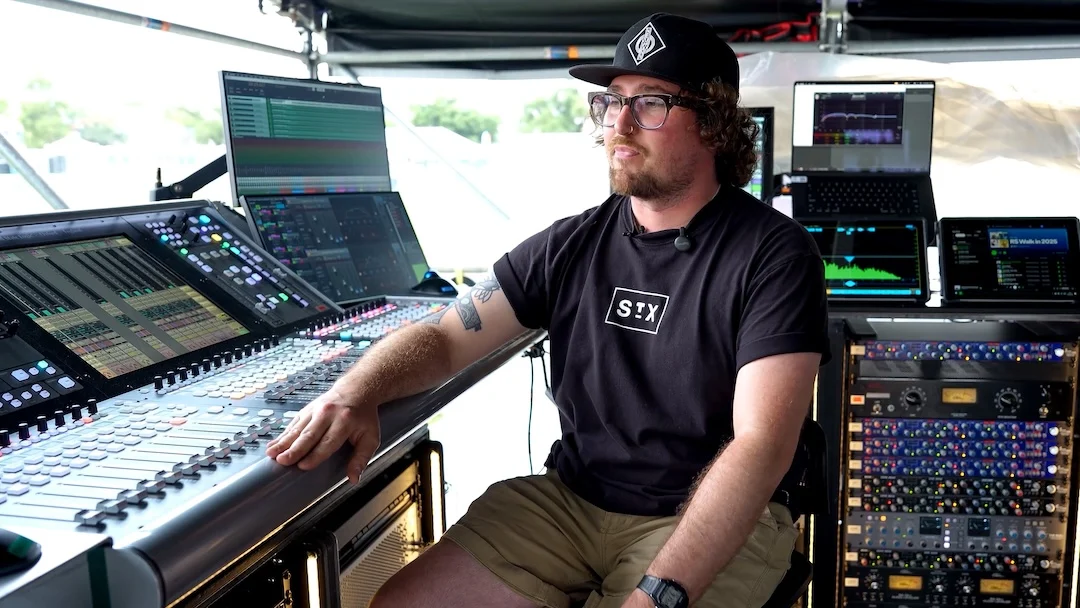
The selection of the SSL Live L650 was a calculated choice based on capacity and ergonomics. Supplied by Sound Image, a Clair Global Group company, the L650 is a powerhouse in the live sound sector, known for its expansive fader layout and its ability to handle immense I/O counts with low latency. For Williams, the three-fader-bay architecture of the L650 was the decisive factor.
"When I had the opportunity to switch to SSL, I only really had two choices—either the L550 Plus or the L650, due to the capacity I needed," Williams explains. "I went for the L650 because I like its layout. I like the three fader banks because I’m very hands-on with the faders, even with a lot of automation involved. The transition from my previous console was also very straightforward."
A Chronology of Mastery: From Studio Roots to Touring Standards
Williams’ relationship with Solid State Logic is not a recent development; it is the culmination of an eight-year professional trajectory. His history with the brand began in the studio environment, eventually bleeding into his live work as the gap between studio-grade processing and touring requirements began to narrow.
Years ago, Williams invested in two SSL consoles for his home studio in the U.K., an experience that allowed him to internalize the SSL workflow. This deep familiarity with the brand’s signal flow and processing logic meant that moving to the L650 felt less like learning a new machine and more like expanding the capabilities of an instrument he already mastered.
The progression from studio enthusiast to tour-grade engineer reflects a broader industry trend where artists and their production teams demand studio-quality fidelity in a stadium environment. By integrating the L650 into the Rod Stewart touring production, Williams has successfully bridged the divide between the warmth of analog signal chains and the sheer processing power of modern digital mixing.
Supporting Data: The Anatomy of a Hybrid Rack
While the L650 acts as the command center, the true magic of Williams’ current rig lies in the auxiliary hardware integrated into his FOH rack. Recognizing that digital emulation is often impressive but rarely identical to the source, Williams has outfitted his setup with an arsenal of SSL’s most revered analog outboard gear.
The rack includes four SSL Super 9000 SuperAnalogue channel strips, which Williams reserves exclusively for vocals. By utilizing these strips, he ensures that Stewart’s iconic voice—the centerpiece of the performance—retains the harmonic richness and depth that have defined his career for decades.
Furthermore, the drum mix is treated with three Revival 4000 all-analog channel strips, deployed specifically for the kick, snare, and bass guitar. This provides the punch and "glue" necessary to keep the rhythm section driving through the mix without relying solely on software plugins. The addition of an SSL The Bus+ compressor on the drum group serves as the final layer of polish, ensuring that the kit remains tight and controlled under the dynamic fluctuations of a live set.
To facilitate modern touring requirements, such as multitrack recording for archival or broadcast purposes, Williams utilizes a UMD192 digital audio interface. Rounding out the technical suite is an SSL 18, which interfaces with his SMAART rig, allowing him to conduct real-time acoustic analysis of each venue to optimize the system for the room’s specific characteristics.
Official Responses and Engineering Philosophy
The flexibility of the SSL Live platform is a recurring theme in Williams’ philosophy. In the high-pressure environment of a live show, redundancy and accessibility are critical.
"One of the great things about SSL Live, a platform I know inside out, is its flexibility," says Williams. "You can put almost anything, almost anywhere. Every Fader Tile can be configured in the same way, allowing me to scroll through banks and layers to access whatever I need. In the very unlikely event that I lose a fader or even an entire tile, I can still access that path elsewhere on the console. That’s a really cool feature."
This sentiment underscores the primary reason top-tier engineers gravitate toward SSL: the console does not dictate the workflow; rather, it adapts to the engineer’s instincts. By allowing Williams to map the console to his specific physical requirements, SSL enables him to focus on the nuance of the mix—the delicate balance between Stewart’s vocals, the backing band, and the ambient energy of the audience—rather than struggling with the limitations of the interface.
Implications for the Live Sound Industry
The adoption of the L650 by a high-profile tour like Rod Stewart’s has several implications for the professional audio landscape. Firstly, it reaffirms the enduring value of the "hybrid" approach. As digital consoles become more powerful, the demand for high-quality analog "flavor" in the signal path has not diminished; instead, it has become a hallmark of premium touring productions.
Secondly, the reliance on Sound Image and the broader Clair Global network for such high-specification equipment highlights the ongoing need for rental houses to provide not just hardware, but the technical support and modularity that modern engineers require.
Finally, the success of Williams’ setup serves as a case study for younger audio engineers. The trend of bringing outboard gear on the road, combined with the power of a flagship digital console, is the current gold standard for large-scale production. It suggests that while the digital age has provided convenience, the pursuit of "tone"—the elusive, analog-inspired quality—remains the driving force behind live sound innovation.
As the tour continues to traverse global stages, the partnership between Jonny “Famous” Williams, Solid State Logic, and the Rod Stewart production team serves as a testament to the idea that, in the world of professional audio, technology is only as good as the vision behind it. With the L650 as his foundation, Williams is ensuring that every note of Stewart’s performance is delivered with the clarity, depth, and impact that fans have come to expect from one of music’s greatest living legends.