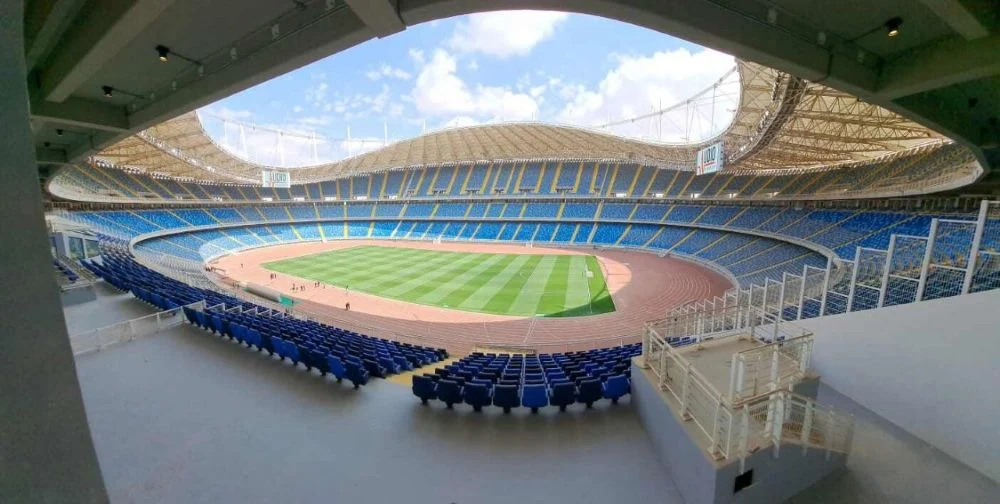
The New Administrative Capital Stadium, a monumental centerpiece of Egypt’s ambitious urban development project, has set a new benchmark for stadium acoustics in the Middle East. As the nation pivots toward hosting world-class sporting spectacles and major cultural gatherings, the mandate for its primary venue was clear: create an immersive, intelligible, and resilient sound environment capable of weathering extreme desert conditions while delivering high-fidelity audio to tens of thousands of spectators. To achieve this, integrators turned to a comprehensive Harman Professional solution, deploying a sophisticated ecosystem of JBL, Crown, and BSS technologies.
Main Facts: A Symphony of Engineering
The installation represents a massive undertaking in distributed audio design. At the heart of the system lies the JBL Professional VLA-C256 loudspeaker series. Chosen for its specific ability to provide high-output, long-throw capabilities, the system is organized into 20 distinct clusters. These arrays are strategically mounted along the stadium’s massive roof structure, firing downward into the seating bowl to ensure that every corner of the stadium—from the front rows to the highest nosebleed sections—receives uniform coverage.
The technical specifications are equally impressive. The system delivers a consistent sound pressure level (SPL) ranging from 96 to 100 dBA, with the headroom to reach peaks of 108 dBA for emergency announcements or high-energy sporting climaxes. Perhaps most crucially, the system maintains a ±3 dB variance in level consistency across the vast majority of the seating bowl. In terms of vocal clarity, the system achieves a Speech Transmission Index (STI) of between 0.55 and 0.65, ensuring that referees’ calls, public announcements, and ceremonial speeches are intelligible even in the presence of massive crowd noise.
Chronology: From Concept to Commissioning
The integration of the audio system was a phased process that paralleled the stadium’s broader construction timeline.
- Initial Planning Phase: Engineers focused on computer-aided modeling to predict acoustic behavior in the semi-enclosed structure. Given the stadium’s scale, the primary challenge was managing the reflection of sound off the hard surfaces of the concrete seating bowls and the metal roofing.
- Infrastructure Rollout: During the mid-construction phase, the fiber-optic backbone was laid. By utilizing a digital network, the project moved away from traditional analog cabling, significantly reducing signal degradation over the massive distances inherent in a modern stadium.
- System Integration: As the roof structure neared completion, the JBL VLA-C256 arrays were flown into position. This required precision rigging to ensure that the vertical dispersion angles matched the simulation data perfectly.
- Commissioning and Tuning: The final phase involved intensive, 24-hour testing sessions. Engineers utilized BSS BLU-806 signal processors to calibrate delays, equalization, and zoning. The final system handover occurred in mid-2026, marking the stadium as fully operational for national-scale events.
Supporting Data: The Backbone of the System
The technical success of the New Administrative Capital Stadium is largely attributed to the synergy between the loudspeaker hardware and the networked control infrastructure.
The Loudspeaker Array: JBL VLA-C256
The VLA-C series was selected not just for its audio quality, but for its physical resilience. The loudspeakers are IP55-rated, a critical requirement for a venue located in a region known for high ambient temperatures, relentless UV exposure, and periodic sand-laden winds. The VLA-C256 elements are designed with weather-treated components, ensuring that the internal drivers and circuitry remain shielded from the harsh Egyptian climate.

Networked Intelligence: BSS and Crown
The "brain" of the system relies on BSS BLU-806 signal processors. These processors act as the central hub for all audio routing, allowing the stadium’s technical team to dynamically reconfigure the sound system based on the nature of the event. Whether the stadium is hosting a football match with restricted zones or a national celebration requiring full-venue coverage, the BSS system manages the signal flow with minimal latency.
Powering these arrays are the Crown DCi DriveCore Network Series amplifiers. These units are more than simple power sources; they provide advanced telemetry back to the control room. Through the networked infrastructure, operators can monitor individual amplifier performance in real-time. If a channel fails or an impedance issue is detected, the system flags the error immediately, allowing for proactive maintenance before the next public event.
Official Responses and Engineering Philosophy
While the project was a collaborative effort involving various local and international contractors, the consensus from the engineering team reflects a philosophy of "performance-first."
"The goal was never just to be loud," noted one lead integration consultant involved in the project. "In a venue of this size, loudness is easy; clarity is the challenge. By utilizing the VLA-C256 arrays in a high-density, distributed cluster configuration, we were able to minimize the ‘slap-back’ and reverberation that typically plagues large concrete stadiums. We essentially treated the seating bowl as a collection of smaller, manageable acoustic zones."
Harman Professional’s involvement was centered on providing a unified ecosystem. By keeping the processing (BSS), amplification (Crown), and transduction (JBL) within the same brand family, the stadium benefits from seamless software integration. The HiQnet system architecture allows for a unified interface, simplifying the learning curve for the local technical staff who operate the stadium on a daily basis.
Implications for Future Stadium Design
The installation at the New Administrative Capital Stadium serves as a blueprint for the next generation of infrastructure in the Middle East and beyond. Several key takeaways have emerged from this project:

1. The Necessity of Digital Redundancy
The integration of fiber-optic backbones is no longer an optional luxury. The reliance on digital transport ensures that even in the event of a primary signal path failure, the system can reroute data instantly, maintaining safety and communication protocols. For a stadium of this scale, the risk of total system failure is non-negotiable.
2. Climate-Resilient Engineering
The success of the IP55-rated JBL arrays underscores the need for "hardened" AV equipment. As global temperatures rise and extreme weather events become more frequent, manufacturers are being forced to rethink the durability of their outdoor products. The Cairo installation proves that high-fidelity audio does not have to be sacrificed for the sake of ruggedness.
3. The Shift Toward Active Monitoring
By leveraging the reporting capabilities of the Crown DCi series, the stadium management has moved from a reactive maintenance model to a predictive one. This shift is critical for large-scale venues where the cost of a "no-show" audio component can disrupt an event broadcast to millions of viewers.
Conclusion: A New Standard
The New Administrative Capital Stadium is more than just a home for football; it is a testament to the power of integrated audio technology. By successfully balancing the need for extreme output with the nuance of speech intelligibility, the project team has ensured that the stadium will remain a premier venue for decades to come.
As the stadium begins its lifecycle of hosting major events, the Harman-powered system stands ready. Whether the air is filled with the roar of 50,000 fans or the crisp, clear announcements of a state ceremony, the technology is designed to disappear—leaving only the sound itself. In the competitive world of modern venue design, this installation serves as a reminder that the most successful systems are those that are heard, but never noticed. With its combination of robust hardware, intelligent networking, and meticulous calibration, the New Administrative Capital Stadium is now, quite literally, one of the best-sounding venues in the world.