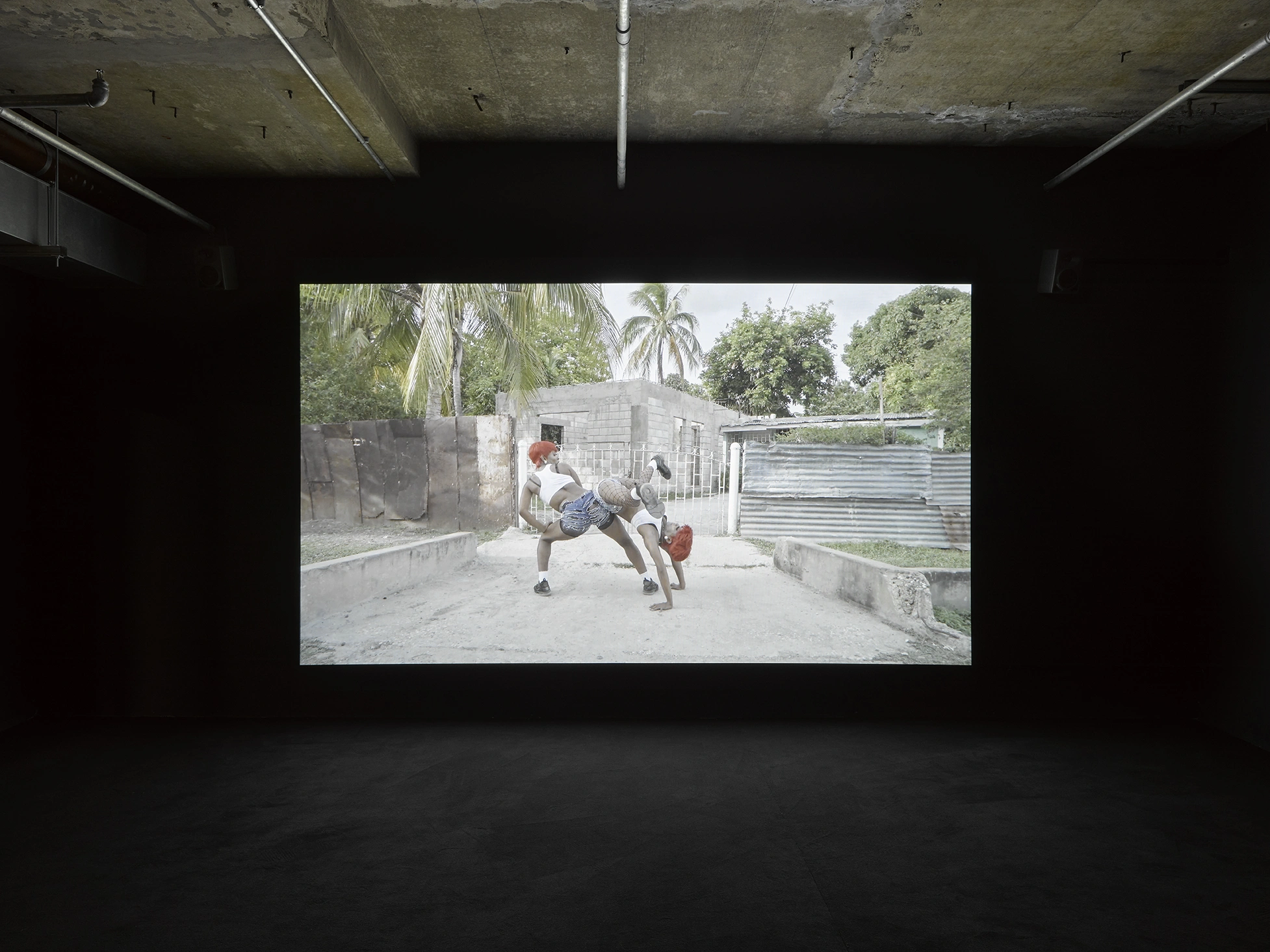
In the pulsating heart of 180 Studios, London, an immersive experience is currently unfolding that bridges the gap between high-concept art and raw, street-level culture. As part of The Vinyl Factory: Reverb exhibition, Argentinian artist and choreographer Cecilia Bengolea presents Shelly Belly Inna Real Life, a hauntingly intimate video installation that serves as both a cultural document and a choreographic exploration. Filmed in Jamaica between 2015 and 2019, the piece offers a rare, unflinching look at the dancehall scene—a genre of music and movement that is as much a form of social resistance as it is a dance.
The Core of the Work: Capturing the Spirit of Dancehall
At the center of Shelly Belly Inna Real Life is the titular figure, Shelly Belly, a legendary icon within the Jamaican dancehall community. For Bengolea, the project was never about merely observing a subculture from the outside; it was about immersing herself in the kinetic language of the dancers who define the scene.
Dancehall, which emerged from the socio-political crucible of post-independence Jamaica, is often misunderstood by global audiences as merely a musical genre. However, in the context of Bengolea’s work, it is presented as a sophisticated, codified system of expression. The installation captures the intricate choreography of the participants, detailing the specific movements that tell stories of struggle, identity, and joy.
Bengolea’s lens focuses on the individuals who keep the dancehall scene alive, often in the face of significant systemic pressures. Through her intimate footage, the viewer is transported to the streets of Jamaica, witnessing the transformative power of movement. The film does not shy away from the complexities of this world, exploring the social context of the participants and the wider, often misunderstood, culture surrounding them.
A Chronology of Collaboration and Artistic Evolution
Cecilia Bengolea’s engagement with the dancehall scene is not a recent development, but rather the culmination of years of deep-rooted artistic exploration. Her professional trajectory reflects a consistent interest in the intersection of traditional choreography and spontaneous, vernacular movement.
2015–2019: The Fieldwork Years
The primary material for Shelly Belly Inna Real Life was gathered during extensive periods of fieldwork in Jamaica. Over four years, Bengolea embedded herself within the local dance communities, earning the trust of figures like Shelly Belly. This period was marked by a commitment to ethnographic accuracy—attempting to capture the ephemeral nature of street dance before it was commodified or sanitized for broader consumption.
2016: The Genesis of the Partnership
Before Shelly Belly Inna Real Life reached its current form, Bengolea had already begun her long-standing relationship with The Vinyl Factory. In 2016, she collaborated with the British artist Jeremy Deller to produce Bom Bom’s Dream. Featured in the landmark The Infinite Mix exhibition, this piece explored the global migration of dance styles, following a Japanese dancer known as Bom Bom. Even in this earlier work, the presence of Shelly Belly was a focal point, signaling the beginning of a multi-year narrative arc that would eventually culminate in the current 180 Studios exhibition.

2024–2025: The Vinyl Factory: Reverb
The current exhibition at 180 Studios, which runs until March 2, 2025, represents the definitive iteration of these years of study. By placing these works within the context of Reverb, the curators have framed Bengolea’s work as a dialogue between sound, image, and the spaces they inhabit.
Supporting Data: The Socio-Political Dimensions of Dance
A recurring theme in Bengolea’s interviews regarding this work is the complex, and often fraught, relationship between the Jamaican police and the dancehall scene. Dance, in this context, is not merely recreational; it is a manifestation of agency.
Historical data and sociological studies suggest that dancehall events have long been subject to police scrutiny, with regulations often targeting the late-night nature of the gatherings and the perceived "subversive" content of the lyrics and moves. Bengolea’s work highlights how these dancers navigate a world where their primary form of expression is frequently criminalized or pushed to the margins.
By centering the camera on the physical agility and the communal bonds of the dancers, Bengolea reframes these individuals not as victims of state pressure, but as innovators. The "street dance" captured in the installation is a language of defiance. It is a way of reclaiming space in an urban environment that often seeks to regulate or exclude them.
Official Perspectives: The Artist’s View
In recent discussions surrounding the exhibition, Cecilia Bengolea has provided critical insight into her motivations. She describes her connection to dancehall as an "active participation," rather than a detached study. For Bengolea, the choreography of the dancehall is a way of thinking—a physical philosophy that challenges the rigid structures of contemporary dance education.
"When you are in the dancehall, you are participating in a conversation that has been ongoing for generations," Bengolea notes. "The dancers are not just moving; they are archiving their history, their grievances, and their resilience."
Her collaboration with Shelly Belly is particularly significant. Shelly Belly is more than a subject; he is a collaborator who brings an authentic, unmediated perspective to the work. By allowing him to guide the narrative, Bengolea avoids the pitfalls of the "outside observer" trope, creating a piece that feels lived-in and fundamentally true to its origins.
Implications for the Art World
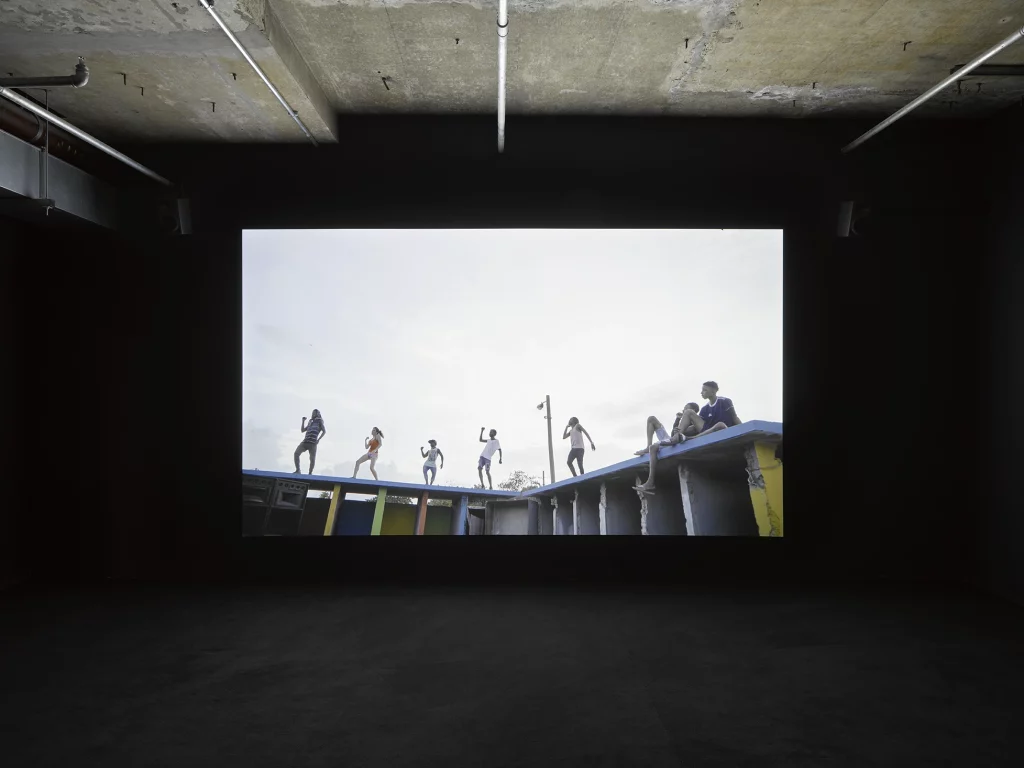
The inclusion of Shelly Belly Inna Real Life in The Vinyl Factory: Reverb has significant implications for how we view video installation art. It marks a shift away from abstract, non-representational digital media and toward works that are deeply grounded in anthropology and human geography.
1. The Validation of Street Culture
By elevating dancehall to the status of a major exhibition piece at a venue as prestigious as 180 Studios, the art world is acknowledging the intellectual and artistic weight of street-originated genres. This legitimization process, while complex, provides a global platform for voices that have historically been underrepresented in institutional art spaces.
2. The Evolution of Video Installation
Bengolea’s work challenges the viewer’s relationship with the screen. Unlike traditional cinema, which dictates a passive viewing experience, the installation format at 180 Studios allows for a rhythmic, iterative engagement. The work loops, changes, and reacts to the space, much like the dancehall events themselves.
3. Future Trajectories
The success of Shelly Belly Inna Real Life suggests a growing appetite for art that bridges the gap between academic theory and popular culture. As the exhibition continues to draw crowds through early 2025, it serves as a testament to the enduring power of the body as a site of political and cultural struggle.
Visiting the Exhibition
For those looking to experience this work firsthand, The Vinyl Factory: Reverb remains open at 180 The Strand, London, through March 2, 2025. The exhibition offers a rare opportunity to witness the synergy between sound and vision in one of London’s most dynamic creative hubs.
Exhibition Details:
- Location: 180 Studios, 180 The Strand, London, WC2R 1EA
- Dates: May 22, 2024 – March 2, 2025 (Note: The exhibition will be closed from December 23, 2024, to January 8, 2025).
- Opening Hours: Wednesday–Saturday: 12:00 PM – 7:00 PM; Sunday: 12:00 PM – 6:00 PM.
As we look toward the future of the contemporary art scene, works like Cecilia Bengolea’s remind us that the most profound artistic expressions are often those that refuse to stay still. Whether through the lens of a camera or the sweat-drenched motion of a dancehall floor, the heartbeat of the culture remains constant, defiant, and undeniably alive.