Main Facts: The Return of a Classic with a Modern Twist
The evolution of the wireless radio is a fascinating study in technological adaptation. Gone are the days when a manufacturer only needed to worry about capturing clear AM and FM frequencies. Today’s portable radios must navigate a complex ecosystem of DAB digital broadcasts, Bluetooth smartphone pairing, and seamless internet streaming options.
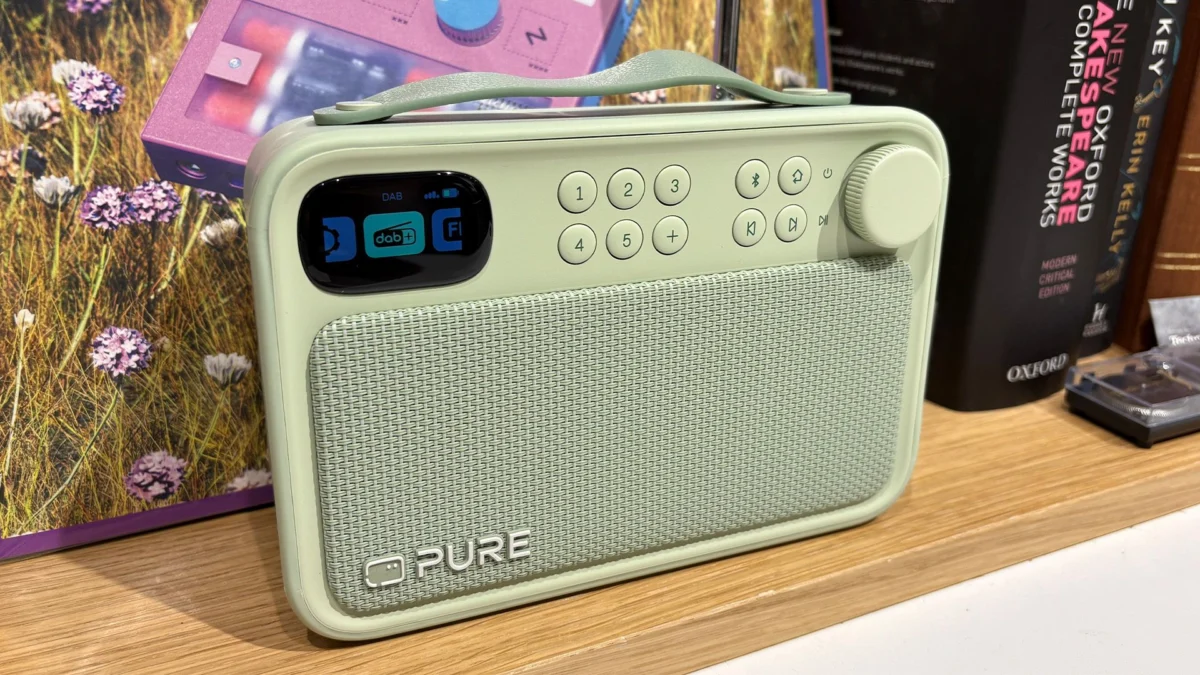
Enter the Pure Bloom, a newly released portable radio priced at £120 / $140 / AU$190. Landing squarely in the mid-tier of Pure’s wireless audio catalog, the Bloom aims to bridge the gap between traditional broadcast listening and contemporary streaming habits. Equipped with DAB, DAB+, FM, and Bluetooth 5.3 connectivity, it offers users a versatile array of listening choices.
However, entering this price bracket means walking straight into the lions’ den. The Bloom faces fierce competition from the reigning five-star What Hi-Fi? Award-winner for the best radio under £100—the Roberts Revival Petite 2, which currently retails around £100 / $120 / AU$196. With a robust plastic chassis, an IPX5 water-resistance rating, and three stylish colorways (Sage, Sand, and Black), the Bloom presents an attractive package for both indoor domestic spaces and outdoor excursions.
Chronology and Market Context: Keeping Pace with Industry Shifts
Founded in 2002, Pure entered the audio market precisely as the digital radio revolution was gathering momentum. Over the past two decades, the company has consistently adapted to shifting consumer demands, evolving from simple digital receivers into creators of sophisticated internet-connected radios.
Yet, the audio industry has recently witnessed a fascinating counter-trend: a collective desire to return to basics. While smart speakers have dominated homes for years, heritage and specialist audio brands—such as Roberts, Ruark Audio, and now Pure—have found sustained success with compact, dedicated radios that focus purely on core wireless functions (DAB+, FM, and Bluetooth) without overcomplicating the user experience with complex multi-room app ecosystems.
The launch of the Pure Bloom represents this philosophy in action. It arrives at a time when consumers are increasingly seeking "digital detox" devices—gadgets that allow them to enjoy music, news, and talk radio without being tethered constantly to a glowing smartphone screen. Evaluated against established titans like the Roberts Revival Petite 2, the Bloom’s market entry signals Pure’s ongoing ambition to capture the hearts and bedside tables of listeners looking for reliable, handsome, and straightforward audio companions.
Supporting Data and Technical Specifications
A deep dive into the engineering and features of the Pure Bloom reveals a thoughtfully designed piece of kit, though it does present a few compromises when weighed against its cheaper rivals.
Technical Specifications Overview:
- Radio Bands: FM, DAB, DAB+
- Network Features: None (No Wi-Fi streaming)
- Bluetooth: Version 5.3 (SBC codec supported)
- Wired Connections: USB-C (charging only; no 3.5mm headphone jack)
- Physical Dimensions: 12.8 x 19 x 7.8 cm (HWD)
- Weight: 1 kg
- Battery Life: Up to 16 hours (approx. 5.5 hours charge time)
- Finishes: Sage, Sand, and Black
Build Quality and Ergonomics
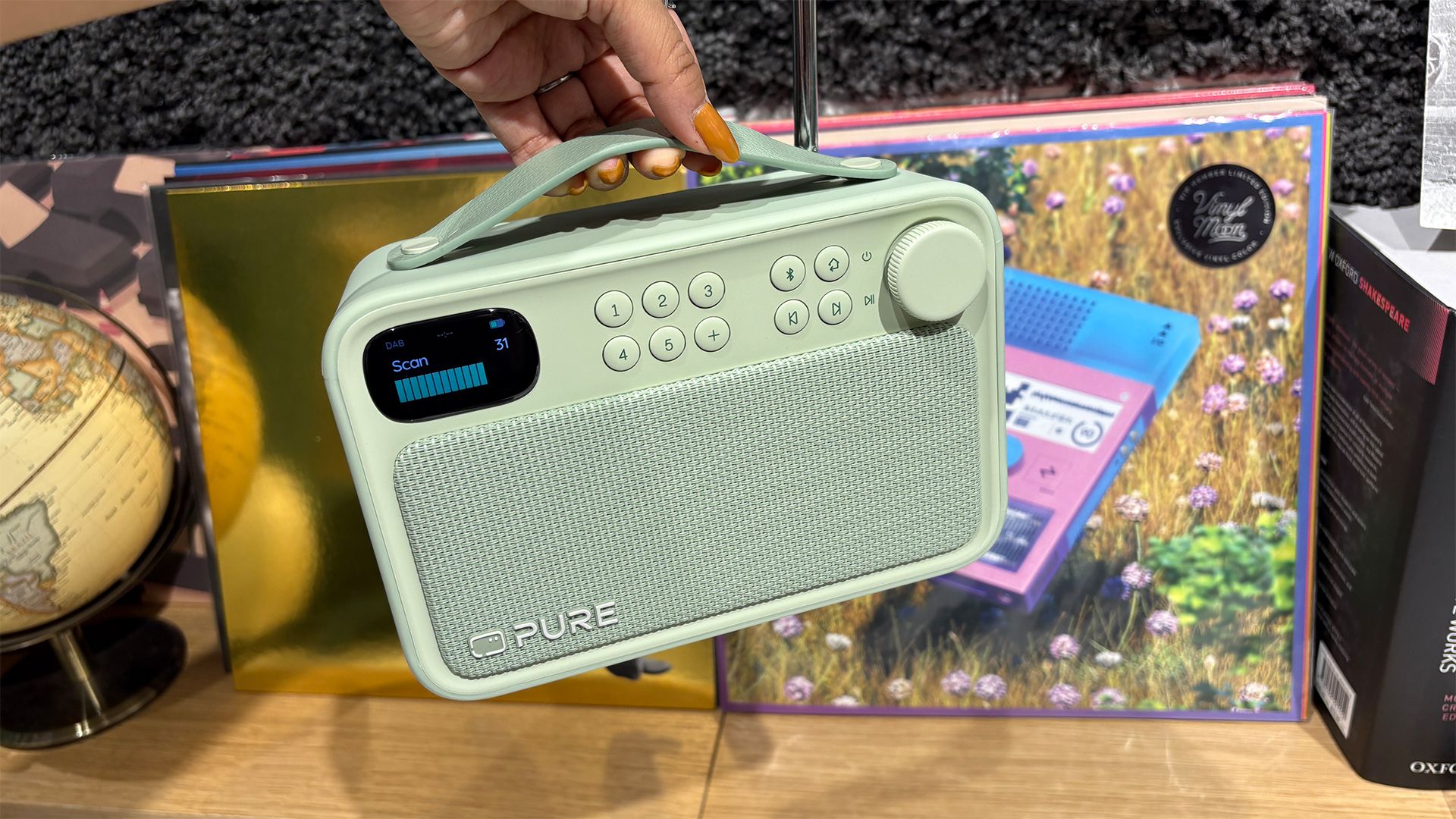
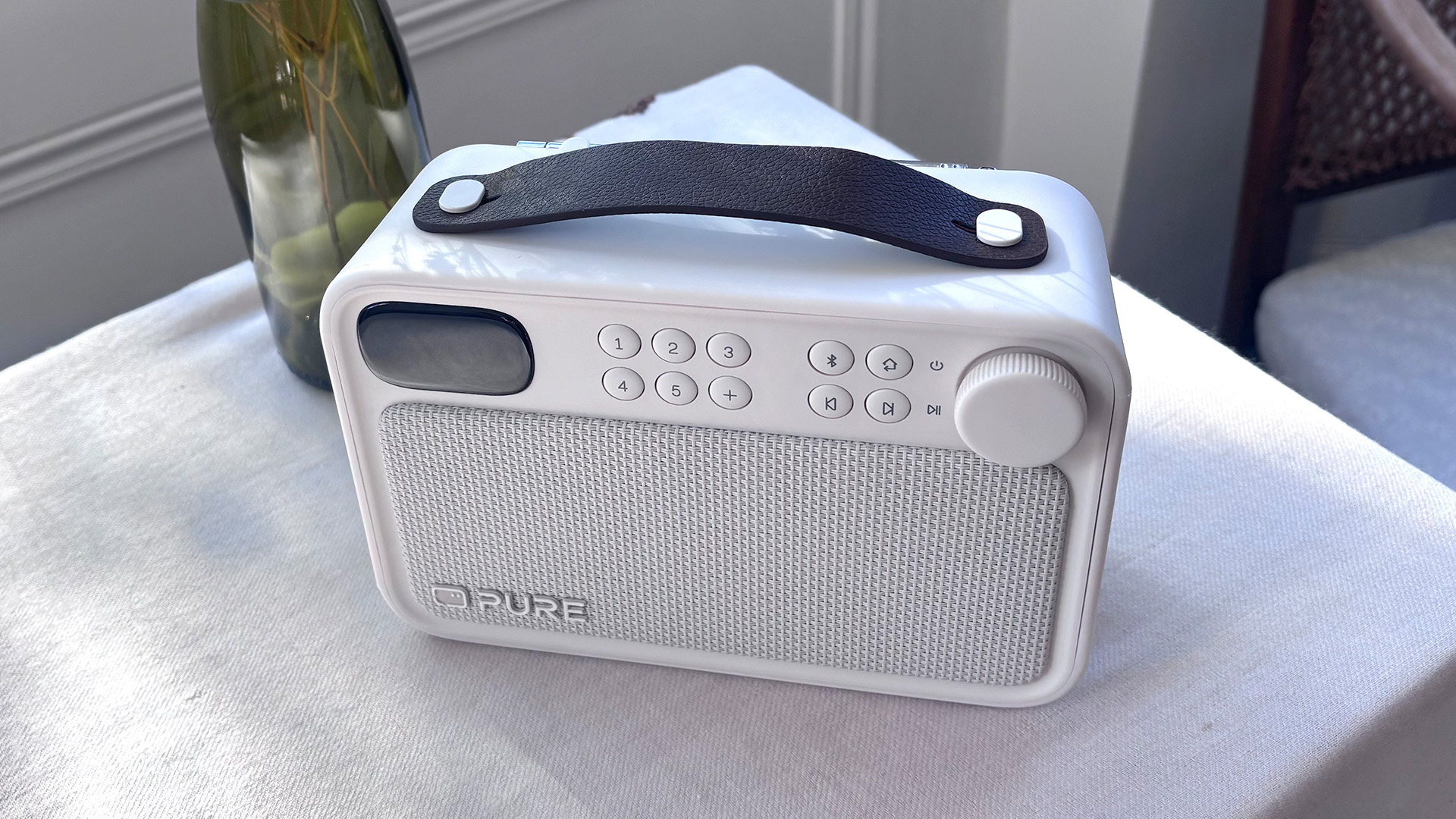
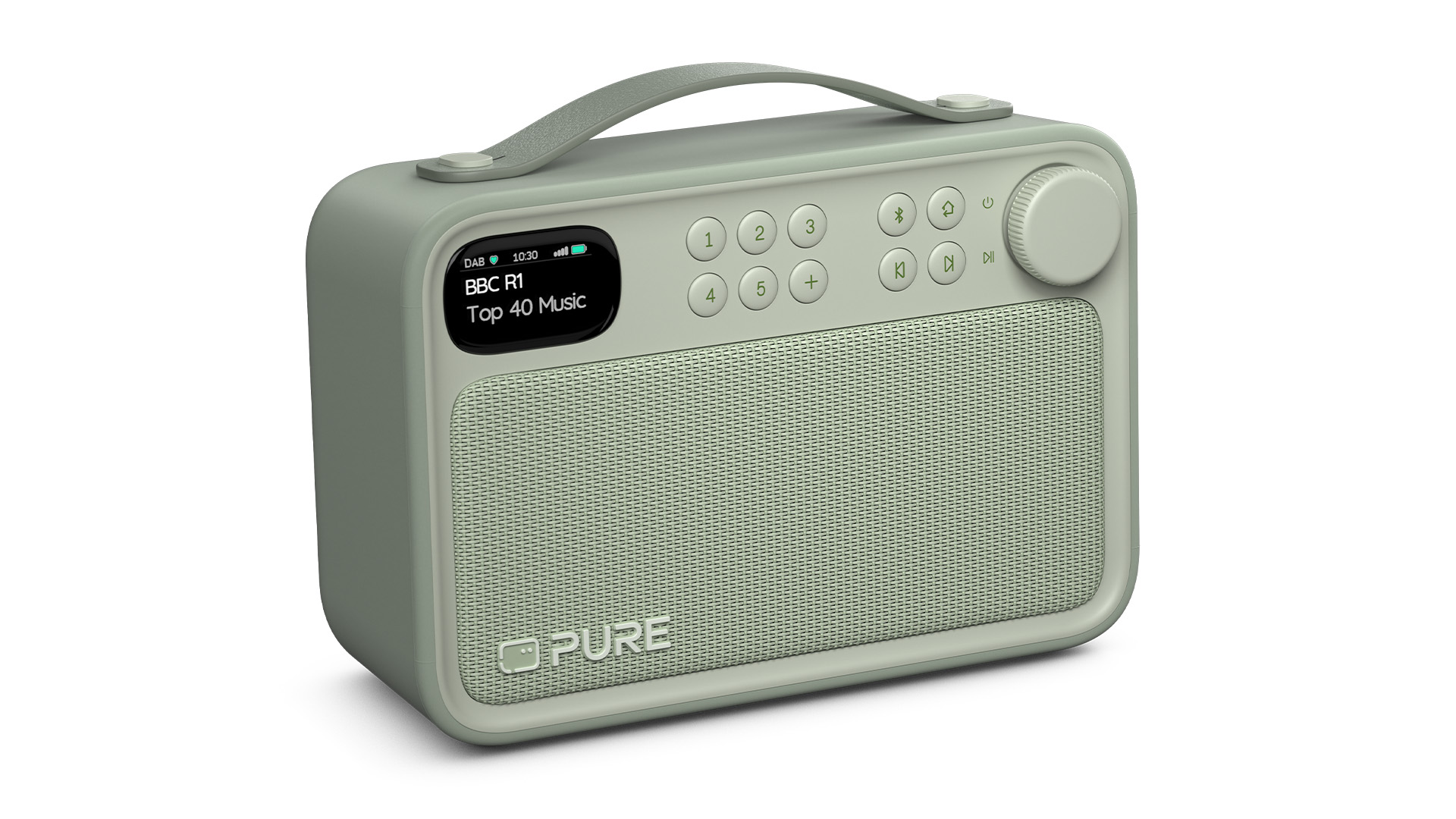
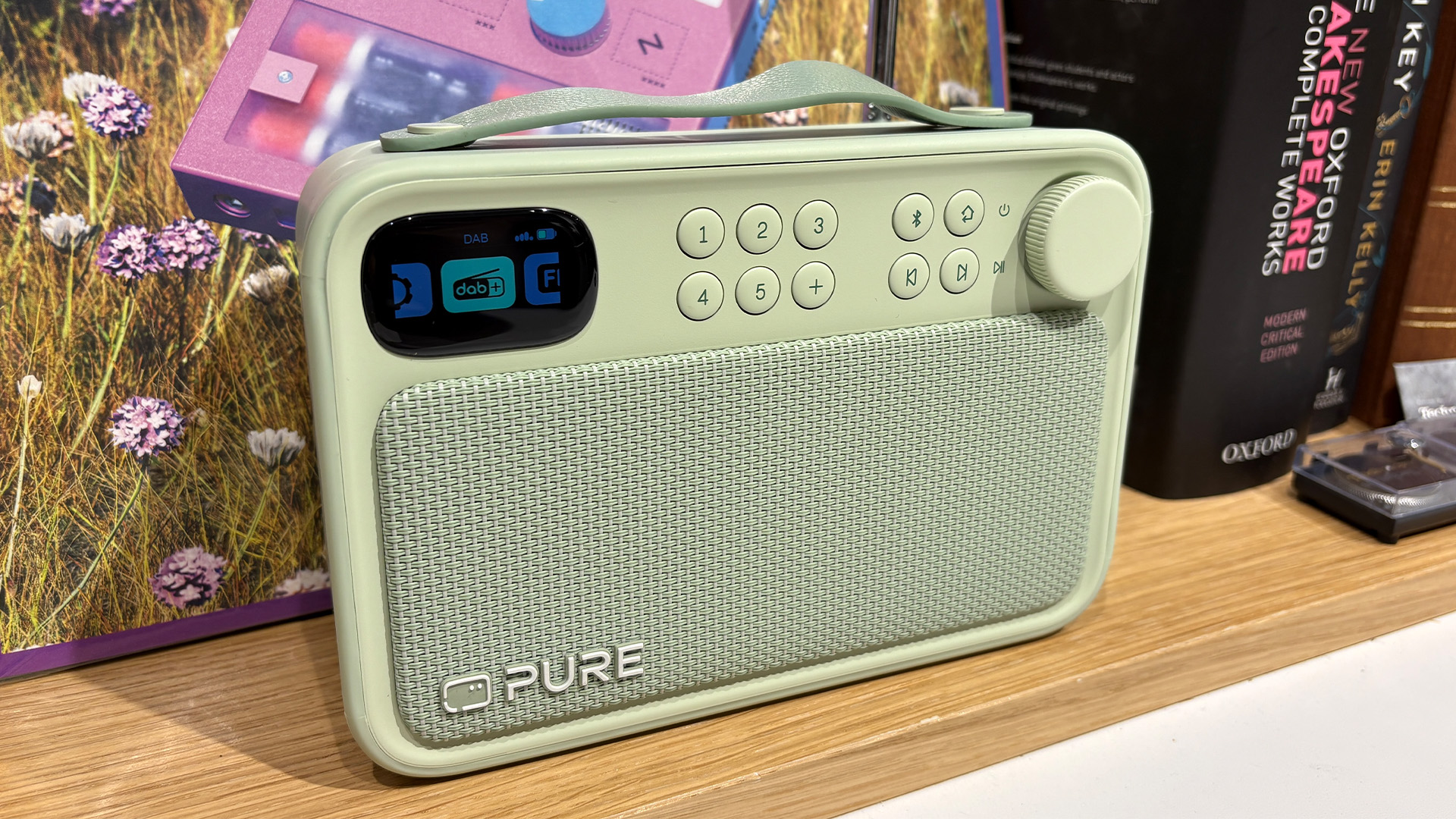
Weighing a modest 1kg and sized slightly smaller than a standard two-slice toaster, the Bloom is exceptionally portable. It features a synthetic leather carrying strap and an IPX5 water-resistance rating, meaning it can easily survive a sudden rain shower on a picnic or splashes by the kitchen sink. Its matte plastic housing resists fingerprints admirably and is available in three understated, sophisticated finishes: Sage, Sand, and Black.
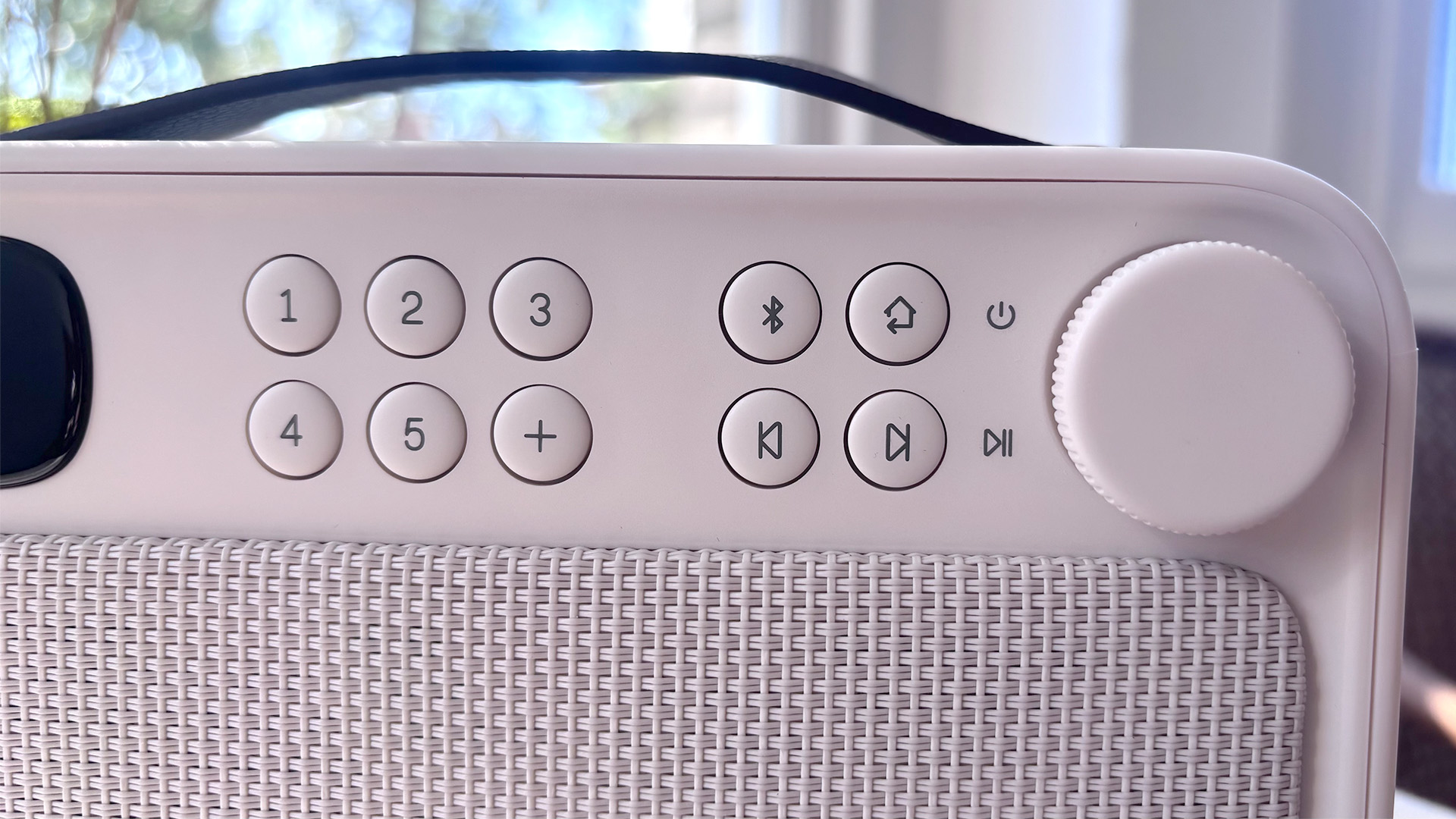
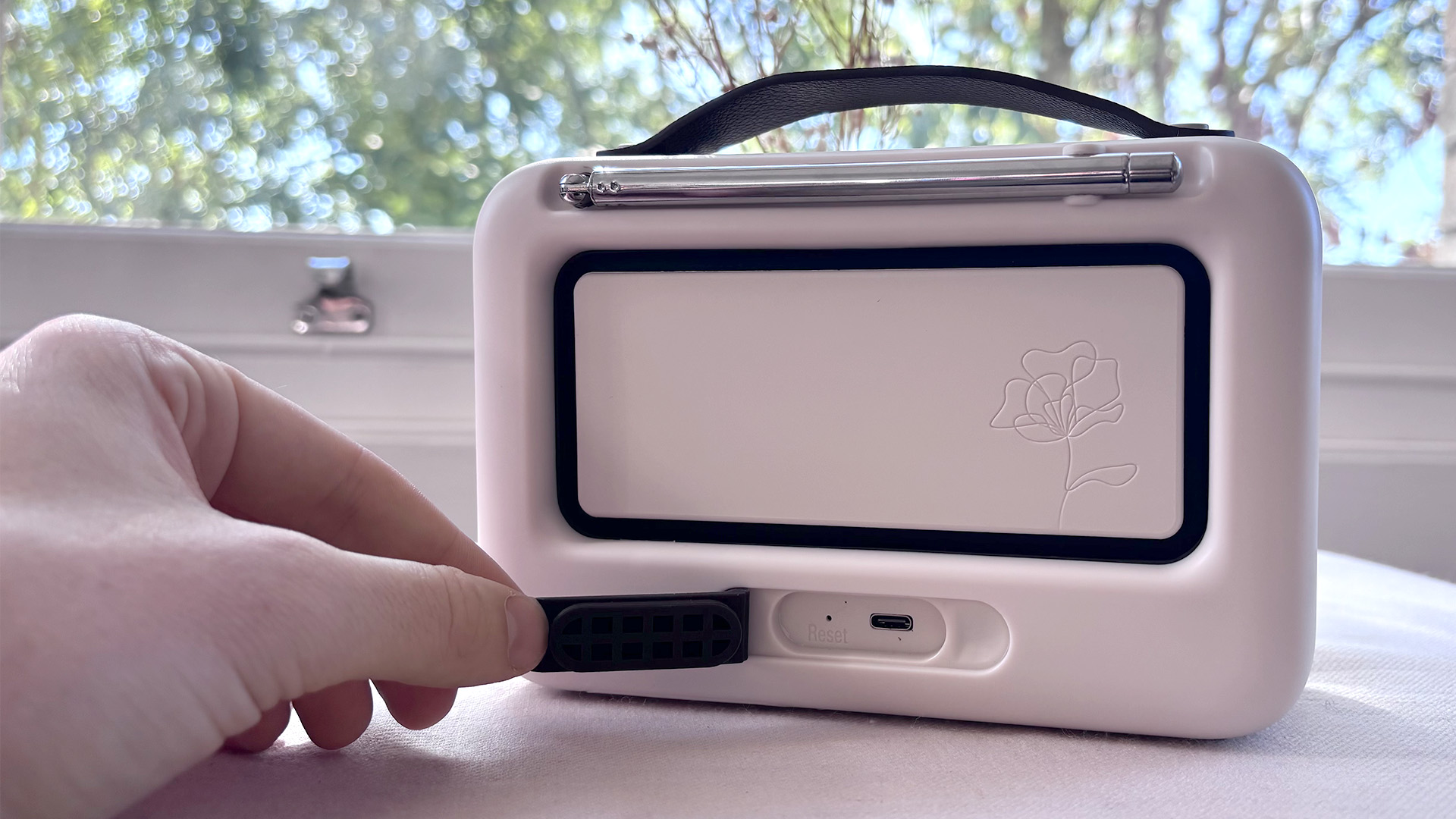
The front face hosts a crisp, legible 37mm color display that presents station names, time, signal strength, and battery percentage clearly. Flanking the screen are five dedicated preset buttons, a quick-access menu button, track-skipping controls, and a tactile volume dial that doubles as a menu navigation tool. On the rear, a passive bass radiator etched with a floral motif sits alongside a telescopic antenna and a heavy silicone flap protecting the USB-C charging port.
Sound Performance and Features
The Bloom features a single 63mm front-firing full-range driver. Out of the box, it offers three default equalizer modes—Dynamic (boosted bass/treble for cross-room or outdoor listening), Comfort (rolled-off high frequencies for close-range relaxation), and Neutral (the most balanced setting for everyday use). A Custom three-band EQ is also available, offering rare mid-range control alongside bass and treble adjustments.
Sonically, the Bloom delivers a surprisingly weighty yet well-controlled low-end given its compact dimensions. Its standout feature is its midrange performance: vocals are rendered with natural warmth and expressive detail, ensuring that both singing voices and radio talk-show hosts cut through with crystal clarity.
Rhythms are snappy, and the unit handles dynamic shifts smoothly across various genres. However, when pushed to complex orchestral pieces—such as Tchaikovsky’s Symphony No. 5 in E Minor—it lacks the absolute air, dramatic impact, and high-mid composure found in top-tier rivals like the Roberts Revival Petite 2.
Official Insights: The Expert Verdict
According to the expert review team at What Hi-Fi?, who rigorously test products in dedicated acoustic rooms, the Pure Bloom earns a strong recommendation for its overall value and execution, even if it falls just short of class-leading sonic supremacy.
"With a competitive feature set and a spirited sound, Pure’s portable radio proves a trusty companion, both in and out of the house."
The review highlights several operational strengths. Notably, the ability to pause Bluetooth streaming or skip tracks directly via the radio’s physical controls—combined with detailed on-screen metadata—actively encourages users to put their mobile phones away.
However, the team did note a couple of notable drawbacks during testing:
- Battery Life: The Bloom offers up to 16 hours of playback on a full charge, which translates to a recharge requirement roughly every two days under heavy use. This trails behind the Roberts Revival Petite 2, which boasts a claimed 20-hour battery life.
- Connectivity Omissions: The complete lack of a 3.5mm headphone jack is a disappointment, particularly for users who prefer private listening late at night.
Implications: Where the Pure Bloom Fits in the Market
The arrival of the Pure Bloom reinforces a broader shift in consumer electronics: the enduring appeal of dedicated, single-purpose audio appliances in an era of hyper-connected smart ecosystems.
For the average consumer, the implications are clear. If you are in the market for a robust, water-resistant portable radio that looks sophisticated on a bookshelf, functions seamlessly without complicated smartphone apps, and delivers a warm, punchy sound for daily talk and music stations, the Bloom is a thoroughly worthy investment. It successfully blends modern Bluetooth convenience with the nostalgic comfort of traditional DAB/FM broadcasting.
However, audio enthusiasts seeking the absolute pinnacle of high-frequency clarity, dynamic drama, and extended battery life at a sub-£100 price point may still find themselves leaning toward established benchmark competitors like the Roberts Revival Petite 2. Nevertheless, Pure has crafted a competent, beautifully styled, and spirited companion that proves there is still plenty of life left in the classic portable radio format.