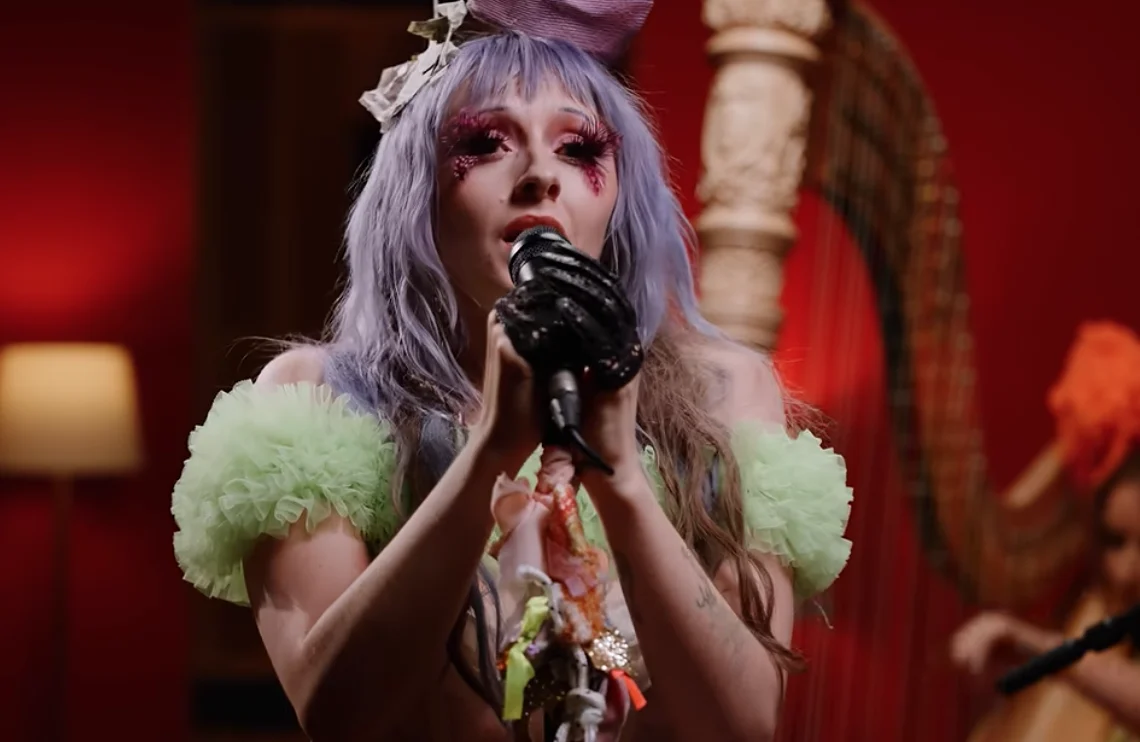
The cultural exchange between established pop icons and the new vanguard of alternative artists has long been a staple of the music industry’s creative evolution. Recently, this tradition reached a poignant milestone when hyperpop provocateur Ashnikko stepped into the legendary triple j studio in Australia. Marking her debut on the iconic Like A Version segment, the artist delivered a haunting, theatrical rendition of Gwen Stefani’s 2004 solo breakout hit, "What You Waiting For?"
The performance was more than just a cover; it was a deeply personal homage to the track that Ashnikko cites as the primary catalyst for her own musical aspirations. By infusing the electropop classic with her signature grit, experimental edge, and a surprising orchestral flourish, Ashnikko bridged two decades of pop evolution, reminding audiences of the enduring power of Stefani’s creative legacy.
The Performance: A Theatrical Reimagining
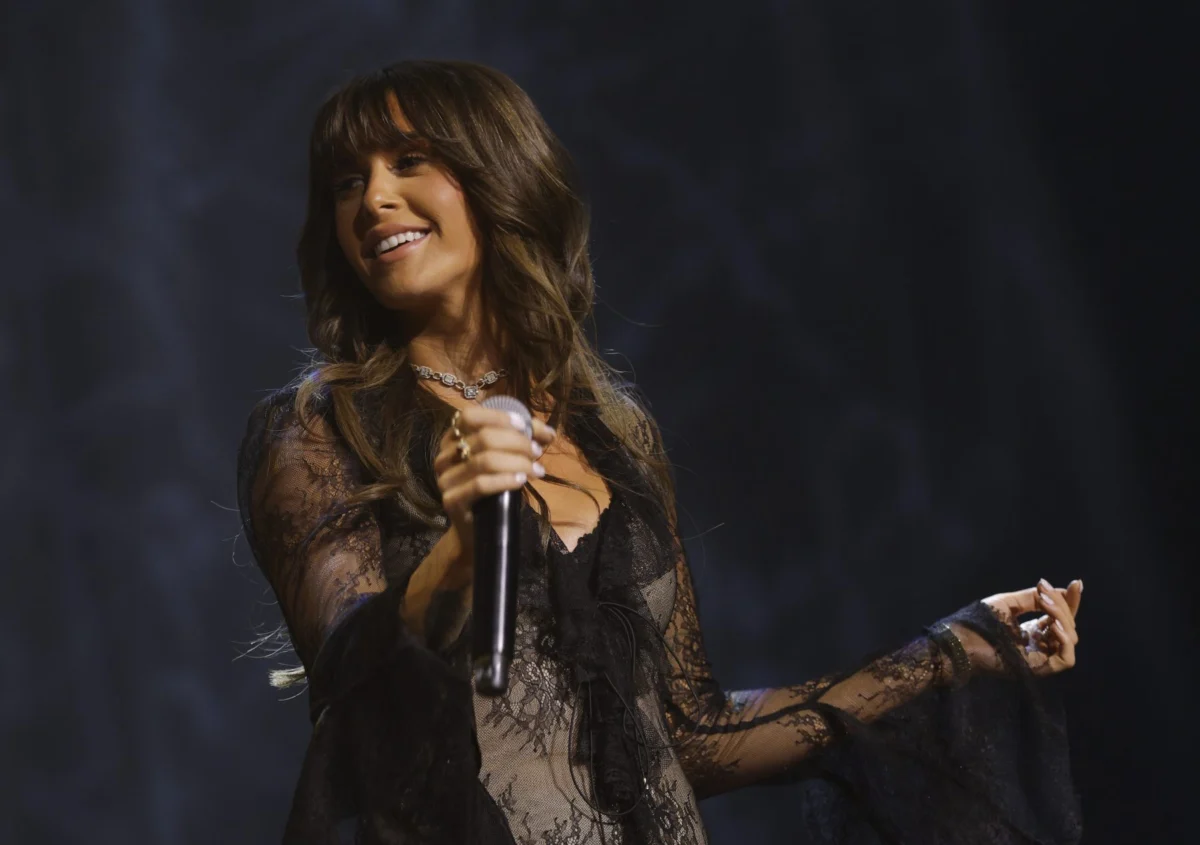
Performing while in the midst of her highly anticipated Australian tour, Ashnikko arrived at the triple j studios prepared to make a statement. Abandoning the sterile, acoustic-heavy tropes often associated with live radio covers, she opted for a full-scale production. Backed by a live band that featured an unexpected, ethereal harpist, the arrangement leaned into the darker, more industrial textures of Ashnikko’s established sound.
The result was a version of "What You Waiting For?" that felt both nostalgic and avant-garde. While the structural integrity of Stefani’s original pop anthem remained intact, the instrumentation felt more aggressive and cinematic, mirroring the genre-blurring aesthetics of Ashnikko’s own discography. Following the cover, she pivoted to her own repertoire, delivering a raw and high-energy performance of her track "Sticky Fingers," further solidifying the contrast between her influences and her own sonic identity.
Chronology: From ‘Love. Angel. Music. Baby.’ to the Modern Era
To understand the significance of this cover, one must examine the timeline of the source material. In 2004, Gwen Stefani, already an international superstar as the frontwoman of the ska-punk institution No Doubt, released her debut solo studio album, Love. Angel. Music. Baby. (L.A.M.B.).
"What You Waiting For?" served as the lead single, a high-octane exploration of creative anxiety and the pressure to succeed post-band hiatus. It was a cultural lightning bolt that reached No. 47 on the Billboard Hot 100. The album went on to become a generational touchstone, spawning massive hits such as "Hollaback Girl"—which earned the distinction of becoming the first digital download to sell one million copies—and "Rich Girl."

Fast-forward to 2019: Ashnikko, a North Carolina-born artist who had relocated to the UK, broke into the mainstream consciousness with her viral TikTok anthem "Stupid." The track’s meteoric rise—eventually earning platinum certification and reaching No. 90 on the Billboard Hot 100—was fueled by the same genre-fluid, unapologetic attitude that defined Stefani’s early solo work. Her 2023 debut studio album, Weedkiller, further cemented her position as a leader of the hyperpop and alternative-rap subcultures, charting on the Billboard 200 and establishing her as a serious creative force.
Supporting Data: The Resonance of a Legacy
The intersection of these two artists is supported by the numbers. Stefani, a four-time Grammy winner, transitioned from the alternative rock scene of the 90s into a solo pop powerhouse, a pivot that provided a roadmap for artists like Ashnikko to follow.
- Gwen Stefani (2004-2005): L.A.M.B. peaked at No. 7 on the Billboard 200. "Hollaback Girl" dominated the Billboard Hot 100 at No. 1, becoming a defining pop culture moment of the mid-2000s.
- Ashnikko (2019-2023): With "Stupid" achieving viral status, Ashnikko proved that the digital landscape could sustain long-term career growth. Her debut album Weedkiller showcased a maturation in sound, moving beyond the "viral hit" label into a cohesive, narrative-driven project that resonated with global charts.
The inclusion of a harpist in the triple j performance is a testament to the sophistication of modern alternative production. Where the 2004 original relied on sharp, staccato synthesizers to convey urgency, the 2026 iteration used stringed arrangements to add a layer of dark, gothic elegance, proving that pop classics can be reinterpreted to suit new emotional landscapes.
Official Responses and Behind-the-Scenes Insights
In an interview with triple j hosts Abby Butler and Tyrone Pynor following the performance, Ashnikko was candid about the emotional weight of the song. "It was the song of my childhood," she admitted, emphasizing that it was the specific track that prompted her to transition from an enthusiastic listener to an active creator.
She elaborated that the sonic landscape of L.A.M.B. served as a foundational template for her own creative experimentation. "It gave me permission to be loud, to be weird, and to be unapologetic," she noted. Beyond the music, the conversation took a whimsical turn as the artist discussed her passion for bird watching and the technical intricacies of her stage choreography. These insights revealed a multifaceted artist—one who balances intense, high-concept musical performances with grounded, personal hobbies.
The Broader Implications: Why Covers Still Matter
The Like A Version segment on triple j has long been regarded as an Australian institution, providing a platform for artists to strip away the artifice of their studio recordings and reveal their musical roots. By selecting "What You Waiting For?"—a song that is notoriously difficult to cover due to its rapid-fire vocal delivery and complex production—Ashnikko signaled her confidence and her respect for the lineage of pop music.
The implications of this performance are threefold:
- Validation of Hyperpop as a Legacy Genre: By placing her own style alongside a polished pop standard, Ashnikko proves that the hyperpop movement is not merely a passing digital trend but a legitimate evolution of the pop-alternative crossover that began in the early 2000s.
- Generational Continuity: The performance highlights how artists from different eras influence one another. Stefani’s transition from No Doubt to solo stardom paved the way for the "genre-blurring" artists of today. Ashnikko’s homage ensures that the influence of L.A.M.B. continues to circulate among younger audiences.
- The Art of the Live Radio Performance: In an era dominated by streaming and perfectly curated studio tracks, raw, live performances remain essential. They demonstrate an artist’s technical prowess and their ability to interpret music through a unique, personalized lens.
Conclusion: A New Chapter for Ashnikko
As Ashnikko continues her Australian tour, the success of her triple j debut serves as a pivotal moment in her career trajectory. It is a rare instance where an artist successfully captures the spirit of a legendary song while simultaneously asserting their own distinct identity.
The convergence of the harp-led production, the candid conversation regarding her artistic influences, and the sheer energy of the performance has left fans and critics alike buzzing. It is a reminder that the best music—whether it is a decade-old pop anthem or a modern alternative experiment—is defined not by its genre, but by the raw, infectious energy of the artist behind the microphone.
For those who missed the live broadcast, the session remains a high-water mark for this year’s Like A Version series, solidifying the idea that for Ashnikko, the question "What you waiting for?" has been answered with a resounding and creative "everything."