TALLAHASSEE, FL — In the high-stakes environment of collegiate athletics, the "home-field advantage" is no longer defined solely by the quality of the turf or the talent on the roster. It is increasingly shaped by the immersive experience provided to fans and the technical reliability afforded to staff. Florida State University (FSU), a titan of the Atlantic Coast Conference (ACC), has recently taken a significant leap forward in this arena, completing a comprehensive overhaul of the audio systems across three of its premier sports venues.
The project, spearheaded by the Duluth, Georgia-based systems integrator Formetco, represents a strategic move to standardize high-fidelity sound, improve ease-of-use for student-athletes, and ensure long-term scalability for the university’s growing digital infrastructure.
The Genesis of the Upgrade: Addressing the "Clarity Gap"
For large-scale university campuses, audio infrastructure often grows organically—and haphazardly—over several decades. Legacy systems, characterized by disparate analog components, often lead to inconsistent audio coverage, phase cancellation, and a lack of modern connectivity.
Wes McCall, Assistant Athletics Director of Information Technology at FSU, recognized that the university’s existing audio environment was failing to meet the evolving demands of modern sports production. Having worked as an audio engineer in a past professional life, McCall possessed a unique perspective on the intersection of technical performance and user-friendly operation.
"For me, as an audio engineer in a previous life, clarity is super important," McCall explained during a recent site review. "Being able to hear what you’re supposed to in every single part of the venue is something that we’ve never had in a lot of our spaces. You want the announcements to be crisp, the walk-up music to be punchy, and the overall atmosphere to be professional. We were dealing with systems that simply weren’t built for the current standard of production."
When FSU initiated the tender process in 2025, they were not looking for a temporary fix. They required a "future-proof" architecture—a modular ecosystem that could handle the increasing data loads of Dante networking while remaining simple enough for coaching staff to operate without a degree in sound engineering.
Chronology: A Multi-Phase Rollout
The collaboration between FSU and Formetco did not happen overnight. It was a carefully sequenced operation designed to minimize disruption to active athletic seasons.
Phase 1: The Design and Procurement (2025)
Following the successful bid, Formetco initiated a deep-dive analysis of FSU’s acoustics. Working alongside engineering teams from Allen & Heath, the integrator mapped out the specific coverage needs for the baseball, softball, and lacrosse stadiums. The goal was to establish a unified "audio language" across the campus, utilizing Allen & Heath’s proprietary hardware to ensure that if a technician learned the system in one venue, they could immediately operate any other facility on campus.
Phase 2: Implementation at Diamond Sports (Early 2026)
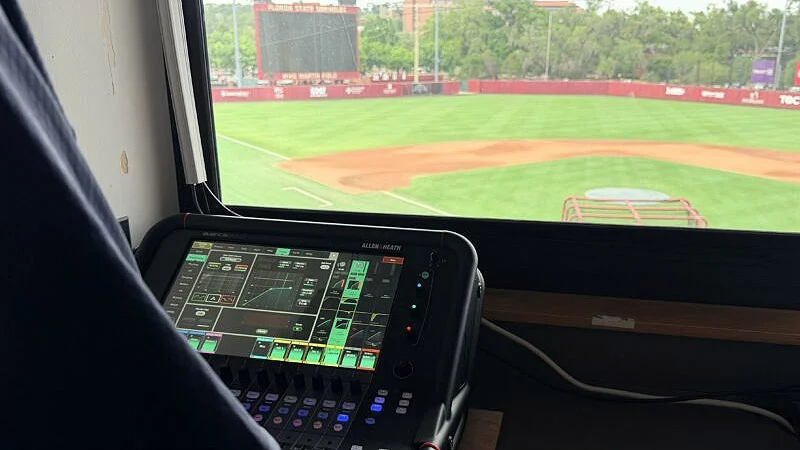
The baseball and softball stadiums were the first to receive the overhaul. These venues presented unique challenges due to their expansive open-air designs and the need for distinct audio "zones" that could handle everything from pre-game hype music to emergency public address announcements. By mid-2026, the installation of Avantis Solo consoles and DT168 expanders was complete.
Phase 3: The Lacrosse Complex (Mid-2026)
Recognizing the different spatial dynamics of the lacrosse complex, the team shifted to a matrix-based approach, installing an AHM-16 processor. This allowed for centralized control and automated routing, ensuring that the sound profile remained consistent regardless of the crowd size.
Phase 4: Future Expansion (Upcoming)
The project is far from over. The next major milestone is scheduled for the university’s volleyball facilities. This phase will introduce the Qu-5D digital audio mixer, a move designed to further integrate the university’s growing Dante network into the indoor arena environment.
Technical Specifications: Power, Flexibility, and Control
The hardware selection was driven by a need for compact footprints and robust I/O capabilities.
The Avantis Solo and DT168
The choice of the Avantis Solo console for the baseball and softball stadiums was a deliberate decision to balance power with accessibility. The Solo offers 64 channels of processing in a footprint small enough for a portable rack, yet powerful enough to handle complex routing.
The integration of the DT168 expander serves as the "connective tissue" of the system. By providing 16 additional microphone preamps and 8 line outputs, the DT168 allows FSU to expand their input capability at the field level, reducing cable runs and potential signal loss. Because these units are Dante-enabled, the latency is negligible, ensuring that audio remains perfectly synchronized with video displays and LED scoreboards.
The AHM-16 Matrix Architecture
At the lacrosse complex, the AHM-16 matrix processor functions as the "brain." Unlike a traditional mixer, the AHM-16 is designed for sophisticated zone management. It handles background music, paging, and venue-specific signal processing with high-level automation. The inclusion of the IP8 remote controller—featuring 8 motorized faders and 23 assignable SoftKeys—gives operators the ability to perform complex tasks with the touch of a button.
Official Perspectives: The "Nitty-Gritty" and the "Plug-and-Play"
The success of an AV project in an academic setting is measured by how well it serves two distinct audiences: the technical staff who demand granular control and the end-users (coaches and athletes) who just want it to work.
McCall highlights this dual-nature success: "The teams were able to come in and turn on the systems, plug in an iPhone, plug in a laptop, and play music for their batting practice or their workouts. Just that simplicity and ease-of-use is something that we were looking for on the control side, which we didn’t have before."
However, for the technical team, the system offers an unprecedented level of depth. "For somebody who has a technical background, I like to be in the nitty-gritty of everything," McCall adds. "It’s got those integral details I want to be available. I can bring out that tiny bit of EQ that’s causing harsh feedback in one spot. We finally have the tools to surgically address the acoustic issues that have plagued these stadiums for years."
Implications for Collegiate Athletics
The FSU project serves as a case study for how universities can modernize their infrastructure without the need for a total "rip-and-replace" of their physical venues. By investing in scalable digital audio networks, FSU has positioned itself to keep pace with the rapidly evolving expectations of the "stadium experience."
1. Standardization as an Operational Asset
By choosing a singular ecosystem (Allen & Heath), FSU reduces the "learning curve" for student workers and IT staff. Standardizing the interface across different sports means that cross-training is easier and troubleshooting becomes more efficient.
2. The Dante Advantage
The shift toward Dante-equipped hardware is a critical trend in the industry. By moving audio over an IP network, FSU has future-proofed its facilities. As the university moves toward more integrated AV-over-IP workflows, these systems will be ready to bridge with video, lighting, and security systems.
3. Sustainability and Reliability
Modern digital mixers, like the upcoming Qu-5D for the volleyball arena, are more energy-efficient and reliable than the aging analog systems they replace. They provide diagnostic tools that allow technicians to identify a failing cable or a clipping signal before it becomes a problem during a game.
Conclusion: Setting the Standard
As Florida State University continues to refine its athletic facilities, the partnership with Formetco stands as a testament to the importance of thoughtful, professional-grade AV design. By prioritizing both the technical precision required by engineers and the intuitive simplicity required by coaches, FSU has successfully created a sound environment that elevates the game-day experience.
The upcoming integration at the volleyball facilities will only solidify this progress, marking another chapter in the university’s commitment to excellence—not just on the field, but in the unseen, essential infrastructure that keeps the crowd roaring and the game flowing. As the technology continues to advance, FSU’s decision to build on a flexible, Dante-based foundation ensures that they are ready for whatever the next generation of collegiate athletics demands.