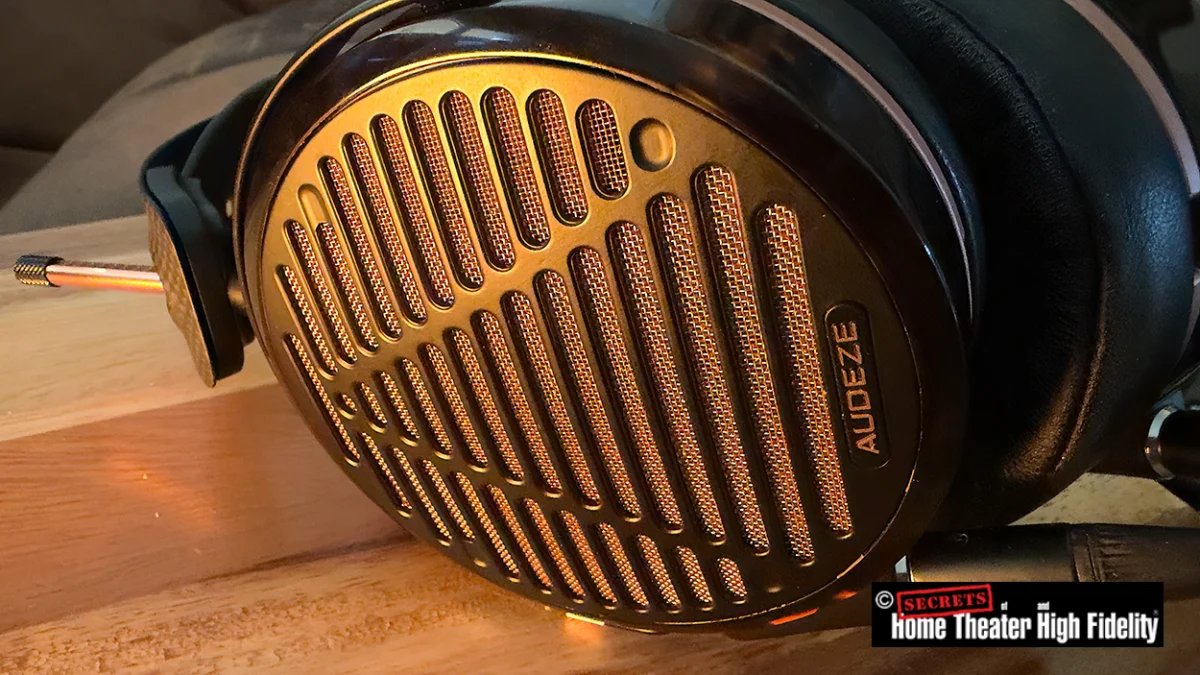
In the rapidly evolving landscape of high-fidelity audio, we are currently witnessing what can only be described as a "headphone renaissance." As the market floods with options ranging from budget-friendly entry-level models to ultra-premium, reference-grade equipment, the discerning audiophile is faced with a paradox of choice. Amidst this saturation, Audeze—a brand long synonymous with cutting-edge planar magnetic technology—has released the LCD-5s. Representing a significant evolution in their flagship lineup, the LCD-5s aim to bridge the gap between clinical precision and emotional musicality. This review explores whether this latest offering earns its place at the pinnacle of personal audio.
Main Facts: Engineering the Soundscape
The Audeze LCD-5s are not merely an iterative update; they represent a fundamental rethink of the company’s approach to driver efficiency and structural integrity. At their core lies a 90mm planar magnetic transducer, a technology for which Audeze is world-renowned. Unlike traditional dynamic drivers that rely on a voice coil to move a cone, the LCD-5s utilize an ultra-thin diaphragm suspended within a sophisticated magnetic field.

The technical specifications are indicative of a flagship product:
- Transducer Type: 90mm Planar Magnetic
- Frequency Response: 5 Hz – 50 kHz
- Sensitivity: 90 dB/1mW
- Power Requirements: Recommended >500mW; Minimum >100mW
- Construction: Carbon fiber, magnesium, genuine leather, and polished polymer acetate
Audeze has integrated their proprietary "SLAM" (air pressure distribution) technology, originally developed for their electrostatic CRBN2 line, to bolster bass reinforcement. By optimizing the airflow and resonance within the earcups, Audeze has achieved a level of low-frequency control that is both substantial and remarkably clean.

Chronology: The Evolution of the LCD Series
To understand the significance of the LCD-5s, one must look back at the trajectory of the Audeze product line. Since their inception, the company has consistently pushed the boundaries of planar magnetic performance. Early iterations established the "Audeze house sound"—a signature characterized by immense, authoritative bass and a smooth, thick midrange.
Over the years, as consumer demands shifted toward greater comfort and more neutral, analytical profiles, Audeze began experimenting with chassis materials to reduce weight, which had historically been a point of criticism for their heavier models. The LCD-5s serve as a "return to form" in a nuanced way: they retain the warmth that audiophiles associate with the brand’s golden era, but they integrate the transient speed and lightweight construction required by modern, critical listeners. This release marks a departure from the "heavier-is-better" philosophy, proving that Audeze is finally prioritizing long-term comfort alongside sonic performance.

Supporting Data: Performance Under Pressure
During the evaluation process, the LCD-5s were tested across a variety of amplification stages, including an Anthem AVM-90 pre-amp processor, a Schiit Magni Unity headphone amp, and the FiiO M33 R2R digital audio player.
Transient Response and Dynamic Range
One of the most immediate impressions of the LCD-5s is their exemplary transient response. When listening to high-dynamic-range recordings, such as the Tricycle album, the headphones revealed nuances in percussion—specifically the delicate brushwork on cymbals—that are often lost in lesser transducers. The speed of the 90mm planar driver allows for an instantaneous attack and decay, ensuring that complex passages remain distinct and un-smeared.

Soundstage and Imaging
In a comparison with reference-grade dynamic headphones (such as the Focal Clear MG), the LCD-5s offer a distinct spatial experience. While the Focal may hold a slight edge in surgical imaging precision, the Audeze excels in the sheer realism of the soundstage. On the 96/24 recording of John Rutter’s Visions/Requiem, the LCD-5s successfully rendered the acoustics of All Hallows Church, placing the listener in the space rather than merely presenting a flat stereo image.
Midrange and High-Frequency Tuning
Audeze has made a deliberate, and arguably successful, strategic choice in the tuning of the LCD-5s. The midrange is slightly elevated, which serves to bring vocals and acoustic instruments to the forefront of the mix with startling emotional clarity. The high frequencies, rather than being pushed to the point of fatigue or "sheen," are smoothed out to provide a natural, unforced presentation. This makes the LCD-5s an exceptionally "musical" headphone—one that encourages multi-hour listening sessions without the listener experiencing the auditory fatigue often associated with "bright" or overly analytical gear.

Official Manufacturer Perspectives
Audeze’s marketing narrative for the LCD-5s centers on the integration of their thinnest-ever diaphragm materials and a revised chassis design. By minimizing internal reflections within the earcups, the company claims to have achieved a new standard of sonic accuracy. The inclusion of directionally tuned, high-purity OCC copper cables is a testament to the brand’s philosophy that the signal path must be optimized at every point of contact.
Furthermore, the physical build reflects a shift toward luxury and durability. The combination of carbon fiber and magnesium provides a structural rigidity that belies the headphones’ manageable weight. The attention to detail extends even to the unboxing experience, which includes a professional-grade aluminum travel case and white gloves—a signal that these headphones are intended to be treated as high-precision instruments.

Implications: The Value Proposition of the Ultra-High-End
Perhaps the most contentious aspect of the LCD-5s is their price point. When positioned against high-quality mid-range headphones—or even lower-priced reference models—the question of "value" becomes difficult to quantify.
The analogy of the 4K video experience is apt. A standard Blu-ray (a mid-range headphone) provides a stellar, satisfying experience that most users find more than adequate. However, the 4K presentation (the LCD-5s) offers that final 5-10% of resolution, textural detail, and emotional "presence" that elevates the experience from mere listening to a profound immersion.

For the professional mastering engineer or the uncompromising audiophile, this incremental gain is not just significant—it is the entire point. The LCD-5s do not attempt to be a "value" product. Instead, they represent the apex of a specific design philosophy. They are built for those who have already explored the mid-fi landscape and are now seeking that specific, elusive quality of sound that only comes with top-tier engineering.
Conclusion: A Masterclass in Refinement
The Audeze LCD-5s represent a triumph of acoustic design. By balancing the warmth of their heritage with the speed and comfort demanded by today’s market, Audeze has created a flagship that feels both nostalgic and futuristic. While their price will naturally limit their audience, those who invest in them will find a product that respects the source material, renders vocals with unmatched intimacy, and handles complex orchestral passages with effortless grace.

In a world of rapidly cycling technology, the LCD-5s feel like a destination product—a piece of hardware that one could confidently keep in their collection for a decade or more. For the critical listener who demands the best and is willing to pay for the privilege of experiencing it, the Audeze LCD-5s are, quite simply, an essential addition to the modern high-end audio arsenal.