In a move that promises to redefine the landscape of industrial automation and artificial intelligence, OMNIVISION, a global leader in semiconductor solutions, has officially announced the launch of the OG05D. This groundbreaking 5-megapixel (MP) global shutter (GS) CMOS image sensor represents the industry’s first 2.2-micron (µm) sensor to integrate High Dynamic Range (HDR) capabilities into a architecture purpose-built for the rigorous demands of industrial machine vision.
As the global manufacturing sector pivots toward "Industry 4.0"—a landscape defined by autonomous robotics, high-speed factory automation, and intelligent barcode scanning—the demand for sensors that can process visual data with human-like precision and superhuman speed has never been higher. The OG05D arrives as a direct response to these technical bottlenecks, offering a suite of proprietary technologies that prioritize efficiency, compact form factors, and superior imaging performance in challenging light conditions.
Main Facts: Engineering the Future of Sight
The OG05D is not merely an incremental update; it is a fundamental leap forward in image sensor architecture. By utilizing a 2.2-micron pixel size, OMNIVISION has managed to pack 5 megapixels of resolution into a 1/2.5-inch optical format. The sensor’s footprint is 30% smaller than its predecessors, a critical design choice that facilitates the development of more compact AI cameras and humanoid robotic interfaces.
Technical Pillars of the OG05D
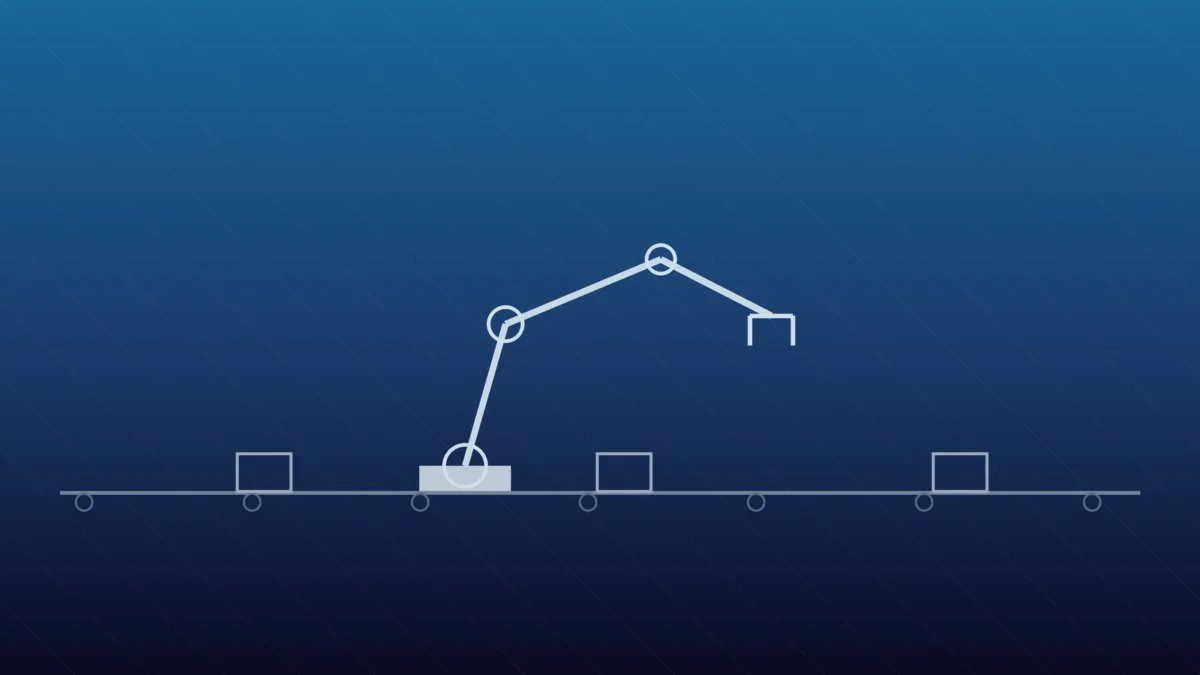
- High-Speed Capture: Operating at a maximum output of 146 frames per second (fps) in linear mode, the OG05D is 143% faster than previous generations. This velocity is vital for high-speed conveyor belts and fast-moving robotic appendages where motion blur can lead to catastrophic errors.
- Single-Exposure HDR: Unlike traditional sensors that require multiple exposures to capture a wide dynamic range—a process that often introduces "ghosting" or motion artifacts—the OG05D utilizes advanced single-exposure HDR technology. This ensures that the image remains crisp, even when a robot is navigating environments with extreme fluctuations in light, such as a warehouse with both direct sunlight and deep, shadowed corners.
- Nyxel® Technology: OMNIVISION’s proprietary Nyxel® near-infrared (NIR) technology allows the sensor to "see" in low-light and near-dark conditions with exceptional quantum efficiency (QE). This is a game-changer for night-vision-capable industrial scanners and outdoor-operating autonomous vehicles.
- Stacked BSI Design: The sensor utilizes a backside-illuminated (BSI) stacked architecture, which separates the imaging array from the logic circuitry. This allows for higher fill factors, lower noise, and greater power efficiency, all within an extremely condensed physical profile.
Chronology: The Evolution of Industrial Vision
The journey to the OG05D is rooted in OMNIVISION’s long-standing strategy of modular innovation. For the past decade, the industry has wrestled with the "Triple Constraint" of machine vision: the need for high resolution, high speed, and low power consumption.
The Developmental Arc
- Early Foundations (2015–2018): OMNIVISION focused on refining BSI technology to increase light sensitivity in standard mobile and surveillance sensors. During this phase, the company began standardizing its Nyxel® NIR architecture, recognizing that industrial applications would eventually require vision systems capable of functioning outside the visible light spectrum.
- The Shift to Global Shutter (2019–2021): The industry recognized that rolling shutter sensors—which capture images line-by-line—were inadequate for high-speed industrial applications. OMNIVISION accelerated the development of its Global Shutter (GS) portfolio, ensuring all pixels capture light simultaneously to eliminate "jello effects."
- The Integration Phase (2022–2023): The company pivoted toward merging HDR, GS, and NIR into a single die. The OG05D is the culmination of this convergence. By integrating Dual Conversion Gain (DCG™) technology, OMNIVISION successfully addressed the noise floor issues that had previously plagued small-pixel high-resolution sensors.
- The Launch (2024): The official unveiling of the OG05D marks the transition from prototype to commercial availability, signaling that the supply chain is now prepared to support the next generation of compact AI-driven robotic trainers.
Supporting Data: Why 2.2 Microns Matters
To understand the impact of the OG05D, one must look at the math behind the silicon. In the world of imaging, smaller pixels generally result in lower sensitivity and higher noise. However, by employing a 2.2-micron pixel architecture combined with stacked BSI, OMNIVISION has bypassed the traditional trade-offs associated with pixel shrinking.
Performance Metrics
- Throughput Advantage: The 146 fps capability is a significant jump from previous benchmarks (typically hovering around 60–90 fps). For an AI system analyzing a barcode or a component defect, this extra temporal resolution allows the system to make decisions in sub-millisecond intervals.
- Power Consumption: As industrial devices move toward battery-powered, untethered robotic units, power efficiency becomes as important as resolution. The OG05D’s low-power consumption design is engineered to extend the operational life of edge-AI devices, reducing the thermal footprint of the hardware and allowing for fanless, sealed industrial housings.
- NIR Quantum Efficiency: The integration of Nyxel® technology boosts NIR sensitivity significantly. In industrial settings where IR lighting is used to illuminate scenes without blinding human workers, the OG05D captures more signal with less illumination power, further reducing the overall energy budget of the system.
Official Responses and Strategic Vision
The release of the OG05D is a strategic signal to the market. OMNIVISION is positioning itself not just as a component supplier, but as an enabler of the "Humanoid Robotics" era.
Kelly Yan, Staff Product Marketing Manager at OMNIVISION, emphasized the user-centric nature of this development:
"The rapid growth of industrial machine vision and robotics is driving demand for image sensors specifically designed for these emerging applications. Our new OG05D sensor delivers the ideal combination of compact size, high-speed imaging, excellent HDR performance and industry-leading low power consumption, enabling customers to build smaller, more capable and power-efficient industrial vision systems."
This sentiment reflects a broader industry consensus: the future of automation is not in massive, fixed-location industrial arms, but in agile, mobile, and intelligent robots that can operate in dynamic, human-occupied environments. By providing the "eyes" for these systems, OMNIVISION is effectively lowering the barrier to entry for developers who are building the next wave of factory assistants.
Implications: A New Era for Automation and AI
The launch of the OG05D has profound implications for several key industries.
1. The Rise of Humanoid Robotics
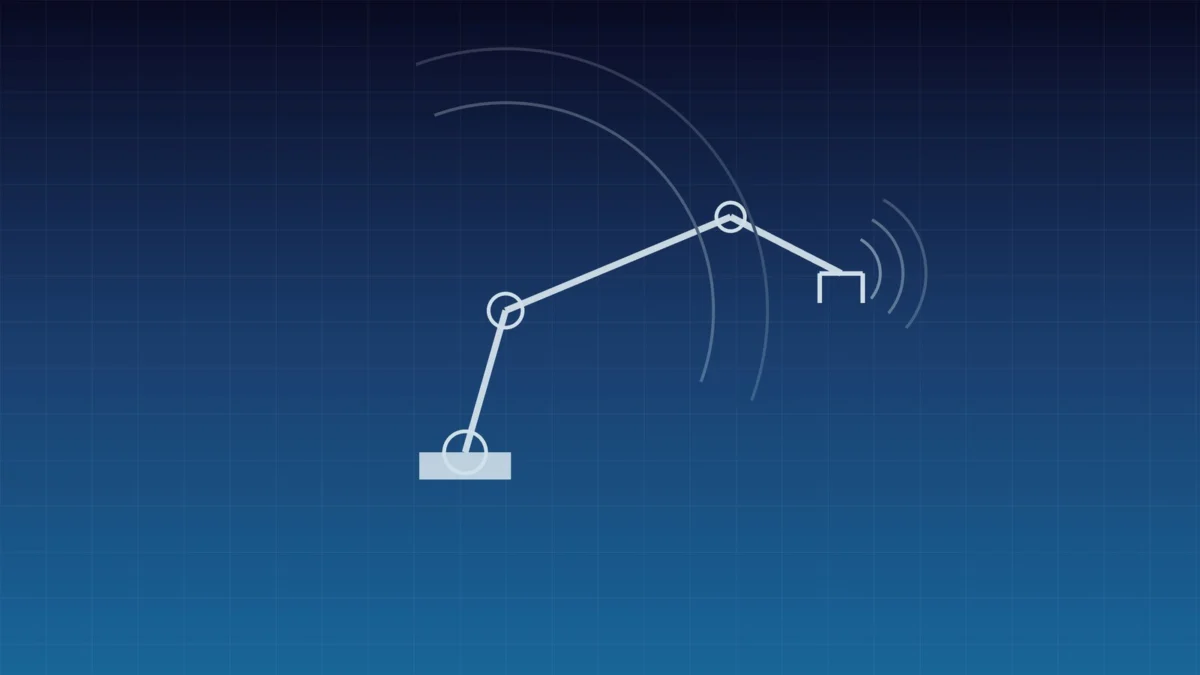
Humanoid robotics requires spatial awareness that mirrors human vision. Because these robots often operate in spaces designed for humans, they require sensors that can handle rapid movement and changing light conditions. The OG05D’s ability to process high-speed, high-dynamic-range data allows humanoid robots to navigate complex environments—such as uneven warehouse floors or dimly lit maintenance corridors—with unprecedented reliability.
2. Embedded AI and Edge Computing
As AI models move from the cloud to the "edge" (the device itself), the data being fed into those models must be clean and high-fidelity. The OG05D’s on-chip processing capabilities, combined with its high-quality imaging, mean that the AI model receives a more accurate representation of the world. This reduces the computational load required for image correction, allowing for faster inference times.
3. Smart Factory Automation
In high-speed manufacturing, even a microsecond of latency in a vision system can lead to defective products. By providing 146 fps, the OG05D allows for "real-time" inspection at speeds that were previously impossible without expensive, bulky multi-sensor arrays. This will likely lead to a reduction in waste and an increase in throughput for industries like pharmaceuticals, electronics assembly, and food processing.
4. Supply Chain and Logistical Efficiency
With the explosion of e-commerce, automated barcode scanning and package sorting have become the backbone of the global economy. The compact form factor of the OG05D allows for smaller, more efficient scanners that can be mounted on mobile robots, increasing the density of sorting centers and improving the accuracy of logistics tracking.
Conclusion: The Path Forward
OMNIVISION’s OG05D sensor is more than a piece of hardware; it is a vital enabler of the next industrial revolution. By reconciling the once-competing needs of speed, resolution, and power efficiency, OMNIVISION has provided the "vision" for the next generation of autonomous systems.
As robotics manufacturers continue to shrink the form factor of their machines, the OG05D’s 1/2.5-inch optical format and stacked architecture offer the design flexibility required for the next decade of innovation. Whether in the form of a high-speed factory camera or the optical sensor array of a humanoid robotic trainer, the OG05D is poised to become a ubiquitous component in the automated landscape of the future.
For engineers and product designers, the message is clear: the limitations of the past have been removed. The era of high-performance, compact, and energy-efficient machine vision has officially arrived.