In a significant milestone for the industrial and autonomous technology sectors, MicroVision, Inc. (NASDAQ: MVIS) has officially transitioned from the development of prototypes to the full-scale commercial production of its latest innovation: the MOVIA™ Pro. This next-generation short-range lidar sensor represents a fundamental shift in how machines "see" and "understand" their surroundings, combining high-performance sensing hardware with integrated edge-computing perception capabilities.
As the global market for autonomous systems moves away from fragmented, complex architectures toward streamlined, integrated solutions, MicroVision’s latest offering arrives at a critical juncture. By enabling "on-sensor" perception—where data is processed at the point of capture rather than being offloaded to external computers—the MOVIA Pro is poised to simplify the deployment of robotics, intelligent infrastructure, and security systems.
Main Facts: The Evolution of Edge-Ready Lidar
The MOVIA Pro is not merely an incremental update to MicroVision’s existing lidar portfolio; it is a fundamental re-engineering of the short-range sensor category. At its core, the device addresses the "bottleneck" problem that has long plagued autonomous system developers: the need for massive, power-hungry external compute modules to interpret raw point-cloud data.
Key features defining the MOVIA Pro include:
- Integrated Perception Architecture: Unlike traditional sensors that act as "dumb" data collectors, the MOVIA Pro features an onboard processing unit. This allows the device to handle perception tasks, such as object detection and classification, directly within the sensor housing.
- Open Software Framework: MicroVision has implemented an open development environment, empowering engineers to deploy proprietary or third-party algorithms directly onto the device. This flexibility ensures that the sensor can evolve alongside software advancements without requiring hardware overhauls.
- Multi-Echo Sensing: Designed for reliability in challenging environments, the sensor utilizes multi-echo technology to accurately distinguish between objects, atmospheric interference (such as dust or fog), and overlapping surfaces.
- Industrial-Ready Connectivity: The unit is built to withstand the rigors of mission-critical environments, featuring robust connectivity options that integrate seamlessly into existing industrial and defense networks.
By consolidating sensing, processing, and communication into a single, compact form factor, the MOVIA Pro dramatically reduces the complexity, weight, and cabling requirements of autonomous platforms.
Chronology: A Path to Commercialization
The launch of the MOVIA Pro is the culmination of a multi-year transformation for MicroVision. Once primarily known for its foundational work in laser scanning and micro-display technology, the company has methodically pivoted to become a diversified perception technology leader.
The Foundation (2020–2022)
During this period, MicroVision intensified its R&D efforts in solid-state lidar. The company recognized that the market was shifting from experimental autonomous vehicles to practical, commercialized robotics and industrial automation. Early iterations of the MOVIA series (specifically the MOVIA S) served as the proof-of-concept for the hardware architecture that would eventually underpin the Pro version.
The Prototyping Phase (2023)
Throughout 2023, MicroVision engaged with key strategic partners in the defense and industrial sectors. These pilot programs were essential for identifying the specific pain points of end-users: namely, the need for lower latency, reduced power consumption, and greater software flexibility. The "MOVIA Pro" branding emerged as the final, production-hardened version of these early prototypes.
The Production Launch (Current)
The formal announcement of commercial production signals that MicroVision has successfully scaled its manufacturing operations. Utilizing a state-of-the-art facility in Orlando, Florida, the company is now actively fulfilling customer orders. This shift from "evaluation of prototypes" to "launching commercial programs" marks the company’s transition from a technology developer to a tier-one supplier of ready-to-deploy hardware.
Supporting Data: Why Integrated Perception Matters
The transition toward "edge perception"—performing data analysis locally at the sensor level—is a response to the inherent limitations of traditional centralized computing.
In traditional setups, a lidar sensor sends millions of raw data points to a central computer via high-speed buses. This process consumes significant bandwidth and requires a powerful, power-intensive GPU or CPU to process the point cloud into actionable insights. This creates three primary challenges:
- Latency: The time required to move data from the sensor to the processor and back can be critical in high-speed applications like drone navigation or collision avoidance.
- Power Consumption: Running massive external compute modules drains battery life, which is a major constraint for mobile robots and unmanned aerial vehicles (UAVs).
- Integration Complexity: Every additional cable and processor increases the potential failure points and the physical footprint of the robot or vehicle.
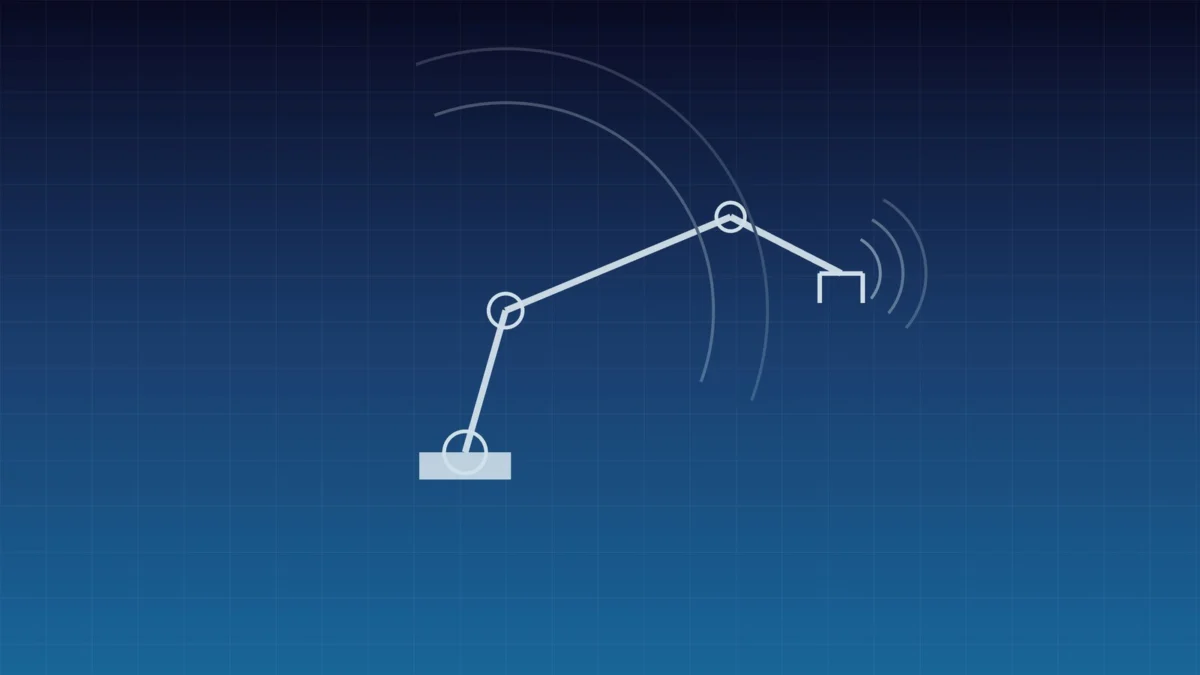
By moving the "intelligence" to the edge, the MOVIA Pro solves these issues. The sensor outputs "actionable perception outputs"—such as "object detected at X,Y coordinates"—rather than raw, uninterpreted data. This reduces the bandwidth burden and allows the system’s primary computer to focus on higher-level path planning and decision-making.
Official Responses: The Leadership Perspective
For MicroVision CEO Glen DeVos, the launch of the MOVIA Pro represents the fruition of the company’s strategic vision to provide "complete" solutions.
"We’re thrilled to meet pent-up customer demand with this production launch of MOVIA Pro," DeVos stated during the announcement. "Customers are ready to progress from evaluation of prototypes to launching commercial programs, and we are pleased to support their progression."
DeVos emphasized that the value proposition of the device lies in its role as a unified system. "With MOVIA Pro, we’ve combined high-performance sensing with onboard computing, an open software framework, and industrial-ready connectivity. This is one device that can sense, perceive, and act, providing customers with a more integrated and adaptable solution."
The company’s decision to center its production in Orlando reflects a commitment to domestic manufacturing quality, ensuring that the sensor meets the stringent reliability standards required for defense and high-value industrial applications.
Implications: The Future of Autonomous Systems
The introduction of the MOVIA Pro carries significant implications for several high-growth industries.
1. Industrial Robotics and Automation
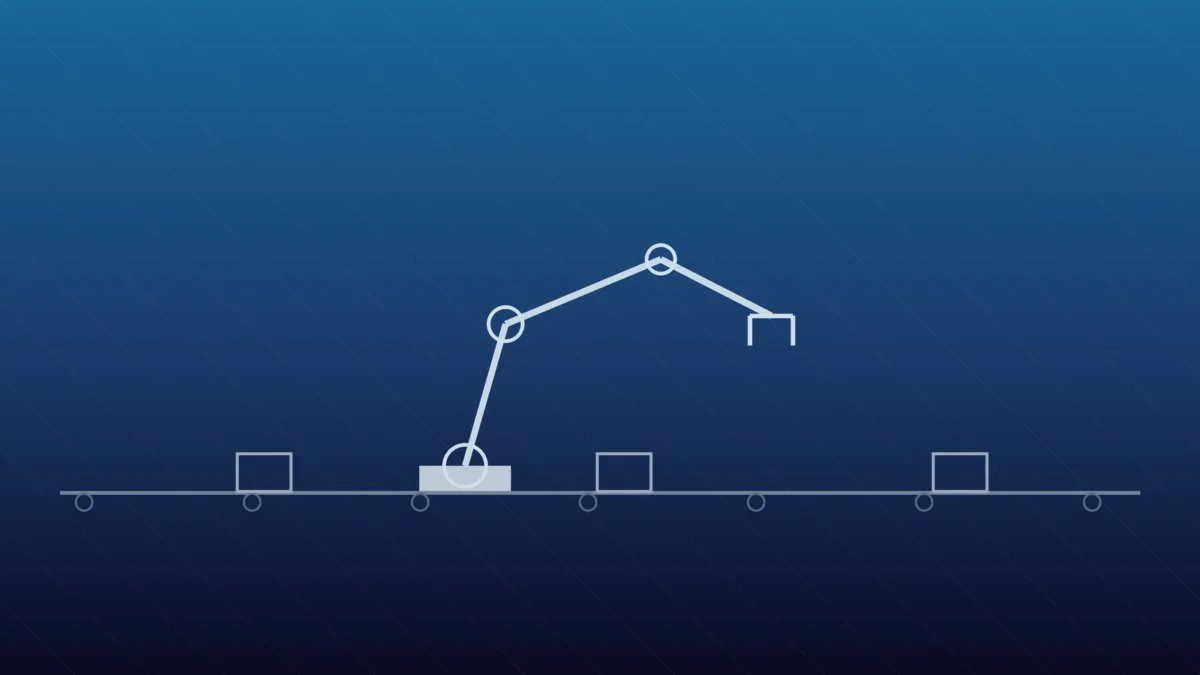
In factories and warehouses, robots must operate in dynamic environments where human workers, moving machinery, and obstacles coexist. The MOVIA Pro’s multi-echo sensing allows these machines to operate reliably even in areas with high dust, debris, or poor lighting—conditions that often blind traditional optical sensors.
2. Security and Defense
For perimeter security and surveillance, the ability to process data at the edge means faster response times and more reliable detection of intruders. By reducing the reliance on central network servers, these sensors can function in "denied" or bandwidth-limited environments, which is critical for military and high-security infrastructure applications.
3. Intelligent Infrastructure
Smart cities rely on sensors to manage traffic flow, monitor public spaces, and optimize resource allocation. The MOVIA Pro’s ability to "see and understand" allows infrastructure managers to deploy smart monitoring stations that report only the necessary data, preserving privacy and reducing the need for constant, massive data streams.
4. Unmanned Aerial Vehicles (UAVs)
Weight and power are the two most critical factors for drone performance. By removing the need for heavy external compute modules, the MOVIA Pro enables smaller, more agile drones to achieve a level of autonomy that was previously reserved for much larger, more expensive platforms.
Conclusion: A New Standard for Perception
MicroVision’s launch of the MOVIA Pro is more than a hardware release; it is a declaration of the company’s maturity. By focusing on the integration of hardware and software, the company is addressing the primary barrier to the mass adoption of autonomous systems: complexity.
As the industry moves beyond the "hype" of proof-of-concept demonstrations, the winners will be those who can provide reliable, scalable, and easy-to-integrate hardware. With its new production capabilities and its focus on edge-based perception, MicroVision is positioning itself to be a cornerstone provider for the next generation of autonomous and intelligent systems.
The MOVIA Pro is now officially available for commercial deployment, signaling a future where machines are not just equipped with eyes, but with the immediate, local intelligence to understand the world around them. As the company continues to refine its portfolio, the market will be watching closely to see how quickly these sensors find their way into the ubiquitous autonomous platforms of tomorrow.