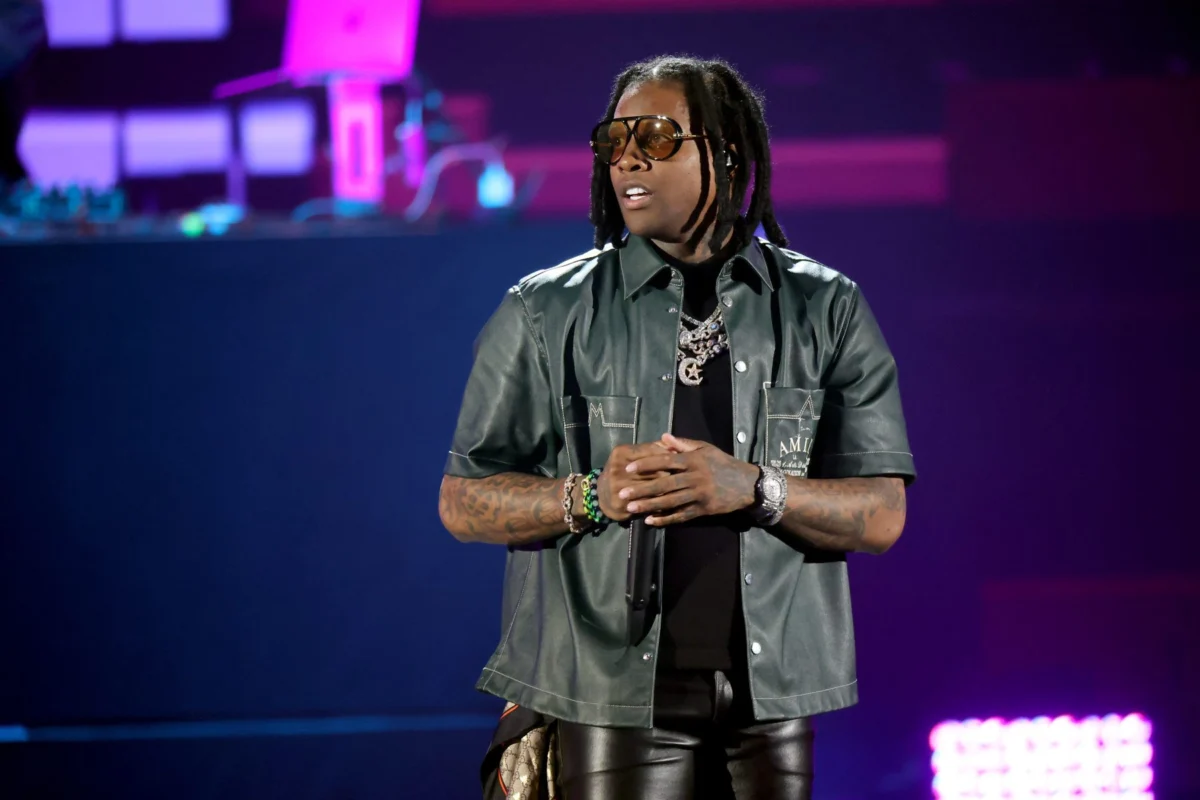
LOS ANGELES — In a stunning legal victory that has reverberated throughout the hip-hop industry and the American federal court system, a Los Angeles jury has acquitted Chicago-based drill superstar Lil Durk of all charges in a high-profile murder-for-hire conspiracy case. The verdict, delivered on Friday, Sept. 11, brings a decisive end to a two-week trial that examined the intersection of rap culture, gang violence, and federal prosecution tactics.
Durk, born Durk Banks, faced potential life imprisonment for his alleged role in a 2022 shooting that targeted rival rapper Quando Rondo. While the jury found Durk not guilty of murder-for-hire, stalking, and conspiracy, his two co-defendants—David “Browneyez” Lindsey and Deandre “OTF Dede” Wilson—were convicted of stalking and conspiracy charges, though they too were acquitted of the most severe murder-for-hire allegations.
The Core Allegations and the Trial’s Narrative
The federal case against the Grammy-winning artist was centered on a retaliatory narrative. Prosecutors alleged that Durk orchestrated a violent response following the 2020 murder of his close friend and affiliate, King Von. According to the government’s theory, the 2022 shooting at a Los Angeles gas station—which left Quando Rondo wounded and resulted in the death of his cousin, Saviay’a Robinson (known as Lul Pab)—was a direct execution of a plan ordered by the OTF (Only the Family) label head.
The prosecution’s case relied heavily on the testimony of three cooperating witnesses: Kacey “OTF Jam” Hester, Keith “Flacka” Jones, and Kavon “Vonnie” Grant. These individuals, who had already pleaded guilty to their roles in the plot, testified that Durk had coordinated the movement of shooters from Chicago to Los Angeles and had allegedly offered monetary incentives for the attack.
However, the defense, led by attorney Drew Findling, aggressively dismantled the credibility of these cooperators. The defense argued that these individuals were incentivized to implicate a high-profile target like Durk to secure more lenient sentences for themselves. Through the presentation of jailhouse phone call recordings, the defense highlighted instances where witnesses discussed their intent to "perform" on the stand, painting them as manipulative actors seeking to trade a celebrity’s freedom for their own.

Chronology: From 2020 Tragedy to 2026 Acquittal
The events that led to this courtroom drama trace back to the escalating tensions within the Chicago drill scene and beyond.
- November 2020: The death of King Von in Atlanta triggers a massive wave of grief and calls for retaliation within the OTF circle, setting the stage for long-standing feuds.
- August 2022: A violent shooting occurs at a Los Angeles gas station targeting Quando Rondo. While Rondo survives, his cousin Saviay’a Robinson is killed.
- 2024: Lil Durk is arrested while attempting to board a flight to Dubai. The federal government charges him with murder-for-hire, sending shockwaves through the music industry.
- Early 2026: The legal proceedings intensify as prosecutors attempt to add a racketeering charge related to the operation of the OTF label as a criminal enterprise.
- September 2026: Following a intense two-week trial, a federal jury deliberates for three days before reaching a verdict of not guilty on all charges for Lil Durk.
The Role of Rap Lyrics as Evidence
A central and highly controversial aspect of the trial was the government’s use of Lil Durk’s own music as evidence of criminal intent. Prosecutors introduced tracks such as “Who Want Smoke??,” “Ahhh Ha,” and “Pissed Me Off,” arguing that the lyrics functioned as telegraphs or admissions regarding the murder plot.
Specifically, the government pointed to lines in "Ahhh Ha"—"Don’t respond to s—t with Von/ I’m like, ‘f—k it, you trippin’, go get your gun’/ They droppin’ locations, I’m gettin’ it done"—as proof of his direct involvement.
The defense countered this by emphasizing that such lyrics are part of a genre rooted in storytelling, artistic expression, and competitive posturing—elements of the "drill" subgenre that are often misunderstood by those outside the culture. By framing the music as commercial art rather than a literal manual for criminal activity, the defense successfully prevented the jury from conflating Durk’s artistic persona with his personal actions. This victory serves as a significant case study in the ongoing national debate regarding the admissibility of rap lyrics in criminal proceedings.
Official Responses and Legal Implications
Following the verdict, the atmosphere outside the Los Angeles federal courthouse was electric. Drew Findling, clearly emotional, framed the victory as a historic moment.

"22 months ago, Durk and I made an agreement that we would make history with the greatest verdict in this country, and it happened today," Findling told reporters. "Durk is not guilty of all charges. The shackles must come off, and he must walk free so that he can come home to his beautiful family and to the world that loves him."
The government, however, remains undeterred in its broader pursuit. Despite the acquittal, Lil Durk remains in custody due to an additional, separate racketeering charge that was excluded from this specific trial. This charge alleges that the OTF label operates as a violent gang. Judge Michael W. Fitzgerald had previously chided the prosecution for attempting to "tack on" this count at the last minute, leading to its exclusion from the current proceedings. A new trial regarding these racketeering charges is currently scheduled for October 5.
Broader Implications for the Hip-Hop Industry
The acquittal of Lil Durk has broader implications for how the legal system treats rappers. The trial drew significant attention from the entertainment world, with high-profile figures such as Ye (formerly Kanye West) and Machine Gun Kelly appearing in court to show their support.
For the music industry, this verdict acts as a momentary shield against the increasing trend of "rap-on-trial" scenarios. If the government had secured a conviction based on lyrics and the testimony of cooperators, it could have set a dangerous precedent, potentially chilling artistic expression and creating a culture of self-censorship for performers across the United States.
However, the legal road ahead remains treacherous for the Chicago artist. With the racketeering trial looming, the defense team must pivot quickly to address the government’s claims that the structure of his record label constitutes a criminal enterprise. The distinction between a corporate entity and a gang, when the entity is built on the culture of "street" rap, is a complex legal hurdle that will define the next chapter of this saga.

Looking Ahead
As the hip-hop community celebrates the acquittal, the industry is left to grapple with the realities of the legal system’s scrutiny of urban artists. The case has highlighted the immense power of federal prosecutors and the equally immense resources required to mount an effective defense against allegations that mix art, association, and criminality.
For Lil Durk, the fight is far from over. The October 5 trial date serves as a reminder that while the battle over the 2022 shooting has been won, the war to clear his name of racketeering charges will require the same intensity and legal precision that defined this acquittal. Whether this verdict will influence the upcoming racketeering trial remains to be seen, but for now, the "Free Durk" movement has achieved a landmark success that will be discussed for years to come.