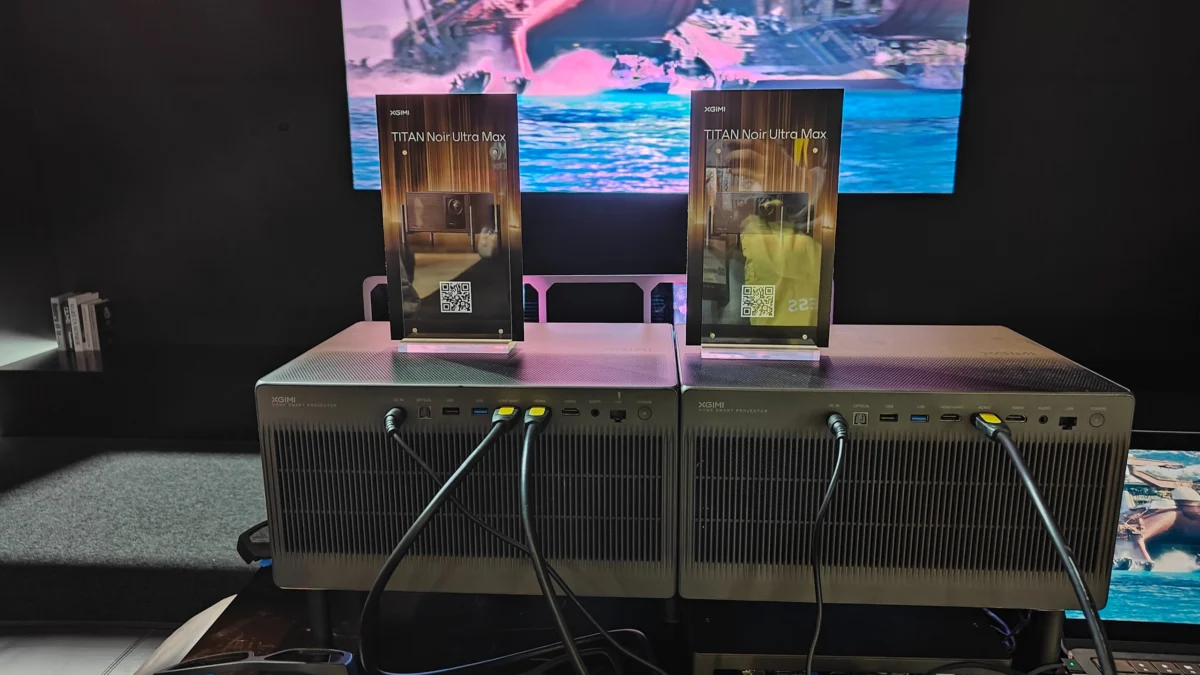
BERLIN — Walking the sprawling exhibition halls of IFA 2026, technology journalists were met with an overwhelming array of incremental upgrades, AI-driven home appliances, and next-generation television displays. Yet, amid the sensory overload of Europe’s premier consumer electronics convention, one particular home cinema demonstration managed to completely overshadow the commercial mainstream.
At the Xgimi booth, tucked away from the conventional product displays, sat a "Frankenstein’s monster" prototype setup that has successfully reignited industry chatter about a technology many had written off as a commercial dead end: high-end 3D projection.
While the consumer market has largely abandoned stereoscopic 3D in the years following its cinematic boom, Xgimi’s proof-of-concept rig proved that when executed with modern, ultra-bright laser projection hardware, three-dimensional home viewing can still deliver a genuinely breathtaking and immersive experience.
Main Facts: The Anatomy of Xgimi’s 3D Prototype
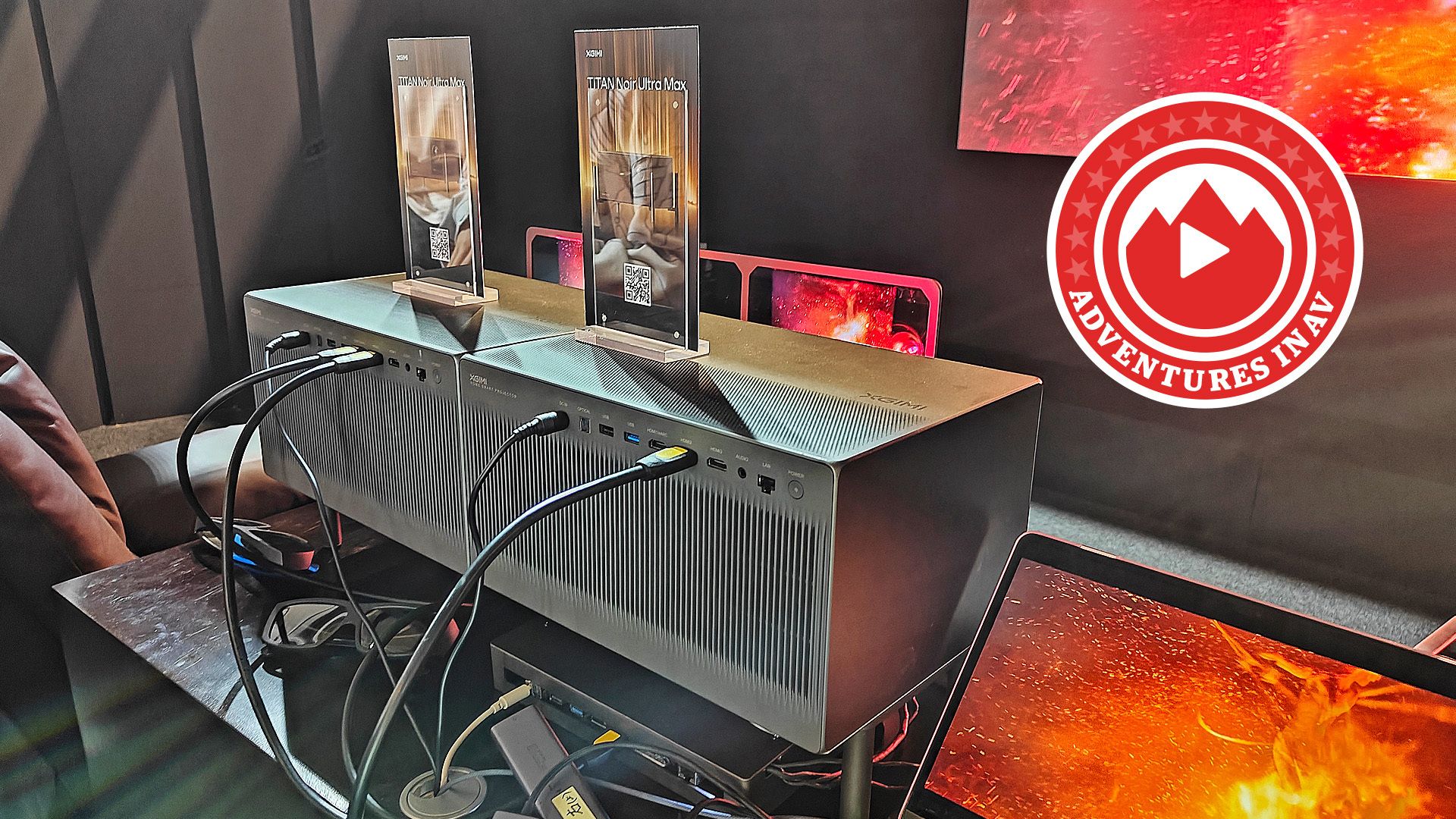
The star of the covert demonstration was not a brand-new, standalone retail product, but rather an ingenious hardware hack engineered by Xgimi’s technical team.
The system relies on the following core components:
- Dual Projector Array: Xgimi utilized two of its newly announced flagship Titan Noir Ultra Max projectors, positioned side-by-side on a heavy-duty mounting rig and fed simultaneously by a single source laptop.
- Polarization Filters: Positioned directly in front of each projector lens were specialized polarizing filters. One projector was designated to output the left-eye perspective, while the other handled the right-eye feed.
- Passive 3D Eyewear: Viewers wore standard passive polarized 3D glasses, allowing the brain to seamlessly fuse the two distinct projected images into a cohesive, stereoscopic visual field.
- Source Material: The demonstration ran on a continuous loop of the official trailer for James Cameron’s highly anticipated Avatar: Fire And Ash, pushing the prototype to its absolute graphical limits.
Despite being a cobbled-together development kit rather than a polished consumer SKU heading to retail shelves, the rig delivered performance levels that stunned onlookers, proving that the underlying hardware capabilities of modern projectors might finally be robust enough to handle high-brightness 3D without the notorious compromises of the past.
Chronology: From Showfloor Curiosity to Obsession
The path to this unexpected IFA highlight began months prior in Xgimi’s research and development labs, though the public-facing realization materialized during the frantic setup days of IFA 2026 in Berlin.
- Pre-Show Development: Xgimi engineers, tinkering with the untapped headroom of the newly developed Titan Noir Ultra Max architecture, began experimenting with dual-stacked passive polarization setups to test color alignment and light efficiency.
- Day 1 of IFA 2026: The prototype was assembled behind closed doors on the Xgimi stand, initially intended as an internal stress test for the projectors’ newly calibrated optical engines and color-matching software.
- Mid-Week Breakthrough: Word of the setup quickly spread among visiting audio-visual journalists and industry insiders. Private viewings transformed into a must-see event on the convention floor.
- Post-IFA Reflection: In the week following the convention, the demonstration continues to serve as a major talking point across home cinema forums, forcing critics and enthusiasts to re-evaluate whether the industry gave up on stereoscopic entertainment too soon.
Supporting Data: Breaking Down the Titan Noir Ultra Max
To understand why Xgimi’s 3D experiment worked so effectively, one must examine the baseline specifications of the hardware powering it. Individually, a single Titan Noir Ultra Max is a powerhouse home cinema projector retailing for £4,799 (approximately $5,000 / AU$9,040).
When split across a dual-projector 3D rig, these specifications take on new significance:
| Feature | Specification | Impact on 3D Performance |
|---|---|---|
| Peak Brightness | Up to 8,000 ISO Lumens | Combats the notorious light-loss penalty inherent to 3D polarizing filters, ensuring punchy highlights. |
| Native Contrast Ratio | 12,000:1 | Delivers deep, inky blacks necessary for maintaining dimensional separation in dark scenes. |
| Input Latency | 1ms (Manufacturer Claim) | Ultra-low latency profile designed with modern next-gen gaming hardware in mind. |
| Gaming Enhancements | Variable Refresh Rate (VRR), Auto Low Latency Mode (ALLM) | Ensures smooth, tear-free motion handling for high-frame-rate content. |
In traditional 3D setups—particularly passive systems using dual projectors—light output is severely compromised by polarization filters and glasses, often resulting in a dim, muddy image. However, by leveraging the immense 8,000 ISO lumen output of each Titan Noir Ultra Max, Xgimi bypassed this historical bottleneck. The resulting image remained astonishingly vibrant, punchy, and luminous, even within a reasonably well-lit exhibition environment.
Official Responses and Expert Observations
While Xgimi has not announced concrete commercial plans to package this specific dual-projector setup into a consumer-ready bundle, company representatives on the ground at IFA were eager to discuss the technical philosophies driving the experiment.
"We wanted to see what happens when you push our most advanced optical engines past their conventional limits," noted a member of Xgimi’s product development team at the Berlin exhibition. "The conversation around 3D died down because the hardware of the past decade simply couldn’t deliver the brightness and resolution required to make it comfortable and immersive. With ultra-bright laser projection, the conversation changes entirely."

Industry analysts and critics who experienced the demonstration noted the striking fidelity of the Avatar: Fire And Ash loop. Observers highlighted several key performance takeaways:
- Spatial Depth and Scale: Rather than feeling confined to the physical boundaries of the projection screen, elements such as the flying Leonopteryx appeared to break free from the frame, extending outward with a realistic sense of volume and mass. Floating islands populated the space like intricate pop-up book illustrations.
- Low-Light Performance: During the notoriously difficult blue-tinted nocturnal water sequences, bioluminescent details on the characters’ skin managed to cut cleanly through the dark forest backdrops without washing out or blending into digital noise.
- Audio Limitations: The only notable weak point of the demonstration stemmed from the showroom floor conditions. The built-in audio speakers of the projectors struggled to cut through the ambient background cacophony of the convention hall. Reviewers noted that in an acoustically isolated home theater environment paired with a dedicated discrete surround-sound system, the sensory disconnect would entirely vanish.
Implications: Is a 3D Renaissance on the Horizon?
The broader implications of Xgimi’s IFA experiment extend far beyond a clever convention-floor gimmick. For over a decade, consumer electronics manufacturers have steadily phased out 3D capabilities from televisions, Blu-ray players, and projectors due to dwindling consumer demand, the friction of wearing active-shutter or passive glasses, and a lack of fresh 3D content releases from major Hollywood studios.
However, the home cinema landscape of 2026 looks vastly different than it did during the height of the 3D TV craze in the early 2010s:
- Laser Illumination: Modern solid-state laser and LED light sources offer lifespans, color gamuts, and brightness levels that dwarf legacy lamp-based projectors.
- Ultra-Short Throw (UST) and High-End Home Cinema Growth: Consumers are investing more than ever in dedicated, multi-thousand-dollar home projection setups, prioritizing massive screen sizes that naturally lend themselves to immersive formats.
- The Avatar Effect: As major visual landmarks like James Cameron’s Avatar franchise continue to push stereoscopic post-production boundaries, a dedicated niche of cinephiles remains hungry for hardware capable of reproducing those theatrical formats at home.
Xgimi may not be putting a dual-projector 3D kit on retail shelves tomorrow, but their bold experiment at IFA 2026 has successfully broken the taboo surrounding stereoscopic home entertainment. By demonstrating that technical hurdles like light starvation and dim contrast can be obliterated with sheer lumen output, they have planted a seed of curiosity across the industry.
Perhaps the death of home 3D was premature. With the right hardware leading the charge, a thrilling, three-dimensional renaissance might just find its way back into the modern home cinema.