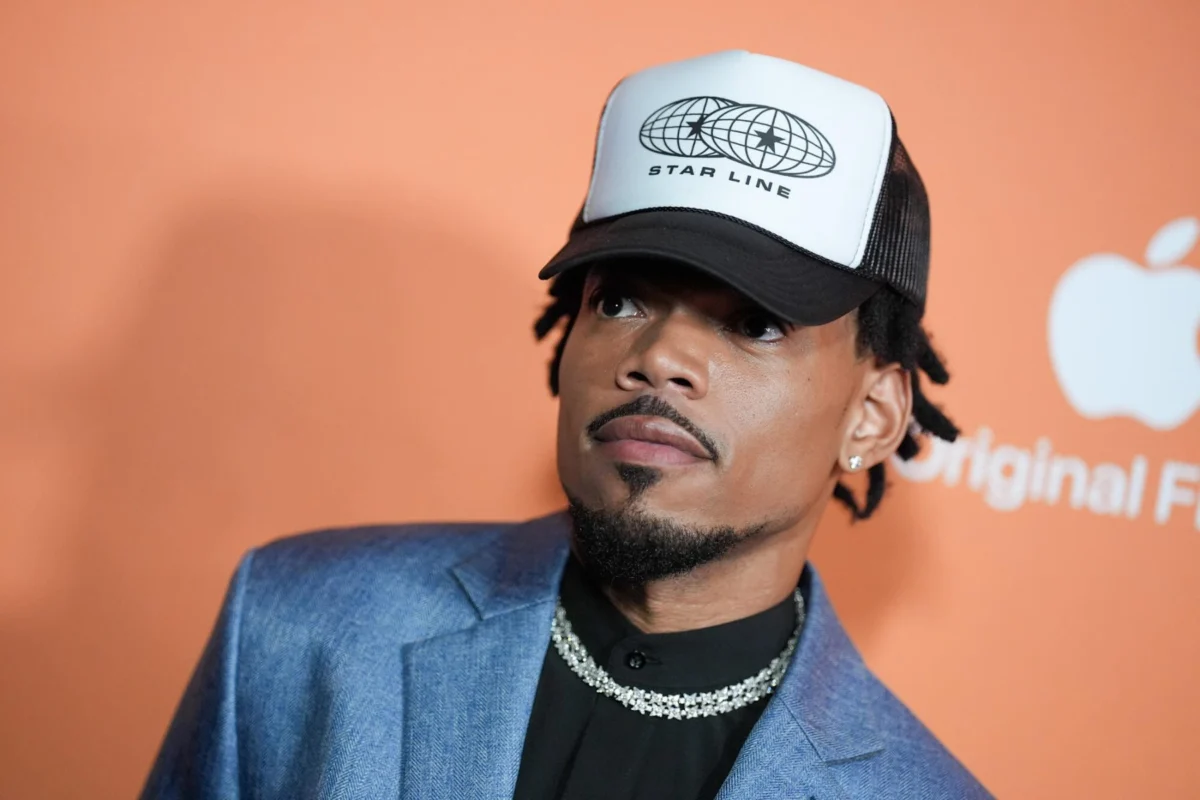
In a significant development in a long-standing legal saga, Chance the Rapper (born Chancelor Bennett) has secured a favorable ruling in the second phase of his litigation against his former manager, Pat Corcoran. The decision, handed down by Judge James E. Hanlon Jr. on Tuesday, Oct. 13, marks a pivotal shift in the bitter dispute that has pitted one of hip-hop’s most prominent independent artists against the man who helped guide his meteoric rise.
While the legal battle between the two parties—who operated for years without a formal written contract—has been complex, the latest ruling provides much-needed clarity on the financial obligations between an artist and their management team. Representatives for Bennett estimate that the final judgment, including the return of “secret profits” and commissions, will reach approximately $1.5 million.
A Chronology of the Dispute
The roots of the conflict trace back to 2020, when Pat Corcoran—widely known as "Pat the Manager"—initiated legal action against Bennett. At the time, Corcoran alleged that the artist owed him nearly $4 million in unpaid commissions. Central to Corcoran’s argument was the existence of a "sunset clause," a common industry provision that would have entitled him to receive management fees for three years following his termination.
Bennett vehemently denied the validity of such a clause. The absence of a formal, written agreement between the two turned the case into a landmark legal challenge, as it forced the court to interpret the bounds of their oral, handshake-based partnership.
The litigation unfolded in two distinct phases:
- The Jury Trial (March 2026): A Chicago jury rejected Corcoran’s claims in their entirety, finding that he was not entitled to the additional commissions he sought. While Bennett emerged victorious in this phase, he was only awarded a nominal $35 for breach of contract and tortious interference, leaving several of his deeper claims unresolved.
- The Bench Trial (May 2026): A second, mini-trial was held before Judge Hanlon to address the remaining allegations, specifically the breach of fiduciary duty. This phase focused on whether Corcoran had acted against the artist’s best interests while managing his business affairs.
Breach of Fiduciary Duty: The Core Findings
The crux of the recent ruling rests on the finding that Corcoran violated his fiduciary duty to Bennett by engaging in "self-dealing." Specifically, the court found that Corcoran had negotiated and secured secret payments from merchandise vendors without the artist’s knowledge.
Judge Hanlon’s ruling was decisive, ordering Corcoran to forfeit these "secret profits" and return the 15% commissions he had earned on merchandise during the period in which the self-dealing occurred. "The trial exhibits should allow the parties to compute the figure," Judge Hanlon wrote. "If the records leave a real doubt about whether a given payment related to Bennett’s orders, the court will resolve the doubt against Corcoran, whose company kept those records and took the payments."

The judge further ordered the return of the domain name chanceraps.com to Bennett, signaling a total restoration of the artist’s digital assets. A follow-up court conference is set for late November to finalize the exact dollar amount of the judgment, which may include accrued interest.
Judicial Scrutiny of Witness Credibility
A notable aspect of Judge Hanlon’s ruling was his assessment of Corcoran’s testimony. The court noted that Corcoran’s version of his own role within the organization shifted dramatically depending on the venue.
During the initial jury trial, Corcoran presented himself as the "architect" of Bennett’s success, taking personal credit for the radio strategy, the branding of the iconic "3" hat, and the overall merchandise operation. He even went so far as to label himself the "CEO" of Bennett’s enterprise to justify his compensation.
However, when faced with the bench trial regarding his fiduciary responsibilities, Corcoran’s narrative changed. He sought to minimize his professional impact, describing himself as merely a "sounding board" who provided general input on operational matters. Judge Hanlon characterized this inconsistency as a failure of credibility, highlighting that Corcoran denied seeking equity in the platform UnitedMasters despite text message evidence showing he had explicitly asked CEO Steve Stoute for a stake during contract negotiations.
Financial Scope and Legal Limitations
While the $1.5 million figure is a significant victory for Bennett, it is notably lower than the nearly $11 million his legal team had initially sought. This discrepancy exists because the court drew a sharp line regarding the scope of Corcoran’s fiduciary duty.
Judge Hanlon determined that Corcoran’s fiduciary obligations were strictly limited to the areas of music, touring, and merchandise. Consequently, the court ruled that Corcoran was legally permitted to pursue side investments in a Chicago theater project, a media startup, and a film company without breaching his duties to the rapper.
"Corcoran performed years of valuable work in music and touring that Bennett accepted and profited from, work that was not tainted by self-dealing," the judge explained. "Stripping Corcoran of all his compensation across the life of the relationship would hand Bennett a windfall and would punish loyal work along with disloyal work."

Official Responses
The aftermath of the ruling has seen both parties attempting to frame the outcome as a step toward closure.
In a brief statement, Chance the Rapper expressed a sense of relief regarding the conclusion of the litigation: "I’m grateful to finally close this chapter of my life and can’t wait to eventually tell my side of the story. I’m thankful to the courts and, more importantly, to God for remaining faithful."
Conversely, representatives for Corcoran emphasized the limitations placed on the financial award. A spokesperson for the former manager told Billboard: "The court ruled there is no basis for Chance’s claim of more than $10 million in damages. We are pleased that the court agreed with Pat that he performed years of valuable work that Bennett accepted and profited from, work that was not self-dealing. It is now up to Chance to prove he incurred any harm at all in the very limited areas of merchandising outlined in the order."
Implications for the Music Industry
This case serves as a stark cautionary tale for the music industry regarding the dangers of "handshake" agreements. While informal arrangements have long been a staple of artist-manager relationships—relying on mutual trust and shared growth—the legal battle between Bennett and Corcoran highlights the risks when that trust evaporates.
Without a written contract detailing the scope of authority, commission structures, and the definition of a "sunset clause," both artists and managers are left vulnerable to protracted litigation. The court’s struggle to interpret the nature of their relationship suggests that the music industry may need to shift toward more rigorous, transparent, and documented agreements to avoid the messy, public disputes that can derail careers.
As the parties head into the November conference to finalize the calculation of the $1.5 million award, the industry will be watching closely. For Chance the Rapper, the victory represents not just a financial recovery, but the final liberation of his brand and business from the shadow of his former management, allowing him to refocus fully on his creative output. For the broader industry, it is a reminder that even the most successful partnerships require the guardrails of legal clarity to withstand the pressures of fame and fortune.