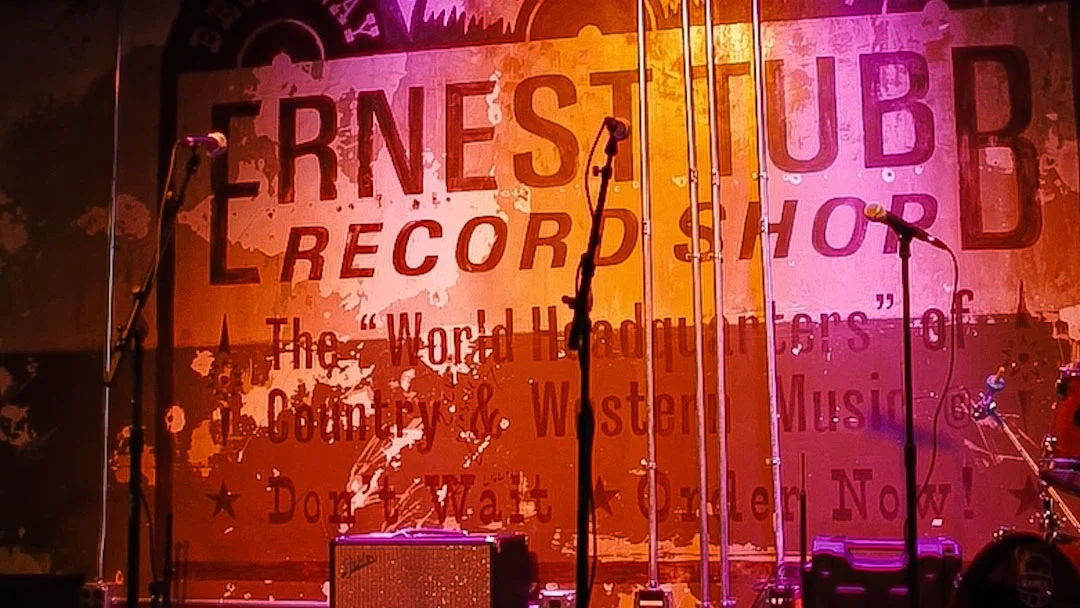
NASHVILLE, TN — In the heart of Music City, where the neon glow of Lower Broadway meets the hallowed echoes of country music’s past, a quiet revolution is taking place. The Ernest Tubb Record Shop, a cornerstone of American musical heritage, has officially completed a comprehensive audiovisual (AV) and technological transformation. Orchestrated by the specialists at Black Box AVS, this modernization project represents a delicate balancing act: preserving the "Texas Troubadour’s" vintage aesthetic while implementing a state-of-the-art ecosystem capable of meeting the demands of 21st-century live performance and retail operations.
Main Facts: A Comprehensive Technological Overhaul
The project, which reached completion in June 2026, was not a mere speaker replacement. It was a ground-up engineering feat designed to turn a narrow, acoustically challenging historic building into a premier listening environment. Black Box AVS, led by owner Martin Lawrence, was commissioned to design and implement a "cohesive technology ecosystem."
The scope of the project included:
- Audio Distribution: The installation of Yamaha CZR line arrays and point-source cabinets, supplemented by Nexo ePS Series high-output loudspeakers.
- Integrated Infrastructure: A complete networking backbone utilizing Netgear switches and Ruckus access points to provide seamless connectivity across four floors.
- Centralized Control: A move away from traditional, bulky Front of House (FOH) booths in favor of iPad-based control systems linked to centralized equipment racks.
- Lighting Design: An integrated system featuring Chauvet fixtures, Luminaire software, and Visual Productions cores, all managed through a unified interface.
- Facility Management: Professional-grade equipment housing via Mid-Atlantic racks and Panduit cable management to ensure long-term serviceability and system tidiness.
The result is a venue that maintains its "time-worn vintage vibe" while delivering studio-quality sound and modern operational efficiency.
Chronology: From Historic Landmark to Modern Venue
The Ernest Tubb Record Shop has occupied its current location at 417 Broadway since 1947. Founded by the legendary Ernest Tubb, the shop became famous not just for its vinyl and memorabilia, but for the "Midnite Jamboree," the second-longest-running radio show in history. For decades, the shop functioned primarily as a retail space with occasional live performances.
However, as the landscape of Lower Broadway shifted toward high-energy live entertainment, the shop faced a dilemma: how to host intimate, high-quality shows without destroying the historical ambiance of the building.
The planning phase of the upgrade began with a focus on the "user experience." Black Box AVS was tasked with addressing the physical limitations of the building—a long, narrow footprint with highly reflective surfaces like exposed brick and original wood flooring. Unlike modern venues that can hide acoustic treatment behind walls, the Ernest Tubb Record Shop required a solution that respected the architecture.
By early 2026, the implementation phase began. This involved stripping away decades of legacy wiring and installing a modern network infrastructure. The goal was to create a "technology backbone" that would support not just current needs, but future expansions. The final phase, completed in June, involved the fine-tuning of the audio zones and the integration of the lighting and networking controls into a single, mobile interface.
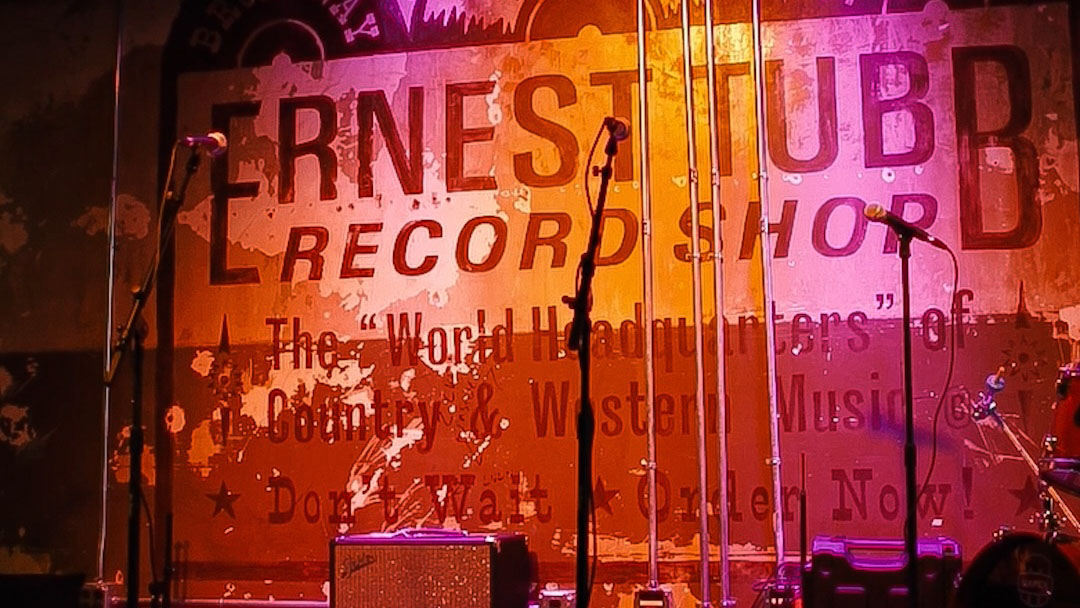
Supporting Data: Engineering Sound in a "Shoebox"
The primary challenge of the Ernest Tubb Record Shop is its physical geometry. In acoustic terms, the space functions much like a long "shoebox," where sound waves bounce off parallel brick walls, creating muddy reflections and standing waves.
The Audio Solution
To combat these issues, Black Box AVS utilized Yamaha CZR line arrays. Line array technology is crucial in narrow spaces because it allows for precise vertical dispersion control, keeping the sound directed at the audience and off the ceiling.
Complementing the Yamaha mains are the Nexo ePS Series loudspeakers. These were strategically deployed throughout the venue to create "delay zones." By time-aligning the speakers located further back in the shop with the main stage arrays, the team ensured that the sound remained crisp and intelligible even at the far end of the building, without the need for excessive volume at the front.
The Networking Backbone
A modern venue is only as strong as its data infrastructure. The installation of Ruckus access points and Netgear switches ensures that the venue’s internal operations—such as Point of Sale (POS) systems and lighting control—remain isolated and secure from guest Wi-Fi. This four-floor connectivity ensures that staff can manage the environment from the basement storage rooms to the top-floor offices.
Aesthetic Integration
A key data point in the project’s success was the "invisibility" of the tech. By using Mid-Atlantic racks tucked away in a dedicated AV closet and Panduit cable management, the team avoided the "cable clutter" that often plagues historic renovations. The use of iPad control eliminated the need for a permanent soundboard, which would have taken up valuable floor space in the intimate shop.
Official Responses: A Shift in the Nashville Paradigm
Martin Lawrence, owner of Black Box AVS, views this project as more than just a successful installation; he sees it as a proof of concept for a new era of Nashville entertainment.
"The project required more than an audio upgrade," Lawrence stated during the unveiling. "We were tasked with creating a cohesive technology ecosystem that supported live music, venue operations, guest experience, networking, lighting control, and long-term serviceability."
Lawrence emphasized that the choice of high-end components like the Yamaha CZR series was intentional to highlight the nuances of country and Americana music. "The CZRs really let every instrument breathe," he explained. "You hear the subtle harmonics in a steel guitar, the snap of an upright bass, and the shimmer of acoustic strings, all without cranking the volume."
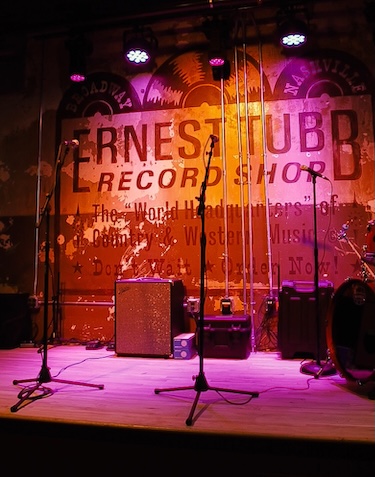
Perhaps most importantly, Lawrence noted a shift in the local industry’s philosophy. "People say it sounds great: It’s not super loud and you actually hear the individual instruments. It’s helping start that shift from bars putting in systems that are just the cheapest and the loudest to something that’s different—building a system from the ground up that makes the user experience enjoyable."
Implications: The Future of Lower Broadway
The successful modernization of the Ernest Tubb Record Shop carries significant implications for the future of Nashville’s historic district.
1. Preservation Through Innovation
The project proves that "vintage" and "high-tech" are not mutually exclusive. By using modern line-array technology and mobile control systems, historic venues can host world-class performances without altering their physical heritage or installing intrusive acoustic panels. This provides a blueprint for other legendary Nashville spots that may be hesitating to upgrade for fear of losing their soul.
2. The "Quality Over Volume" Movement
For years, the "Broadway Sound" has often been characterized by sheer volume—a competition between venues to see who can bleed the most sound onto the street. The Ernest Tubb project signals a move toward high-fidelity, lower-volume environments. By focusing on "clarity" and "harmonic breathing," the shop is attracting a demographic of listeners who value musicality over noise.
3. Operational Scalability
The implementation of a robust network infrastructure across four floors allows the Ernest Tubb Record Shop to function as a multi-purpose entity. It is now simultaneously a high-end retail outlet, a broadcast-capable performance space, and a digitally integrated office. This scalability is essential for historic businesses to remain competitive in a real estate market as aggressive as downtown Nashville.
4. Setting a New Standard for AV Integration
By integrating lighting (Chauvet), sound (Yamaha/Nexo), and networking (Netgear/Ruckus) into a single controlled environment, Black Box AVS has set a high bar for system integrators. The move toward "booth-less" FOH management via iPads is likely to become the standard for small-to-medium venues where every square foot of floor space translates to potential revenue or guest comfort.
In conclusion, the Ernest Tubb Record Shop has not just survived the march of time; it has harnessed modern technology to ensure its voice remains the clearest on Broadway. As the "Texas Troubadour" himself might have appreciated, the shop is still keeping it country—it just sounds better than ever.