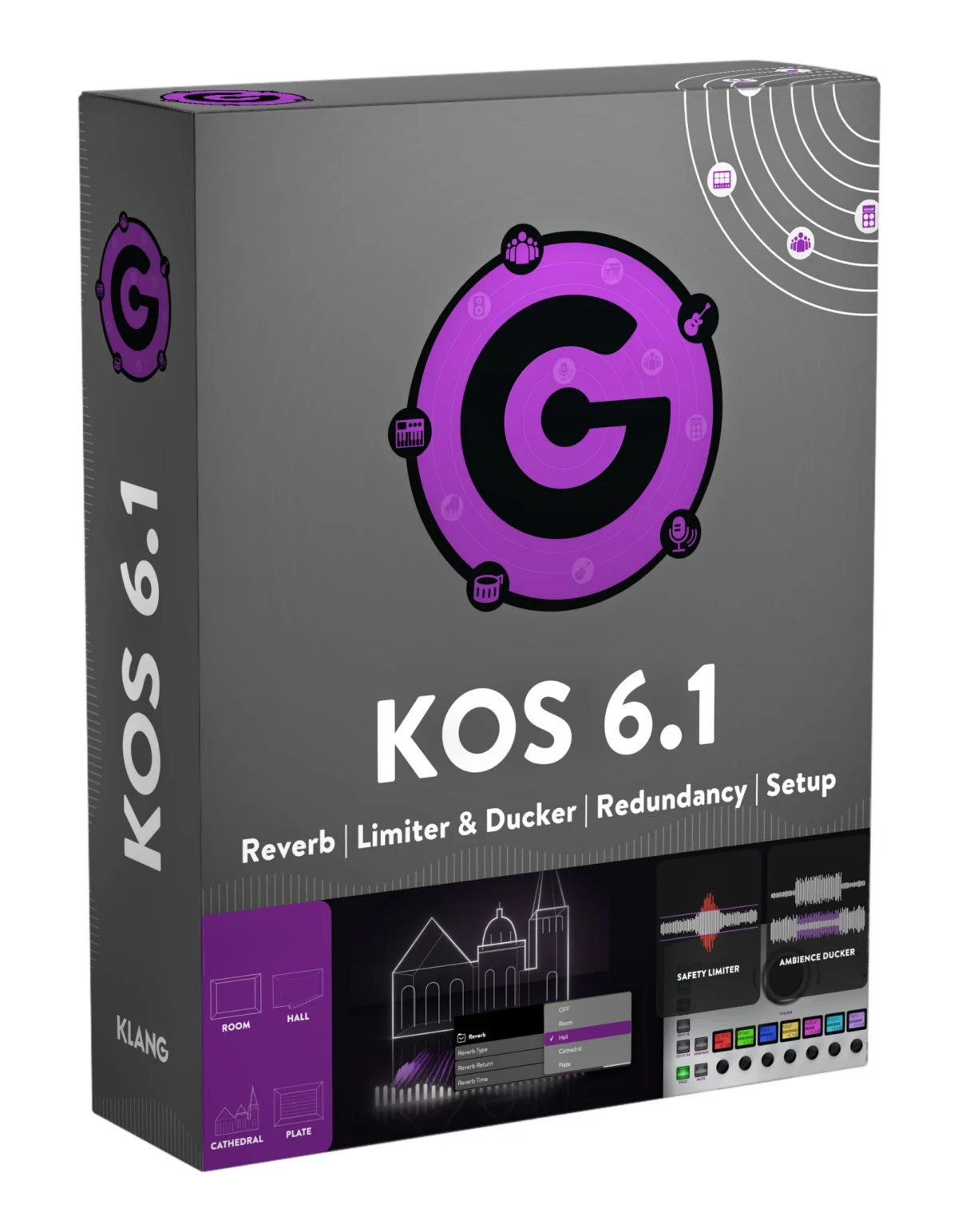
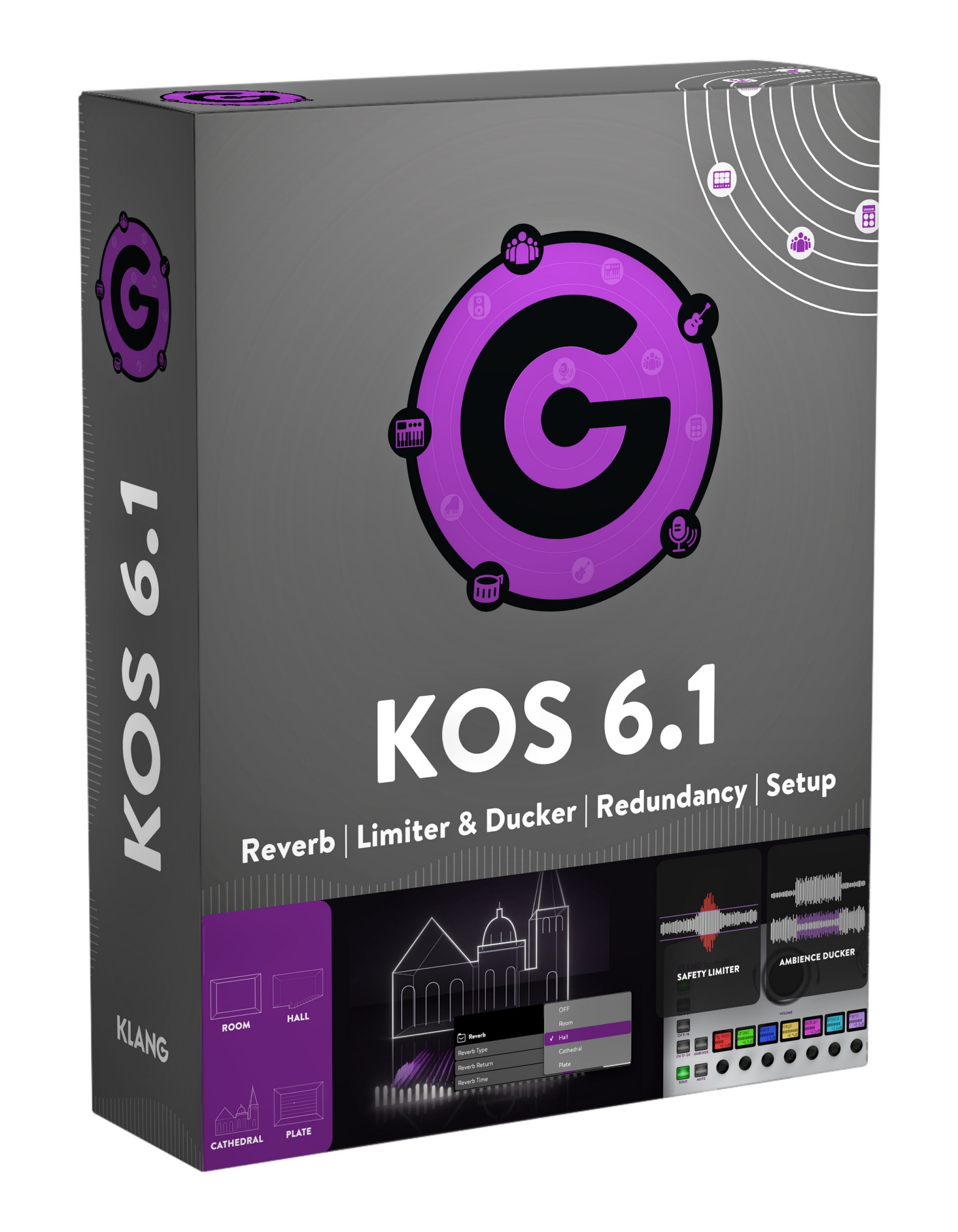
In the high-stakes world of professional live sound, the clarity of a performer’s monitor mix is the difference between a triumphant performance and a technical struggle. For years, KLANG:technologies has been at the forefront of the immersive in-ear monitoring revolution, allowing musicians to spatialize their soundstage to reduce ear fatigue and improve musicality. This week, the Aachen-based manufacturer took another significant step forward with the release of KOS 6.1, a major update to their operating system and KLANG:app that introduces sophisticated localized reverb, integrated safety limiting, and automated ambience ducking.
The Core Developments: A New Sonic Frontier
The KOS 6.1 update represents more than just a routine patch; it is a fundamental shift in how KLANG users interact with their mix environment. By enabling every individual mix to host its own discrete, high-quality reverb, KLANG is addressing one of the most persistent requests from touring monitor engineers and performing artists alike.
The new reverb engine, which runs natively on the KLANG:konductor, KLANG:vokal, DMI-KLANG, and KLANG:1pro processors, offers four distinct algorithms: Room, Hall, Cathedral, and Plate. Each algorithm is fully adjustable, allowing users to tailor decay times, return levels, and spectral characteristics via a dedicated four-band EQ. Perhaps most importantly, this is not a global effect. Because each mix can access its own reverb settings, the creative possibilities are vast: a vocalist can be placed in a lush, expansive cathedral setting for emotional resonance, while a drummer or bassist can maintain a dry, tight, and punchy room sound to ensure rhythmic precision—all happening simultaneously on the same hardware.
A Chronology of Innovation
To understand the significance of KOS 6.1, one must look at the evolution of KLANG:technologies within the DiGiCo ecosystem. Since its inception, KLANG has operated on the philosophy that "less is more." By using psychoacoustic spatial positioning, the company proved that if instruments are separated spatially, the brain can distinguish between them more effectively at lower overall volumes.
- The Foundation: The early years focused on 3D spatial positioning, moving audio sources around the listener’s head to eliminate the "clutter" of a standard stereo in-ear mix.
- The Processor Integration: The acquisition of KLANG by the Audiotonix group facilitated the integration of their technology into the DMI format, allowing DiGiCo consoles to interface directly with the KLANG engine.
- The Scalability Phase: With the release of the KLANG:konductor and KLANG:vokal, the company moved toward high-density, multi-user systems.
- The KOS 6.x Era: The current update cycle, culminating in 6.1, represents the transition from "spatial positioning" to "spatial environments." By adding room acoustics (reverb) and safety features (limiters), KLANG is now offering a complete, end-to-end monitoring ecosystem that replaces the need for external outboard processing.
Technical Deep-Dive: Safety and Ambience
Beyond the artistic addition of reverb, KOS 6.1 introduces critical safety and convenience features directly to the KLANG:kontroller, the hardware remote used by musicians on stage.
The Safety Limiter
The new safety limiter is perhaps the most vital addition for artist protection. In live environments, unpredictable spikes—such as a microphone being dropped, a phantom power pop, or sudden feedback—can cause permanent hearing damage. The KOS 6.1 limiter is enabled by default. It operates as an "always-on" protective layer that monitors the output signal, clamping down on full-scale bursts before they reach the artist’s in-ear monitors. This provides a much-needed layer of security for the performer, ensuring that their hearing remains protected without requiring additional rack-mount hardware.
The Ambience Ducker
The introduction of the ambience ducker addresses the "isolated" feeling that can plague performers on large, loud stages. While in-ears provide incredible clarity, they can sometimes disconnect the artist from the energy of the crowd. The new ducker solves this by intelligently managing audience microphones. It automatically lowers the volume of the room mics while the band is actively playing, preventing muddying of the mix, and instantly brings the crowd’s energy back up during the silence between songs. This creates a seamless, natural transition between performance and interaction, further bridging the gap between the studio-like environment of in-ears and the organic reality of a live concert.
Official Perspectives: The Philosophy of the Mix
Dr. Pascal Dietrich, co-founder of KLANG:technologies, views this update as the logical evolution of their mission. "Reverb has long been one of the most requested features from musicians and monitor engineers," Dietrich noted in the official release statement. "Immersive mixing has already taken away the isolation musicians used to feel on stage, and spatial positioning has let them turn their in-ears down without losing detail. Now, with KOS 6.1, every mix gets a room of its own, running directly on the processor."
Dietrich emphasizes that the goal remains unchanged: lower decibel levels leading to higher-quality performances. "Add a safety limiter that is on before anyone has to think about it, and you get exactly what KLANG has always stood for: lower levels, better mixes."
From an engineering perspective, the decision to ensure that existing shows load with these new effects set to "off" is a crucial operational detail. It prevents the update from inadvertently altering the sonic signature of a touring production that has already been meticulously balanced, allowing engineers to opt-in to the new features on their own timeline.
Industry Implications and Future Outlook
The release of KOS 6.1 carries significant implications for the live touring industry. As stages become more complex and the demand for higher audio fidelity grows, the burden on monitor engineers to provide "studio-quality" sounds in a live setting has reached an all-time high. By offloading these tasks—reverb, limiting, and ambience management—onto the KLANG processor, the system reduces the load on the main front-of-house or monitor console.
Strategic Advantages:
- Reduced Latency: Because the processing happens natively within the KLANG ecosystem, there is no need for external digital-to-analog-to-digital conversions, keeping latency at a minimum.
- Workflow Efficiency: Monitor engineers can configure complex reverb tails and ducking thresholds in the KLANG:app, while musicians retain tactile control on the KLANG:kontroller. This empowers the musician to tweak their own "space" without bothering the engineer during a soundcheck.
- Standardization: As these features become standard across all KLANG hardware, it ensures that a rental house in London or a festival rig in Tokyo can provide the same high-level monitoring experience, regardless of the local backline limitations.
As we look toward the future, the integration of these features suggests that KLANG is positioning itself as more than just a spatial audio company; it is becoming a comprehensive monitoring platform. By combining safety, comfort, and creative audio tools into a single, scalable OS, KLANG:technologies is setting a new benchmark for how artists interact with their sound on stage.
For the professional engineer, the KOS 6.1 update is a reminder that the most effective tools are those that are invisible to the audience but transformative for the performer. By giving every mix its own "room," and providing the peace of mind of an integrated limiter, KLANG has successfully blurred the line between the sterility of in-ear monitoring and the vibrant, visceral experience of performing on a real stage. As these updates propagate across global tours, the standard for what constitutes a "great mix" is poised to rise once again.