MEMPHIS, TN — October 22, 2026 — In a move signaling a fundamental shift in how the music industry handles the intersection of creative collaboration and administrative backend, the platform formerly known as Sound Credit has officially rebranded as Flowthru.
This transition represents more than a mere cosmetic change; it marks the maturation of a service that began as a niche tool for credit management and has now expanded into a comprehensive, end-to-end ecosystem for music release preparation. By integrating lossless audio sharing, sophisticated feedback loops, and robust rights registration into a single, cohesive workflow, Flowthru aims to solve the chronic "fragmentation problem" that has long plagued producers, engineers, and independent artists.
The Core Transformation: Moving Beyond Metadata
For years, Sound Credit served as the industry standard for ensuring that every person who touched a recording—from the session musician to the mastering engineer—was properly acknowledged. However, the team behind the platform identified a significant gap in the lifecycle of a music project. Between the moment a mix is finished and the moment it is delivered to a digital service provider (DSP), a massive amount of "lost data" often occurs.
Flowthru has been engineered to bridge this gap. By consolidating the creative feedback process with the technical requirements of metadata and rights registration, the platform creates a unified "source of truth."
Key New Features:
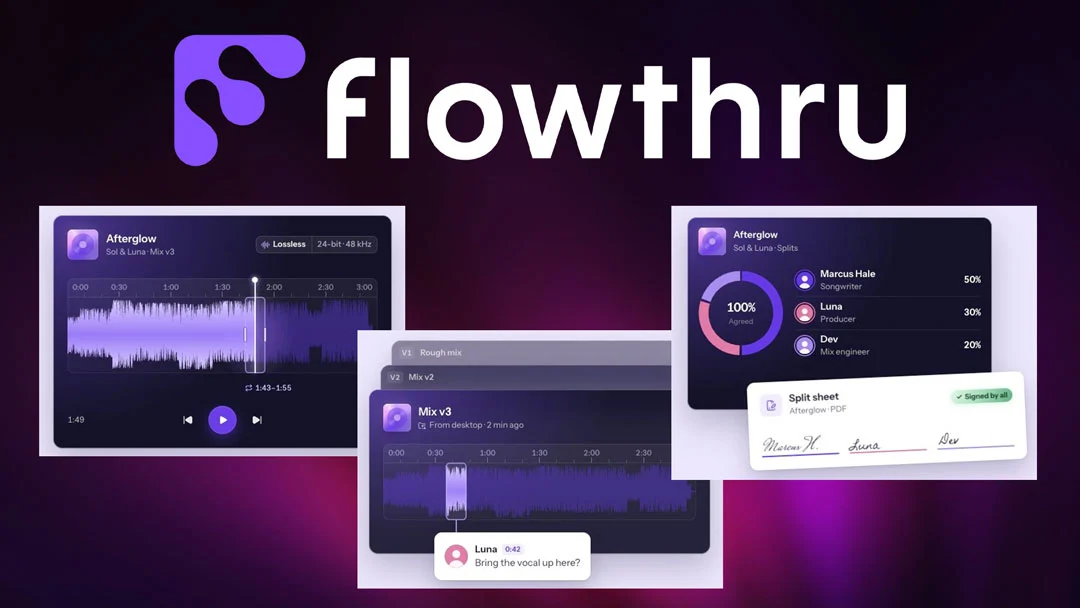
- Lossless Audio Sharing: Through the platform’s upgraded desktop sync, collaborators can stream files in high-fidelity, lossless formats. This eliminates the need for third-party file-sharing services that often lack version control or security.
- Timestamped Feedback: A native collaboration tool allows team members to leave specific, timestamped comments directly on the audio file, streamlining the revision process and reducing the reliance on scattered email threads or text messages.
- Integrated Rights Registration: Perhaps the most critical addition, the platform now allows teams to finalize split sheets and rights ownership while the music is still in the creative development phase. This data then flows directly into the registration process, ensuring that delivery to supported industry destinations is seamless and accurate.
A Chronology of Innovation: From Sound Credit to Flowthru
To understand the significance of this launch, one must look at the trajectory of the platform over the last several years.
- The Early Days (The "Sound Credit" Era): The platform initially launched with a singular, laser-focused mission: to solve the "credit crisis" in music. By automating the collection of ISRC and contributor metadata, it helped reduce the millions of dollars in unclaimed royalties that annually fell through the cracks of the global music business.
- The Mid-Stage Expansion: As the user base grew to include high-profile production houses and record labels, the platform began to integrate with major industry entities such as The MLC (The Mechanical Licensing Collective) and BMI. This established the platform as a trusted technical partner rather than just a software utility.
- The Rebrand (October 2026): The pivot to Flowthru represents the culmination of a two-year development cycle. Recognizing that "credit" was only one part of the release lifecycle, the developers spent the last 24 months building a collaborative suite that manages the flow of a project from the studio console to the final streaming delivery.
Supporting Data and Industry Adoption
Flowthru does not exist in a vacuum. Its rapid adoption by top-tier industry players serves as a testament to the platform’s utility. According to the company, the service is currently utilized by a massive cross-section of the industry, including major labels and distribution houses like Warner ADA, The Orchard, and Memphis Record Pressing.
Furthermore, the integration with technical partners like Avid—the gold standard in audio production software—has solidified its place in the modern studio workflow.
The "A-List" User Base
The platform’s reputation is bolstered by the high-profile creators who rely on its infrastructure. The list of users includes industry titans who have worked on records for Beyoncé, Ariana Grande, Justin Bieber, Mark Ronson, Bruno Mars, and John Mayer.
Notable figures include:
- Boo Mitchell: A legendary engineer and producer whose work with Al Green and Rod Stewart requires meticulous attention to detail.
- Rob Caggiano: Known for his work with Anthrax and Bruce Springsteen, Caggiano represents the bridge between rock-solid production and the need for modern digital efficiency.
- Antonio Dixon: A producer whose work with global pop icons necessitates a system that can handle complex, high-stakes release schedules.
These users represent the "Power User" demographic that has provided the feedback loop necessary to shape Flowthru into its current form.
Official Perspectives: The Philosophy of Flow
In statements surrounding the launch, the leadership behind Flowthru emphasized that the name change was about more than branding—it was about reflecting the reality of modern music production.
"Music creation is no longer a linear process," a company spokesperson noted. "It is a dynamic, iterative, and highly collaborative environment. By moving to a platform that supports the flow of audio and data, we are allowing creators to spend less time on spreadsheets and more time in the creative zone, while simultaneously ensuring that their rights are protected from day one."
The platform’s focus on "Release Preparation" is a direct response to the increasing complexity of international copyright law. By forcing metadata to be verified at the point of creation, Flowthru mitigates the risk of "black box" royalties—revenue that cannot be distributed because the rights holders are unknown or unverified.
Implications for the Music Industry
The launch of Flowthru carries significant implications for the future of the music economy.
1. The Death of the "Spreadsheet Culture"
For decades, the "split sheet"—the document determining who gets what percentage of a song—was a physical or digital document prone to loss or error. By digitizing this within the Flowthru ecosystem, the platform ensures that agreements are documented while the creative process is still fresh in the minds of the collaborators.
2. Streamlining the Supply Chain
The integration of lossless audio sharing into the same environment as rights registration is a game-changer. Historically, these were two separate worlds: the creative world of the studio and the administrative world of the label. Flowthru creates a "single-pane-of-glass" view that allows label operations, distribution managers, and creators to operate in tandem.
3. A Barrier to Entry for Errors
By utilizing automated tools for delivery to supported destinations, Flowthru reduces the likelihood of human error in the supply chain. In the streaming era, where a single incorrect ISRC code can result in a track being misattributed or lost in a digital library, this level of automation is essential.
How to Get Started: The Pro Plan Initiative
To encourage the migration of existing Sound Credit users and to attract new creators, Flowthru has announced an aggressive introductory offer.
The Incentive: Users who sign up at flowthru.com by November 21, 2026, will be granted three months of the "Pro" plan at no cost. This tier includes the full suite of collaborative tools, including expanded storage for lossless files and priority support for complex multi-contributor projects.
Conclusion
The evolution of Sound Credit into Flowthru is a microcosm of the wider digital transformation within the music industry. As the barrier to entry for releasing music drops and the volume of content increases, the tools required to manage that content must become more sophisticated.
By prioritizing the "flow" of data alongside the flow of sound, the platform has positioned itself as an essential utility for the modern creator. Whether it is an independent bedroom producer or a Grammy-winning mix engineer, the need for a singular, reliable, and high-fidelity workspace has never been greater. As we head into 2027, Flowthru seems poised to become the connective tissue that holds the modern music release process together.