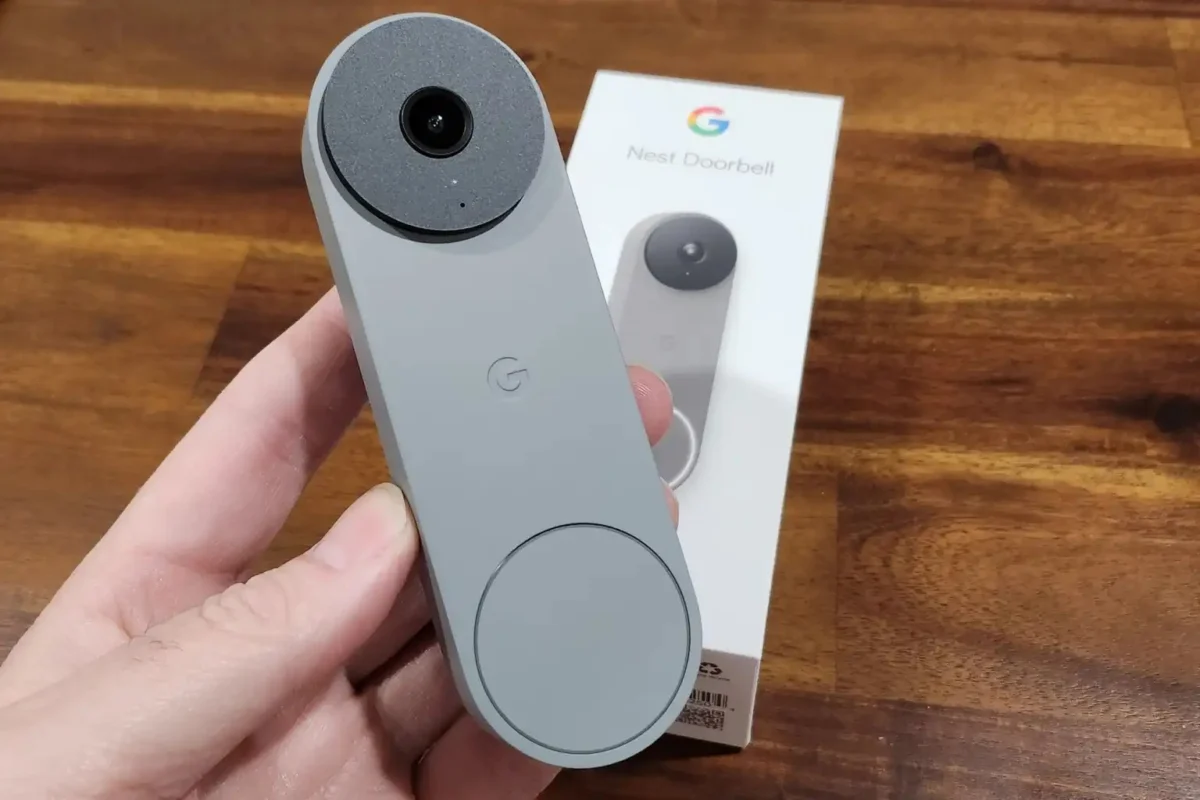
As the holiday shopping season reaches its fever pitch, homeowners looking to bolster their perimeter security have been handed a significant opportunity. The Google Nest Doorbell (wired, 2nd Gen) is currently available for just $98—a staggering 46% reduction from its standard $179.99 retail price. This Black Friday promotion marks one of the most competitive entry points for a premium, AI-integrated smart doorbell currently on the market.
For those who have been waiting to transition to a more robust, reliable surveillance setup, this deal represents a perfect intersection of high-end technology and accessibility. Below, we break down the specifics of this offer, the technology powering the device, and why this particular model remains a top-tier contender in an increasingly crowded smart home landscape.
The Core Facts: Why This Deal Matters
The $98 price point is not merely a discount; it is a strategic repositioning of the Nest Doorbell within the security ecosystem. By slashing nearly $82 off the list price, Google is making its advanced on-device processing and Gemini AI integration accessible to a broader audience.
Unlike battery-operated units that require periodic charging or supplemental solar panels, the wired version of the Nest Doorbell provides a "set it and forget it" experience. By tapping into your home’s existing low-voltage doorbell wiring, the device remains active 24/7, ensuring that you never miss a moment of porch activity. Whether you are tracking the arrival of essential packages, monitoring for suspicious activity, or simply keeping an eye on neighborhood traffic, the device acts as a tireless sentry.
A Chronology of the Nest Ecosystem
To understand the value of the current Nest Doorbell, it is necessary to look back at the evolution of Google’s smart home strategy.
- The Early Days (2011-2014): Google’s acquisition of Nest Labs brought the Nest Learning Thermostat into the spotlight, but it was the subsequent expansion into the "Works with Nest" program that laid the groundwork for a unified security ecosystem.
- The Expansion (2017-2020): Google began integrating its Nest security cameras into the Google Home app, gradually sunsetting the standalone Nest app to move toward a more centralized user interface.
- The AI Revolution (2023-2024): The most significant shift in the timeline occurred with the integration of generative AI. By moving from simple motion detection to sophisticated, LLM-powered event summarization (Gemini AI), the Nest Doorbell transitioned from a simple recording device to an intelligent security assistant.
Supporting Data: Technical Specifications and Performance
The hardware powering the Nest Doorbell is designed to provide clarity and precision, regardless of external lighting conditions.
1. Optical Prowess and Field of View
The camera captures crisp 1080p video, providing enough resolution to identify faces and read package labels clearly. Its 145-degree field of view is specifically engineered for a "head-to-toe" perspective, which is crucial for monitoring parcels left directly on your doorstep. This vertical coverage solves the "blind spot" problem common in many wide-angle but short-sighted cameras.
2. HDR and Night Vision
The inclusion of High Dynamic Range (HDR) ensures that the footage remains balanced even when the subject is backlit by a bright sky or harsh porch light. Furthermore, the robust night vision capabilities mean that security doesn’t cease when the sun sets, allowing for continuous surveillance through the night.
3. On-Device Intelligence
One of the key technical advantages of the current wired Nest model is its reliance on on-device machine learning. By processing data locally rather than relying exclusively on cloud-based computation for initial triggers, the camera provides faster response times and more accurate detection. The device is trained to distinguish between:
- People: Reducing alerts for wind-blown trees.
- Packages: Specifically notifying you when a delivery is placed or removed.
- Animals: Filtering out neighborhood pets or wildlife.
- Vehicles: Tracking the comings and goings on your street.
Official Responses and Integration: The Gemini AI Factor
Perhaps the most compelling argument for purchasing this device today is its recent integration with Google’s Gemini AI. This is a significant leap forward in home security.

In official statements, Google has emphasized that the transition to Gemini AI allows for "natural language searching." Users no longer need to scrub through hours of footage to find a specific event. Instead, you can ask your Google Home app, "Did I get a package yesterday?" or "Show me when the dog was on the porch." The AI parses your video history and surfaces the exact clips, drastically reducing the time spent managing security data.
Furthermore, the integration with the broader Google ecosystem means that your doorbell footage can be streamed to Nest Hub displays or cast to your television via Chromecast, providing a seamless "at-a-glance" security experience that few competitors can replicate.
Implications: The Role of Nest Aware
While the hardware is an incredible value at $98, it is important for consumers to understand the role of the Nest Aware subscription.
The Baseline Experience
Out of the box, the Nest Doorbell offers three hours of free event-based video history. This is sufficient for users who only need real-time notifications and quick look-ups of recent events.
The Enhanced Subscription
For those who require more peace of mind, the Nest Aware subscription (starting at $8 per month) unlocks the full potential of the device:
- Extended History: Access to 30 or 60 days of event-based video history.
- Familiar Face Detection: The ability for the camera to recognize frequent visitors, such as family members or regular delivery drivers.
- Emergency Services: Access to e911 services, which allows you to connect with emergency dispatchers near your home’s location from within the app, even if you are traveling abroad.
- Sound Detection: Advanced monitoring for specific audio triggers, such as glass breaking or smoke/carbon monoxide alarm sirens.
For many, the $98 price tag for the hardware makes the subscription feel like a much more justifiable long-term investment.
The Verdict: Why You Should Act Now
In the landscape of smart home technology, hardware prices rarely drop below the $100 mark for premium, brand-name devices. The Nest Doorbell represents a mature product that has benefited from years of software refinements, making it more stable and intelligent today than it was at launch.
If you are looking to secure your home before the holiday season—a time when both package deliveries and travel-related security concerns peak—this is the ideal moment to upgrade. The $98 price point is a temporary Black Friday offering, and once the promotion ends, the value proposition shifts back to the standard retail price.
Beyond the monetary savings, you are investing in a system that is actively evolving. With the continued rollout of Gemini AI features, the Nest Doorbell is one of the few devices that actually gets smarter the longer you own it. Whether you are a dedicated Google Home user or someone just starting to build a connected home, this wired doorbell offers the reliability, intelligence, and peace of mind necessary for modern home security.
Don’t wait for the holiday rush to pass—this is a deal that combines top-tier hardware with the cutting edge of AI, making it a definitive "must-buy" for the 2024 shopping season.