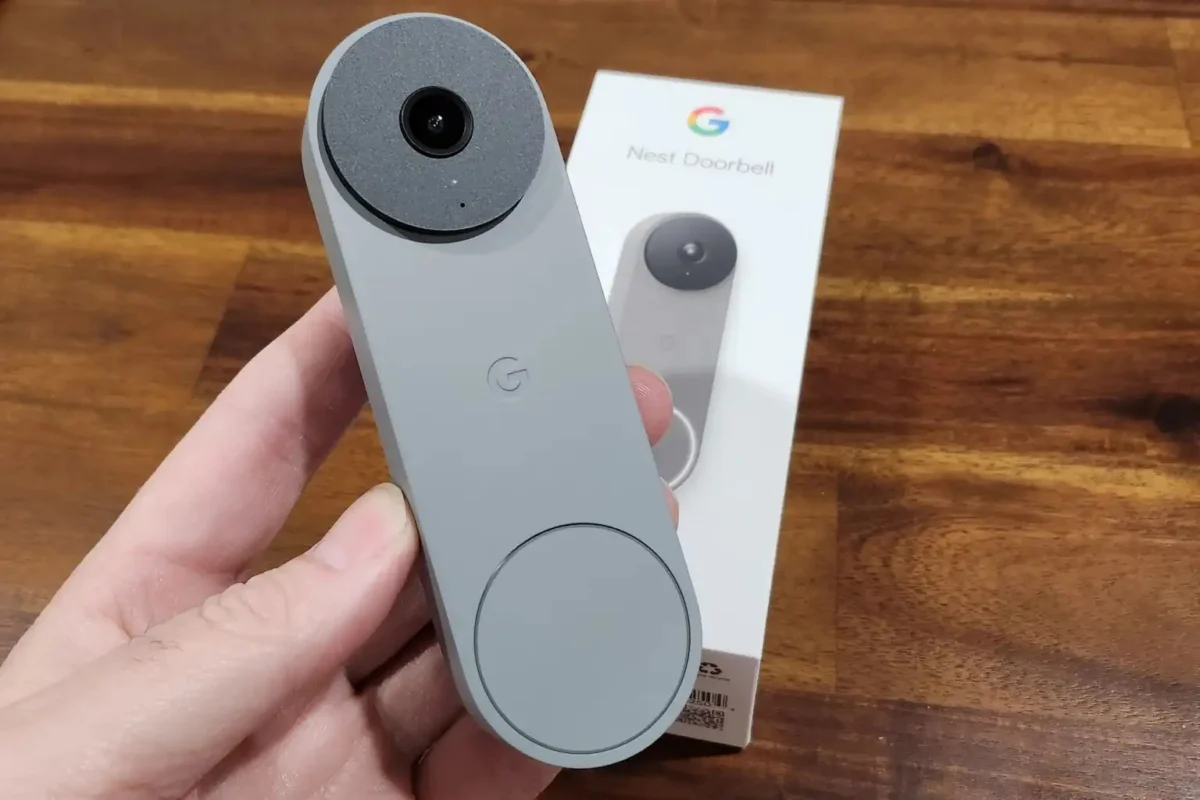
In the rapidly evolving landscape of smart home security, the front door remains the most critical point of defense. As we navigate the busiest shopping season of the year, one of the most compelling offers to emerge is a significant 46% price reduction on the wired Nest Doorbell. Currently available for just $98—down from its standard $179.99 list price—this device represents a substantial entry point for those looking to upgrade their home security infrastructure without the recurring inconvenience of battery maintenance.
Main Facts: A Powerhouse of Vigilance
The Nest Doorbell (Wired) is engineered for reliability. Unlike battery-powered alternatives that require periodic recharging, the wired version ensures a constant stream of surveillance. This reliability is bolstered by high-definition 1080p video capture, ensuring that faces, license plates, and delivery details are recorded with clarity.
One of the device’s standout features is its advanced field of view. By offering a 145-degree, head-to-toe perspective, the camera eliminates the "blind spots" often found in traditional, narrower-angle doorbells. This is particularly advantageous for package delivery, as it allows the user to see items placed directly at the base of the door. Furthermore, the integration of High Dynamic Range (HDR) and sophisticated night vision ensures that the quality of your footage remains consistent, regardless of harsh backlighting or the absence of daylight.
Perhaps most importantly, the device utilizes on-device machine learning to categorize activity. By distinguishing between people, packages, animals, and vehicles, the Nest Doorbell significantly reduces "notification fatigue"—the phenomenon where users become desensitized to security alerts due to frequent false positives triggered by wind or passing traffic.
A Chronology of Innovation: From Basic Recording to Gemini AI
To understand the significance of the current Nest Doorbell, one must look at the evolution of Google’s smart home ecosystem. In its early iterations, the Nest ecosystem was primarily a cloud-based storage service. Over the last decade, however, the company has pivoted toward "Edge AI"—processing data locally on the device rather than sending every frame of video to the cloud.
The introduction of this wired model marked a turning point in hardware efficiency. As Google integrated its deep-learning prowess into the hardware, the doorbell transformed from a simple motion sensor into a proactive security assistant. The most recent and perhaps most transformative milestone is the integration of Google’s Gemini AI.
With this update, the doorbell no longer just shows you a clip of "motion at the door." Instead, it can generate intelligent summaries of events. Users can now perform natural-language searches within their video history—for instance, asking, "Did the package arrive while I was at work?" or "Who came to the door yesterday morning?" This shift from raw video storage to intelligent information retrieval represents the current state-of-the-art in consumer home security.
Supporting Data: Why Reliability Matters
The market for video doorbells is crowded, but data consistently suggests that users prioritize three specific metrics: latency, clarity, and storage accessibility.

- Latency: Because the wired Nest Doorbell is not reliant on a power-saving sleep mode, the time between a motion event and a notification is significantly lower than that of battery-operated counterparts.
- Field of View: The 145-degree vertical-leaning aspect ratio is specifically designed for the "porch problem." Studies in logistics and consumer behavior show that the majority of package theft occurs within the first 12 inches of the threshold; the Nest’s geometry is optimized precisely for this zone.
- Storage Ecosystem: Out of the box, Google provides three hours of event-based video history free of charge. For power users, the Nest Aware subscription service offers up to 60 days of event history, alongside premium features like "Familiar Face" detection, which uses facial recognition to alert you specifically when a friend or family member arrives.
Official Perspectives: The Value of the Ecosystem
While manufacturers often focus on specifications, the value proposition of the Nest Doorbell lies in its integration. According to Google, the focus of the current hardware suite is to "make the front porch feel like an extension of the living room."
By leveraging the Google Home app, the doorbell acts as a central hub. It can broadcast announcements to Nest speakers throughout the home when someone presses the button, and it can display a live feed automatically on Nest Hub smart displays. This interoperability is a core pillar of the product’s design philosophy: security should not be an isolated task, but an integrated component of the connected home.
Industry analysts note that while many competitors focus on "feature dumping"—adding as many sensors and bells as possible—Google’s strategy remains focused on user experience and the reliability of the AI notification system. The $98 price point is widely viewed by industry observers as an aggressive push to consolidate market share during the high-traffic holiday season, effectively lowering the barrier for entry into the Google smart home ecosystem.
Implications: The Future of Smart Security
What does this deal imply for the average homeowner? First, it signals that 1080p, AI-enhanced security is no longer a luxury—it is becoming the baseline standard. As we move into 2025, we can expect the integration of Large Language Models (LLMs) like Gemini to become standard across all home security devices, moving us closer to a "conversational" smart home.
Second, the shift toward wired power solutions highlights a growing consumer preference for "install it and forget it" hardware. Homeowners are increasingly moving away from the maintenance cycle of battery charging, opting instead for professional or DIY-wired setups that guarantee uptime.
Finally, for the privacy-conscious, the use of on-device processing remains a critical selling point. By keeping the classification of video events local to the device, the Nest Doorbell provides a layer of privacy that cloud-only processing cannot match. It ensures that the device can intelligently identify a package without needing to stream every pixel of your private entryway to a server for analysis.
Conclusion: Seizing the Opportunity
As the holiday shopping season accelerates, the $98 price tag for the Nest Doorbell (Wired) is a fleeting opportunity. Whether you are looking to secure your home against porch pirates, monitor your kids returning from school, or simply enjoy the convenience of knowing who is at the door before you stand up, this device offers a robust, AI-powered solution at an accessible price.
The confluence of high-end AI features, a superior field of view, and a price point that undercuts most of its premium competitors makes this one of the most practical investments you can make for your home this Black Friday. Given the rapid pace of technological obsolescence, securing a device that is already equipped with future-facing AI capabilities like Gemini is a wise, long-term decision for any modern homeowner. Act quickly—at this discount, inventory is expected to move rapidly.