In a move set to disrupt the traditional hierarchy of broadcast infrastructure, Violet Audio has announced a major software evolution for its dMix 128 digital mixer. By integrating SMPTE ST 2110-30 and AMWA NMOS (Networked Media Open Specifications) standards, the company is effectively dismantling the "price-of-entry" barrier that has historically kept advanced IP-based audio networking reserved for high-end, multi-million-dollar broadcast facilities.
This update represents more than a simple firmware patch; it is a strategic repositioning of the dMix 128 as a high-performance, standards-compliant node capable of sitting comfortably within the most complex television production ecosystems, esports venues, and large-scale remote production facilities.
The Core Technical Shift: Bridging the IP Divide
At its heart, the new release introduces native support for SMPTE ST 2110-30—the industry-standard protocol for the transport of digital audio over IP networks—and AMWA NMOS, which provides the necessary framework for discovery, connection management, and device interoperability.
For years, the adoption of ST 2110 has been hampered by complexity. Broadcast engineers have often been forced to rely on expensive, proprietary gateways or high-tier console systems to handle the nuances of PTP (Precision Time Protocol) synchronization and stream routing. Violet Audio has chosen to bypass this friction by integrating a dedicated "Streams" management interface directly into the dMix 128’s browser-based control environment.
This new interface allows operators to handle the heavy lifting of network audio—including clocking, stream discovery, transmission, and routing—without leaving the mixer’s GUI. By testing this implementation against the rigorous AMWA NMOS Testing Tool, Violet Audio has ensured that the dMix 128 behaves predictably and reliably within multi-vendor environments, meeting the stringent requirements of modern professional broadcast networks.
Chronology: From Concept to Industry Disruption
The development of this feature set follows a clear trajectory for Violet Audio, a company that has steadily carved out a niche in the high-density mixing market.
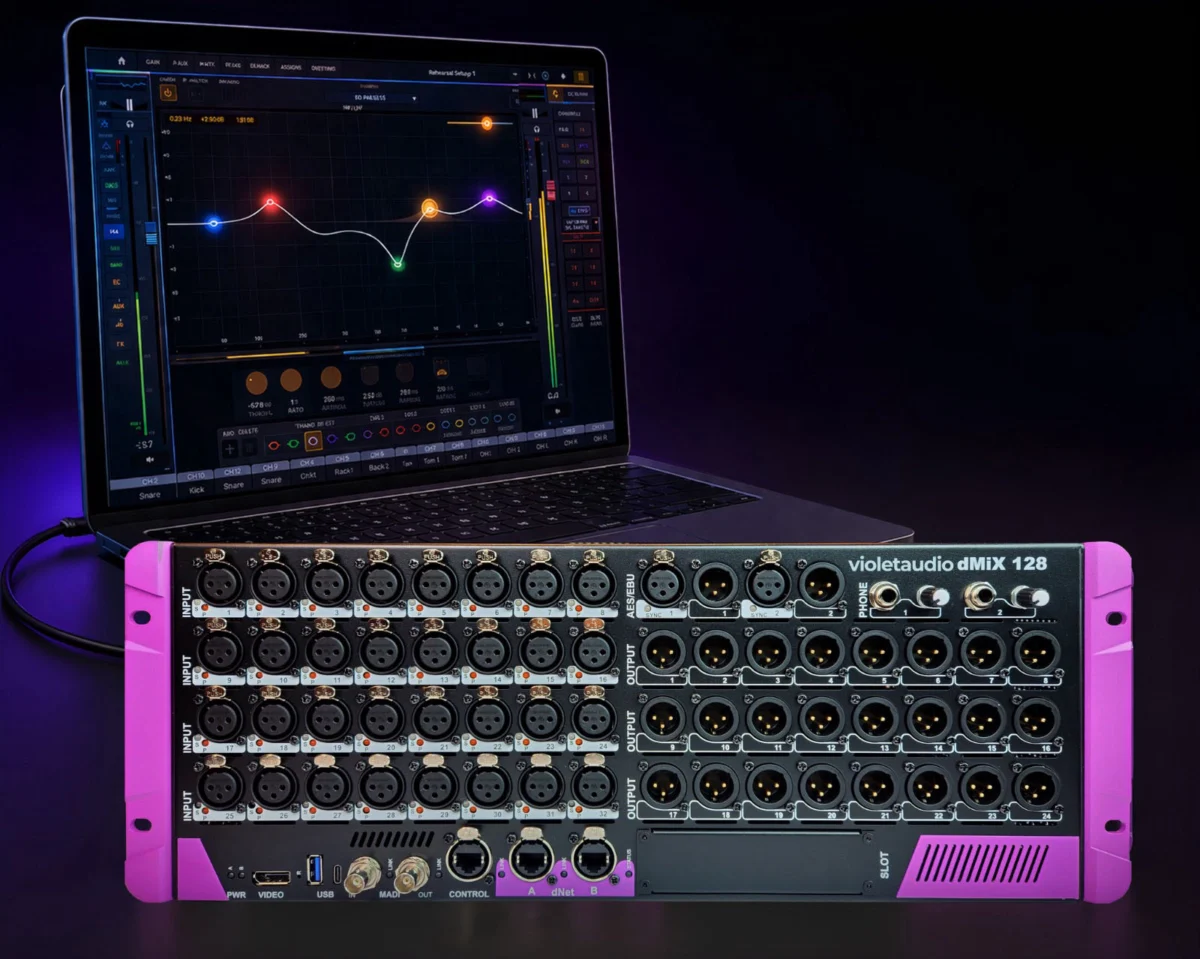
- Initial Platform Launch: The dMix 128 first gained market traction by offering a high-density, FPGA-based processing engine at a competitive price point, featuring 128 channels, 32 mic/line inputs, and 24 line outputs.
- The Pivot to IP: Recognizing the industry’s rapid migration away from point-to-point copper and SDI-embedded audio toward redundant AES67 and IP-based workflows, Violet Audio began an aggressive R&D phase in late 2024 to bring SMPTE ST 2110 compliance to the platform.
- Validation and Testing: Throughout early 2026, the team focused on achieving "interoperability-first" status, leveraging the AMWA NMOS Testing Tool to ensure the mixer would be recognized by existing network controllers and management software used in major studios.
- InfoComm 2026 Announcement: The official unveiling at InfoComm 2026 marks the start of the commercial rollout, with the company initiating a six-month free trial period for existing and new users to test the integration in live environments.
Supporting Data: Under the Hood of the dMix 128
The dMix 128 is not merely a "mixer with an IP port"; it is a robust, low-latency processing engine designed for the rigors of 24/7 operations. The hardware specifications remain a cornerstone of its value proposition, now augmented by deep network capabilities:
- Audio Density: 128 total mixing channels with FPGA-based signal processing.
- I/O Configuration: 32 Mic/Line Inputs, 24 Line Outputs, and integrated MADI I/O.
- IP Connectivity: Over 300 channels of redundant AES67 networking.
- Performance Metrics: Latency is held to a remarkably low 0.3 ms, critical for live broadcast synchronization.
- System Integrity: Dual redundant power supply units (PSU) and 64×64 CoreAudio/ASIO driver support for DAW integration.
- The "Streams" Interface: A specialized dashboard providing real-time visibility into PTP synchronization status, channel counts, sample rates, and stream health.
By combining this hardware density with the new software-defined IP layer, Violet Audio has created a platform that scales from small podcast studios to complex, networked live-event production trucks.
Official Perspective: The Vision Behind the Code
Danny Olesh, founder of Violet Audio, views this release as a necessary correction in the professional audio market. "This is not just a checkbox feature," Olesh stated during the product unveiling. "The goal is to make professional IP audio easier to use. Engineers should be able to discover devices, connect streams, and map audio without needing a complicated external setup. That is exactly where NMOS makes a huge difference."
Olesh emphasizes that the industry has reached a tipping point where IP is no longer a luxury but a requirement. By offering this at a price point of $5,995, Violet Audio is inviting a broader demographic of systems integrators and content creators into the ecosystem of standards-based networking. "SMPTE 2110-30 and NMOS are normally associated with high-end broadcast infrastructure, yet we are bringing this level of IP connectivity into a live mixing product at a price point that makes it accessible to far more engineers, integrators, and venues."
Implications for the Industry
The ripple effects of this update are likely to be felt across several key verticals.
1. The Democratization of Broadcast
For small-to-medium-sized television stations and digital media outlets, the barrier to entry for ST 2110 infrastructure has been high. By using the dMix 128, these organizations can now integrate directly into existing IP facilities without the need for massive capital expenditure on high-end broadcast routers and conversion hardware.
2. Streamlining Systems Integration
Systems integrators are perhaps the biggest beneficiaries of the NMOS implementation. NMOS significantly reduces the time required for system commissioning. Rather than manually patching and addressing hundreds of streams, installers can rely on the automated discovery process, ensuring that the dMix 128 is "plug-and-play" within a broader network of standards-based devices.
3. The Rise of the "Hybrid" Facility
We are seeing an increase in facilities that function as both live sound venues and broadcast centers. The dMix 128 is uniquely positioned to handle both tasks. It can simultaneously manage local PA feeds for a live audience while streaming multi-channel, PTP-synchronized audio to a broadcast master control room or a mobile unit parked outside.
4. Future-Proofing for Content Creators
As live streaming continues to evolve toward higher production values, the need for robust, low-latency audio transport is growing. The dMix 128 provides a future-proof foundation for creators who are moving beyond USB interfaces and into the realm of dedicated network audio.
Pricing and Availability
Violet Audio has structured the availability of these new features to allow for a "try-before-you-buy" approach. The dMix 128 is currently shipping through authorized retailers at a base price of $5,995.
To facilitate widespread adoption, the SMPTE ST 2110-30 and NMOS feature set is available as a free six-month trial through the end of 2026. Following the trial period, users have two options to retain the functionality:
- Subscription Model: A $499 annual fee, providing flexibility for smaller production houses.
- Perpetual License: A $1,995 one-time fee, intended for permanent installations where long-term ownership is the priority.
Conclusion
The release of SMPTE ST 2110-30 and NMOS support for the dMix 128 marks a significant milestone in the evolution of professional audio. By stripping away the complexity and the exorbitant costs previously associated with IP-based broadcast workflows, Violet Audio is empowering a new generation of engineers to build faster, more efficient, and more reliable audio systems.
As the industry continues its march toward an all-IP future, tools like the dMix 128 ensure that the benefits of networked media are no longer confined to the elite echelons of global broadcasting, but are instead accessible to any professional who demands precision, scalability, and ease of use in their signal chain. Whether it is a local news desk, an esports stage, or a hybrid concert hall, the landscape of IP audio just became significantly more open.