As modern architecture continues to evolve, the physical spaces dedicated to education and collaboration have transformed dramatically. Gone are the days of the rigid, isolated rows of desks facing a single chalkboard. Today’s universities, K-12 schools, libraries, and multi-purpose campus commons are intentionally designed as flexible, dynamic environments meant to foster communication, interactive learning, and shared experiences.
However, as design trends lean heavily toward sleek, modern aesthetics—incorporating hard, reflective surfaces like polished concrete, floor-to-ceiling glass, steel accents, and granite flooring—a silent obstacle to academic success has emerged. Chaotic sound, long reverberation times, and persistent echoes are sabotaging learning environments. Far from being a mere luxury or an afterthought for recording studios, acoustic design has become integral to making modern educational spaces comfortable, healthy, and functionally effective.

The Core Problem: Acoustics, Communication, and Cognitive Load
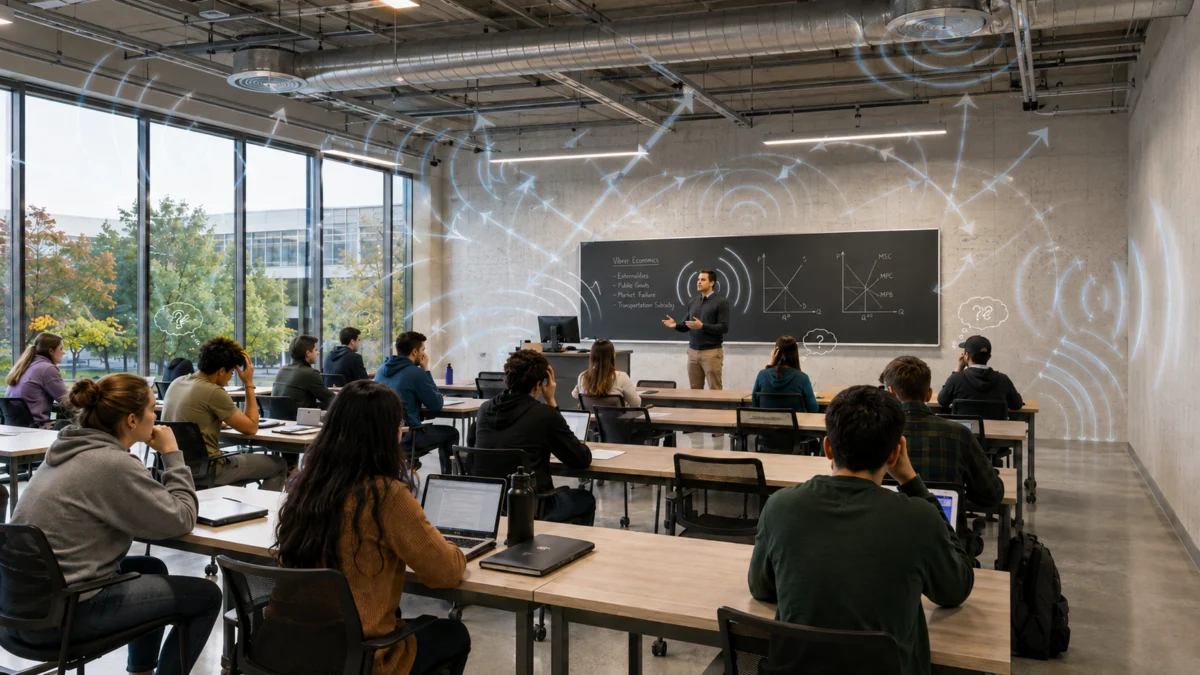
At the heart of the issue is a fundamental conflict between modern architectural trends and human biology. Hard, reflective surfaces bounce sound waves around a room indefinitely, creating a chaotic acoustic soup. Background noise from HVAC systems, hallway chatter, and the compounding reflections of everyday speech create an environment where sound smears together.
This acoustic interference directly impacts learning by severely limiting the ability of both teachers and students to communicate effectively. When background noise and reverberation dominate a room, students miss critical words. Consonants such as f, p, s, and t, along with vital word endings, become entirely obscured. Research indicates that in poorly treated spaces, students can miss up to one in every four words spoken by an instructor—a deficit that grows exponentially worse for students seated farther away in large lecture halls or assembly spaces.

The Cognitive Toll of Noise
This phenomenon is deeply tied to Cognitive Load Theory. When a room suffers from poor acoustics, students cannot simply listen; they must actively and constantly filter out noise to decipher what is being said.
This continuous mental filtering consumes a significant portion of their working memory capacity. Consequently, students are left with less mental energy to actually process, understand, and retain new information. By contrast, when excess sound is absorbed and ambient noise levels are lowered, distractions evaporate. The resulting sonic calm creates an environment where attention spans are extended, student behavior improves, and overall class participation increases.

Chronology of an Architectural Shift: From Industrial Tiles to Dynamic Design
To understand where educational acoustics stand today, it helps to examine how building practices have shifted over the decades:
- The Mid-to-Late 20th Century (The Era of Industrial Standardization): Schools were constructed with utilitarian, one-size-fits-all approaches. Standard acoustic ceiling tiles were deployed uniformly, often sagging, staining, and degrading over time both visually and functionally. While they offered basic sound absorption, they did little to enhance architecture or accommodate collaborative learning styles.
- The Early 2000s (The Rise of Hard Surfaces): A sweeping design trend favored minimalist, open-concept spaces wrapped in glass, steel, and polished stone. While aesthetically striking, these spaces ignored acoustic principles, leading to severe reverberation problems (with RT60 reverberation times skyrocketing up to 1.9 seconds, compared to the recommended 0.7 seconds).
- The 2010s (The Collaborative Evolution): Educational institutions shifted toward open-plan learning zones and multi-purpose commons. This introduced the "Lombard Effect"—a behavioral phenomenon where people naturally raise their voices to compete with ambient noise, which in turn drives background noise levels even higher.
- Present Day (Integrated, High-Performance Architectural Acoustics): Modern design recognizes that sound is just as critical to human comfort as lighting, temperature, and ergonomic seating. Today’s acoustic solutions merge seamlessly with interior architecture, utilizing high-performance materials tailored to specific zones within a building.
Supporting Data and the Metrics of Sound
Quantifying the impact of room acoustics reveals stark metrics that underscore the urgency of proper design:

- Reverberation Time (RT60): In untreated educational spaces, RT60 measurements—the time it takes for sound to decay by 60 decibels—frequently reach 1.9 seconds. Acousticians recommend an RT60 of 0.7 seconds or lower for optimal speech intelligibility in classrooms.
- Word Recognition Deficits: Studies demonstrate that students in poor acoustic environments miss up to 25% of spoken words.
- The Distance Factor: Sound loses energy as it travels. In large auditoriums, gymnasiums, and high-ceilinged lecture halls, the combination of distance and reverberation creates severe audio "hot spots" and dead zones, alienating students seated in the rear rows.
- The Fallacy of Amplification: A common misconception is that installing sound reinforcement systems—such as microphones and loudspeakers—solves speech intelligibility issues. In reality, amplifying speech in an untreated room merely pumps more energy into the space, exacerbating reflections and making the acoustic environment even louder and more chaotic. True clarity requires absorption first.
Official Responses and Strategic Solutions
Architects, facility managers, and acoustic engineers are no longer relying on generic fixes. Instead, modern educational design demands localized, strategic interventions that treat sound at its source rather than simply attempting to "deaden" an entire room into an uncomfortable vacuum.
Targeted Architectural Interventions
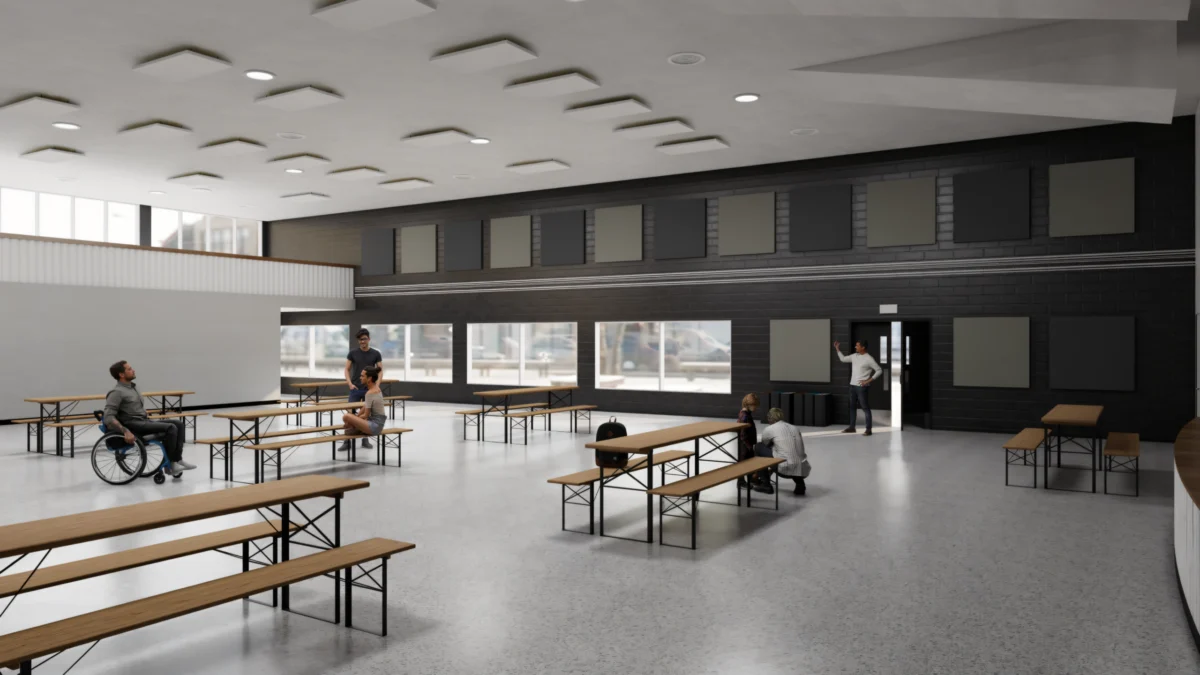
- Ceiling Clouds and Baffles: In high-ceilinged lecture halls, atriums, and open commons, ceiling-mounted clouds and suspended vertical baffles absorb sound waves before they can travel horizontally across work zones or bounce vertically between floors.
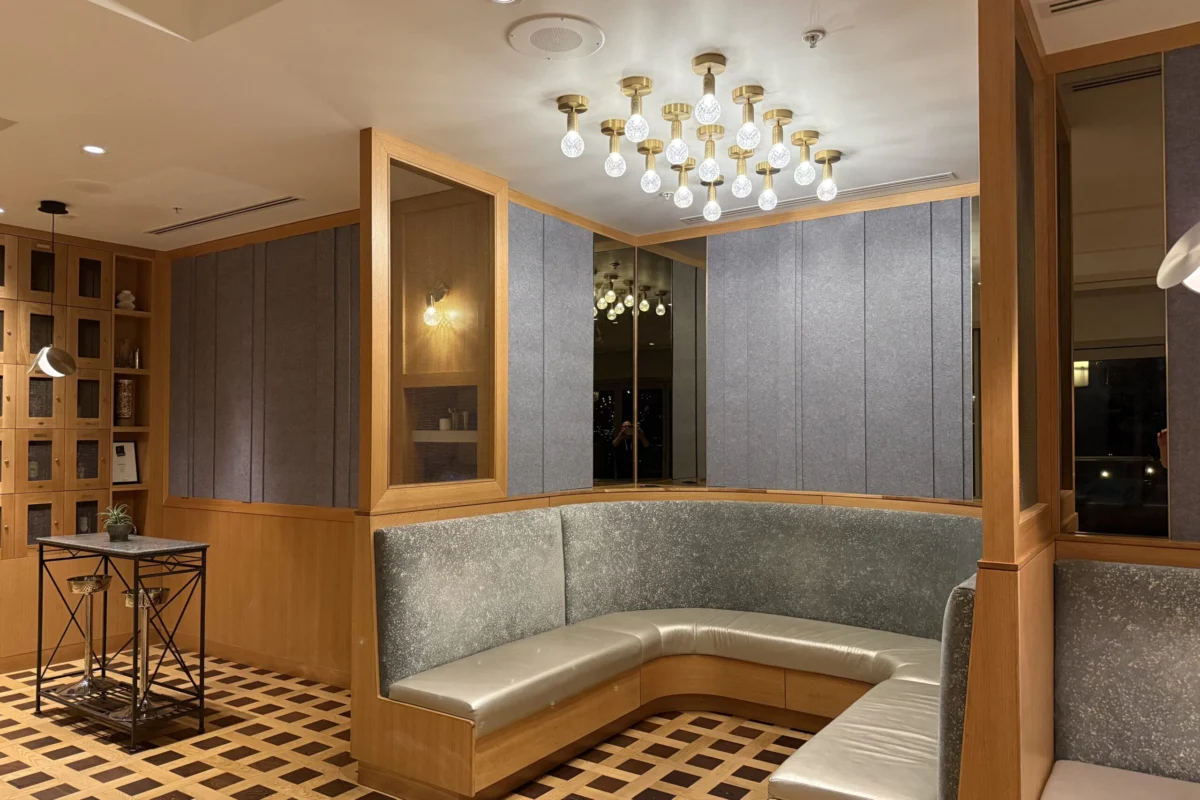
- Broadband Glass Wool Panels: Borrowed from critical listening spaces like recording studios, high-performance glass wool panels offer exceptional absorption across the entire frequency spectrum, eliminating flutter echoes and taming unruly reflections.
- Advanced Modular Systems: Modern product lines—such as Primacoustic’s Broadway series, fabric-wrapped TelaScapes, customizable Archadia panels, and the comprehensive EcoScapes system (which includes dimensional baffles and contour carved panels)—allow designers to integrate acoustic control directly into the visual identity of a school.
- Mobile Isolation Solutions: For modern hybrid learning environments where lectures are streamed, recorded, or where students collaborate on media projects, reconfigurable mobile isolation units provide localized control over sound capture.
- Durable Grid Upgrades: Replacing aging industrial tiles with high-performance grid systems (such as the GridWay series) ensures that acoustic infrastructure remains durable, visually appealing, and functionally elite over decades of heavy campus use.
Broader Implications for the Future of Learning
The implications of prioritizing room acoustics extend far beyond standardized test scores or short-term comfort. They touch upon health, equity, and the evolution of teaching methodologies.

Health and Well-Being
Constant exposure to high ambient noise levels acts as a chronic physiological stressor for both educators and students. Elevated noise increases fatigue, raises cortisol levels, and contributes to vocal strain and burnout among teachers who must constantly project their voices over competing room reflections. Lowering background noise levels creates a calmer, healthier psycho-acoustic environment.
Educational Equity
Poor acoustics disproportionately affect vulnerable learning populations. Younger children, who are still developing their vocabulary and phonological skills, struggle significantly more with distorted speech signals. Furthermore, students learning in a second language or those with mild auditory processing challenges or hearing impairments are heavily penalized by untreated, echo-heavy classrooms. Good acoustic design ensures equitable access to education for every student in the room.

The Holistic Campus Experience
As educational institutions compete to attract students in an increasingly digital world, the physical campus must offer an experience that screens cannot replicate. By treating sound as a fundamental design element—balancing aesthetics, flexibility, and human comfort—architects and educators can transform traditional rooms into spaces that genuinely support deep focus, long-term retention, and dynamic collaboration. Ultimately, a well-designed room cannot single-handedly make a student smarter, but by removing the invisible barrier of noise, it ensures that nothing stands in the way of their potential.