In an era dominated by algorithmic streaming playlists, cloud-based audio libraries, and hyper-minimalist digital audio players, the charm of live, tactile broadcasting has quietly slipped into the background. Yet, consumer electronics manufacturer FiiO—a brand increasingly synonymous with modern audio nostalgia, thanks to successful revivals like the SNOWSKY ECHO NANO and the CP13 cassette player—is refusing to let analog media fade away quietly.
Their latest release, the FiiO RR13, bridges the gap between old-school radio culture and contemporary digital versatility. Priced competitively at $64.99, this pocket-sized pocket FM radio functions not only as a traditional tuner with mechanical controls, but also as a desktop active speaker and a USB-C DAC/amplifier.
Blending tactile joy with modern utility, the RR13 is far more than a novelty item. This review examines its design, features, sonic performance, and how it stacks up against its smaller sibling, the FiiO RR11.

Main Facts: What Is the FiiO RR13?
At its core, the FiiO RR13 is a portable, retro-styled FM radio equipped with analog tuning, integrated stereo speakers, and independent headphone amplification.
- Price: $64.99 USD
- Core Functions: FM Radio (analog manual tuning), USB-C DAC/Amplifier dongle, and portable active speaker.
- Tuning Chipset: Skyworks Solutions Si4831 chipset with built-in Digital Signal Processing (DSP).
- FM Bands: Supports standard 87–108 MHz and regional 76–90 MHz frequencies.
- Power Source: Rechargeable 3.7V 10440 lithium battery (swappable).
- Weight: 76 grams.
Unlike standard utilitarian emergency radios or legacy pocket units from manufacturers like Sony, the RR13 is engineered with the audiophile-adjacent mindset that FiiO is known for, emphasizing build quality, low noise floors, and flexible daily-carry utility.
Chronology and Development: FiiO’s Retro Audio Journey
FiiO’s recent trajectory highlights a calculated pivot toward nostalgic hardware formats. Over the past few years, the market has witnessed a surge in demand for tangible, physical media formats that offer a digital detox from smartphones.

- The Cassette and Portable Revival: FiiO initially tested the waters of portable retro gear with the release of devices like the CP13 portable cassette player, tapping into an unexpected resurgence of analog tapes among younger demographics.
- The Ultra-Compact Pioneer (RR11): Following this, FiiO introduced the RR11—a dongle-sized minimalist FM radio designed primarily for headphone use.
- The Evolution (RR13 Release): Realizing the limitations of ultra-compact designs, FiiO developed the RR13 to address consumer demand for added versatility. By integrating a built-in active speaker, an extendable external antenna, and a higher-capacity rechargeable power system, the RR13 evolved into a fully featured "pocket jukebox."
Design, Build, and Ergonomics
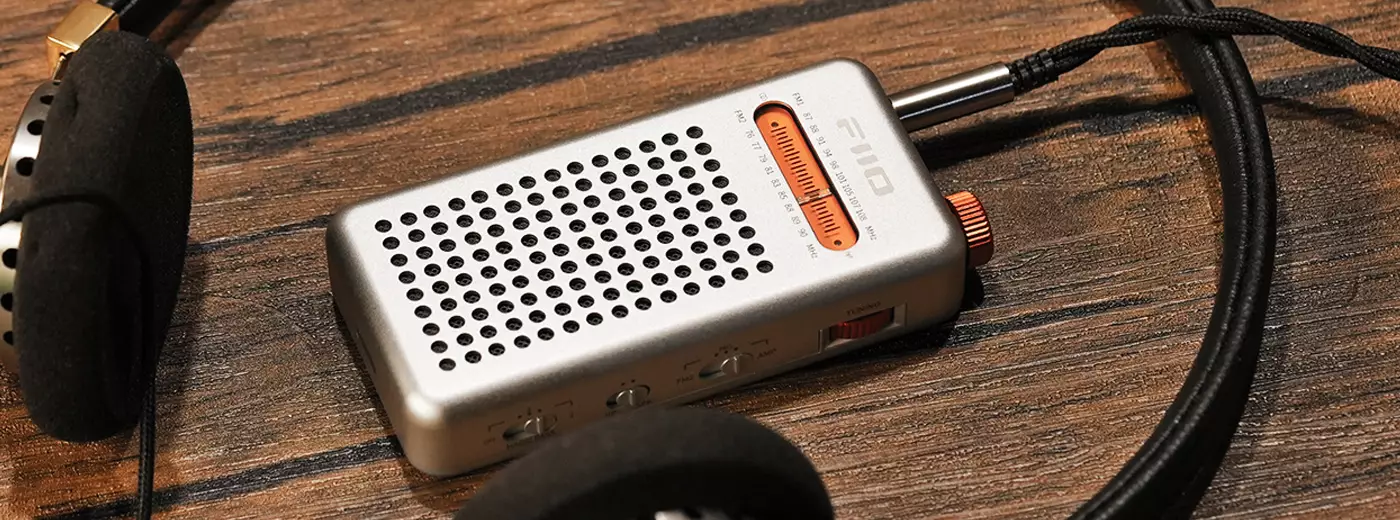
Measuring in at an exceptionally light 76 grams, the RR13 is housed in a sleek, industrial-styled aluminum shell available in several distinct color schemes. Despite packing significantly more features than traditional pocket radios, it maintains a remarkably slim profile.
Controls and Tactile Feedback
Operation of the device is designed to be fully manageable with one hand. A satisfyingly weighted volume roller wheel provides distinct tactile feedback reminiscent of classic pocket transistors. Secondary controls—including the Bass Boost toggle, FM band switch, and AMP/Radio mode selectors—are logically positioned along the chassis.
Battery and Power Management
Departing from standard AAA battery configurations, the RR13 utilizes a rechargeable 3.7V 10440 lithium battery. Operating at a higher voltage than standard alkaline cells, this battery yields improved driving power for headphones.

- Battery Life: Delivers approximately 7 hours of continuous playback through earphones, and roughly 4 hours when utilizing the built-in speaker.
- Recharge Time: Reaches a full charge in approximately 2 hours via USB-C.
A dedicated sleep timer button on the left panel allows users to program an automatic shutoff for 30 or 60 minutes. This thoughtful addition caters to bedtime listeners who enjoy drifting off to talk radio or music without worrying about overnight battery drain or hearing fatigue.
Feature Deep Dive
1. The Radio and RF Reception
The RR13 supports FM frequencies across both the standard 87–108 MHz and 76–90 MHz bands. Tuning is performed manually via a mechanical dial, complemented by an LED indicator that lights up upon detecting a stable signal.
Driven by the Skyworks Solutions Si4831 chipset, the internal DSP processes radio frequency signals while automatically filtering out interference and prioritizing stronger frequencies.

“During a field test, the RR13 with its antenna plugged in delivered impressive reception with minimal interference outside of dense concrete obstructions, matching the reliable performance of a car radio.”
Because FM signals prioritize audio clarity over long-distance propagation (comparable to how Bluetooth LDAC trades transmission range for bandwidth fidelity over SBC), the RR13 delivers a noticeably cleaner listening experience for music than traditional AM radios. Furthermore, the inclusion of a detachable external antenna significantly boosts signal acquisition in rural or fringe coverage areas.
2. USB Decoding and Active Speaker Mode
When switched to "Amp" mode and connected to a smartphone or computer via USB-C, the RR13 seamlessly transforms into a portable USB DAC and amplifier.

While a USB-C to USB-C interconnect cable is notably absent from the retail packaging, standard OTG cables or cables borrowed from other FiiO devices function flawlessly.
When untethered from headphones, the built-in stereo speaker punches well above its weight class. It delivers surprising volume and fullness, which can be further augmented using the device’s signature two-step "Magic-bass" boost.
Sound Impressions and Performance
Evaluating the FiiO RR13 requires a dual perspective: how it performs as a traditional radio receiver, and how it handles digital decoding as a USB-C dongle.

Timbre and Tonal Balance
Traditional radios often sacrifice fidelity for sheer utility. However, the RR13 benefits immensely from modern DSP filtering, which maintains a remarkably quiet background free of hiss or static bursts during channel transitions.
- Midrange and Vocals: The device features a slightly warm, neutral tuning profile with a boosted mid-bass. This emphasizes human speech, making newscasts, talk shows, and sports broadcasts exceptionally clear and articulate without sounding harsh or fatiguing.
- Highs and Lows: Upper treble is gently smoothed over to prevent listening fatigue, while the bass response possesses a natural fullness. Engaging the two-step Bass Boost adds satisfying body to the low end, effectively counteracting environmental noise when listening outdoors with earbuds or semi-open headphones.
Staging and Dynamics
When paired with dynamic in-ear monitors (IEMs) like the Sony IER-M500 or sensitive multi-driver configurations, the RR13 delivers a clean, well-separated stereo image. Vocals sit forward in the mix with adequate layering against backing instrumentals.
While it cannot compete with dedicated high-end digital audio players (DAPs) in terms of micro-detail retrieval or ultimate soundstage depth, its dynamic presentation easily outperforms standard smartphone headphone jacks and standard budget dongles.

Synergy and Power Output
The integration of a 10440 lithium battery allows the RR13 to maintain a higher operating voltage than AAA-powered alternatives, providing a robust output capable of driving low-impedance headphones and multi-driver IEMs with ease.
- IEM and Earbud Pairing: The RR13 pairs exceptionally well with dynamic IEMs and classic earbuds like the Venture Electronics (VE) Monk Plus. Highly sensitive balanced armature (BA) IEMs may reveal a faint background hiss, though it remains well-controlled during active playback.
- Headphone Synergy: Portable open-back and low-impedance over-ear models (such as the Meze Audio 105 AER) receive sufficient power to sound dynamic, open, and engaging.
Comparative Analysis: FiiO RR13 vs. FiiO RR11
| Feature | FiiO RR11 | FiiO RR13 |
|---|---|---|
| Form Factor | Dongle-sized minimalist | Pocket radio with built-in speaker |
| Weight | Ultralight (~35g) | 76g |
| Speaker | None (Headphones required) | Integrated stereo speakers |
| Antenna | Headphone cable only | Detachable external antenna + cable |
| Battery Capacity | Smaller internal cell | 50% larger swappable lithium battery |
| Price | Budget tier | $64.99 USD |
While the RR11 caters strictly to users wanting an ultra-portable FM tuner attached to wired earphones, the RR13 expands the product category into a true lifestyle gadget. The inclusion of a physical speaker, an extendable antenna, and a larger swappable battery makes the RR13 far more versatile for outdoor excursions, bedside listening, and desktop use.
Implications for the Portable Audio Market
The release of the FiiO RR13 signals a broader cultural and industrial shift within the personal audio community. As streaming fatigue sets in among consumers bombarded by endless digital choices, niche hardware that offers intentional friction—such as manual analog tuning and live broadcasting—is carving out a resilient market segment.

By fusing vintage aesthetics with modern USB-DAC architecture, FiiO has successfully transformed what could have been a nostalgic gimmick into a genuinely practical, multi-functional audio tool.
Verdict
The FiiO RR13 is a delightful surprise in a market saturated by identical, screen-heavy devices. It delivers a fun, highly engaging user experience that encourages listeners to step away from curated algorithmic playlists and rediscover the spontaneous joy of live radio broadcasting.
Backed by clean DSP filtering, surprisingly robust speaker output, and flexible USB-DAC functionality, the RR13 serves as an exceptional everyday carry companion or a reliable backup audio device. For the price of a few sets of premium ear tips, it offers a remarkably entertaining portal back to the golden age of radio—with a modern twist.