Introduction: The Challenge of Scale
In the world of modern house-of-worship production, the leap from traditional church sanctuary acoustics to arena-sized touring environments presents a unique set of technical challenges. Balancing the high-energy, immersive dynamics of contemporary worship music with the hyper-articulate requirements of spoken-word sermons requires a sound reinforcement system that is as versatile as it is powerful.
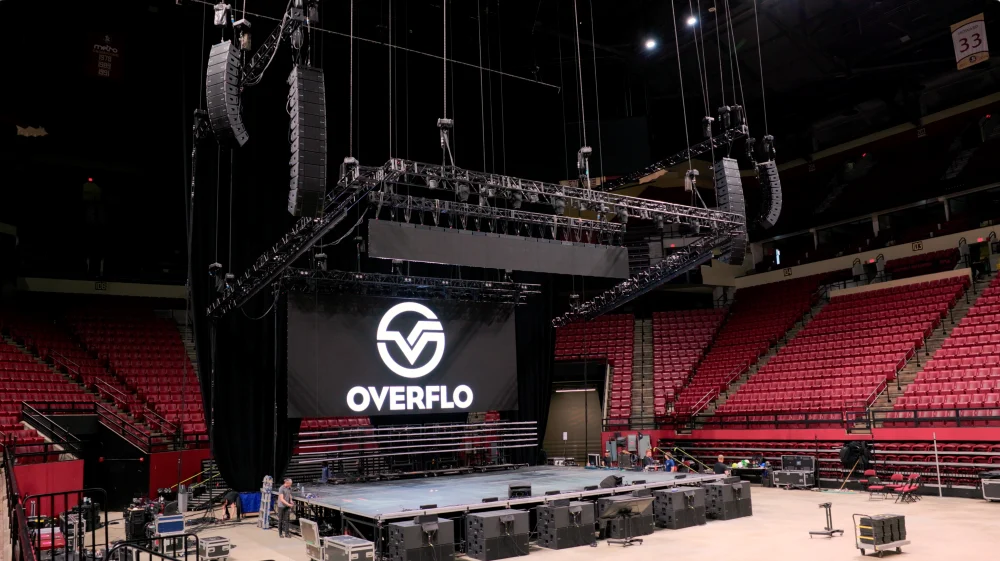
When Tallahassee-based CITYCHURCH, a multi-campus evangelical organization known for its high-production-value worship services, planned its recent Easter celebration, the scale of the event demanded a solution capable of filling a 13,000-capacity arena with uniform coverage. To meet this challenge, they turned to Overflo Productions, an Alabama-based AVL specialist with nearly two decades of experience in the touring and installation circuit. The result was a masterclass in system design, utilizing a comprehensive dBTechnologies VIO configuration that proved once again that high-impact live sound and pristine vocal clarity are not mutually exclusive.
Main Facts: The Anatomy of the Deployment
The scale of the Easter event required a rig that could handle the sheer physical volume of the arena while maintaining the nuance necessary for a faith-based message. Overflo Productions opted for a multi-layered approach to audio distribution, anchored by the VIO series from dBTechnologies.
The primary hardware complement included:
- Main Arrays: 24 units of VIO L1610 large-format line array modules.
- Supplementary Arrays: 20 units of VIO L208 compact line array elements for side-fill and specific coverage zones.
- Low-Frequency Support: 12 VIO S218 dual 18-inch subwoofers.
- Front-Fill/Point Source: 5 VIO X205 point-source loudspeakers.
By utilizing the VIO L1610s as the primary workhorses, the team was able to achieve the long-throw capabilities necessary for the back rows of the 13,000-seat venue. The L208s provided the necessary horizontal dispersion to cover the wider seating blocks, while the VIO S218 subs provided the visceral, low-frequency foundation that contemporary worship music demands.
Chronology: From Design to Performance
The success of such a massive production is rarely an overnight miracle; it is the result of meticulous planning and a phased implementation.

Phase 1: Predictive Modeling and System Design
Months before the first truck arrived at the arena, the Overflo team began the design process. Using EASE Focus for acoustic modeling and dBTechnologies Composer software, the engineers created a virtual twin of the arena. This allowed them to simulate the room’s acoustics and adjust the rigging angles of the line arrays to account for the arena’s specific three-quarters seating configuration. By optimizing the "voicing" of the system in a digital environment, the team ensured that the transition from a low-volume spoken-word passage to a high-decibel musical crescendo would be seamless.
Phase 2: The Load-In and Rigging
The physical deployment required a high level of coordination. As the Overflo crew moved into the arena, the primary goal was to establish the master grid. With the weight and power requirements of 44 total line array modules, the rigging process was subject to rigorous safety checks. Taylor Bishop, acting as the lead system technician, oversaw the deployment, ensuring that the physical placement of the arrays matched the predictive models generated in the pre-production phase.
Phase 3: The Event Execution
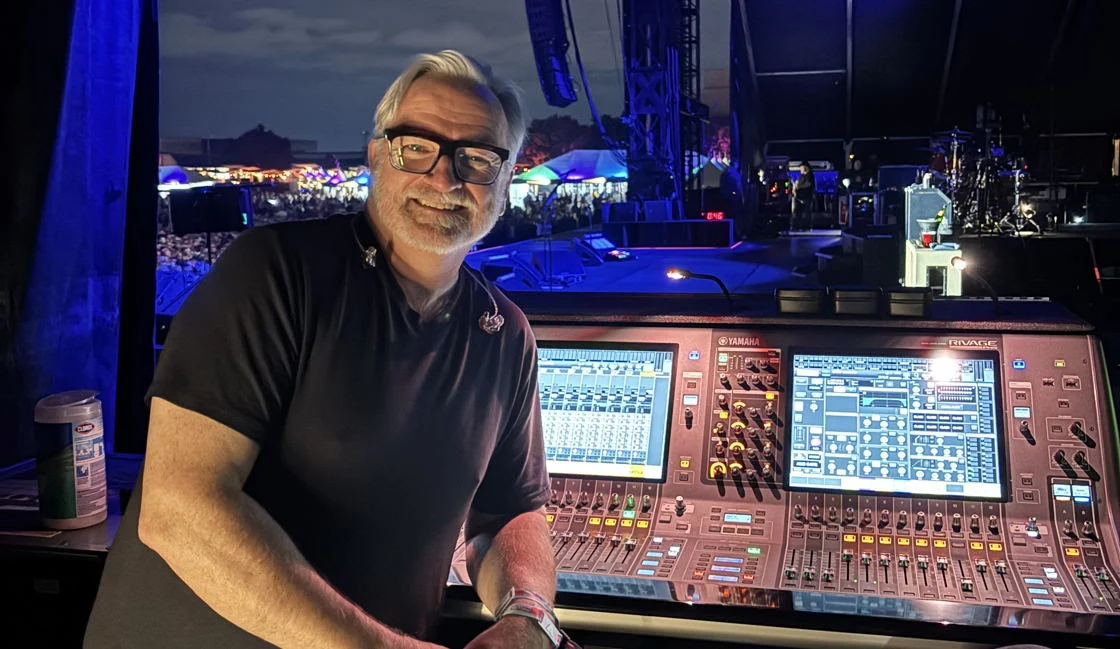
On the day of the event, the focus shifted to real-time optimization. With FOH engineer Michael Keith Lewis at the helm of an Allen & Heath Avantis console, the system was subjected to final tuning. The network infrastructure, anchored by a Ubiquiti Dream Machine environment, ensured that the digital signal flow remained stable and high-speed throughout the multi-hour service.
Supporting Data: Infrastructure and Technical Integration
A modern audio system is only as good as its weakest link. Overflo Productions’ decision to utilize the Allen & Heath Avantis platform provided the FOH team with the processing power and tactile control necessary to navigate complex musical arrangements.
The integration of the Ubiquiti Dream Machine into the network infrastructure highlights a growing trend in pro-audio: the convergence of IT and traditional AV signal routing. By managing the network environment with enterprise-grade equipment, the team ensured that the dBTechnologies VIO system—which relies on high-resolution data for control and monitoring—remained responsive. The result was a system that provided consistent tonal balance from the front row to the very back of the arena, a difficult feat in a venue known for its reflective surfaces and cavernous volume.
Official Responses and Perspectives
The project served as a definitive showcase for the capabilities of the VIO series. Tim Spidel, the founder of Overflo Productions, emphasized that the system’s primary strength is its predictability.

"We’re an AVL and set design company approaching twenty years of service," Spidel noted. "For productions like CITYCHURCH Easter, consistency and musicality are critical. The VIO platform gave us the output, coverage control, and overall sonic performance needed to support both the energy of the music and the clarity required for spoken-word moments throughout the service."
Spidel highlighted that the "plug-and-play" nature of the VIO series, combined with the power of the dBTechnologies software ecosystem, allows his team to scale their productions without sacrificing quality. "Events like this require a system that can transition naturally between powerful live worship moments and highly articulate spoken content. The VIO system remained controlled, musical, and extremely predictable throughout the venue."
Implications: The Future of Worship Audio
The success of this deployment has broader implications for the AVL industry, particularly for houses of worship looking to expand their production footprints.
1. The Rise of Scalable Touring Systems
The move away from permanent, static installations in favor of scalable, touring-grade systems is accelerating. As churches host more off-site events, conventions, and holiday productions, they are demanding equipment that can be broken down, transported, and re-tuned with minimal downtime. The dBTechnologies VIO setup used by Overflo demonstrates that a single, high-quality inventory can be configured to suit a variety of spaces, from smaller campus auditoriums to 13,000-seat arenas.
2. The Importance of Software-Driven Acoustics
The days of "ear-tuning" a massive arena rig from scratch are largely over. The reliance on EASE Focus and dBTechnologies Composer highlights a shift toward a data-driven approach to acoustics. This reduces the time spent on the physical site, lowers the margin for error, and allows engineers to focus on the creative aspects of the mix rather than fighting phase issues or coverage gaps.
3. Bridging the Gap: Music vs. Speech
Perhaps the most significant takeaway from this event is the system’s ability to maintain "tonal consistency." In many arena environments, the energy required for a modern rock-style worship set often creates a "muddy" sound during the sermon, forcing the audience to strain to hear the speaker. By utilizing the specific voicing capabilities of the VIO L1610 and L208 combination, the Overflo team successfully bridged this gap, ensuring the preacher’s message remained as impactful as the musical performance.

Conclusion: Setting a New Standard
The collaboration between CITYCHURCH and Overflo Productions serves as a blueprint for high-production-value worship. By leveraging the technical prowess of dBTechnologies and the logistical expertise of an experienced AVL team, the organizers were able to create an environment where the message was never overshadowed by the medium.
As churches continue to grow and embrace the use of professional arena spaces, the demand for sophisticated, reliable, and highly articulate sound systems will only increase. With the VIO series, dBTechnologies has provided a platform that meets these demands, and with companies like Overflo Productions, the future of worship audio is clearly moving toward a more immersive, consistent, and powerful experience for congregations worldwide.
The successful execution of this Easter event is a testament to the fact that when technology is deployed with precision and intent, it becomes a transparent vessel for the message it is intended to carry.