Introduction: The Dawn of the Elim Chan Era
In the storied history of the San Francisco Symphony, the appointment of a new Music Director is always a moment of profound cultural significance. However, the selection of Elim Chan—the orchestra’s incoming Music Director Designate—has sparked a level of enthusiasm rarely seen in the modern classical music landscape. As she prepares to assume the mantle of official Music Director in September 2027, the classical world is watching with bated breath.
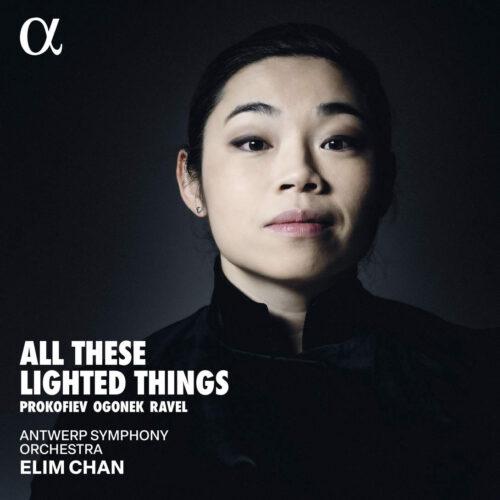
For those looking to understand the unique musical voice that convinced the San Francisco board to entrust her with their future, there is no better starting point than her latest recording, All These Lighted Things. This release serves not merely as a portfolio of her conducting prowess, but as a testament to her ability to balance the weight of the traditional repertoire with the vitality of modern composition. As part of our ongoing Dodd’s Discoveries series, we take a deep dive into this recording—which is currently available at a 40% discount—to explore why Elim Chan is being heralded as the most vital rising star in orchestral leadership today.
The Chronology of a Rising Star
To understand the magnitude of Chan’s appointment, one must look at the meteoric rise of her career. Elim Chan has consistently defied expectations, carving out a path characterized by intellectual rigor, emotional transparency, and an uncanny ability to connect with orchestral musicians.
The Early Milestones
Chan’s ascent was not an overnight phenomenon. It was forged through years of dedicated study and high-stakes performance. She first garnered international attention in 2014 when she became the first female conductor to win the Donatella Flick LSO Conducting Competition. This victory provided her with a platform to assist some of the world’s most demanding conductors, honing her craft in the shadow of the London Symphony Orchestra.
The Path to San Francisco
Following her London success, Chan held positions with the NorrlandsOperan and the Royal Scottish National Orchestra, where her interpretations were noted for their precision and "singing" quality. Her guest appearances with major international ensembles—ranging from the Los Angeles Philharmonic to the Orchestre de Paris—solidified her reputation as a "conductor’s conductor." By the time the San Francisco Symphony began its search for a successor to Esa-Pekka Salonen, Chan was already a frontrunner. Her recent appointment as Music Director Designate represents a commitment to the future of symphonic music, bridging the gap between established canon and the innovative voices of the 21st century.
Supporting Data: An Analysis of the New Recording
The album All These Lighted Things provides a crystalline window into Chan’s artistic philosophy. The recording is a bold juxtaposition of classic balletic storytelling and the contemporary American voice.

Prokofiev and Ravel: A Re-evaluation
Chan’s treatment of Prokofiev’s Romeo and Juliet (Suites 1 and 2) and Ravel’s Daphnis et Chloé (Suite 2) is characterized by a remarkable fluidity. In the hands of a lesser conductor, these works can sometimes lean into melodrama or rigid technicality. Chan, however, favors a "flowing, melodic quality" that breathes new life into these well-trodden excerpts. She avoids the temptation to over-accentuate the percussive elements of Prokofiev, instead allowing the lyrical lines of the string section to dictate the emotional arc of the narrative.
The Modern Spark: Elizabeth Ogonek
The centerpiece of the disc—and its namesake—is All These Lighted Things by American composer Elizabeth Ogonek. This work is a crucial inclusion for the listener. It serves as a bridge between the lush, impressionistic colors of Ravel and the sharp, rhythmic energy of Prokofiev.
The work is structured in three movements:
- The Spark: A movement that glistens with intricate textures, requiring extreme sensitivity from the ensemble.
- The Lyrical Center: A thoughtful, introspective passage that showcases the woodwind section’s ability to sustain long, melancholic lines.
- The Dance: A lively, celebratory conclusion that demands precision and high-octane energy.
Chan’s approach to Ogonek’s score is neither abrasive nor overly cautious. She embraces the "sparkle" of the orchestration, ensuring that the modern harmonies feel like a natural evolution of the classical tradition rather than a jarring interruption.
Official Responses and the "Hero’s Welcome"
The public and critical reaction to Chan’s first concert following her appointment was nothing short of electric. Music journalists have struggled to find adjectives strong enough to capture the atmosphere in the hall. Descriptions such as "rapturous" and "exhilarating" have been ubiquitous, but perhaps the most telling detail was the audience’s behavior: a standing ovation occurred before she even lifted her baton.
This reaction is not merely a product of hype; it is a response to a perceived shift in the atmosphere of the San Francisco Symphony. Interviews with orchestral members—often kept private during the designative phase—suggest a palpable sense of relief and excitement. Chan is perceived as a collaborator who respects the autonomy of the individual musician while imposing a clear, cohesive vision upon the ensemble.
As one observer noted, it was a "hero’s welcome"—a term that implies not just a greeting, but an acknowledgement that a savior or a visionary has arrived to guide the institution into a new, more vibrant chapter.
Implications: The Future of the San Francisco Symphony
What does the appointment of Elim Chan mean for the future of symphonic music in the United States? The implications are far-reaching.
A Commitment to Diversity and Modernity
By selecting a conductor who is as comfortable with Elizabeth Ogonek as she is with Prokofiev, the San Francisco Symphony is signaling a departure from the "museum-piece" mentality of classical programming. The organization is betting on a future where the audience is as interested in the new as they are in the venerable.
Technical Brilliance and Audiophile Quality
For the listener, this recording also highlights the importance of production quality. In an era where music is often consumed via compressed streams, NativeDSD’s commitment to high-resolution audio allows the listener to fully appreciate the "glow" that Chan coaxes from the orchestra. The recording quality is stellar, capturing the nuances of the hall’s acoustics and the intricate, delicate colors of the Ogonek suite. This is a recording designed for those who appreciate the technical craft of music-making as much as the artistic expression.
The Sustainability of the "Star System"
The "star conductor" model is evolving. We are moving away from the era of the dictatorial, larger-than-life maestro and toward the era of the communicator. Elim Chan is the embodiment of this transition. She possesses the authority to lead but the humility to listen. Her tenure in San Francisco will likely be defined by a more egalitarian approach to music-making, where the "hero’s welcome" is earned not through spectacle, but through the consistent, high-level execution of challenging repertoire.
Conclusion: Why You Should Listen
In the crowded market of classical recordings, it is rare to find a disc that feels truly necessary. All These Lighted Things is one such record. It captures a specific moment in time: the dawn of an era for one of the world’s great orchestras and the maturation of one of its most exciting conductors.
Whether you are a longtime fan of the Russian masters, an aficionado of contemporary American orchestral works, or simply an audiophile looking for a reference-quality recording to test your system, this album offers something substantial. It is a work of intelligence, grace, and undeniable beauty.
As part of the Dodd’s Discoveries series, we are proud to feature this album. We encourage you to download the accompanying digital booklet, which provides a fascinating look into the philosophy of the music and the career trajectory of Elim Chan. The music truly "glows and dances," and it is an essential addition to any serious listener’s collection.
Highly recommended.
Click the button below to visit the NativeDSD store to purchase the album at the special 40% reduced price, and to browse other selections curated by Bill Dodd.
About the Reviewer: Bill Dodd
Bill Dodd is the Senior Music Reviewer at NativeDSD. With a background that spans from classical piano training to a successful career in radio broadcasting, Bill brings a unique perspective to his reviews. His life’s work has been a synthesis of high-fidelity audio and an omnivorous love for music—ranging from the complex structures of Bach to the raw energy of Led Zeppelin. Bill lives in the Portland, Oregon area, where he pursues his dual passions for photography and the critical analysis of the world’s finest recordings.