In the heart of London’s bustling Strand, beneath the historic architecture of 180 Studios, a quiet revolution in digital art is currently unfolding. Ryoji Ikeda, the Japanese electronic composer and visual artist renowned for his minimalist, mathematically driven aesthetics, has once again pushed the boundaries of human perception. His latest commission, data-cosm [n°1], has officially been extended due to overwhelming public demand, with the exhibition now scheduled to run until February 1, 2026.
As an evolution of his seminal data-verse project, data-cosm [n°1] is not merely an installation; it is a profound meditation on the hidden structures of the universe. By translating the raw, invisible data of nature into a visceral, total-sensory encounter, Ikeda challenges the limitations of human observation, bridging the chasm between abstract physics and tangible artistic expression.
The Architecture of the Infinite: Main Facts
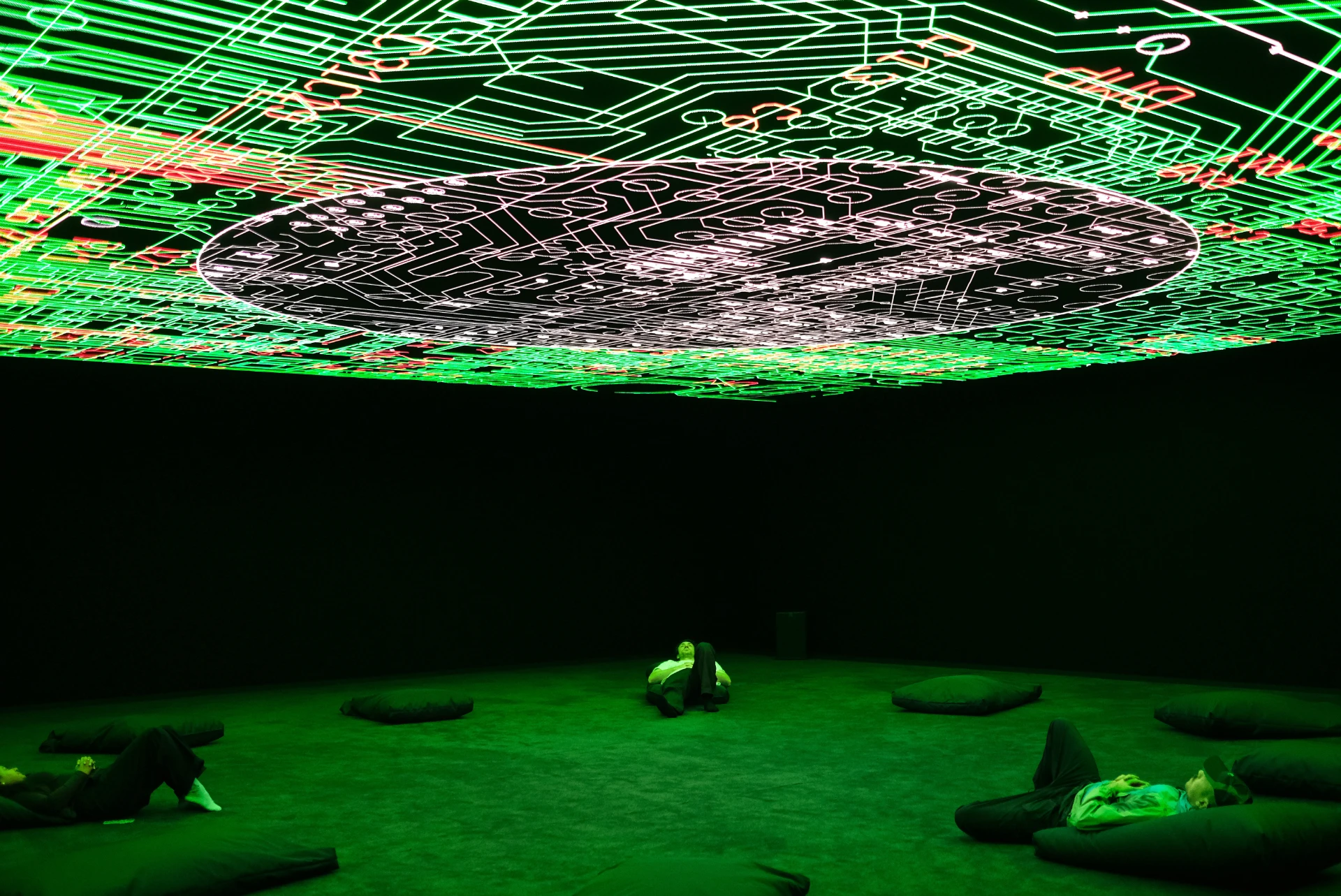
data-cosm [n°1] invites visitors to surrender their physical orientation. Upon entering the exhibition space, the audience is encouraged to lie back beneath a sprawling, high-resolution LED ceiling. What follows is an intensive journey through the fabric of reality.
The work operates on a binary of scale: it zooms from the infinitesimal—the subatomic vibrations of particle physics—to the gargantuan, visualizing the cosmic movements of astrophysics. Ikeda’s signature soundscapes, characterized by sine waves, glitch-inflected noise, and precision-engineered frequency pulses, envelop the viewer, synchronizing perfectly with the rapid-fire visual data streams above.
Key details of the exhibition include:
- Location: 180 Studios, 6 Surrey Street, London, WC2R 2ND.
- Duration: October 15, 2025, through February 1, 2026.
- Accessibility: Open Wednesday to Sunday, 12pm to 7pm.
- Concept: A continuation and expansion of the data-verse research project, focusing on the visual translation of universal datasets.
A Chronology of Data: From data-verse to data-cosm
To understand the significance of data-cosm [n°1], one must look back at the trajectory of Ikeda’s career, which has long been preoccupied with the "aesthetics of data."
The Early Years (2000–2015)
Ryoji Ikeda first gained international acclaim for his "Test Pattern" series, where he sought to convert binary code into synchronized audiovisuals. During this period, he established a visual language defined by high-contrast black-and-white palettes, binary streams, and stroboscopic flashes that felt less like traditional art and more like a diagnostic check of the digital age.
The data-verse Era (2019–2021)
The data-verse trilogy marked a turning point. Commissioned by Audemars Piguet Contemporary, this project was a massive undertaking that sought to visualize the "totality" of the world’s data. By aggregating astronomical, biological, and physical data, Ikeda created a "unified theory" of audiovisual expression. It was here that he began moving away from pure abstraction toward a more literal, yet still deeply stylized, interpretation of natural phenomena.
The Current Manifestation: data-cosm (2025–2026)
With the launch of data-cosm [n°1] at 180 Studios, Ikeda has refined his process. While data-verse was an expansive, encyclopedic survey, data-cosm feels more intimate and immersive. It is a refinement of his methodology, utilizing upgraded LED technology and more sophisticated sound-spatialization software to create a sense of presence that was previously impossible. The extension of this exhibition reflects a growing public hunger for "deep" experiences—works that demand patience, presence, and a meditative state of mind.
Supporting Data: The Physics of Art
What makes Ikeda’s work so compelling is its reliance on "real" data. Unlike generative art that relies on randomized noise, data-cosm [n°1] is grounded in scientific rigor.
![Ryoji Ikeda's data-cosm [n°1] extended at 180 Studios until 1 February](https://factmag-images.s3.amazonaws.com/wp-content/uploads/2025/12/data-cosm-ALubbock_180-14Oct-3554.webp)
- Particle Physics Input: Ikeda sources datasets from institutions like CERN, utilizing the raw data from particle collisions to determine the rhythmic pulses of his soundscapes.
- Astrophysical Mapping: The visual light patterns displayed on the LED array are mapped to real-time stellar coordinates and deep-space survey data, allowing the audience to effectively look "through" the screen into the mechanics of the universe.
- The Psycho-Acoustic Effect: Studies have shown that Ikeda’s use of high-frequency sine waves induces specific physiological responses in viewers, including heightened alertness and altered temporal perception. The "lying down" configuration of the 180 Studios installation is a deliberate choice to force the viewer into a state of physical relaxation while the brain is simultaneously overstimulated by the visual data—a deliberate cognitive dissonance.
Official Responses and Curatorial Context
The curators at 180 Studios have positioned data-cosm [n°1] as the cornerstone of their 2025-2026 programming. In a statement, the studio emphasized the necessity of the work in an era dominated by superficial digital consumption.
"Ryoji Ikeda does not just represent data; he makes it feelable," says the curatorial team. "In an age where we are constantly inundated with information, data-cosm acts as a filter. It strips away the noise of the human-made world and exposes the fundamental, mathematical elegance that governs everything from the atom to the galaxy."
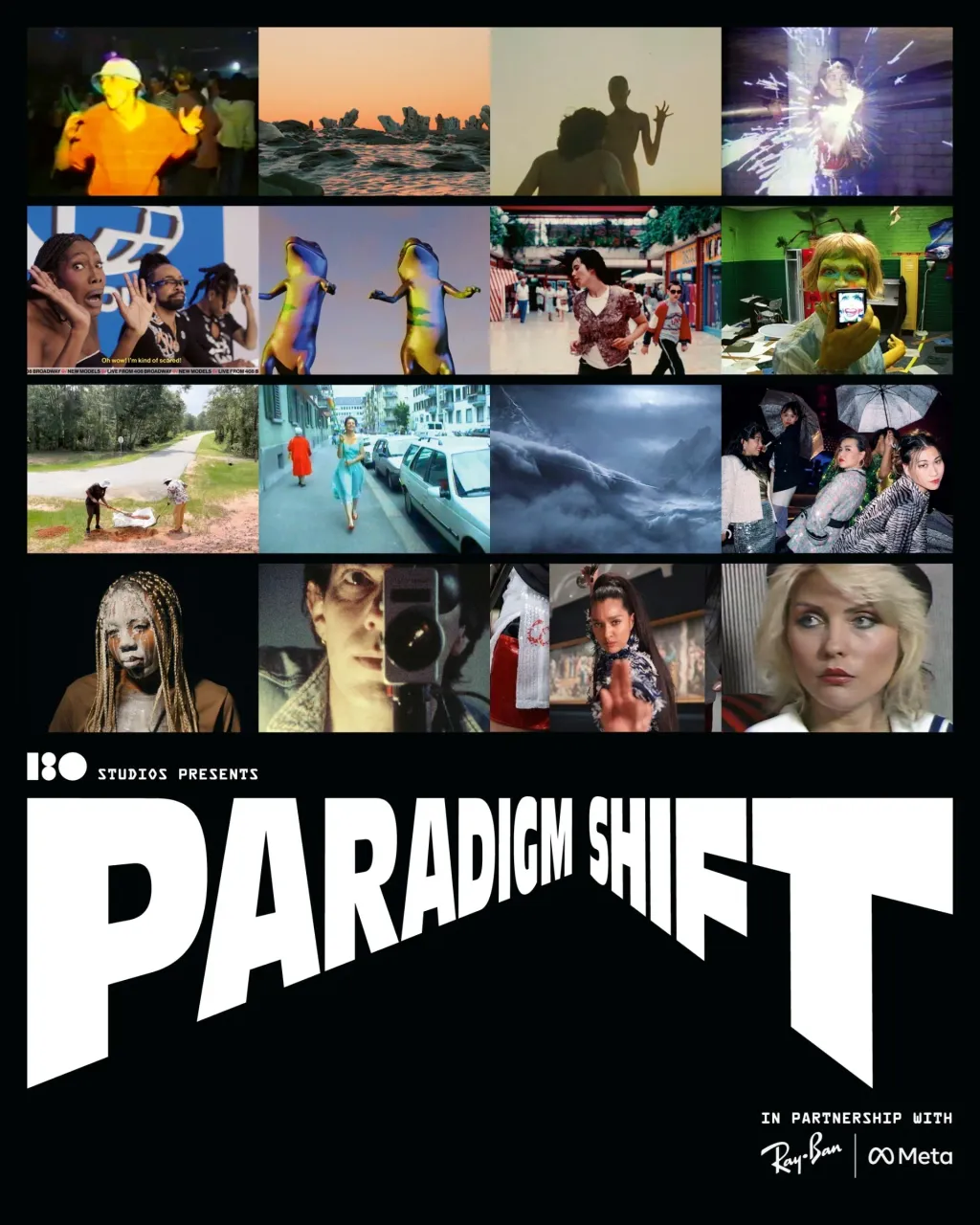
The exhibition is currently running in tandem with Paradigm Shift, a broad-reaching show exploring the evolution of moving image culture. By placing Ikeda’s work alongside luminaries like Andy Warhol, Arthur Jafa, and Derek Jarman, 180 Studios creates a dialogue between the pioneers of analog film and the future of digital-first, data-driven art. The juxtaposition is intentional: where the aforementioned artists used the camera to capture the human condition, Ikeda uses the computer to capture the universal condition.
The Implications: Where Art Meets Science
The success and extension of data-cosm [n°1] suggest a significant shift in the art world. We are witnessing the maturation of "Data Art" as a medium that commands the same level of respect and critical inquiry as traditional sculpture or painting.
1. The Democratization of Complex Physics
Ikeda’s work serves as a unique bridge for the layperson to engage with complex scientific concepts. By translating quantum mechanics and astrophysical data into beauty, he makes the "incomprehensible" accessible. This has profound implications for how science communication might evolve in the future.
2. The Future of Immersive Environments
The technical success of the installation at 180 Studios sets a new benchmark for spatial audio and visual immersion. As VR and AR technologies struggle to find their footing in the art world, Ikeda’s "low-tech" high-impact approach—using giant, high-quality screens and precisely calibrated sound—proves that the most powerful digital experiences are often those that occur in shared, physical spaces.
3. The Ethical Dimensions of Data
Finally, data-cosm [n°1] prompts us to consider our relationship with the data we produce. By framing data as something beautiful and cosmic, Ikeda elevates it beyond the mundane "tracking" of human activity. It is a reminder that behind every binary digit lies a piece of the universe.
Conclusion
As the exhibition continues into early 2026, it remains a must-visit for anyone interested in the intersection of technology, sound, and the sublime. Ryoji Ikeda has not only created a spectacle; he has created a mirror in which we can see the hidden order of the cosmos. For those who have yet to experience data-cosm [n°1], the extension offers a rare opportunity to witness an artist operating at the absolute peak of his technical and philosophical powers.
Tickets are available now via the official 180 Studios website. Whether you are a devotee of electronic music, a student of physics, or simply someone seeking a moment of profound, data-driven clarity, Ikeda’s installation promises an experience that is as mathematically precise as it is emotionally overwhelming.
Exhibition Details Summary:
- Artist: Ryoji Ikeda
- data-cosm [n°1]
- Venue: 180 Studios, London
- Closing Date: February 1, 2026
- Further Viewing: Ryoji Ikeda Presents: data-verse (Available via Fact Magazine archives)