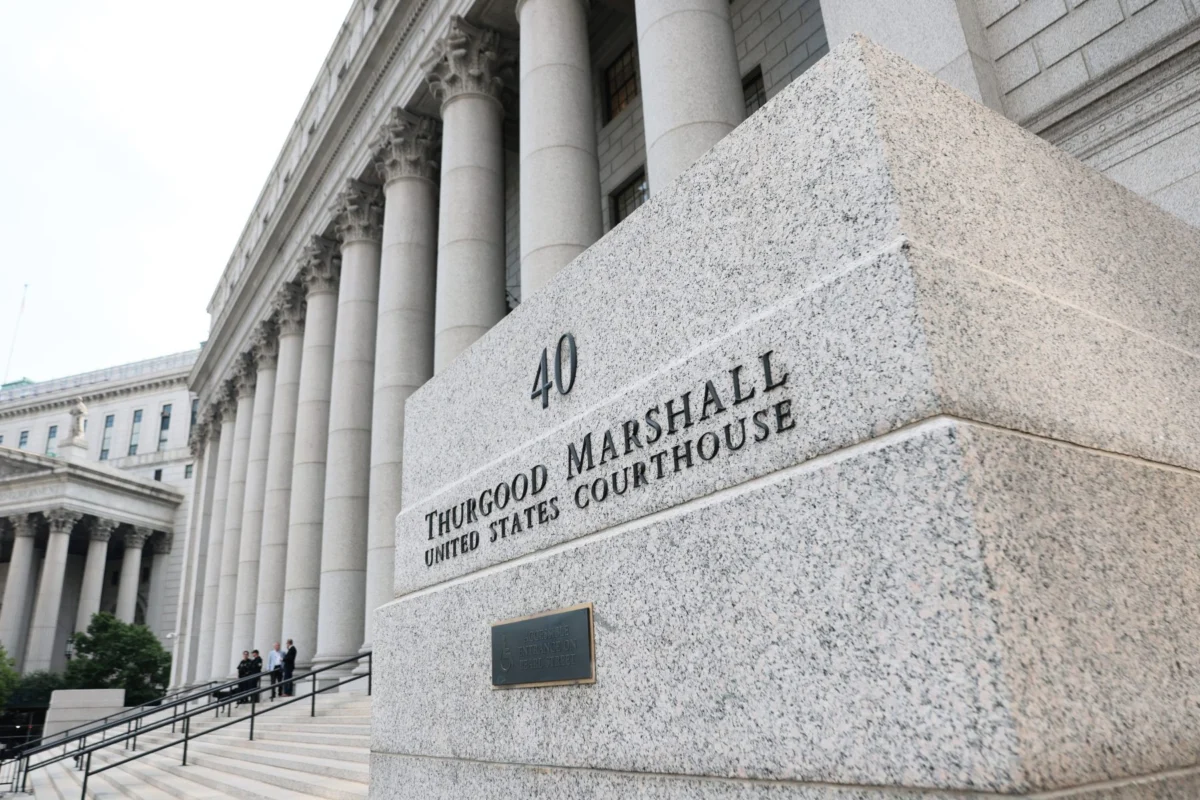
In a landmark case that has sent shockwaves through the global music industry, the federal government is squaring off against Michael Smith, a 54-year-old North Carolina man who orchestrated a multi-year, multi-million-dollar fraud scheme. As the first-ever U.S. criminal prosecution centered on streaming manipulation, the case serves as a warning shot to a growing industry of "bad actors" utilizing artificial intelligence to subvert the royalty ecosystem.
While Smith and his defense team have attempted to frame the scheme as a victimless enterprise, federal prosecutors are painting a much darker picture: a calculated, sophisticated heist that directly drained the pockets of thousands of hardworking, underpaid artists and songwriters.
The Mechanics of the Fraud
Between 2017 and 2024, Michael Smith exploited the fundamental architecture of modern digital music platforms. The scheme was not a simple hack; it was a massive, automated industrial operation. Smith utilized AI software to generate thousands of low-quality, generic musical tracks, which he then uploaded to platforms like Spotify, Apple Music, and Amazon Music.
The core of the fraud involved the deployment of a massive bot network—thousands of automated devices programmed to stream these AI-generated tracks on a loop. By running these bots 24 hours a day, seven days a week, Smith successfully accumulated billions of fraudulent streams. Because streaming platforms operate on a "pro-rata" royalty pool—where total subscription revenue is divided among rights holders based on their share of total streams—Smith’s artificial influx of billions of plays allowed him to siphon off over $8 million in royalties that should have been distributed to legitimate musicians.
A Chronology of the Scheme
The timeline of Smith’s operation reveals a level of commitment and technical planning that prosecutors argue elevates this to a major white-collar crime:
- 2017: Smith initiates the scheme, setting up the infrastructure to upload AI-generated content and connect it to a network of streaming bots.
- 2018–2023: The operation scales significantly. Smith refines his bot technology to mimic human listening patterns, attempting to evade detection by the sophisticated anti-fraud algorithms employed by major streaming services.
- 2024: Federal authorities, following a multi-agency investigation, arrest Smith. A three-count indictment is filed, charging him with wire fraud, wire fraud conspiracy, and money laundering.
- March 2026: Recognizing the mounting evidence, Smith enters a guilty plea to a single count of wire fraud conspiracy. He agrees to forfeit the $8 million in proceeds generated by the illicit scheme.
- September 2026: As the sentencing hearing approaches, a battle ensues between the defense, which argues for leniency, and the prosecution, which demands a 46-month prison term.
The Defense: A Plea for Leniency
In a sentencing memorandum submitted last week, Smith’s legal counsel urged the judge to reject the standard sentencing guidelines, suggesting that no prison time is warranted. The defense’s primary argument is built on the concept of "de minimis" harm.

According to Smith’s team, because the $8 million was diluted across the global streaming royalty pool, the financial impact on any individual artist was "imperceptible." They argued that the loss for a single songwriter was akin to "a drop in an ocean," and that because no specific victim lost a life-changing amount of money, the crime does not warrant incarceration. Furthermore, Smith’s lawyers emphasized that he has expressed "profound sorrow" and has taken "full responsibility" for his actions, characterizing his behavior as an error in judgment rather than a malicious act of theft.
The Prosecution: Defining the "Victim"
Federal prosecutors have responded with a blistering filing that rejects the "victimless" narrative. They argue that the defense is fundamentally misinterpreting how the music business works. By stealing from the collective royalty pool, Smith didn’t just hurt one person; he effectively "taxed" every legitimate creator on the planet.
"Smith was the architect of, and led, a sophisticated and multi-faceted fraud scheme over the course of many years to divert musical royalties from legitimate and hard-working songwriters and other rightsholders to himself," the prosecutors wrote in their September 29 filing.
The government emphasizes that the royalty pool is finite. Every dollar that flows into the pocket of a fraudster is a dollar taken away from an artist who wrote a song, a producer who mixed it, and a label that invested in it. The prosecution argues that characterizing this as a victimless crime is a cynical attempt to minimize the harm done to the creative class—a group already struggling with stagnant royalty rates in the streaming era.
Data and Financial Implications
The scale of the fraud is staggering. Over $8 million was diverted directly into Smith’s coffers. To put this in perspective, this amount represents the annual streaming revenue that could have supported hundreds of mid-tier, working-class musicians.
The federal sentencing guidelines for this offense recommend between 46 and 57 months in prison. Even the federal probation office, in a departure from the prosecutors’ stance, initially recommended a lighter sentence of 24 months. However, the Department of Justice is doubling down, arguing that a lenient sentence would send the wrong message to the industry: that in the age of AI, digital fraud is a low-risk, high-reward endeavor.

Industry-Wide Implications
The Smith case is the first of its kind, but experts believe it will not be the last. The emergence of generative AI has lowered the barrier to entry for streaming fraud, allowing individuals with minimal musical talent to generate an infinite supply of "content" to feed into bot networks.
Streaming platforms have been scrambling to adjust their policies. Many have begun implementing "minimum stream thresholds" and demonetizing tracks that fail to meet certain engagement criteria. Yet, the cat-and-mouse game between fraudsters and tech companies continues to evolve.
Legal experts point out that this case sets a critical precedent for how federal courts define the "harm" associated with digital piracy. If the court accepts the defense’s argument that individual harm is too small to measure, it could set a dangerous standard for future intellectual property and digital fraud cases. Conversely, if the judge imposes the full 46-month sentence, it will underscore the federal government’s commitment to protecting the integrity of the digital marketplace.
The Road Ahead
As the sentencing hearing approaches, the focus is squarely on the judge’s interpretation of justice in the digital age. Will the court prioritize the "insignificant" impact on any one individual, or will it recognize the aggregate damage caused by a massive, years-long systematic theft?
For the thousands of artists whose royalties were diluted by Smith’s bots, the outcome of this trial represents more than just a legal verdict. It is a validation of their work and a declaration that their labor has value, regardless of how easily that value can be siphoned away by the push of a button.
The case of Michael Smith serves as a sobering reminder of the vulnerability of our digital economy. In a world where AI can mimic creation, the law must be robust enough to distinguish between genuine artistry and the algorithmic theft that threatens to undermine the livelihoods of those who write the world’s music. Whether the sentence is 24 months, 46 months, or none at all, the music industry is watching closely, knowing that the precedent set here will define the future of streaming for years to come.