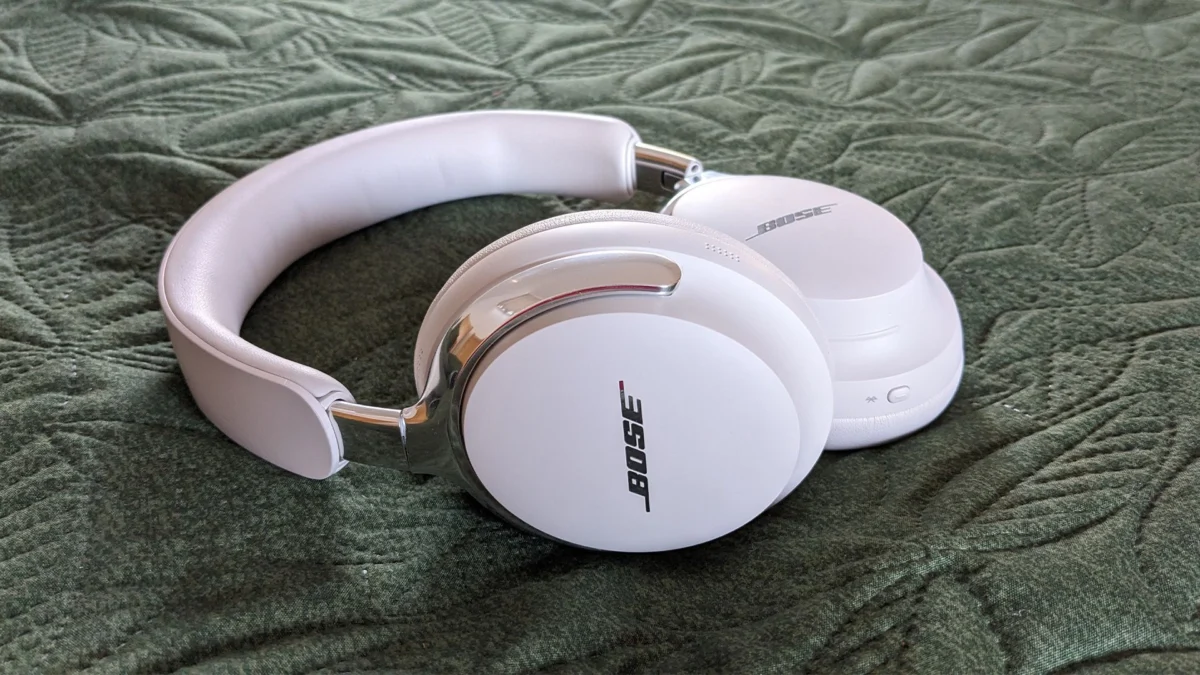
Even the most premium tech products can sometimes feel stagnant after a year on the market, but Bose is proving that high-end audio gear can continue to evolve long after the initial unboxing. The acclaimed Bose QuietComfort Ultra Headphones (2nd Gen)—widely celebrated as some of the top-tier noise-canceling cans available—are receiving a substantial capabilities upgrade via a brand-new firmware patch.
Rolling out globally, firmware update version 10.12.12 introduces a suite of advanced features designed to modernize the listening experience, expand connectivity, and improve multi-purpose utility. However, the update comes with a major caveat: a significant portion of these new features are restricted exclusively to Android and Windows users, leaving Apple ecosystem loyalists out in the cold.
Main Facts: What Does Firmware Update 10.12.12 Bring?
The latest software package is far more than a routine bug-fix patch. Bose has injected four major features into the second-generation QuietComfort Ultra architecture, targeting wireless efficiency, spatial immersion, and wired functionality.
- Bluetooth LE Audio Support: The inclusion of next-generation Bluetooth Low Energy (LE Audio) brings advanced efficiency to the headphones. Alongside it comes support for the LC3 codec, which is designed to deliver superior audio fidelity at lower bitrates compared to the traditional, aging SBC standard.
- Auracast Compatibility: Thanks to the implementation of LE Audio, the headphones are now ready for Auracast broadcast audio. This revolutionary feature allows a single audio source to stream to multiple wireless listening devices simultaneously—enabling use-cases such as tuning into public airport televisions, silent discos, or shared media feeds in public spaces.
- 5.1 Spatial Audio with Head Tracking for Android: Users leveraging compatible Android devices can now experience immersive 5.1 spatial audio paired with dynamic head-tracking technology, bringing a theater-like soundstage to mobile media consumption.
- Enhanced Wired USB-C Functionality: For users who prefer a tethered connection—whether for gaming, professional web conferencing, or zero-latency media playback—the update introduces higher-quality game audio, clearer voice capture, and vastly improved compatibility with web meeting applications across compatible PCs and mobile devices.
Despite these headline-grabbing additions, the rollout has sparked immediate debate within the audiophile community, particularly regarding hardware limitations and platform exclusions.
Chronology: The Evolution of the QuietComfort Ultra Line
To understand the significance of this update, it is helpful to look back at the product timeline and the shifting landscape of wireless audio standards.
- Late 2023 / Early 2024: Bose launches the QuietComfort Ultra Headphones (2nd Gen) to widespread critical acclaim, praising their industry-leading active noise cancellation (ANC), immersive audio modes, and plush comfort. At launch, the headphones rely on standard Bluetooth protocols.
- Mid-2024: The broader consumer electronics industry slowly begins adopting Bluetooth LE Audio and Auracast standards, though widespread hardware support remains fragmented across operating systems and chipsets. Major competitors—such as Sony with their WH-1000XM series—begin teasing or rolling out LE Audio integrations.
- Late 2024 to Present: Bose officially releases firmware version 10.12.12, bringing long-awaited next-gen connectivity features directly to the second-gen Ultra line. Concurrently, other industry players like Sennheiser schedule similar rollouts for upcoming products like the Momentum True Wireless 5.
Supporting Data: Understanding Bluetooth LE Audio, LC3, and Auracast
The marquee addition to the Bose QuietComfort Ultra 2nd Gen is undoubtedly Bluetooth LE Audio. To appreciate why this matters—and where its limitations lie—we must examine the underlying tech stack.
Efficiency and the LC3 Codec
Traditional Bluetooth audio relies on the Classic Bluetooth radio, transmitting data streams via the mandatory Subband Coding (SBC) codec. While functional, SBC is notoriously inefficient, demanding higher power consumption and compressed bitrates that can compromise high-frequency detail.
Bluetooth LE Audio introduces the LC3 (Low Complexity Communication Codec). According to industry specifications, LC3 can deliver equal or superior audio quality at roughly half the bitrate of traditional SBC. In theory, this reduction in data processing overhead translates into minor improvements in battery longevity—though Bose has refrained from making formal claims regarding extended playback times in its official changelog.
The Auracast Revolution
Beyond point-to-point listening (connecting your phone to your headphones), LE Audio opens the door to Auracast. This broadcast-audio technology transforms compatible listening devices into radio receivers. Instead of pairing directly to a specific transmitter via a secure, private handshake, Auracast allows venues—such as gyms, museums, conference halls, and transit hubs—to broadcast multiple audio streams into the ether. Listeners simply open their headphone app, scan for available local broadcasts, and tune in instantly.
The Apple Obstacle
The most glaring compromise of the 10.12.12 update is its platform exclusivity. Bluetooth LE Audio and its associated features do not currently function with Apple devices (iPhones, iPads, Macs). Apple has been notably slow to adopt standard Bluetooth LE Audio protocols across its consumer hardware lineup, preferring proprietary pairing and spatial audio ecosystems (such as the H-chip architectures found in AirPods). Consequently, iPhone users who update their Bose headphones will not be able to utilize LE Audio, LC3, or Auracast capabilities.
Official Responses and Installation Realities
Bose has documented the update thoroughly through its customer support portals, though the company’s notes are characteristically understated regarding the scale of the software transformation.
How to Install Firmware 10.12.12
For users eager to test the new features, the installation process requires patience. Because firmware updates containing massive protocol overhauls involve transferring significant data packages to the onboard headset memory, the process is not instantaneous:
- Check the Bose App: Open the official Bose Music app on your smartphone or tablet and check for device updates.
- Automatic Download: The firmware package should download automatically in the background. However, your headphones must remain powered on, connected to your device, and positioned nearby throughout the transfer.
- Transfer and Installation Time: Users should be prepared for a waiting period. Transferring the files can take up to 40 minutes, while the actual local installation process on the headphones can demand an additional 15 minutes. It is strongly recommended to perform the update while your headphones are plugged into a power source to prevent accidental shutdowns.
Implications: What This Means for Consumers and the Industry
The release of firmware version 10.12.12 carries several broad implications for both current Bose owners and the broader high-end headphone market.
1. The "Future-Proofing" Paradox
On one hand, this update is a resounding win for consumer rights and sustainability. It demonstrates that premium hardware investments do not become obsolete overnight; manufacturers can breathe new life into existing products long after they hit store shelves.
On the other hand, it highlights a fractured consumer tech landscape. When a major firmware update introduces features that exclude half of the user base (in this case, Apple device owners), it creates an uneven user experience. Consumers must now weigh whether software feature sets align with the specific operating systems they use daily.
2. The Slow March Toward Auracast Adoption
By rolling out LE Audio and Auracast support, Bose is helping push the industry past a critical adoption tipping point. For years, Auracast was viewed as a futuristic concept with few real-world applications due to a lack of compatible hardware. As industry heavyweights—including Sony, Sennheiser, and now Bose—integrate these protocols into flagship devices, public infrastructure (such as airports and fitness centers) will be far more incentivized to install Auracast transmitters.
3. A Better Hybrid Tool for Professionals and Gamers
Beyond wireless audiophile tech, the inclusion of improved USB-C audio compatibility and superior web-conferencing performance acknowledges a shifting reality: premium headphones are no longer just for listening to music on the subway. They are hybrid communication tools used for remote work meetings, long gaming sessions, and media consumption across PCs, tablets, and smartphones. By refining its wired USB-C audio handling, Bose has made the QuietComfort Ultra 2nd Gen a significantly more versatile daily driver.
Final Verdict
If you are an Android or Windows user who owns the Bose QuietComfort Ultra Headphones (2nd Gen), firmware update 10.12.12 is an essential installation that unlocks modern wireless protocols, better wired functionality, and immersive spatial audio.
However, if you are firmly entrenched in the Apple ecosystem, the update offers far fewer tangible benefits, serving mostly as a reminder of the software walls that still divide major operating systems. Check your Bose Music app, ensure you have a solid chunk of uninterrupted time to spare, and prepare your headphones for their next evolutionary step.