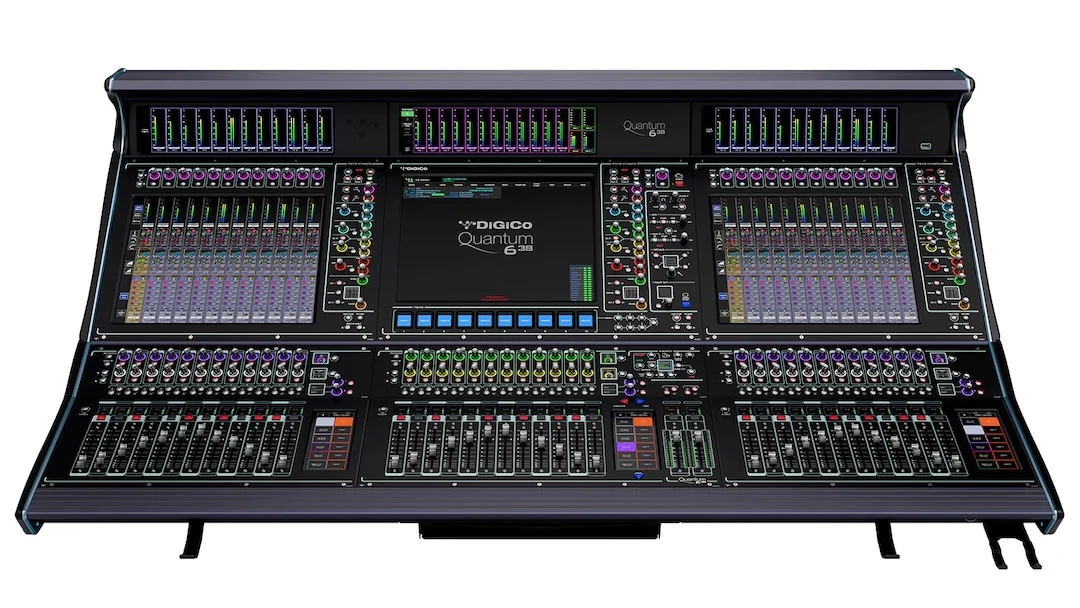
New York, NY (September 28, 2026) — In a strategic move designed to consolidate its dominance in the live performance and theatrical sectors, DiGiCo has officially unveiled the Quantum638 digital mixing console. Positioned as the “goldilocks” solution within the manufacturer’s esteemed Quantum range, the 638 sits purposefully between the flagship Quantum852 and the industry-standard Quantum338 Pulse. By synthesizing the architectural reliability of the SD5 with the cutting-edge processing power of the SD7, DiGiCo has engineered a desk that specifically addresses the high-pressure, high-channel-count demands of Broadway, the West End, and large-scale touring productions.
The Main Facts: A New Standard for Performance
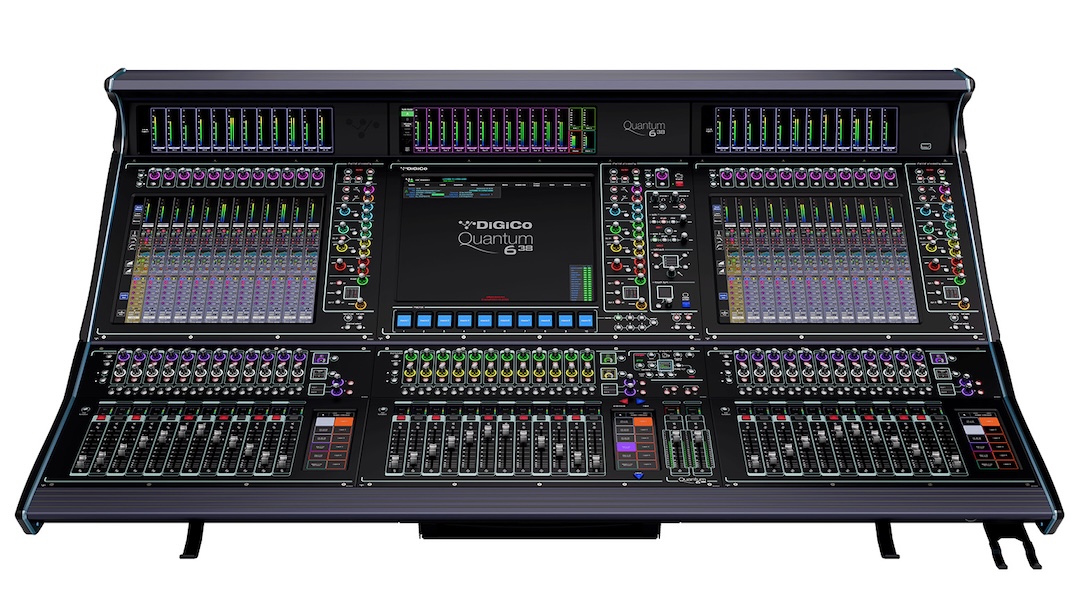
The Quantum638 represents more than just a hardware iteration; it is a refined toolset for sound engineers who require both tactile intimacy and immense digital headroom. Available in both single-engine and dual-engine configurations, the console offers unparalleled flexibility for sound designers who prioritize redundancy and fail-safe operation in live environments.
The console is built upon a robust foundation:
- Capacity: 256 input channels and 128 aux/sub-group busses.
- Visual Interface: Three 17-inch high-resolution LCD touchscreens complemented by three 6.8-inch TFT screens dedicated to fader bank management.
- Tactile Control: 38 motorized, touch-sensitive 100mm faders organized into three distinct worksurface sections, supported by two dedicated Master faders.
- Connectivity: Native Dante support, eight sets of MADI I/O, and an integrated Fourier Interface Card, allowing for seamless, low-latency integration with Fourier Audio’s transform.engine platform.
Beyond the standard model, the company has introduced the Quantum638T. This specialized variant is pre-loaded with DiGiCo’s proprietary "T" theatre software extension, a suite that has become the industry benchmark for complex musicals and plays.
A Chronological Evolution: From SD Legacy to Quantum Future
To understand the significance of the Quantum638, one must look at the lineage of DiGiCo’s engineering. The company’s journey to this moment began with the legendary SD series, which established the "DiGiCo sound" and workflow.
- The SD Era: Throughout the 2010s, the SD5 and SD7 were the backbone of global touring. The SD7, in particular, was revered for its dual-engine redundancy, a feature that became non-negotiable for large-scale theatrical productions.
- The Quantum Leap (2020s): With the introduction of the Quantum engine, DiGiCo shifted the paradigm by introducing Nodal Processing and Mustard processing. These technologies moved beyond basic EQ and dynamics, allowing engineers to process individual nodes within a signal path.
- The Pulse Update: Following the success of the Quantum338, users requested a console that provided the density of the flagship 852 but with a footprint more suitable for the tight confines of theater mix positions.
- September 2026: The Quantum638 arrives as the culmination of these requests, integrating the learnings of the last decade into a chassis that mirrors the physical size of the SD7 while offering the latest internal processing power.
Supporting Data: Under the Hood
The power of the Quantum638 lies not just in its fader count, but in its sophisticated signal management. The desk is designed to handle the most complex sound designs without breaking a sweat.
Processing Power
The console features 128 instances of Nodal Processing, allowing for precise control over audio as it flows through the console’s routing. Coupled with 64 insertable Mustard Processing strips—which provide analog-style saturation and advanced dynamics—and 16 Spice Rack slots for high-end emulation, the 638 offers a sonic palette that is both expansive and clean.
Connectivity and I/O
The rear panel is a masterclass in professional connectivity, ensuring the console can integrate into any existing infrastructure.
- Analog I/O: 32-bit mic/line inputs and eight 32-bit line outputs, ensuring pristine A/D/A conversion.
- Digital I/O: Four AES/EBU inputs and outputs (eight channels each).
- Control/Sync: DSub37 GPI/GPO (16 in/16 out), MIDI In/Thru/Out, and SMPTE LTC I/O for timecode-synced shows.
- Networking: Four switched Ethernet ports provide robust connectivity for network-based control systems and external devices.
Official Responses and Engineering Philosophy
During the launch, DiGiCo’s product development team emphasized that the Quantum638 was built in direct response to feedback from theatrical sound designers. "The theater environment is unique," noted a senior spokesperson for the company. "You need the speed of a live concert desk, but the automation and recall capabilities of a studio console. The 638, particularly in its ‘T’ version, removes the friction between the engineer and the performance."
The inclusion of the Fourier Interface Card is a direct nod to the growing trend of utilizing external processing engines for plugins. By providing a native bridge to the Fourier Audio transform.engine, DiGiCo is acknowledging that modern sound design is no longer confined to the desk itself, but exists as part of a larger, interconnected digital ecosystem.
The "T" software features—including Auto Update, Aliases, Players, and Matrix Nodal Delays—are designed to allow sound designers to program complex scene changes that track actors across the stage, automatically adjusting levels, EQ, and delays in real-time. This level of automation is critical for shows where cast members change microphones, move between zones, or where acoustic conditions change during a performance.
Implications for the Industry
The release of the Quantum638 signals a shift in the live sound market. As production values for musicals and touring concerts continue to escalate, the requirement for higher channel counts and more sophisticated processing is becoming the baseline.
1. Standardization in Theatrical Sound
By creating a "middle-ground" console, DiGiCo is making high-end features more accessible. Smaller and mid-sized venues that previously couldn’t justify the cost or space of an SD7 or Quantum852 can now leverage the same processing power and workflow. This is expected to lead to a more standardized approach to theatrical sound design, where engineers can move from venue to venue with a consistent, familiar DiGiCo file structure.
2. The Future of Hybrid Mixing
The integration of the Fourier Interface card and the focus on "T" software suggests that the console of the future is not a self-contained unit, but a hub. The Quantum638 acts as the brain, while third-party engines provide the "muscle" for specialized effects and processing. This modularity will likely define the next generation of mixing desks.
3. Workflow Efficiency
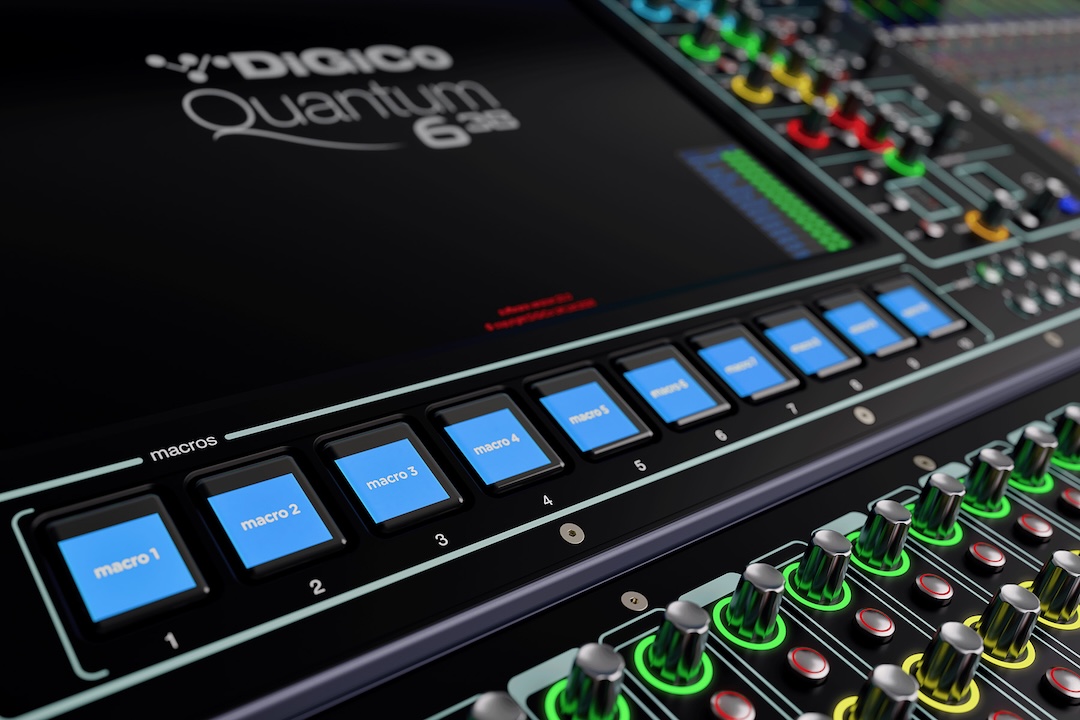
The new enhanced Macro buttons—specifically the four channel-based Macros that travel with the channel—solve a common frustration in large-scale mixing. Being able to assign a specific function to a fader strip that moves when the channel is moved (or when the bank is changed) is a significant time-saver for operators who need to jump between characters or zones during a fast-paced musical.
Conclusion: A New Benchmark
The DiGiCo Quantum638 is a compelling proposition. It is a console that respects the history of its predecessors while aggressively pushing the boundaries of what is possible in live theater. By offering a high-density, high-redundancy, and feature-rich environment, DiGiCo has provided the industry with a tool that is as reliable as it is creative.
As theaters around the world begin to adopt this new technology, the impact will be felt in the clarity of the mix, the stability of the performance, and the ease with which sound designers can realize their artistic vision. Whether managing a simple play or a blockbuster musical with hundreds of inputs, the Quantum638 is poised to become the new standard-bearer for the craft.