Mini Music Powerhouse: The FiiO K17 Redefines High-End Value at $995
011 mins
Main Facts
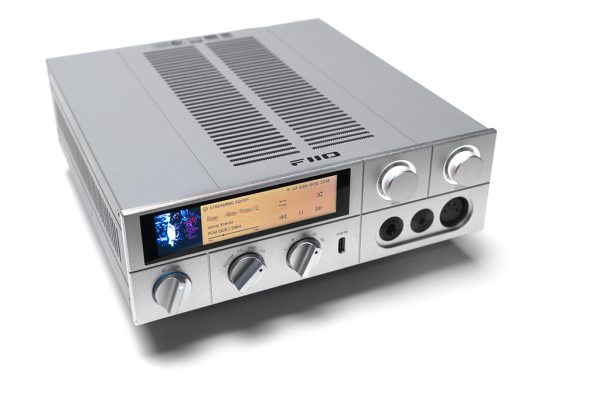
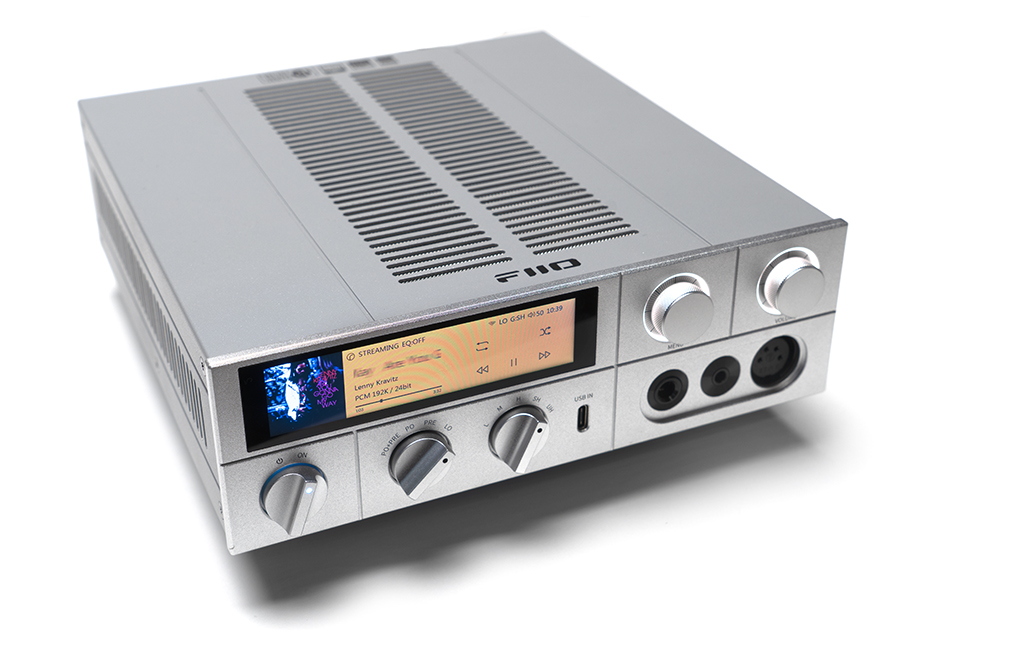
In the rapidly evolving landscape of personal audio and high-end home playback, finding a component that challenges established pricing paradigms is a rare event. Enter the FiiO K17, a remarkably compact device that packs a network streamer, high-performance Digital-to-Analog Converter (DAC), fully featured preamplifier, and robust headphone amplifier into an 8-inch by 8-inch by 2-inch footprint. Priced at $995.00, the K17 bridges the gap between ultra-budget entry points and five-figure audiophile flagships.
Despite its diminutive size—often described as a masterclass in miniaturization—the K17 features a 3.93-inch high-resolution touchscreen front panel, a 31-band digital parametric equalizer (PEQ) controllable via mobile app, discrete headphone output components pushing up to 4 watts of power, and a comprehensive suite of digital and analog inputs. Tested in systems ranging from ultra-high-efficiency Klipschorn loudspeakers to vintage electrostatic setups, the FiiO K17 has secured a reputation as a disruptive force in the sub-$1,000 category, earning critical acclaim and industry accolades early in its product lifecycle.
Chronology and Evaluation Context
The journey of the FiiO K17 from concept to audiophile benchmark involved rigorous testing across diverse acoustic environments and reference-grade systems.
Initial Benchmarking: The evaluation period began with the K17 integrated into a high-end reference system centered around massive Klipschorn loudspeakers, streamed via Roon playing complex, texturally dense electronic tracks such as The Art of Noise’s "Paranormal." Reviewers noted immediate surprise from seasoned listeners regarding the source’s provenance.
Mid-Tier and Source Transition: Testing progressed to evaluate spatial depth, vocal texture, and midrange realism using tracks from Tom Waits ("What’s He Building?"), Lou Reed ("Vanishing Act"), and acoustic renditions like Allan Taylor’s "Tennessee Waltz." Further versatility was proved by routing a vintage Madrigal Proceed PDT CD transport through the K17’s coaxial SPDIF input, effectively breathing new digital life into older hardware.
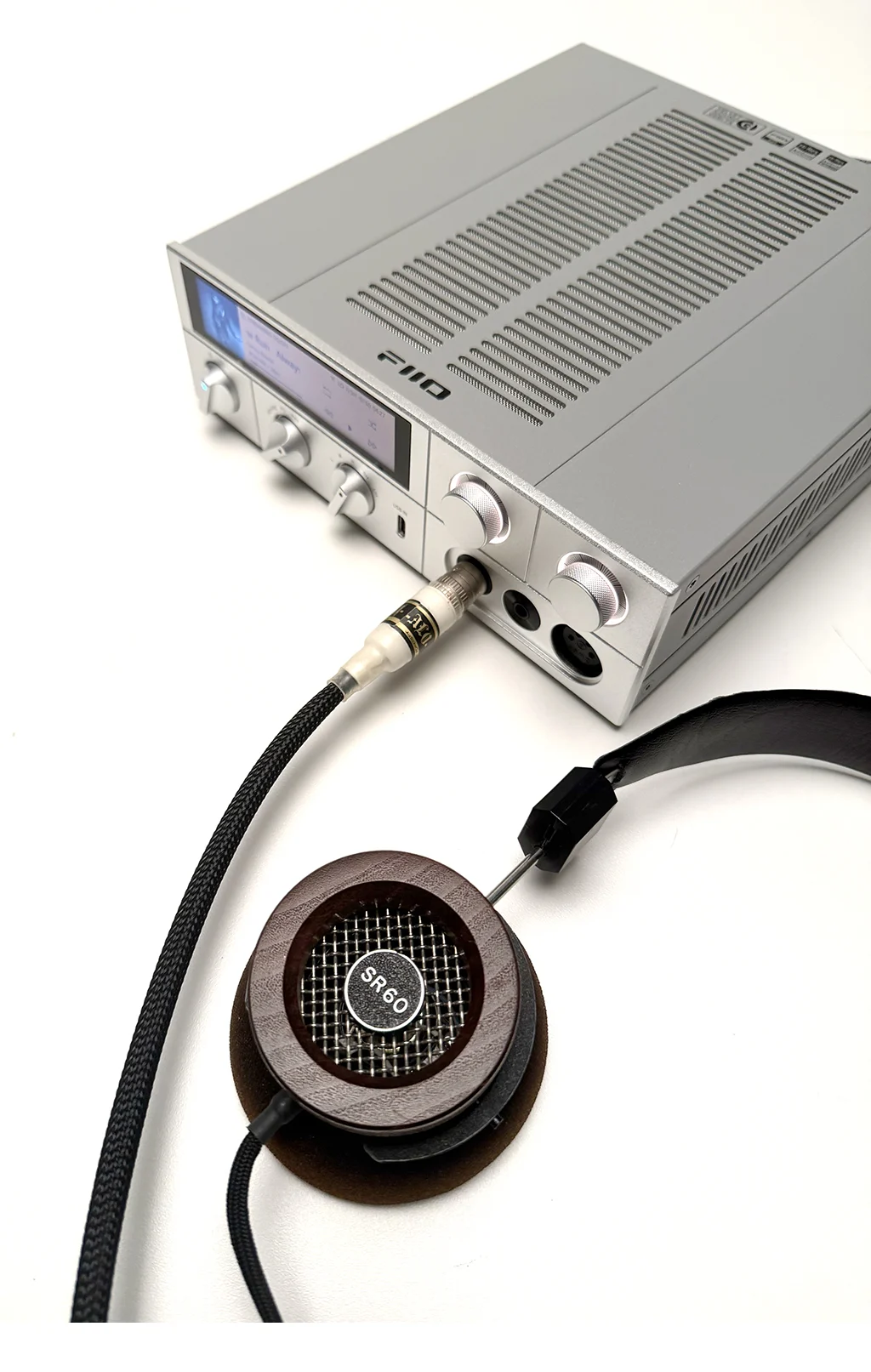
Headphone and Spatial Integration Trials: The unit was subsequently decoupled from speaker setups to drive demanding flagship headphones, including Focal Clear MG, original Audeze LCD-2s, and Grado configurations. The onboard 4-watt headphone amplifier section and app-controlled 31-band PEQ were tested for their ability to correct acoustic anomalies in difficult living spaces.
Direct Competitive Shootouts: Finally, the K17 was matched against dedicated standalone components and integrated players from brands such as Advance Paris, Naim, and Marantz, many commanding price tags nearly double the FiiO’s asking price, before concluding its evaluation phase as the recipient of the first Exceptional Value Award.
Supporting Data and Technical Architecture
The engineering footprint of the FiiO K17 reveals a meticulously optimized internal layout that leaves virtually no wasted internal volume.
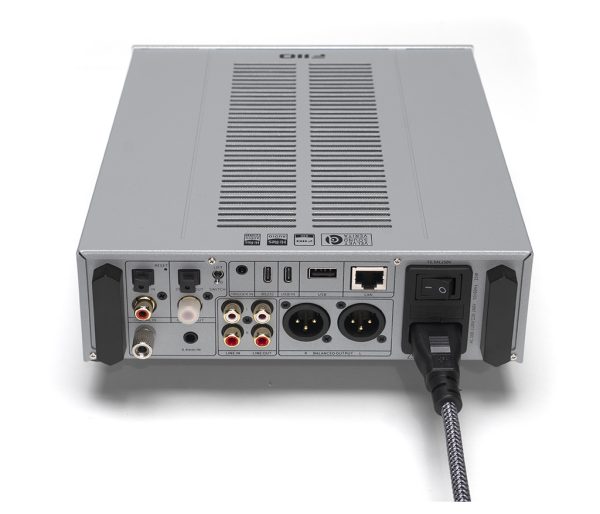
Analog Outputs: Single-ended RCA and balanced XLR (fully balanced internal design)
Analog Inputs: Single-ended line-level input (accommodating external phono stages like the Hagerman Trumpet MC)
Headphone Outputs: Three front-facing headphone jacks driven by discrete output stages delivering up to 4 watts of power
Connectivity & Streaming: Roon Ready, Qobuz, Tidal, MQA decoding support, and high-fidelity Bluetooth playback (supporting sources like Spotify via mobile devices)
Advanced Processing: 31-band digital parametric EQ with companion mobile app control; ground lift switch; selectable fixed or variable line outputs
Acoustic Performance Metrics
In listening evaluations, the K17 displayed remarkable sonic attributes across the frequency spectrum:
Bass: Extended, highly defined, and structurally textured, avoiding the bloated or sluggish bass typical of similarly priced digital interfaces.
Mids: Natural, clean, and deeply revealing of micro-details, bringing out intricate vocal nuances and instrument decay.
Treble: Well-represented and entirely listenable, though exhibiting a minor degree of grain when directly compared against ultra-high-end digital front ends costing upwards of $100,000 (such as a dCS Vivaldi ONE running APEX specifications).
Official Perspectives and Industry Reactions
The reception of the FiiO K17 within the high-end audio community has ignited discussions regarding diminishing returns and the democratization of elite sound reproduction.
Industry analysts and veteran reviewers have noted that while the K17 is explicitly not a "dCS killer"—nor is it intended to displace multi-thousand-dollar reference transports from brands like Esoteric—it completely reshapes expectations for what a sub-$1,000 component can achieve. By holding its own in side-by-side comparisons against integrated digital players costing twice as much, the K17 has shifted the narrative surrounding affordable audio.
"To put this in perspective, I own a dCS Vivaldi ONE… I want you to know that I have an incredible digital front end, and yet at $995, the K17 is not only a tremendous value, but it delivers tremendous performance and amazing flexibility."
— Lead Reviewer, Tone Publications
Furthermore, FiiO’s implementation of practical, real-world tools—such as the app-driven 31-band parametric equalizer—has been praised for addressing a long-standing divide between purist audiophile ideals and the messy acoustic realities of real-world listening rooms. While traditionalists may occasionally view digital EQ with skepticism, the ability to surgically correct room modes and smooth out upper-midrange cloudiness has been validated as a transformative feature for everyday music lovers.
Implications for the Audiophile Market
The arrival of the FiiO K17 carries significant implications for both entry-level hobbyists and seasoned audiophiles structuring secondary or tertiary systems.
1. A New Anchor for Budget-Conscious High-End Systems
For budding enthusiasts entering the separates market, the K17 eliminates the traditional financial barrier of purchasing separate DACs, streamers, and preamplifiers. By pairing the K17 directly with a transparent power amplifier (such as the Vera-Fi A40 class-A amplifier or Pass Labs XA30.8) and capable loudspeakers, users can build an elite two-channel system that punches well above its weight class without requiring substantial capital investment.
2. Revitalizing Legacy Hardware
With its robust array of digital inputs, the K17 serves as a vital bridge for vintage gear. Audiophiles possessing classic digital transports—such as the Madrigal Proceed PDT—can bypass outdated internal conversion boards while retaining their preferred mechanical transport mechanisms, seamlessly blending legacy build quality with modern high-resolution streaming capabilities.
3. The Maturation of Multi-Function Desktop Hi-Fi
The K17 illustrates that multi-function components no longer necessitate severe compromises in sonic fidelity. Whether deployed as a dedicated headphone hub on a desktop, a fully balanced preamplifier feeding long XLR cable runs to monoblocks across a room, or a minimalist digital core in a sprawling living room, the K17 demonstrates that modern engineering can successfully pack reference-grade versatility into a sub-$1,000 chassis.
As the high-end audio market continues to navigate consumer concerns over soaring inflation and rising equipment costs, products like the FiiO K17 establish a new benchmark for value, proving that world-class musical engagement is increasingly accessible to all.