Main Facts
In the high-end audio community, few names evoke the same level of reverence—and historical gravity—as Thorens. For decades, the brand became synonymous with masterful engineering, primarily celebrated globally for its iconic idler-wheel and belt-driven turntables that defined generations of vinyl playback. However, the latest iteration making waves on the audiophile circuit introduces a curveball that challenges the company’s traditional design philosophy: direct drive (DD).
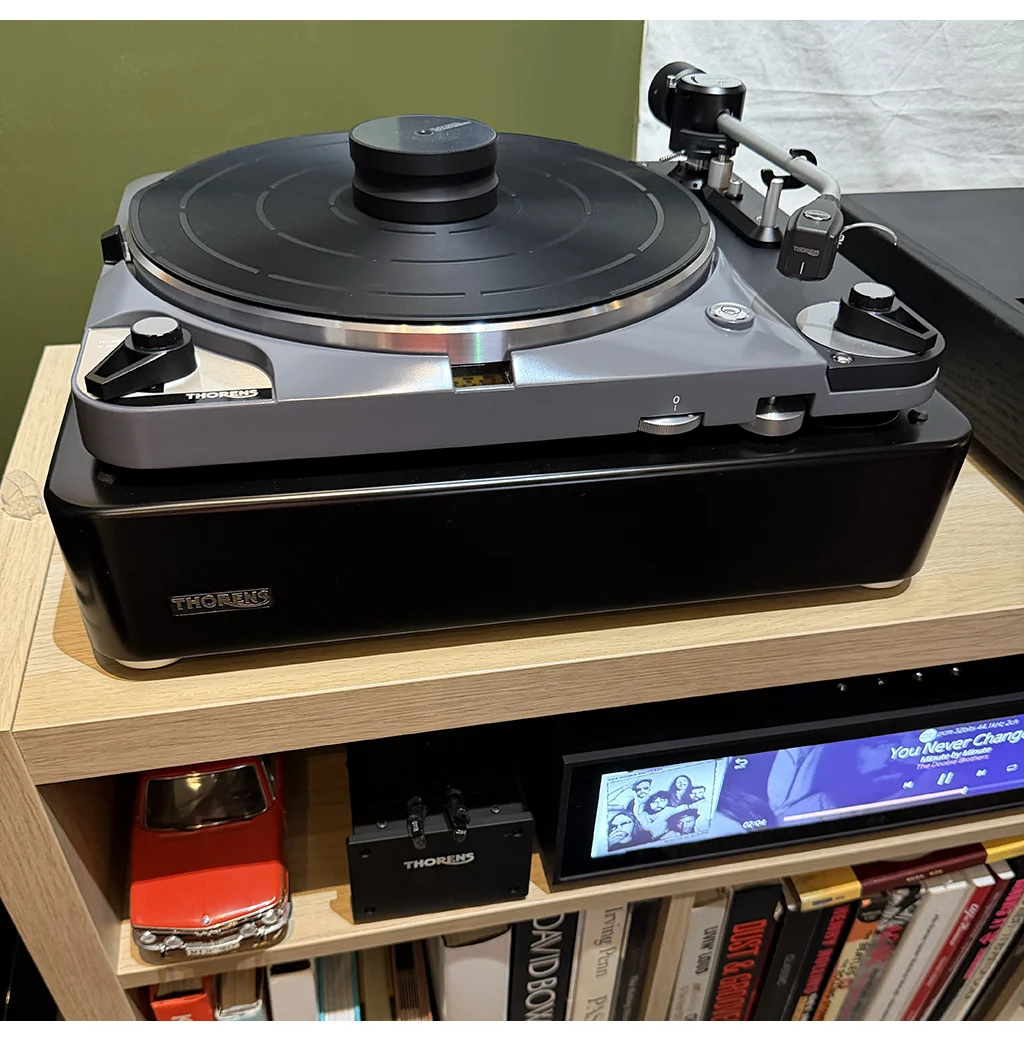
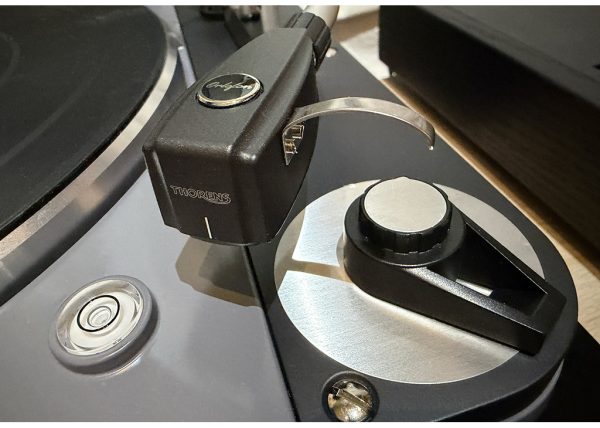
Currently undergoing rigorous evaluation courtesy of MoFi Distribution, this reimagined modern machine arrives packaged with a 9-inch Thorens tonearm and paired with Ortofon’s latest SPU cartridge—specifically designated the TD124. Eschewing the infamously heavy cast-iron platters of its legendary ancestors in favor of a modern, high-mass yet cartridge-safe alternative, this new direct-drive table aims to bridge the chasm between mid-century analog charm and contemporary engineering stability.
Initial listening sessions—anchored by the MoFi Master Phono operating in current mode—reveal a sonic profile characterized by expansive soundstages, lush midranges, and striking dynamic authority. Yet, as with any piece of gear bearing a legendary nomenclature, the burning question remains: Can a direct-drive system truly capture the idiosyncratic magic of the original Thorens lineage, or is this a brave new chapter that simply borrows a famous name?
Chronology of a Legend: From Idler-Wheels to Direct Drive
To understand the weight resting on the chassis of this new release, one must trace the evolutionary timeline of Thorens and the broader turntable market.
The Mid-Century Golden Age
Founded in Switzerland in 1883, Thorens initially manufactured musical boxes and clockwork movements before pivoting to phonographs in the early 20th century. By the mid-1950s, the company introduced architectural masterpieces of vinyl playback. The original Thorens TD 124, launched in 1957, cemented the brand’s elite status. Utilizing a hybrid belt-and-idler-wheel drive system, it was designed for broadcast and high-end home use alike, renowned for its incredible torque, speed stability, and robust construction.
However, these vintage workhorses came with distinct quirks. Most notably, the original TD 124 featured a massive cast-iron upper platter. While effective for maintaining rotational inertia, its intense magnetic field posed a notorious hazard to sensitive moving coil (MC) cartridges of the era—and occasionally spelled disaster for careless audiophiles whose cartridges strayed too close to the spinning metal.
The Belt-Driven Shift and the Direct-Drive Revolution
As the audio industry transitioned into the 1960s and 70s, Thorens largely championed belt-drive suspended chassis designs (such as the legendary TD 160), which excelled at isolating the stylus from external vibrations. Meanwhile, direct-drive technology—championed heavily by Japanese manufacturers like Technics with their iconic SL-1200 series—took over the broadcast and DJ markets, prized for instantaneous start-up times and rock-solid speed accuracy.
For purists, "direct drive" and "audiophile listening" were historically treated as separate tracks. Over the decades, however, precision engineering has largely eradicated the motor-cogging artifacts that once plagued direct-drive systems, allowing modern high-end manufacturers to revisit the technology with fresh eyes.
The Modern Reimagining
The arrival of this new direct-drive Thorens unit represents a fascinating convergence of timelines. By adopting a DD motor system, Thorens is stepping outside its traditional comfort zone. Upon unboxing, the setup process is remarkably swift—a stark contrast to the finicky calibration required by vintage units. When lifting the modern platter, observers will notice a striking resemblance to the layout of a Technics SL-1200, signaling a pragmatic nod to industrial progress. Yet, the external styling cues remain unmistakably Thorens, bridging decades of aesthetic history into a single contemporary chassis.
Supporting Data and Technical Overview
Evaluating a high-end turntable requires looking closely at the synergy of its components. The current review configuration brings together three major pillars of analog playback: the turntable chassis/tonearm, the cartridge, and the phono stage.
Component Breakdown
- The Turntable Chassis: A modern direct-drive mechanism designed to eliminate motor-cogging while providing instantaneous, stable torque. Unlike the vintage TD 124, the modern platter features substantial mass without relying on a hazardous cast-iron composition, protecting modern moving coil cartridges from stray magnetic interference.
- The Tonearm: A factory-matched 9-inch Thorens tonearm engineered to extract precise tracking information from complex record grooves while maintaining mechanical synergy with high-compliance and low-compliance cartridges alike.
- The Cartridge: Ortofon’s latest SPU (Stereo Pick-Up) cartridge, designated the TD124. The SPU lineage is legendary for its warm, robust presentation, making it a natural stylistic partner for a table bearing the 124 moniker.
- The Phono Stage: The MoFi Master Phono operating in "current mode." Current-mode amplification offers a fundamentally different approach to signal transfer from low-output cartridges, drastically reducing the influence of cable resistance and phase anomalies, thereby unlocking greater micro-dynamic resolution.
Sonic Performance Metrics
Early listening impressions paint a portrait of a heavyweight performer. Through the MoFi Master Phono, the sonic presentation is described as:
- Scale: Exceptionally "big," filling the listening room with a wide, three-dimensional acoustic space.
- Tonal Balance: Lush and organic, avoiding the clinical coldness sometimes associated with early digital or poorly implemented direct-drive systems.
- Dynamics: Highly responsive transient attacks, providing rapid percussion snaps and effortless bass articulation without bleeding into the midrange.
Official Responses and Industry Perspectives
The introduction of a direct-drive table bearing the heritage of Thorens has generated significant chatter across distribution channels and enthusiast forums.
Representatives from MoFi Distribution, who facilitated the review hardware, emphasize that the project is not merely an exercise in nostalgic cash-grab branding, but a serious engineering endeavor intended to compete at the highest echelons of modern analog playback. By pairing the table with Ortofon’s specialized SPU TD124 cartridge, the distribution team highlights an intentional effort to honor the historical acoustic signature of the brand while leveraging 21st-century manufacturing tolerances.
Meanwhile, analog purists have voiced mixed initial reactions across audio forums. Traditionalists who spent decades restoring original idler-wheel TD 124 units view the pivot to direct drive with cautious skepticism, questioning whether a quartz-lock motor can replicate the unique mechanical "bounce" and musical drive of the original designs. Conversely, modernists and reviewers welcome the development, praising Thorens for refusing to rest on its historical laurels and instead adapting to the demands of contemporary audiophiles who require zero-maintenance reliability alongside state-of-the-art performance.
Implications for the High-End Audiophile Market
The arrival of this direct-drive Thorens unit signals a broader shift within the high-end audio landscape. For years, the market has been cleanly divided: vintage restoration enthusiasts on one side, and modern high-end belt-drive or boutique direct-drive buyers on the other.
By stepping into the direct-drive ring, Thorens is validating the format for a tier of listeners who may have previously dismissed DD tables as "DJ gear." If this machine succeeds in delivering the sonic majesty of traditional high-end tables while retaining the pitch-black background and speed stability inherent to direct-drive motors, it could force a reevaluation of drive-system hierarchies across the industry.
Furthermore, the ongoing evaluation promises a definitive showdown. As reviewers prepare to put this modern iteration through a head-to-head comparison against a fully restored, vintage TD 124, the results will likely serve as a watershed moment for analog enthusiasts. Will the ghosts of Swiss engineering past outshine the precision of modern manufacturing? Or will the new guard prove that progress can successfully honor the past without being shackled to it?
One thing is certain: the audio community is watching closely, and the vinyl world is listening. Stay tuned for the complete, definitive verdict.