
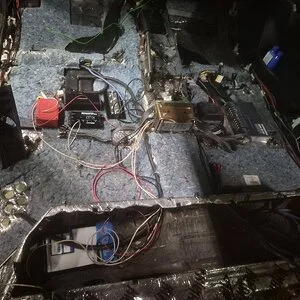
In the specialized world of high-fidelity automotive audio, the pursuit of "the perfect sound" is rarely a destination; it is an ongoing journey of refinement, calibration, and power. For enthusiasts operating high-output systems in heavy-duty vehicles like the Ram 2500, the challenge of achieving deep, visceral bass while maintaining the integrity of an existing high-end setup is a common rite of passage.
Recent discussions within the car audio community highlight a recurring scenario: a user with an expertly curated system—comprising an Alpine Halo head unit, Audiofrog GB60 series drivers, and JL Audio amplification—finds that after a year of listening, their single Kicker L7 12-inch subwoofer no longer satisfies their desire for low-frequency intensity. This article explores the technical pathways, equipment considerations, and systemic implications of upgrading a high-performance subwoofer stage.
Main Facts: The Anatomy of a High-End Upgrade
The user’s current configuration represents a premium tier of mobile audio. The integration of Audiofrog GB series components, renowned for their transparency and mid-range accuracy, paired with the robust JL Audio HD600/4 amplifier, creates a soundstage that is arguably superior to most factory-installed "premium" systems. However, the bass stage is a dynamic element.
The primary fact at hand is the limitation of a single 12-inch square-cone subwoofer (the L7) in a large-cabin vehicle like a Ram 2500 Quad Cab. While the L7 is a formidable performer, the cabin volume of a full-size truck necessitates a significant displacement of air to achieve the "rumble" that many enthusiasts crave. The transition from "accurate" bass to "high-impact" bass often requires a shift in physics—specifically, increasing cone surface area, excursion capabilities, or total amplifier power.
Chronology of the Audio Evolution
The evolution of an enthusiast’s system typically follows a predictable timeline:
- Phase One (The Foundation): The initial build, focusing on signal clarity and speaker integration. This is where the head unit and component speakers are prioritized.
- Phase Two (The Mid-Life Plateau): After approximately 12 to 18 months, the user becomes "acclimated" to the sound. The brain compensates for the output levels, leading to the subjective feeling that the bass has "lost its punch."
- Phase Three (The Seeking Stage): The current juncture. The enthusiast realizes that minor EQ adjustments are insufficient to satisfy their desire for increased output, prompting a search for hardware-based solutions.
- Phase Four (The Implementation): The design and fabrication of a new, custom-engineered enclosure, often involving the integration of higher-wattage amplification and potentially larger driver configurations.
Supporting Data: The Physics of Bass Output
To achieve a "significantly more bass" result, one must look at the mathematical relationship between power, displacement, and enclosure efficiency.
Surface Area and Displacement
The most direct route to increased bass is increasing the effective surface area (Sd) of the subwoofer. A 15-inch driver offers significantly more surface area than a 12-inch driver, which allows it to push more air at lower frequencies with less excursion strain. For those limited by space, doubling the driver count (adding a second 12-inch sub) provides a theoretical 3dB gain in output—a noticeable increase to the human ear.
The Role of Enclosure Design
The enclosure is the "engine" of the subwoofer. A 35Hz tune is a popular choice for general-purpose music, providing a balance between deep extension and punchy mid-bass. However, to maximize the potential of a new sub, the box volume must be precisely matched to the Thiele/Small (T/S) parameters of the chosen driver. A generic box will almost always result in an underperforming system, regardless of how expensive the subwoofer is.
Power Management and Electrical Integrity
The user currently utilizes a 300-amp alternator and the "Big 3" wiring upgrade, which is excellent. This creates a stable electrical foundation. However, when upgrading to higher-power subwoofers (such as the Sundown Audio SA-15 or higher-wattage L7 iterations), one must ensure that the current amplifier (the BG 1900/D) is capable of delivering stable power at the final impedance of the new configuration.
Official Perspectives and Expert Recommendations
Industry experts and experienced installers generally categorize the upgrade path into three distinct strategies:
1. The Displacement Strategy (Upsizing)
Moving from a 12-inch to a 15-inch subwoofer is the classic solution for truck owners. The 15-inch driver is better suited for the lower frequency notes (20Hz–40Hz) that define the "rumble." Products like the Sundown Audio SA series are frequently cited for their high-excursion design, which allows for massive air movement while maintaining control.
2. The Multi-Driver Strategy (Doubling Up)
If the user prefers the response characteristics of their current 12-inch L7, adding a second identical unit is often the most cost-effective and predictable route. This retains the sonic signature of the existing system while providing the doubling effect of surface area. However, this requires a significant increase in available trunk or under-seat space in a Ram 2500.
3. The Efficiency Strategy (Advanced Amplification)
Sometimes the "lack of bass" is not a failure of the subwoofer, but a lack of overhead in the amplifier. If the current sub is being pushed to its mechanical limit, upgrading the amplifier to one with a higher damping factor and cleaner power delivery can make the current sub sound tighter, louder, and more authoritative.
Implications for the Ram 2500 Platform
Integrating high-output audio into a modern Ram 2500 is not without its complications. The truck’s interior space, particularly under the rear seats, is the primary constraint.
- Enclosure Constraints: Custom fabrication is mandatory. Because the floor is often uneven, the box must be built to follow the contour of the chassis to maximize internal volume.
- Vibration Mitigation: With increased bass output, the risk of panel rattle increases exponentially. Owners must invest in sound-deadening material (such as butyl-based sound deadeners) for the doors, floor, and rear wall of the cab to ensure the bass is heard as music, not as loose metal rattling.
- Charging System Load: While the user has already upgraded to a 300-amp alternator, moving to a larger amplifier may require additional battery capacity, such as an AGM or lithium-iron-phosphate (LiFePO4) secondary battery, to ensure voltage stability during heavy transients.
Final Considerations: To Replace or to Supplement?
The decision to abandon a perfectly functional system in favor of a new one should be approached with caution. If the goal is purely "more bass," the most logical step is to analyze the existing enclosure. Is it ported to the correct volume? Is there port noise? Is the subwoofer receiving the full rated power of the amplifier at the correct ohm load?
Often, a custom-built enclosure tailored specifically for the current L7 will yield more performance than simply swapping to a different 12-inch driver in a mediocre box. If the current subwoofer is indeed reaching its physical limitations, then the transition to a high-excursion 15-inch driver or a dual 12-inch setup is the recommended path.
Conclusion
Upgrading a high-end audio system requires a balance of enthusiasm and engineering. For the Ram 2500 owner, the path forward is clear: define the space constraints, calculate the required air volume for the target subwoofer, and ensure the electrical system can support the increased demand. Whether opting for the sheer displacement of a 15-inch driver or the efficiency of a dual-subwoofer setup, the objective remains the same: to create a low-frequency response that complements, rather than overwhelms, the exceptional clarity of the Audiofrog and JL Audio components already installed. By prioritizing enclosure geometry and electrical stability, the enthusiast can transition from a "solid" system to a world-class listening environment.