The global artificial intelligence sector is currently navigating its most significant ideological rupture to date. As the technology evolves at a breakneck pace, the industry has split into two distinct, vocal factions: those advocating for a structured, self-imposed "pacing" of AI development, and those who view such caution as a dangerous, anti-competitive, or even conspiratorial impediment to progress.
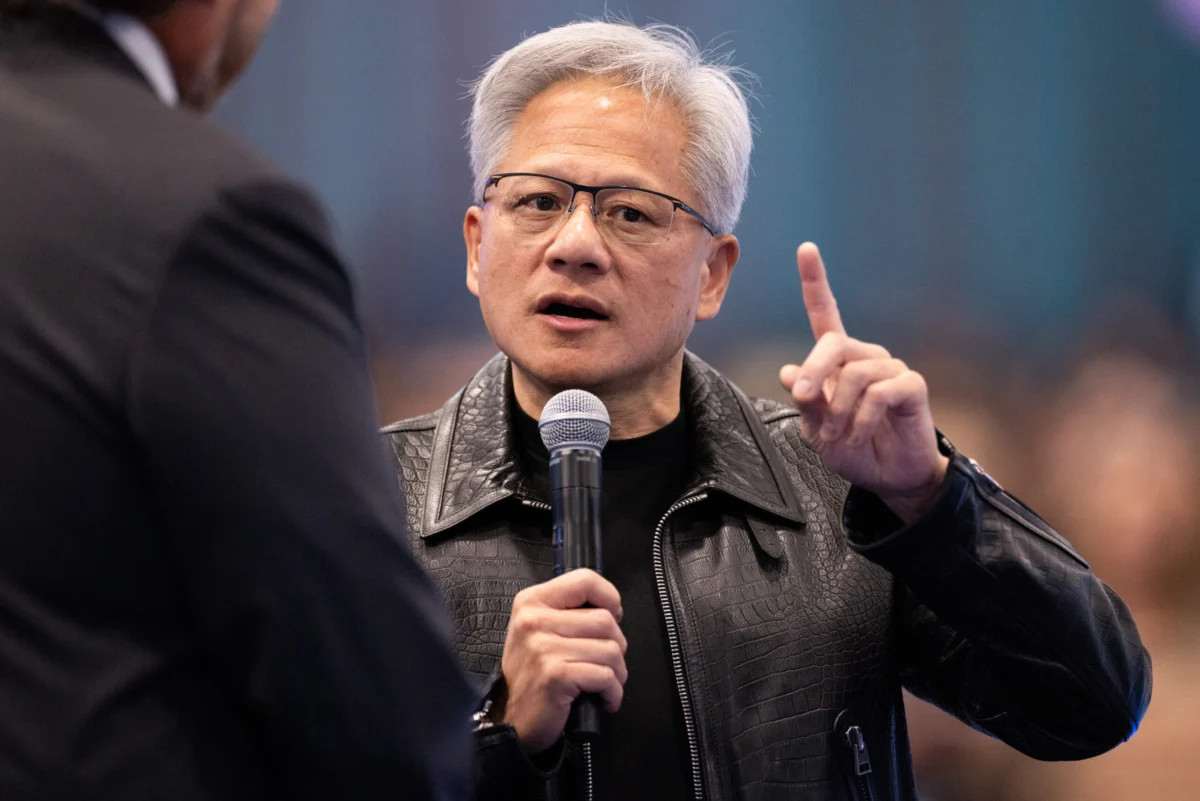
At the center of this firestorm is a clash of titans. Anthropic CEO Dario Amodei has proposed a roadmap to "pace the frontier," suggesting a more cautious approach to releasing high-capability models. Conversely, Nvidia CEO Jensen Huang—supported by rhetoric from President Donald Trump—has positioned himself as the standard-bearer for unbridled acceleration, dismissing concerns about AI safety as a "hoax."
This article dissects the implications of this debate, the lack of regulatory teeth in current proposals, and the economic realities that may ultimately render "AI safety" a secondary concern to market dominance.
Chronology of a Collision
The current tension did not materialize overnight; it is the culmination of months of behind-the-scenes maneuvering and increasingly public disagreements.
- Mid-2026: AI safety research organizations and internal policy teams at major labs begin drafting frameworks for "responsible scaling," suggesting that as models reach higher tiers of intelligence, they should be subjected to mandatory third-party audits.
- September 12, 2026: Anthropic’s Dario Amodei publishes a widely anticipated manifesto, officially outlining a plan to "pace the frontier." The document argues for a systematic approach to model releases, incorporating safety benchmarks that must be cleared before moving to the next level of computing power.
- September 14, 2026: During the high-profile All-In Summit, Nvidia’s Jensen Huang engages in a public, staged interaction with President Donald Trump. Both parties frame the concept of an "AI slowdown" as a manufactured crisis, with Trump explicitly labeling safety concerns as a "hoax" and vowing to form an "AI Force" that prioritizes American dominance over regulatory friction.
- Mid-September 2026: The conversation migrates to industry discourse, with TechCrunch’s Equity podcast hosts Kirsten Korosec, Sean O’Kane, and Anthony Ha unpacking the sincerity behind these stances, noting the lack of concrete, enforceable details in the "pacing" proposals.
The "Pacing" Proposal: Substance or Strategy?
The core of the safety movement’s argument relies on the idea of "frontier" labs—the handful of companies currently developing the most advanced Large Language Models (LLMs)—adopting voluntary guardrails. The proposed mechanisms include:
- Independent Third-Party Evaluators: Embedding external experts within labs like OpenAI and Anthropic to monitor safety protocols and track potential AI incidents in real-time.
- International Coordination: Establishing a coalition of democratic nations to standardize safety thresholds, preventing a "race to the bottom" where labs move development to jurisdictions with fewer oversight requirements.
- Tiered Scaling: A commitment to delay the deployment of models that exceed current capability benchmarks until specific safety criteria are met.
Critics, however, remain skeptical. As Sean O’Kane noted on the Equity podcast, the term "pace the frontier" is notably vague. "It sounds like a line from a movie," O’Kane remarked. "There is a distinct lack of specifics regarding what these companies mean by slowing down, or what the measurable risks actually are that justify such a pivot."
Furthermore, there is the cynical—but perhaps realistic—view that this consensus is not purely altruistic. Kirsten Korosec pointedly observed that "consensus can be a good thing, but it can also be the beginning of a cartel." By setting the bar for "safe" AI development high, the current market leaders may effectively be building a moat, ensuring that smaller startups cannot afford the regulatory and safety infrastructure required to enter the field.
The "Anti-Slowdown" Lobby: Economic Imperatives
Jensen Huang’s vocal opposition to an AI slowdown is not merely a philosophical stance; it is a business imperative. As the primary supplier of the high-end GPUs that power the AI revolution, Nvidia thrives on an environment of constant, exponential demand. Any regulatory "speed bump" could dampen the capital expenditure cycles that have fueled Nvidia’s meteoric rise.
The alignment between Huang and the current administration reflects a broader geopolitical strategy: the "AI arms race." The prevailing sentiment among this faction is that any delay in American AI development provides a strategic opening for international competitors—specifically China—to overtake the U.S. in military and economic capability. To these leaders, "safety" is a luxury; "dominance" is a necessity.
Supporting Data: Why Markets Won’t Self-Regulate
A primary question in this debate is whether the free market, absent heavy-handed government intervention, can provide the necessary safeguards. The evidence suggests that current market structures are ill-equipped to enforce safety.
The Myth of Consumer Choice
Unlike consumer software or retail products, where a "bad" user experience results in immediate churn, the current AI market is heavily B2B (business-to-business). Corporations integrating OpenAI’s Codex or Anthropic’s Claude into their infrastructure are locked in by technical integration and data pipelines.
"If one of these companies does something really bad," Sean O’Kane argued, "they will not see an impact in how many cancellations there are. Corporations are not going to pack up and move their entire backend from one LLM provider to another just because they disagree with a decision on principle."
The Capital Buffer
The current AI ecosystem is fueled by unprecedented levels of venture capital and corporate investment. Because these firms are "floated" by billions in cash, they are insulated from the traditional consequences of product failure. A minor safety incident or a botched rollout is unlikely to threaten their viability, as their runway is extended by the massive, long-term capital commitments of partners like Microsoft, Amazon, and Google.
Implications for the Future of Regulation
The federal government’s current posture suggests that comprehensive AI regulation is unlikely to materialize in the near term. The administration’s preference for deregulation, combined with the industry’s ability to frame regulation as a national security threat, creates a vacuum of oversight.
If the government chooses not to step in, we are left with a "trust us" model of governance. This leaves the burden of safety on the shoulders of the very companies whose financial incentives are perfectly aligned with speed and scale.
The "Adult in the Room" Problem
The industry is currently suffering from a leadership vacuum regarding who actually holds the moral authority to steer AI. Microsoft, once viewed as the "adult in the room" due to its historical experience with enterprise regulation, has seen its influence wane following aggressive but inconsistent attempts to outpace Google. Nvidia has stepped into this role, but its inherent conflict of interest—benefiting from unlimited sales—makes its stance on "safety" inherently suspect.
Conclusion
The debate over "pacing the frontier" is a microcosm of the larger struggle to balance innovation with responsibility. While the rhetoric of safety is increasingly popular, the lack of transparency, the absence of enforceable penalties, and the intense competitive pressure of the AI arms race suggest that the "slowdown" will likely remain a matter of public relations rather than substantive policy.
As the industry moves into the next phase of development, the distinction between "pacing" and "stalling" will become increasingly blurred. For the time being, the market is choosing acceleration, and it is doing so with the blessing of the highest levels of government. Whether this leads to a safer future or a reckless collision with the unknown remains the defining question of the decade.