In the heart of downtown Los Angeles, at The Grand LA, a revolution in sensory perception is currently underway. DATALAND, the world’s first Museum of AI Arts, has opened its doors, marking a paradigm shift in how human beings interact with machine intelligence. At the core of this omni-sensory institution lies a technical achievement that bridges the gap between digital art and physical reality: the first permanent U.S. installation of L-Acoustics’ Ambiance active acoustics platform, integrated seamlessly with the L-ISA Hyperreal Immersive spatial system.
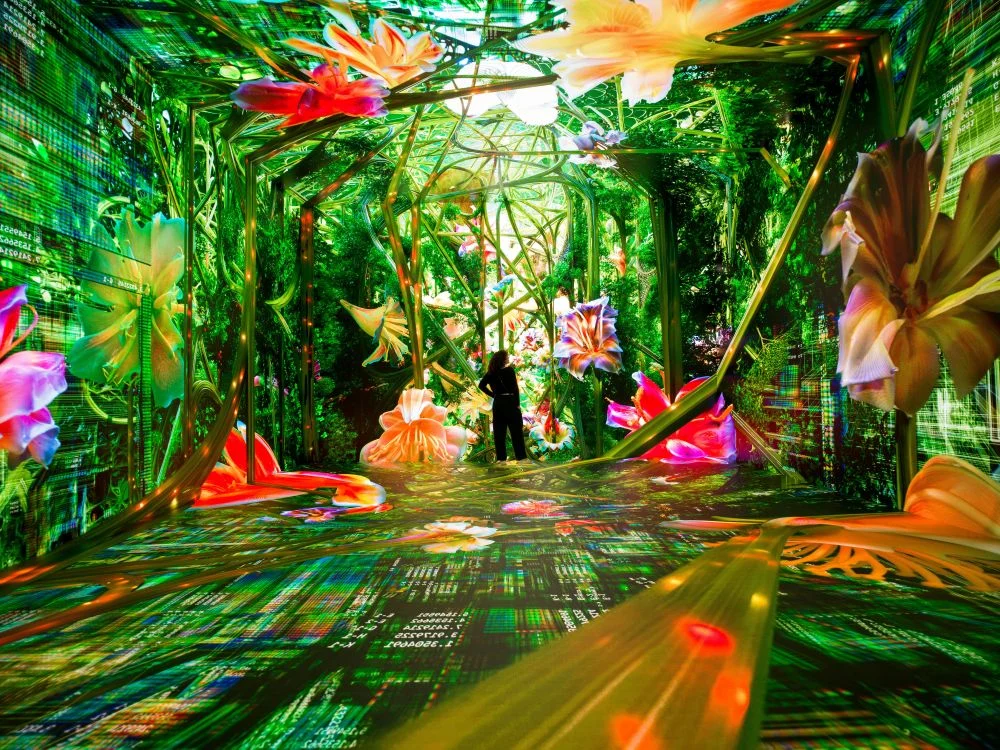
The inaugural exhibition, Machine Dreams: Rainforest, is more than a display of generative art; it is a living, breathing ecosystem of data, sound, and human presence. By leveraging a massive 250-loudspeaker infrastructure, DATALAND has moved beyond the traditional concept of sound reinforcement to create an "auditory architecture" that evolves alongside its audience.
The Convergence of Art and Engineering: Main Facts
DATALAND is designed to activate all five human senses, positioning itself as a cornerstone of the modern "experiential" art movement. Developed by Refik Anadol Studio—a multidisciplinary collective of artists, scientists, architects, and engineers—the museum functions as a laboratory for the age of machine intelligence.
The technical backbone of this experience is a complex, high-fidelity audio ecosystem provided by L-Acoustics. Unlike standard museum audio, which often relies on passive playback, DATALAND utilizes:
- L-ISA Hyperreal Immersive technology: An object-based spatial audio platform that allows creators to "paint" with sound, placing audio sources in 3D space with surgical precision.
- Ambiance: A hybrid active acoustic enhancement platform that adjusts the reverberation and acoustic signature of a physical room in real time.
- 250-Loudspeaker Array: A sprawling network of Syva, X-series, and Soka loudspeakers that ensure a continuous, high-resolution soundscape across five distinct galleries.
The collaboration represents a significant milestone for L-Acoustics, which has moved from a traditional pro-audio manufacturer to a primary creative partner in the realization of Anadol’s vision.
A Chronology of Vision: From Barcelona to Los Angeles
The partnership between Refik Anadol and L-Acoustics did not emerge overnight; it is the culmination of years of iterative experimentation and deep technological integration.
- The Early Foundation: The relationship began with smaller-scale installations that tested the limits of spatial audio in gallery settings. These early projects established the "language" of interaction between Anadol’s generative visuals and L-Acoustics’ spatial audio.
- The Barcelona Breakthrough: The In the Mind of Gaudí installation at Casa Batlló in Barcelona served as the critical proof-of-concept. It demonstrated that L-ISA technology could handle the complexity of generative, data-driven art while maintaining high-fidelity emotional resonance.
- The Development of DATALAND: As the concept for DATALAND moved from vision to construction, the project required a more robust, adaptive audio solution. The team identified the need for a system that could change the acoustic "personality" of a room—leading to the selection of the Ambiance platform.
- The Launch (2024): After months of design and installation by Certified Partner Solotech, DATALAND officially opened to the public in early 2024, debuting the Machine Dreams: Rainforest exhibition, which is scheduled to run through January 31, 2027.
Deep Dive: The Technical Ecosystem
The sophistication of DATALAND lies in its distributed intelligence. The installation is not a monolithic sound system but a series of interconnected acoustic environments, each tailored to specific artistic requirements.
The Main Exhibition Hall
Spanning nearly 5,000 square feet with 21-foot ceilings, this is the museum’s crown jewel. The audio strategy here is defined by three distinct vertical rings of loudspeakers, creating a 360-degree sphere of sound.
- Bottom Layer: 27 Syva colinear loudspeakers with matching Syva Low and Sub units.
- Surround & Height Layers: 25 X8i coaxial loudspeakers for surround and 12 X8i units for height.
- Personalized Interaction: 25 X6i coaxial loudspeakers provide localized audio "pockets" for guests, allowing for a more intimate engagement with the AI-generated soundscapes.
The Sanctuary and Beyond
The "Sanctuary" is where the Ambiance platform truly shines. By utilizing 17 5XT compact loudspeakers and a series of X8i units, the room can transform from a dry, intimate space to a resonant, cathedral-like environment at the touch of a processor. This allows the audio to mirror the visual "breathing" of the rainforest art.
The Latent Gallery and Infinity Room utilize a mix of X8i and 5XT loudspeakers to maintain continuity. The transition between these spaces is seamless, ensuring that as visitors move through the museum, the sonic experience is never interrupted. The Discovery Portal—the first point of entry—uses Soka colinear arrays to immediately immerse guests in the museum’s aesthetic.
All these systems are powered by 12 LA7.16i amplified controllers, utilizing L-SMART technology for extreme energy efficiency, and controlled via the L-ISA Processor II. The network architecture relies on a hybrid of Milan-AVB and AES67 protocols, ensuring future-proof flexibility for the museum’s evolving content.
Official Responses: The Creative Philosophy
Refik Anadol has consistently emphasized that sound is not an "add-on" to his work; it is an organic, co-constituting element of the art itself.
"Sound is not merely an accompaniment to my visual installations; it is an intrinsic element," says Anadol. "With L-Acoustics L-ISA and Ambiance technologies, those atmospheres are no longer fixed. They are alive."
The sentiment is echoed by the team at L-Acoustics, who view the project as a validation of their pivot toward permanent architectural installations. Yann-Gaël Gicquel, director of product management for Spatial Systems at L-Acoustics, noted: "This is the culmination of a long and deeply shared vision. We’ve worked together to build technology that supports the art and becomes part of it. With L-ISA and Ambiance, we are giving Refik’s studio something they can keep playing with, keep evolving, and keep imagining with."
Implications: The Future of Cultural Spaces
The installation of Ambiance at DATALAND carries significant implications for the future of museums, galleries, and public art spaces.
1. The Death of the "Static" Gallery
Traditionally, acoustic design in galleries was a matter of soundproofing and basic diffusion. DATALAND replaces this with active acoustic intelligence. By allowing the room’s reverberation to be programmed, architects and curators can now design spaces that adapt to the exhibit’s emotional tone, effectively "tuning" the room to the art.
2. The Rise of "Hyperreal" Sensory Experiences
As generative AI continues to transform the visual arts, the demand for high-fidelity, spatialized audio will only grow. The L-ISA system provides a blueprint for how institutions can create deep, immersive experiences that feel personal rather than broadcast. The ability to route personalized audio to individual guests—a key feature of the DATALAND setup—points toward a future of individualized museum experiences.
3. Sustainability and Technological Flexibility
The choice of LA7.16i amplifiers with L-SMART power management underscores a shift toward sustainable high-end technology. Furthermore, the use of open standards like Milan-AVB ensures that the museum can update its hardware and software interfaces as technology advances over the next several years.
4. Setting the Standard for North America
As the first permanent installation of Ambiance in the Americas, DATALAND is now the benchmark for high-tech cultural institutions. It demonstrates that spatial audio is no longer the exclusive domain of touring rock concerts or high-end theaters; it is an essential tool for the 21st-century art world.
In summary, the collaboration between Refik Anadol Studio and L-Acoustics is a testament to the power of cross-industry partnership. By merging cutting-edge spatial audio with the unpredictable beauty of machine-learned art, they have created an environment that doesn’t just display art—it envelops the visitor in a living, breathing, and singing reality. As DATALAND continues to evolve through 2027, it will undoubtedly serve as the primary case study for the next generation of sensory-integrated architecture.