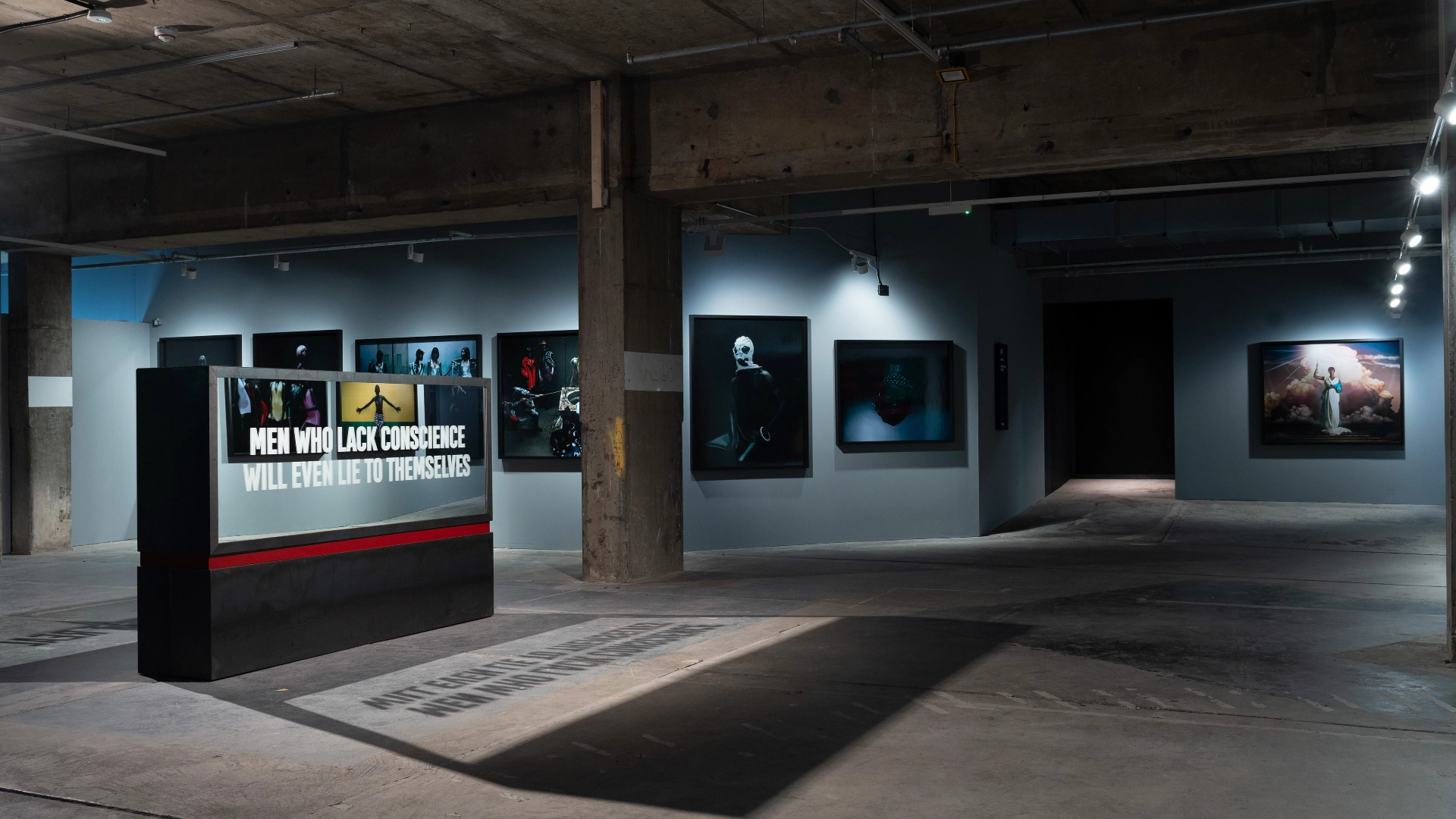
In the heart of London’s creative district, 180 Studios has once again transformed into a vessel for the visceral. Following the seismic impact of his 2023 debut, Regina, South London-born artist, photographer, and filmmaker Gabriel Moses has returned to the space with Selah—a monumental exhibition that serves not merely as a retrospective, but as a deliberate evolution of his visual language.
Spanning two expansive floors, Selah is an immersive labyrinth. It brings together over 70 photographic works and 10 films, weaving a narrative thread through the intersecting worlds of high fashion, global sport, and intimate music portraiture. As the centerpiece of his most ambitious project to date, the exhibition signals a shift from the observational to the experiential, inviting the viewer to inhabit the atmosphere rather than simply survey the frame.
The Architecture of Evolution: From ‘Regina’ to ‘Selah’
When Gabriel Moses burst onto the scene with Regina in 2023, he was already established as a prodigy—a photographer whose ability to capture the "in-between" moments of Black life and cultural iconography had made him a darling of international luxury houses and editorial giants. However, standing in the stark, industrial corridors of 180 Studios today, Moses is quick to acknowledge that the two-year gap between shows has been a period of intense artistic maturation.
"I’ve grown a lot in those two years," Moses reflects during an exclusive conversation regarding the show’s conceptual foundation. "I’ve developed more as an artist. For me, it was important to create a show that felt so much more immersive and interactive. With Regina, I was testing the waters of how a gallery space could house my vision. With Selah, I wanted to construct a world that you can walk through, one that breathes."
The title, Selah, is derived from the Hebrew term often found in the Psalms, typically interpreted as a musical or liturgical pause—a moment for reflection, to stop and listen. In the context of the exhibition, it acts as a structural directive, urging the visitor to slow their pace, engage with the installations, and sit with the stillness inherent in Moses’s otherwise kinetic imagery.
A Chronology of a Visionary
To understand the weight of Selah, one must trace the trajectory of Moses’s rapid ascent. Raised in South London, his early aesthetic was forged in the heat of his immediate surroundings—a mix of community, style, and the raw energy of urban existence.
- The Early Years: Moses began his career with a camera in hand, documenting the people of his neighborhood with a sensitivity that felt decades ahead of his years. His early work gained traction through social media, eventually catching the eyes of industry tastemakers.
- The Breakthrough: His transition into professional fashion photography saw him collaborate with the likes of Dazed, i-D, and Vogue. His style—marked by high-contrast lighting, profound shadows, and an uncanny ability to capture human vulnerability—quickly became a recognizable brand.
- 2023: The ‘Regina’ Milestone: His first solo exhibition at 180 Studios established his ability to scale his work for a gallery setting. It was a baptism by fire that proved his photography was not just meant for the glossy pages of magazines, but for the contemplative quiet of a gallery wall.
- 2025: The ‘Selah’ Era: Now, with the premiere of The Last Hour and the introduction of physical installations and sculptures, Moses has moved into the realm of multi-disciplinary installation art. The exhibition, which runs through August 31, 2025, represents the culmination of this transition.
Supporting Data: The Anatomy of the Exhibition
Selah is not a modest undertaking. The logistics of the show speak to its scale and the importance 180 Studios places on Moses’s continued growth as a contemporary artist.
- Venue: 180 Studios, London.
- Duration: Opened March 2025, running until August 31, 2025.
- Content Volume:
- 70+ Photographic prints ranging from large-scale portraits to candid snapshots.
- 10 Short films displayed on varying formats.
- One marquee premiere: The Last Hour.
- Multiple site-specific sculptures and spatial installations.
- Curatorial Focus: The exhibition is divided into thematic zones that transition from the chaotic energy of the sports and fashion world to the internal, quietude-focused atmosphere of his portraiture.
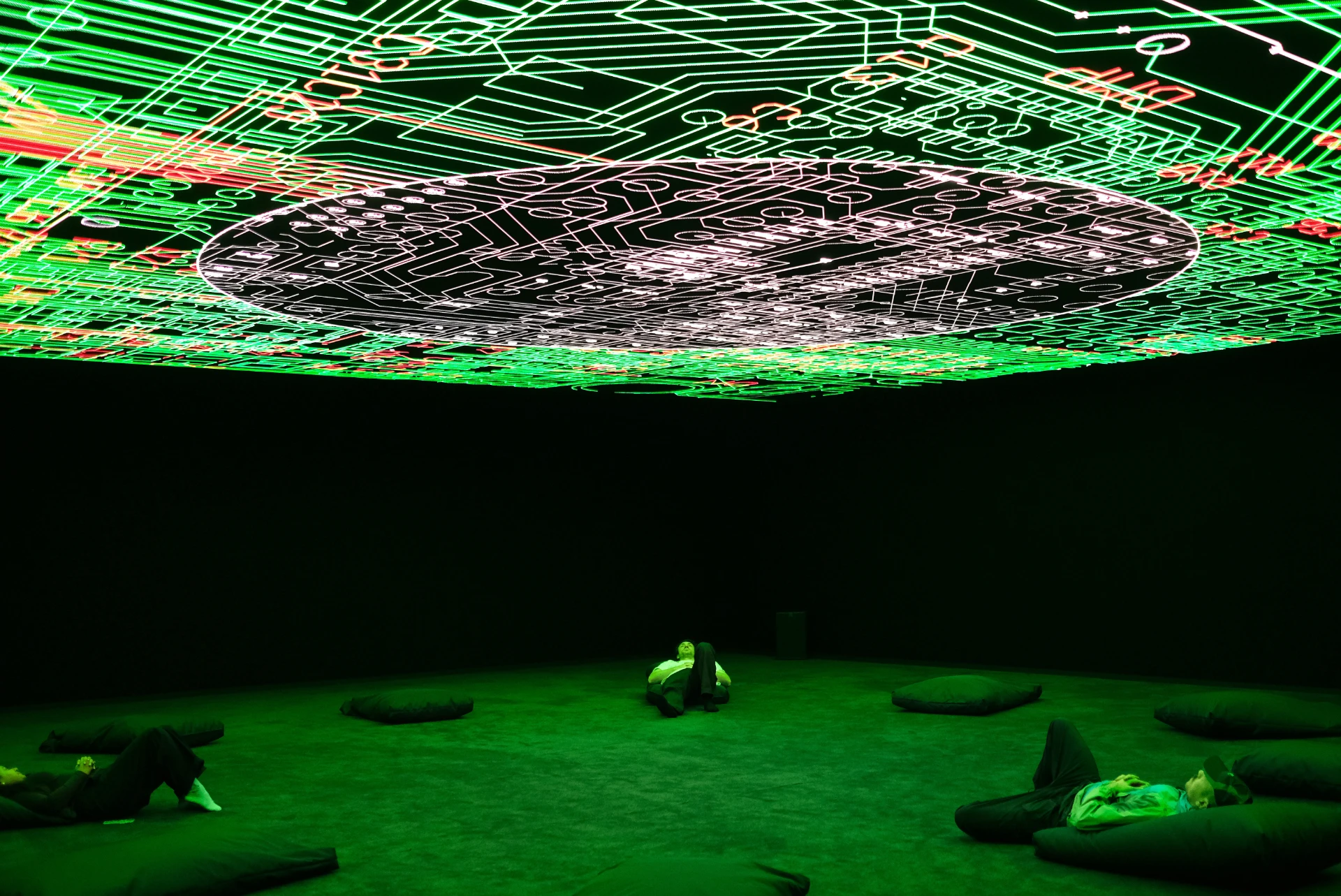
The inclusion of sculpture marks a new departure for Moses. By introducing three-dimensional elements into the space, he forces the viewer to navigate the exhibition physically. The photographs are no longer just images; they are focal points within a curated environment, framed by textures and light installations that mimic the emotional tone of the work being displayed.
The Premiere: ‘The Last Hour’
Perhaps the most anticipated element of Selah is the debut of the short film The Last Hour. While Moses has long utilized film as a medium to complement his photography, The Last Hour represents his most cohesive narrative work to date.
The film is an exercise in suspense and atmosphere. By stripping back dialogue and focusing on the interplay of shadow and light, Moses captures the feeling of the "final moments"—a theme that echoes throughout the exhibition. It is a haunting piece of cinema that suggests a future where Moses might pivot further into long-form filmmaking. Critics who have previewed the piece describe it as "visceral," noting that it demands the audience’s complete psychological surrender.
Official Responses and Industry Reception
The critical reception of Selah has been overwhelmingly positive, with many curators noting the rarity of an artist so young achieving such a comprehensive mastery of space.
"Gabriel has an uncanny ability to make you feel like you are the only person in the room with his subjects," says a representative from 180 Studios. "When he approached us with the concept for Selah, it wasn’t just about showing more work. It was about creating a dialogue between the viewer and the image. The addition of the sculptural elements was a bold choice, but it perfectly complements his cinematic approach to photography."
In the wider fashion and art press, the conversation has centered on Moses’s ability to remain authentic to his roots while operating at the highest levels of global luxury and commercial success. Unlike many of his contemporaries who lose their "edge" as they move into high-fashion circles, Moses appears to be using his access to those circles to refine his vision of the world, rather than letting those circles define his artistic identity.
The Implications: What ‘Selah’ Means for the Future of Art
The implications of Selah are significant for both the London art scene and the broader global photographic community. By maintaining a residency-style presence at 180 Studios, Moses is challenging the traditional, fleeting nature of the "gallery show." He is positioning his work as something that requires time, repeated visits, and deep engagement.
Furthermore, his success underscores a shift in how we define "fine art." We are moving away from a time when photography was relegated to the periphery of the "high art" world. Moses, alongside a new generation of multidisciplinary artists, is blurring the lines between fashion, film, and fine art. This synthesis is not just a stylistic choice; it is a response to how contemporary audiences consume visual media—we want the cinematic, the tactile, and the narrative all at once.
As the exhibition continues its run through the summer of 2025, the impact of Selah will likely be felt in the way other artists approach their own showcases. The demand for "immersive" experiences is at an all-time high, but Selah proves that immersion cannot be faked with technology alone. It requires a genuine, human-centric soul—a point of reflection—at its core.
For those planning to attend, the message is clear: do not rush. Selah is a journey that demands the one thing we rarely give ourselves in the digital age—the permission to stop, to look, and to listen.
Tickets for Selah are currently available via the 180 Studios website. For those looking to delve deeper into the artist’s process, further reflections and interviews can be found through his various features in Fact Magazine and other leading cultural publications.