By Global News Desk
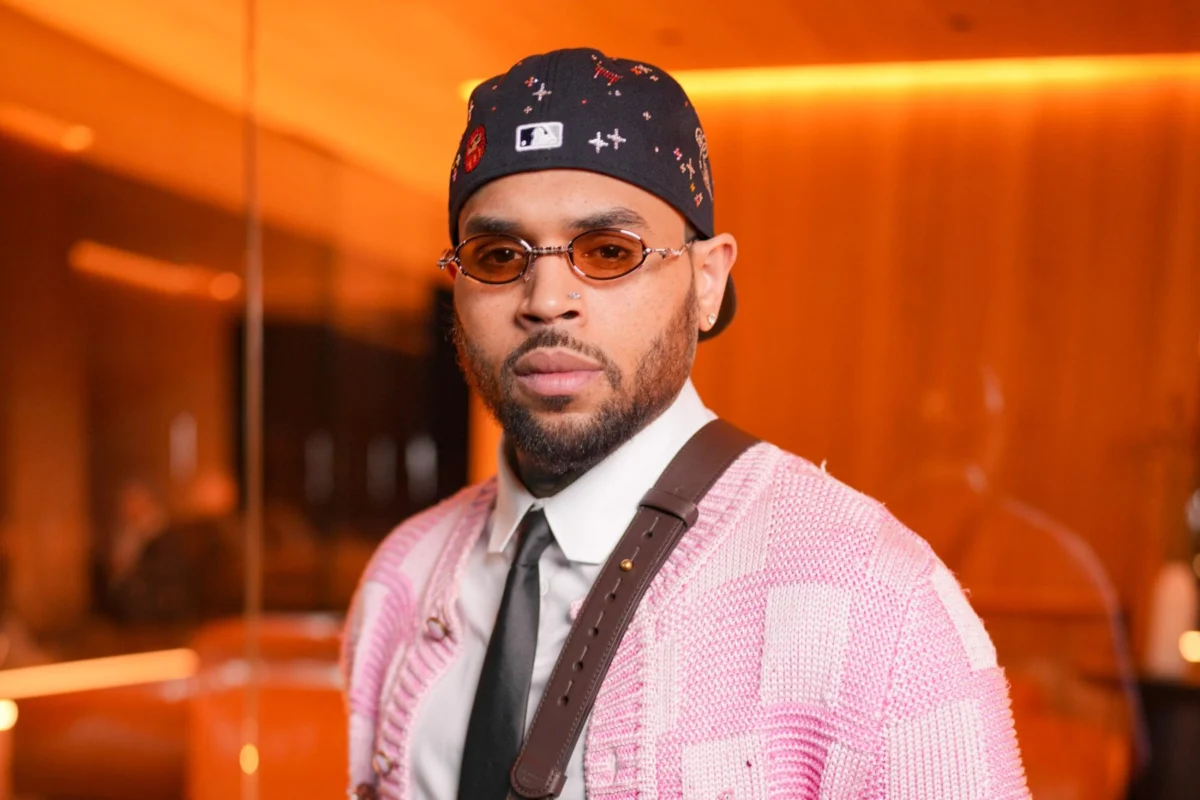
In a significant development regarding a high-profile legal dispute, American R&B star Chris Brown pleaded guilty to a charge of “affray” on Friday (July 24) at London’s Southwark Crown Court. The plea marks a pivotal shift in a long-standing criminal case stemming from a 2023 altercation at a prestigious Mayfair nightclub. By accepting the charge, which relates to a disturbance of public order involving a physical fight, the 37-year-old singer has successfully avoided more severe charges of assault and grievous bodily harm that had loomed over him for nearly two years.
The proceedings, which concluded in less than five minutes, also saw Brown’s associate, 40-year-old vocal coach Omololu Akinlolu—professionally known as the Florida rapper "Hoody Baby"—enter a similar guilty plea. Both men, who had previously maintained their innocence, now await sentencing, bringing a degree of finality to an incident that has shadowed Brown’s international touring career.
The Incident at Tape Nightclub: A Chronology of Events
The events in question unfolded on February 19, 2023, at Tape, an exclusive private members’ club in the heart of London’s upscale Mayfair district. According to court documents and prosecution summaries, the evening spiraled into violence following an encounter between Brown, Akinlolu, and local music producer Amadou “Abe” Diaw.
The Prosecution’s Account
Prosecutors described the incident as a “vicious and unprovoked attack.” According to the Crown Prosecution Service (CPS), the situation escalated when Brown approached Diaw and struck him over the head with a glass bottle. The violence did not stop there; investigators claim that Akinlolu joined the altercation, repeatedly punching Diaw in the head.
The prosecution further alleged that the two defendants continued their assault as the victim attempted to navigate the club in a desperate bid to escape. The violence allegedly reached a point where Diaw was kicked while he was seated and defenseless on the floor of the venue. The victim was subsequently hospitalized, receiving treatment for significant head and knee injuries.
Legal Maneuvering
The fallout from the February 2023 incident was swift. Following an investigation by the Metropolitan Police, authorities sought to bring charges against the singer. The situation culminated in May 2025, when Brown was apprehended by law enforcement upon his arrival in Europe for his Breezy Bowl XX tour.
At the time of his arrest, Brown faced serious allegations, including assault, suspicion of causing grievous bodily harm (GBH), and possession of an offensive weapon—specifically, the tequila bottle identified in the prosecution’s narrative. Both Brown and Akinlolu initially entered pleas of not guilty during a hearing in June 2025.

During the period between his arrest and the recent plea, Brown was released on a substantial $6.75 million bail. This allowed the artist to continue his European tour, provided he adhered to strict court-mandated conditions. The case remained in a state of legal limbo for over a year, involving complex discovery and negotiation between defense counsel and the CPS, eventually culminating in the downgraded charge of affray.
Implications of the "Affray" Plea
Under English law, “affray” is defined as a public order offense where a person uses or threatens unlawful violence towards another person, causing a person of reasonable firmness present at the scene to fear for their safety. By pleading guilty to this specific charge, Brown has effectively side-stepped the more rigorous sentencing guidelines associated with grievous bodily harm, which carry significantly heavier penalties and more stringent conviction criteria.
The Sentencing Outlook
While the avoidance of the more serious charges is a strategic legal victory for the defense, the situation remains precarious. Both Brown and Akinlolu are scheduled to return to Southwark Crown Court on October 26 for their official sentencing hearing.
The charge of affray carries a maximum sentence of three years in prison. However, judicial discretion in the UK system allows for a range of outcomes, including suspended sentences, fines, or community orders, depending on the defendant’s prior record, the severity of the victim’s injuries, and the judge’s assessment of remorse. As part of his bail conditions, the court has granted Brown permission to leave the United Kingdom for professional commitments, provided he returns by October 25 to face the court.
Official Responses and Public Sentiment
The case has drawn sharp criticism from law enforcement officials. Metropolitan Police Detective Zara Ripamonti, who served as a primary voice for the prosecution throughout the investigation, did not mince words regarding the nature of the crime.
“This was a disgraceful, unprovoked assault that put a man in hospital,” Detective Ripamonti stated following the hearing. “There is no place for serious violence like this in London, and I’m pleased these men accepted that their actions were not just completely unacceptable—but criminal.”
The detective also highlighted the transnational nature of the investigation, noting that British police collaborated extensively with international counterparts to ensure the defendants were held accountable.
The Civil Litigation Aspect
The criminal case is only one facet of the broader fallout. The victim, Amadou “Abe” Diaw, had previously initiated a $16 million civil lawsuit against Brown, seeking damages for the trauma and injuries sustained during the incident. Curiously, that lawsuit was later dropped. While the exact reasoning behind the withdrawal of the civil claim remains opaque—with speculation regarding a potential out-of-court settlement—the absence of a civil suit likely influenced the climate in which the criminal plea deal was struck.
At the time of writing, representatives for Chris Brown have declined to provide a statement to Billboard regarding the outcome of the hearing or the next steps in the legal process.
A Career Under the Microscope
For Chris Brown, the London incident is another chapter in a long history of public legal controversies that have often overshadowed his musical achievements. Since his breakout in the mid-2000s, Brown’s career has been a dichotomy of chart-topping success and persistent scrutiny.
The Breezy Bowl XX tour, during which he was arrested, represented a major effort to maintain his relevance in the European market. The ability to continue touring while under bail is a testament to the scale of his global reach, yet the cloud of criminal proceedings has forced a constant dialogue between his artistic output and his conduct.
The Future of the Case
As October 26 approaches, the music industry and the public will be watching closely. A sentencing hearing of this magnitude is rarely just a procedural formality. The judge’s final decision will set a precedent for how the court views celebrity status in the context of violent crime.
For the legal teams involved, the work is far from over. The defense will likely argue for leniency, emphasizing the plea as an acknowledgment of wrongdoing, while the prosecution’s emphasis on the “unprovoked” and “vicious” nature of the attack will serve to remind the court of the physical and psychological toll the incident took on the victim.
Ultimately, this case serves as a stark reminder of the complexities of international law for global entertainers. When personal conduct crosses the threshold into criminal activity in a foreign jurisdiction, the stakes extend far beyond the stage. Whether this plea brings a definitive end to the saga or merely transitions it into a new phase of litigation remains to be seen. For now, the focus shifts to October, where the final judgment will determine the immediate future of one of R&B’s most enduring, yet controversial, figures.