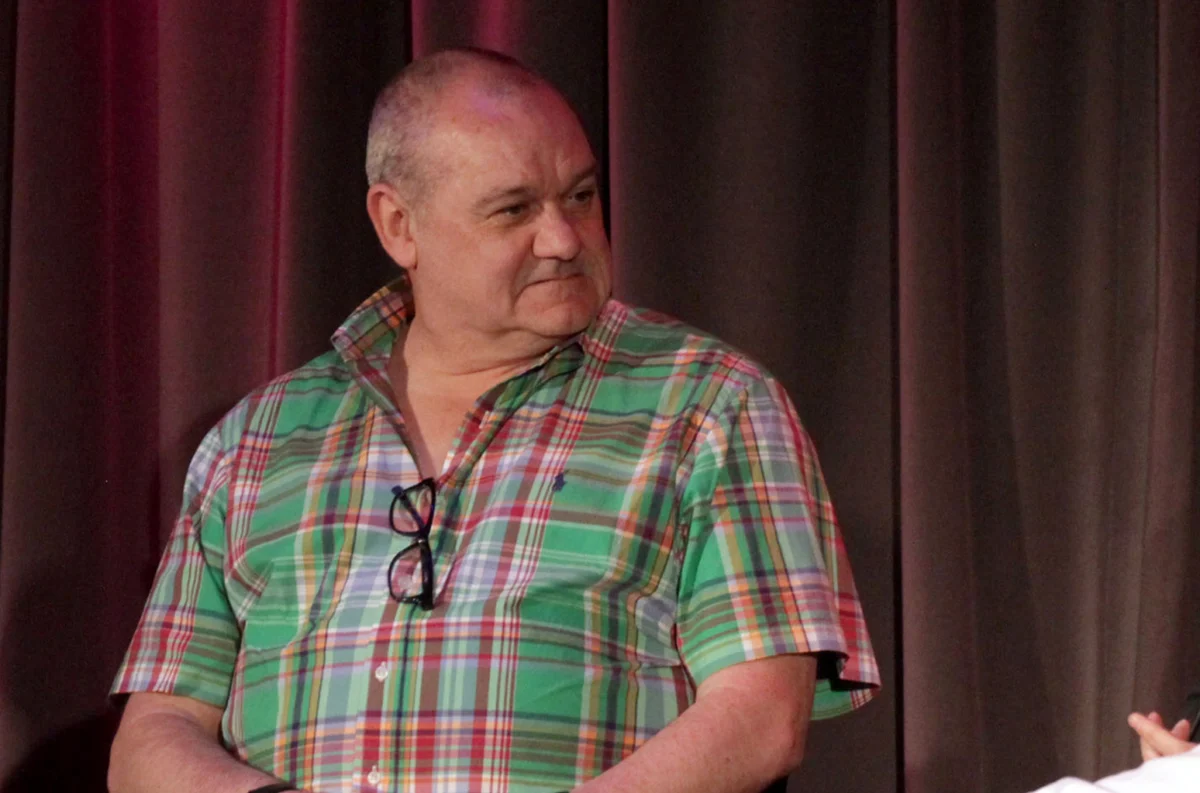
The global music industry is mourning the loss of a true visionary. Kenny MacPherson, a titan of music publishing whose career bridged the gap between raw, left-of-center artistry and global commercial success, passed away in Los Angeles on October 23. He was 71. While no cause of death was disclosed, his passing has prompted an outpouring of tributes from across the music ecosystem, marking the end of a four-decade career that fundamentally reshaped how independent songwriters are championed and protected.
From his early days in Glasgow to his tenure as a powerhouse executive in New York and Los Angeles, MacPherson’s influence was defined by a rare combination of grit, "high-touch" artist relations, and an unwavering belief in the cultural necessity of songwriters.
A Life Defined by Rhythm and Ambition: The Chronology
Kenny MacPherson’s trajectory was never conventional. Born in Largs, Scotland, his journey into the upper echelons of the music industry began not in a corporate boardroom, but in the trenches of live performance. His early years were spent managing concerts at the iconic Apollo Theatre in Glasgow. It was here that he cut his teeth in the volatile world of artist management, eventually touring with the legendary Scottish comedian Billy Connolly.
It was during this formative period in London that MacPherson received the directive that would define his life’s work. As he recounted in a 2019 Billboard interview, he was speaking with publisher Bill Martin, who offered him a piece of advice that resonated deeply: "You know, Kenny, if you want to be in the music business, get into publishing—it’s a gentleman’s game."
The Rise to Executive Prominence
By the late 1970s and early 1980s, MacPherson had transitioned to the United States, bringing with him a uniquely European sensibility regarding talent development. After working with The Manhattan Transfer, he joined the management company for Supertramp. It was there that he helped establish a publishing arm, realizing early on that control of intellectual property was the true engine of artist longevity.
His true institutional impact began in 1989 when he joined Warner/Chappell to lead its New York office. For the next 13 years, MacPherson became a master of discovery. His tenure at Warner/Chappell was characterized by an eclectic, forward-thinking roster that included Radiohead, the Afghan Whigs, Paul Westerberg, and The Blue Nile.
In 2002, he moved to the helm of Chrysalis Music’s North American division. Under his leadership, the label became a powerhouse for the burgeoning indie-alternative movement. He steered the signing of OutKast, My Morning Jacket, Ray LaMontagne, TV on the Radio, The Yeah Yeah Yeahs, and Beach House. By the time BMG acquired Chrysalis in 2010, MacPherson had solidified his reputation as an executive who could turn "cult" artists into critically acclaimed, commercially viable successes.
Supporting Data: The Big Deal Era and Market Dominance
Perhaps MacPherson’s most enduring legacy was the founding of Big Deal Music in 2012, alongside partners Dave Ayers and Jamie Cerreta. Built on the principle of "high-touch" management, Big Deal was a reaction against the impersonal nature of the major-label conglomerate model.
The company’s impact was immediate and measurable. Within a few years, Big Deal Music was regularly appearing in the top 10 rankings of U.S. music publishers by market share—a staggering achievement for an independent firm. The Association of Independent Music Publishers (AIMP) recognized this dominance by naming it the Indie Publisher of the Year in 2017.
A Portfolio of Influence
The success of Big Deal was not merely financial; it was cultural. By reuniting with past collaborators like St. Vincent and My Morning Jacket, while simultaneously cultivating a new generation of talent—including Kamasi Washington, Weyes Blood, Blake Mills, and Sharon Van Etten—MacPherson created a creative ecosystem. The roster also boasted hitmakers like Teddy Geiger, Julian Bunetta, and John Ryan, proving that MacPherson’s "sharp ear" was not limited to indie-rock but extended to the mechanics of modern pop.
In 2020, this growth trajectory culminated in the acquisition of Big Deal by Hipgnosis Songs Fund. Transitioning into the role of CEO for Hipgnosis Songs Group, MacPherson continued to navigate the shifting tides of the music economy, ensuring that the songwriters he championed remained the center of the conversation.
Official Responses and Industry Tributes
The loss of MacPherson has been felt deeply by those who worked in his shadow and by his side. The industry’s reaction highlights a man who prioritized human connection over corporate metrics.
"Kenny was one of a kind," noted Dougie Thomson, the Supertramp bassist and a friend of over 50 years, in a statement to HITS Daily Double. This sentiment was echoed by Jamie Cerreta, who transitioned from partner to president of Peermusic U.S. and Canada. "He was beloved by the songwriters he fought so hard for," Cerreta remarked, underscoring the fierce loyalty MacPherson inspired.
MacPherson himself was always humble about his role in the creative process. "I wanted to build a place that was culturally significant and great for people to work, where manners, courtesy and high touch are important," he once said. He remained a fierce advocate for structural change within the industry, frequently lobbying for songwriters to occupy board positions and championing the creation of industry-wide health care funds.
Implications: The End of an Era
The passing of Kenny MacPherson leaves a significant void in the independent publishing landscape. As the industry continues to consolidate under the influence of massive song-catalog acquisitions, the "gentleman’s game" that MacPherson championed—one defined by relationships, long-term development, and a genuine respect for the craft of songwriting—faces new challenges.
The "Songwriter First" Philosophy
MacPherson’s legacy serves as a blueprint for the next generation of executives. His career demonstrated that an independent publisher could outmaneuver major competitors not by spending more, but by caring more. He proved that an executive’s value is not just in the bottom line, but in the advocacy they provide for the artists who lack a voice in the halls of power.
His final years were spent grappling with the rapid digitization of the music business, yet he remained consistent in his core belief: "A world without songs would be a very dull place." His commitment to this ethos ensured that the artists he managed were never just "assets" in a portfolio, but architects of culture.
A Legacy of Family and Music
Kenny MacPherson is survived by his wife, the photographer Melanie Nissen, who was a witness to much of his career’s evolution; his daughter, Nicole Walker; his granddaughter, Kate Land; and his sister, Anne Cowgill.
As the music industry continues to honor his memory, the focus remains on the immense catalog of music he helped bring into the world. From the haunting melodies of Radiohead to the soulful compositions of Ray LaMontagne, MacPherson’s fingerprints are found on some of the most essential music of the last 40 years.
He was an executive who viewed the music industry not as a series of transactions, but as a series of relationships. In his passing, the industry loses not just a veteran of the boardroom, but a guardian of the song—a man who understood that while the business of music is complex, the soul of music is simple. He leaves behind a legacy that is, in every sense of the word, a big deal.