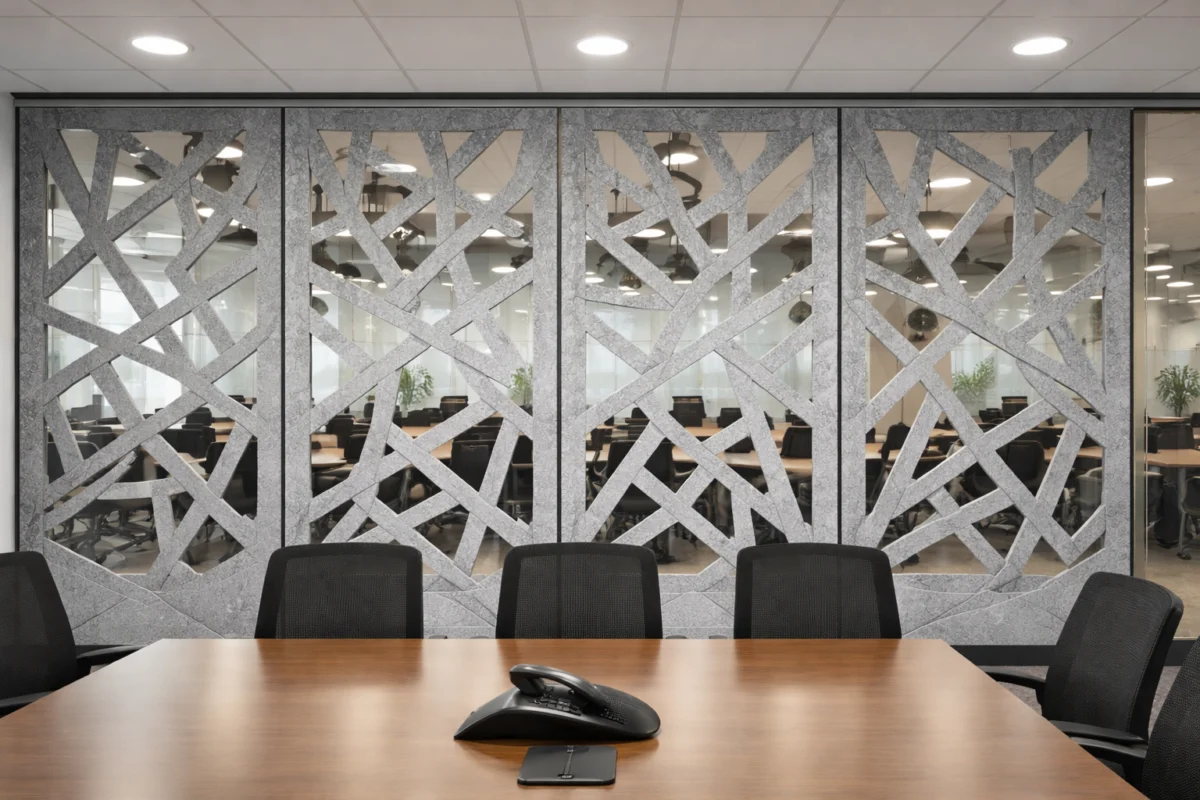
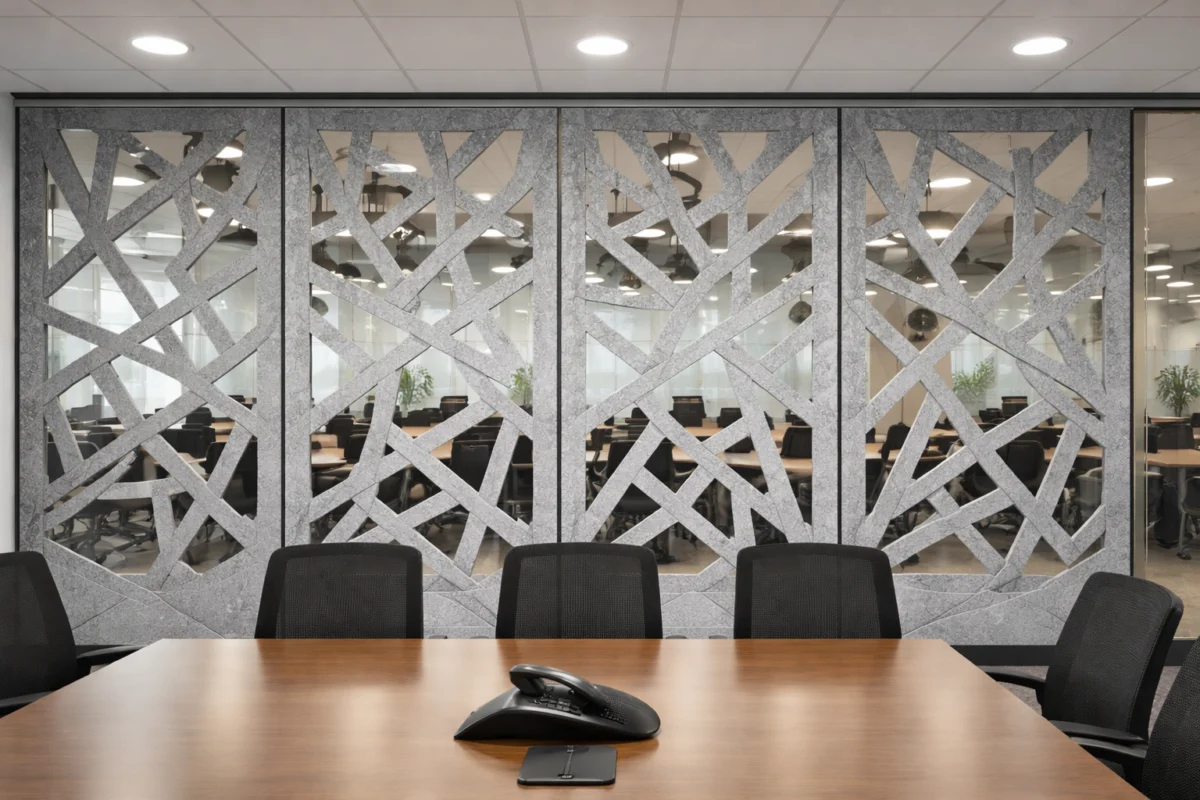
Modern office architecture has undergone a radical transformation over the last decade. The era of the enclosed, cubicle-heavy floor plan has largely given way to "daylighting"—a design philosophy that prioritizes open, expansive spaces flooded with natural light. By utilizing floor-to-ceiling glass walls, conference rooms, and flex-work hubs, architects create a sense of transparency and interconnectedness. However, this aesthetic evolution has introduced a significant, often overlooked challenge: the physics of sound.
Glass, while visually stunning, is a highly reflective surface. In a space dominated by glass, sound waves bounce repeatedly off hard, non-porous surfaces, creating persistent echoes and reverberation. This acoustic phenomenon degrades speech intelligibility, compromises privacy, and increases listener fatigue. For a Boston-based pharmaceutical company, these challenges reached a breaking point in their primary teleconferencing suite, prompting a collaboration with Primacoustic to find a solution that honored the room’s design without compromising its light-filled atmosphere.
The Challenge: When Glass Walls Become Acoustic Barriers
The project centered on a high-stakes teleconferencing room defined by two parallel glass walls running the entire length of the space. As is common in modern corporate environments, the room was intended to be a hub for high-level collaboration. However, the reliance on glass created a "bouncing" effect that turned simple staff meetings into frustrating exercises in communication.
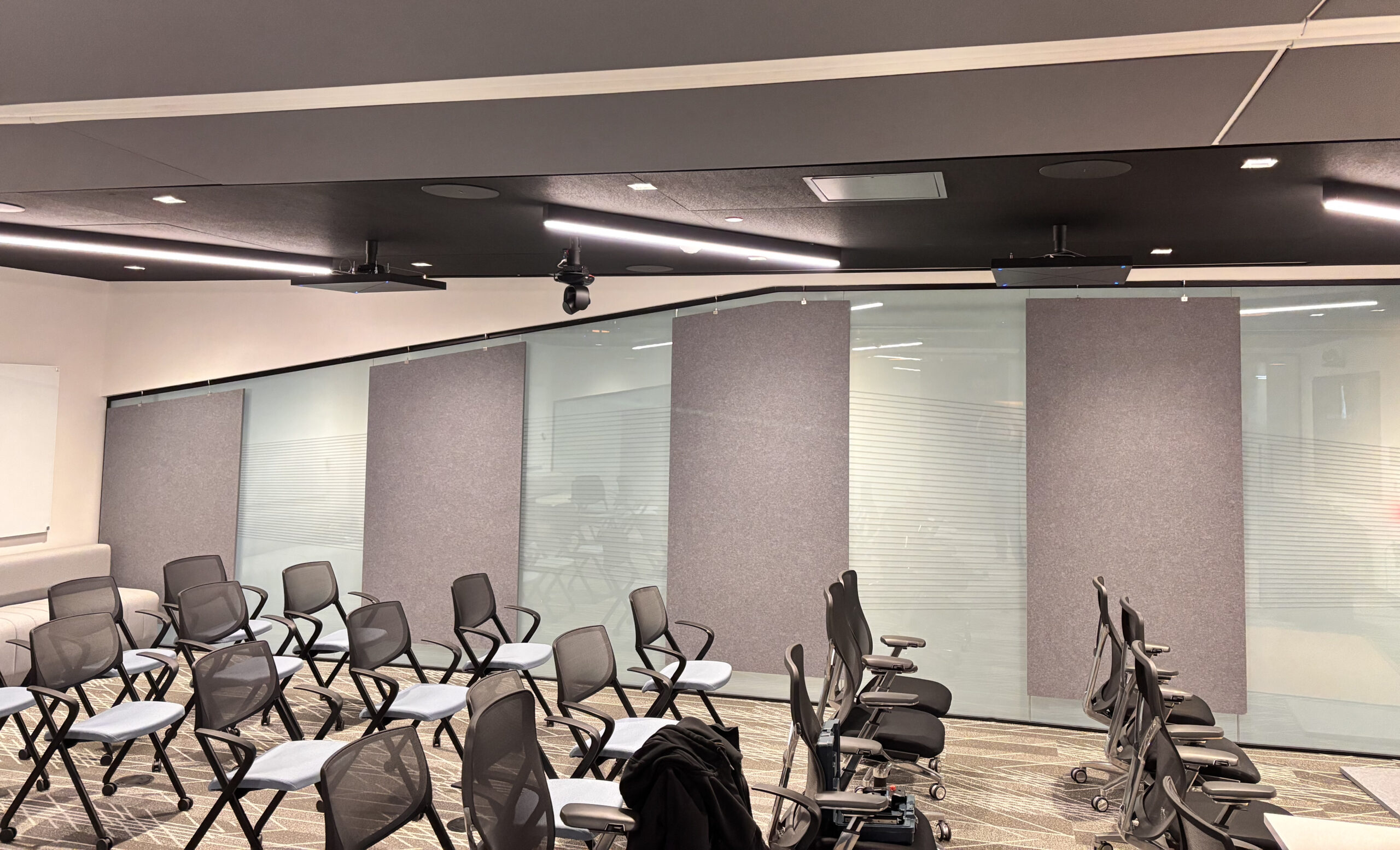
The AV integrator on the project, Massachusetts-based DGI Communications, quickly identified the culprit: the room’s existing ceiling-based acoustic treatments were entirely insufficient to mitigate the reflections generated by the expansive, parallel glass surfaces. The reverberation times were so high that remote participants struggled to understand local speakers, and internal communication became muddy and fatiguing.
The constraint was clear: the client required a significant reduction in sonic reflections, but they were unwilling to modify the glass elements or obscure the natural light they provided. Furthermore, the structural limitations of the ceiling precluded the installation of traditional baffles or heavy acoustic clouds. The solution needed to be non-destructive, visually subtle, and acoustically potent.
Chronology of the Installation: Precision Engineering
To address the reverberation, the project moved from diagnostic analysis to a custom-engineered implementation using Primacoustic’s EcoScapes line of PET (Polyethylene Terephthalate) acoustic treatments.
Phase 1: Site Analysis and Design
The Primacoustic engineering team conducted an on-site assessment, determining that the solution required a balanced distribution of sound-absorbing material. Because the walls were parallel, the risk of "flutter echo"—the rapid, ringing reflection of sound between two hard, flat surfaces—was high. The team opted to place acoustic panels directly in front of the glass.
Phase 2: Custom Fabrication
Standard, off-the-shelf panels were not an option. Each EcoScapes panel was precision-cut on-site to match the unique architectural angles and the footprint of the glass walls. This ensured that the installation looked like a deliberate design choice rather than an afterthought.
Phase 3: Non-Destructive Mounting
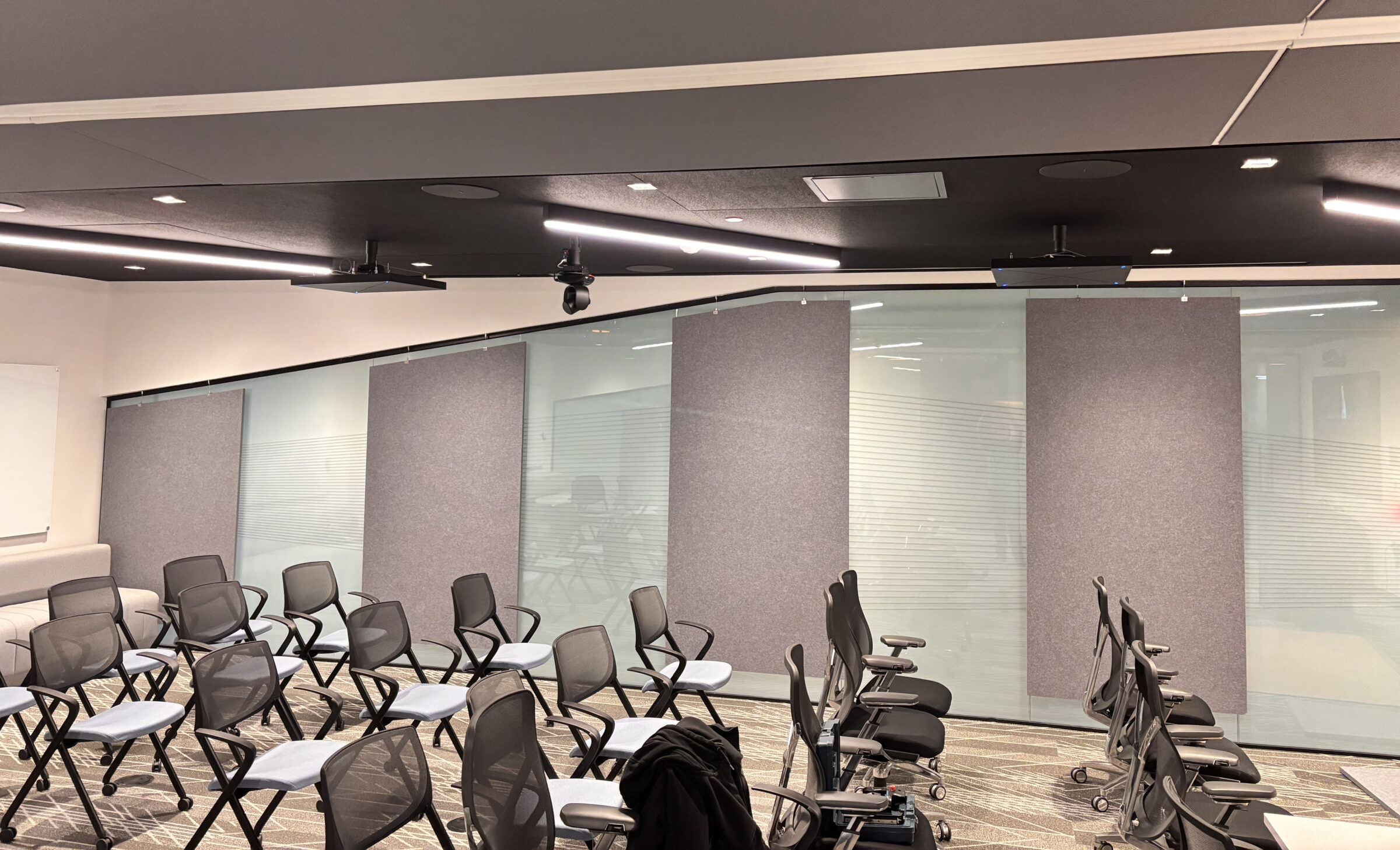
To preserve the structural integrity of the office, the team utilized hardware anchored solely into the drywall above the glass line. This allowed the panels to "float" in front of the glass. By leaving an intentional air gap between the panel and the surface, the engineering team effectively doubled the acoustic efficiency. The air space allows sound waves to pass through the front of the panel and reflect back through the rear, significantly increasing the Noise Reduction Coefficient (NRC) rating and enhancing the absorption of lower-frequency energy.
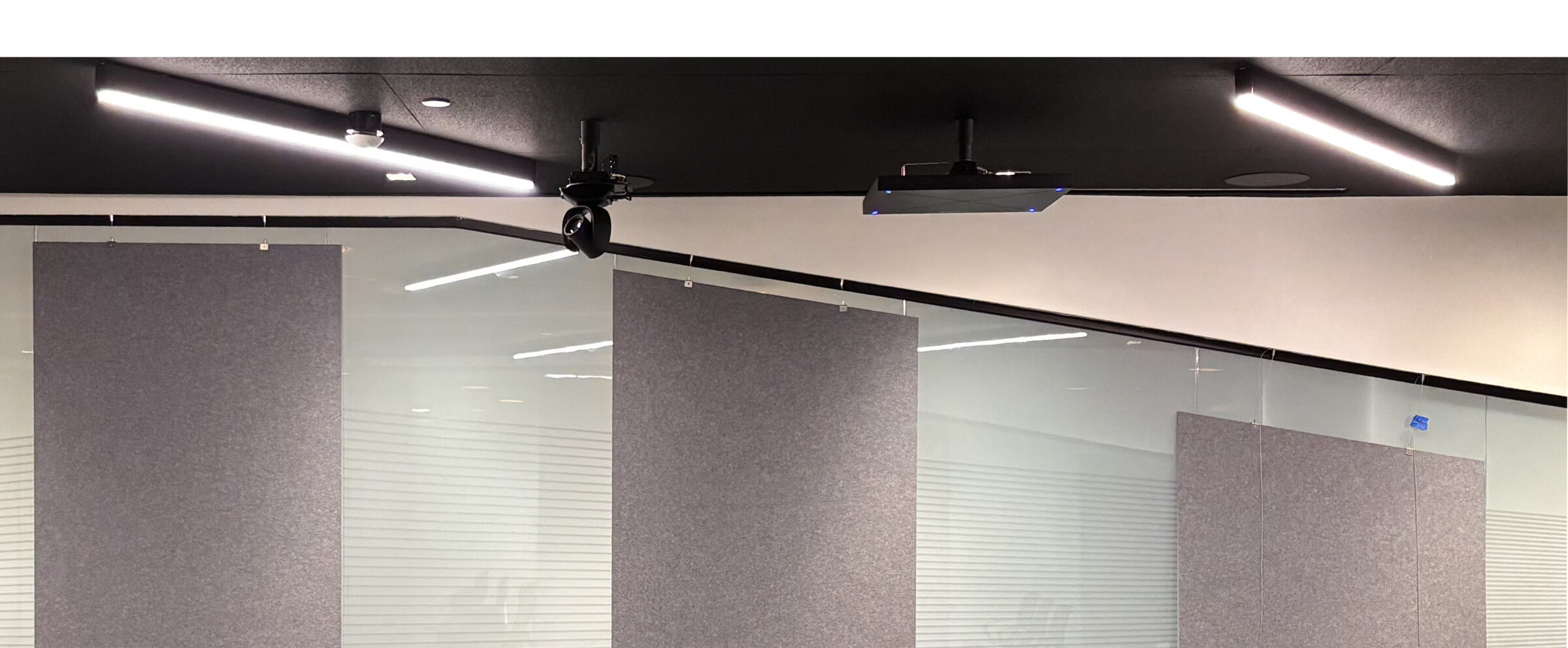
Phase 4: Final Integration
In total, eight 4’x8’ panels—four per side—were installed. The result was a dramatic improvement in the room’s acoustic signature. The flutter echoes were entirely eliminated, and speech intelligibility in teleconferences reached professional-grade standards.
Supporting Data: Why PET is the New Standard
The effectiveness of this project relies on the material science of PET. Derived from recycled plastic bottles, PET is a sustainable, durable, and highly versatile polymer. In the context of acoustic design, its performance is driven by several key factors:
- Porosity and Density: PET panels are manufactured with a specific density that allows them to trap sound waves within their fibrous structure, converting acoustic energy into microscopic amounts of heat.
- Frequency Response: Unlike thinner foams that only address high-frequency flutter, PET panels of sufficient thickness are highly effective at absorbing mid- and high-frequency sound, which is the range where human speech resides.
- Sustainability Metrics: As corporate responsibility becomes a central tenet of modern business, the use of recycled materials like PET contributes directly to LEED certification. The panels are non-toxic, fire-rated, and fully recyclable at the end of their lifecycle.
- Aesthetic Flexibility: PET can be manufactured in virtually any shape, thickness, and color. This allows designers to treat acoustic panels as art, utilizing custom patterns to reinforce corporate branding or architectural themes.
Official Perspectives: The Role of Expert Consultation
The success of the Boston project underscores a broader shift in how AV integrators and facility managers approach workspace design. Primacoustic, which has spent over two decades working in the high-stakes environment of professional recording studios, has pivoted to address the growing demand for "designer-grade" acoustic solutions.

"We pride ourselves on providing personalized support from the initial sketch to final installation," says a spokesperson from the Primacoustic team. "Our goal is to enable customers to achieve their goals fluidly—meeting their acoustic requirements while respecting the architectural vision of the space."
This philosophy is embodied in the company’s "Signature Suite," a recent expansion that offers custom finishes and designer fabrics. By moving away from the "industrial" look of traditional acoustic foam, companies like Primacoustic are making it easier for architects to integrate sound control into high-end lobbies, boardrooms, and open-office layouts.
Implications for Future Office Design
The "Boston Case Study" serves as a blueprint for the future of workspace design. It demonstrates that the conflict between "beautiful glass architecture" and "functional acoustic environments" is a false dichotomy.

The Shift Toward "Invisible" Acoustics
Moving forward, we can expect a greater emphasis on acoustic treatments that serve a dual purpose. Instead of hiding panels in the ceiling, designers are increasingly utilizing vertical wall surfaces as canvases for acoustic art. The use of air gaps behind panels will likely become standard practice, as it maximizes the ROI of the materials used.
The Role of the AV Integrator
The role of the AV integrator is also evolving. It is no longer enough to simply install microphones and speakers. To achieve high-quality teleconferencing, integrators must now act as room acousticians. By partnering with manufacturers that provide custom, install-ready solutions, integrators can solve complex environmental issues without needing to bring in specialized construction contractors.
Sustainability as a Default
Finally, the industry is reaching a point where sustainability is no longer a premium feature but a baseline expectation. The success of PET in professional environments proves that environmental stewardship and high-performance engineering are not mutually exclusive. As firms look to refurbish existing glass-heavy offices to accommodate hybrid work models, the demand for sustainable, non-destructive, and aesthetically pleasing acoustic solutions will only continue to rise.

Conclusion
The transformation of the Boston pharmaceutical company’s teleconferencing room is more than a success story for one firm; it is a signal to the design industry. When natural light is prioritized, acoustic performance must be engineered with equal rigor. Through the strategic application of PET materials and a commitment to custom-engineered mounting, modern offices can retain their open, airy, and transparent feel without sacrificing the clarity of the human voice.
As we look toward the future of the workplace, the lesson is clear: for communication to be truly "heard," the space itself must be silent. By balancing form, function, and environmental responsibility, professionals can create workspaces that are as productive as they are beautiful. For those facing similar acoustic hurdles, the path forward is a combination of precise material selection and a willingness to embrace creative, custom-engineered solutions.