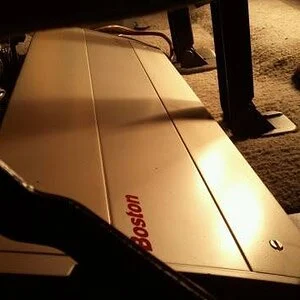
In the world of high-performance car audio, the importance of power delivery is often overshadowed by the flashy aesthetics of subwoofers and amplifiers. However, the backbone of any robust sound system is the integrity of the electrical connection. Recent discussions among audio enthusiasts have highlighted a persistent dilemma: the choice between Copper-Clad Aluminum (CCA) and Oxygen-Free Copper (OFC) wiring. For those building systems in the Australian market, navigating these technical requirements is essential for safety, efficiency, and sound quality.
Main Facts: The CCA vs. OFC Debate
At the core of the ongoing discourse is the material composition of the power wire. CCA cable consists of an aluminum core coated with a thin layer of copper. While it is significantly cheaper to produce and purchase, it suffers from higher electrical resistance compared to pure OFC.
OFC, as the name suggests, is refined to remove oxygen, resulting in a high-purity copper conductor. Because copper is inherently more conductive than aluminum, an OFC wire can carry the same current as a CCA wire with less heat generation and lower voltage drop.
For an amplifier running in the 250-300 watt range, experts note that while CCA can be "adequate" under specific conditions—namely, short cable runs—it is rarely the optimal choice. As resistance increases, so does the heat generated within the cable. At peak output, an undersized or highly resistive cable may cause the amplifier to starve for current, leading to clipping, thermal shutdown, or, in extreme cases, electrical hazards.
Chronology: Understanding the Evolution of Cabling Standards
The debate over cabling materials has evolved alongside the car audio industry. Historically, pure copper was the standard. However, as the price of raw copper skyrocketed in the early 2000s, manufacturers introduced CCA as a cost-effective alternative.
- The Early 2000s: Copper prices began a multi-year climb, prompting mass-market retailers to shift toward CCA to maintain margins on amplifier installation kits.
- The 2010s: Enthusiast forums began to track "voltage drop" phenomena, where users reported dimming headlights and lackluster bass response in systems wired with CCA.
- 2020-2025: The industry moved toward standardized gauge measurements. However, a "hidden" issue persists: many budget CCA kits are "undersized" (using thinner strands to save cost), exacerbating the inherent resistance issues of aluminum.
- September 2026: Current discussions—as evidenced by recent community inquiries—center on the practical application of 10-gauge OFC versus thicker CCA for mid-level amplifier installations. The consensus remains that for long-term reliability, pure copper remains the gold standard.
Supporting Data: Resistance, Conductivity, and Heat
To understand why professional installers consistently recommend OFC, one must look at the physics of electrical transmission.
Conductivity Ratings
Copper possesses a conductivity rating of approximately 100% on the International Annealed Copper Standard (IACS). Aluminum, by contrast, sits at roughly 61%. Because CCA is a composite, its conductivity depends on the thickness of the copper cladding. In a typical CCA wire, the conductivity is often 30% to 40% lower than that of an equivalent gauge of OFC.
The Thermal Threshold
Resistance ($R$) is the enemy of efficiency. According to Joule’s Law ($P = I^2R$), the power lost as heat is proportional to the resistance of the wire. If a cable has higher resistance, more energy is converted into heat rather than sound.
- Voltage Drop: In a 12-volt automotive system, even a small drop in voltage (e.g., from 14.4V to 12.0V) can significantly limit the output of an amplifier.
- The "Length" Factor: As the distance between the battery and the amplifier increases, the resistance of the cable accumulates. For runs longer than 6-8 feet, the efficiency loss of CCA becomes exponential. While a 10-gauge OFC wire might handle the current of a 300-watt amp with minimal loss, a CCA wire of the same gauge might experience a significant temperature rise at full load.
Official Responses and Industry Recommendations
While there is no single "government" body regulating car audio cabling in Australia, major industry players and reputable audio engineering firms provide guidelines based on safety standards like AS/NZS 3000 (Wiring Rules).
Leading manufacturers, including brands such as Stinger, Rockford Fosgate, and T-Spec, universally recommend OFC for any system exceeding 500 watts or for installations where the cable must travel the length of a vehicle (e.g., from an engine bay battery to a boot-mounted amplifier).
For Australian consumers seeking reliable brands available locally, the recommendation is to look for "True Spec" cabling. Many local car audio specialty shops stock:
- Stinger HPM Series: Renowned for high strand count and true-to-gauge OFC construction.
- Rockford Fosgate Power Wire: Often cited as the benchmark for durability in harsh Australian climate conditions.
- Aerpro/Custom Built Cables: Often found in major Australian automotive retailers, though consumers are urged to check the packaging specifically for "100% Oxygen-Free Copper" rather than "CCA" or "Copper-Clad."
Implications for the Australian Consumer
The choice of cabling has long-term implications for the vehicle and the audio equipment.
Financial Implications
While an OFC kit may carry a 30% to 50% price premium over a CCA kit, the "hidden" cost of CCA involves potential equipment failure. Replacing a blown amplifier output stage is far more expensive than upgrading from a $50 CCA kit to a $100 OFC kit. Furthermore, OFC cables are more flexible and resistant to oxidation, meaning they do not need to be replaced as frequently as CCA, which can become brittle or corrode when exposed to the moisture common in Australia’s coastal environments.
Safety Implications
Electrical fires in vehicles are frequently caused by poor connections or overheated wiring. Aluminum wire has a higher coefficient of thermal expansion than copper, meaning it expands and contracts more with temperature changes. This can cause terminals to loosen over time, leading to "arcing" at the connection point. OFC, being more stable, maintains a tighter connection, significantly reducing the risk of a thermal event.
Performance Implications
The primary goal of an audio system is fidelity. An amplifier starved of current cannot reproduce deep bass transients accurately. By choosing OFC, the enthusiast ensures that the amplifier receives the full voltage required to operate at its rated specification. This results in cleaner highs, tighter bass, and an overall more dynamic soundstage.
Final Recommendations for Your Project
If you are currently planning a 250-300 watt installation, the consensus among experts is clear:
- Prioritize Material: Always opt for OFC (Oxygen-Free Copper) over CCA. The extra cost is an insurance policy for your electronics.
- Verify Gauge: Ensure the wire is "True Spec." Some manufacturers use thick insulation to make a thin wire look like a higher gauge. Look for the AWG (American Wire Gauge) rating on the cable jacket.
- Plan the Run: If your amplifier is located more than 6 feet from the battery, consider moving up one gauge size (e.g., from 10-gauge to 8-gauge) to compensate for the distance, regardless of whether you choose OFC or CCA.
- Local Sourcing: In Australia, seek out reputable car audio retailers. Avoid generic "no-name" kits sold on discount marketplaces, as these are almost exclusively low-grade CCA with poor insulation quality.
By investing in high-quality power delivery, you are not just buying a cable—you are investing in the longevity and performance of your audio system. The peace of mind that comes with a solid, copper-based electrical foundation is well worth the initial investment, ensuring your music sounds exactly as the artist intended, without the risk of electrical compromise.