The history of recorded music is punctuated by anomalies—songs that defy the prevailing trends of their era to become permanent fixtures in the global subconscious. Few tracks embody this phenomenon more vibrantly than The Tokens’ 1961 masterpiece, "The Lion Sleeps Tonight." Originally an African folk melody, it was transformed into a pop juggernaut that has bridged the gap between the pre-rock vocal era, the folk revival of the early sixties, and the modern digital age.
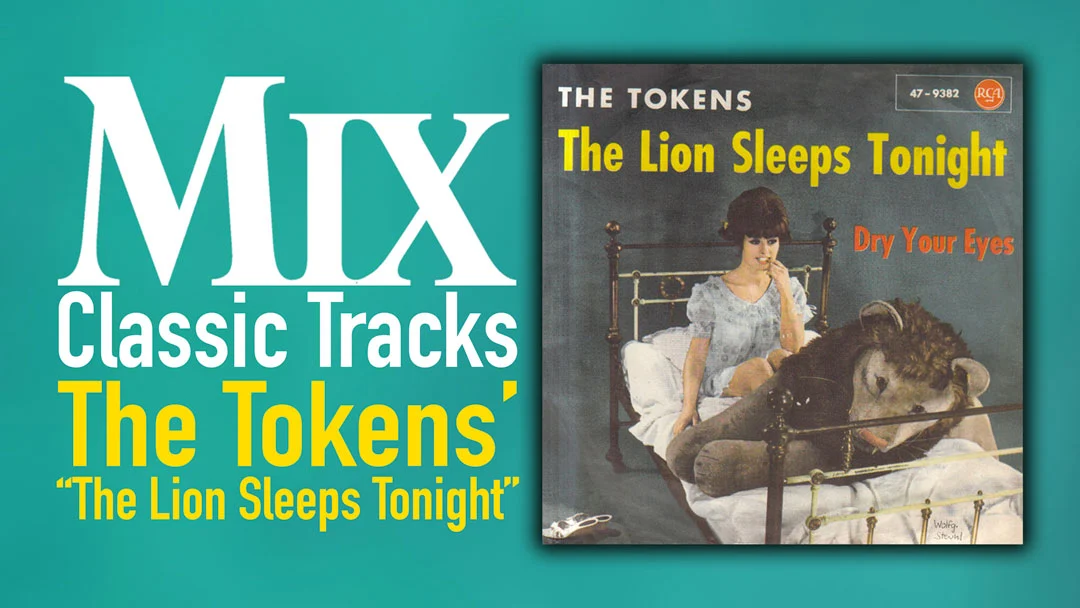
When Mix magazine launched its "Classic Tracks" series in December 1994, it chose this song as its inaugural subject. At the time, the track was experiencing a massive cultural resurgence thanks to Disney’s The Lion King. Today, decades after that revival and over sixty years since the original recording session, "The Lion Sleeps Tonight" remains a masterclass in innovative arrangement, accidental genius, and the enduring power of a simple melody.
Main Facts: A Cross-Generational Phenomenon
"The Lion Sleeps Tonight" is a rare example of a song that has achieved "standard" status while maintaining a specific, recognizable sonic identity tied to a single recording. While dozens of artists have covered it, the 1961 version by The Tokens remains the definitive blueprint.
The song’s journey to the top of the Billboard Hot 100 was unlikely. It was recorded by a group of clean-cut Brooklyn vocalists, managed by producers who specialized in a "sweetened" pop sound, and based on a South African Zulu chant that had already been a hit in a very different form.
In 1994, the song proved its resilience. A brief comedic snippet performed by the characters Timon and Pumbaa in Disney’s The Lion King sent audiences back to record stores. The original Tokens version was re-released, spending over five months on the Billboard Hot Singles chart—a staggering feat for a thirty-three-year-old "oldie." This resurgence highlighted not just the song’s catchiness, but the timeless quality of its production, which sounds as lush and "hi-fi" today as it did during the Kennedy administration.
Chronology: From the Transvaal to Manhattan
The lineage of "The Lion Sleeps Tonight" is a complex map of cultural exchange and adaptation. To understand the 1961 recording, one must trace the melody back to its source.
1939–1952: The "Mbube" Origins
The song began as "Mbube" (Zulu for "The Lion"), written and recorded in 1939 by Solomon Linda and his group, the Evening Birds. Linda was a South African musician who improvised the famous soprano line during a recording session in Johannesburg. The record became a massive hit in South Africa, selling over 100,000 copies.
1950s: The Folk Connection
In the early 1950s, musicologist Alan Lomax brought the record to the attention of Pete Seeger. Seeger, mishearing the Zulu word "Uyimbube" (You are a lion), transcribed it as "Wimoweh." His group, The Weavers, recorded a version in 1952 that reached the Top 20, bringing the African melody into the American folk canon. Later, South African legend Miriam Makeba would further popularize the song on the international stage.
1961: The Tokens and the RCA Session
By 1961, The Tokens—comprising Jay Siegel, Hank Medress, and brothers Phil and Mitch Margo—were looking for a follow-up to their hit "Tonight I Fell In Love." RCA producers Hugo Peretti and Luigi Creatore (known as Hugo & Luigi) saw potential in "Wimoweh" but felt it needed English lyrics to conquer the pop charts. Along with lyricist George David Weiss, they penned the now-iconic lines about the "peaceful village" and the "sleeping lion."
On August 27, 1961, at RCA’s Studio A in New York City, the group gathered to record what they initially thought was a "silly" track. Within months, it was the Number One song in the country.
Supporting Data: The Technical Architecture of a Classic
The 1961 recording session is a fascinating case study in early 1960s studio craft. While the technology was primitive by modern standards, the creative use of space and personnel resulted in a recording of remarkable depth.
The Studio Environment
RCA’s Studio A on 23rd Street was a legendary space, known for its high ceilings and natural reverberation. The session was engineered by Mickey Crawford, a veteran who understood how to balance a vocal group against a live band in real-time.
Though 3-track recording was the state-of-the-art format at the time, the "hit" version was actually the simultaneous mono mix. The 3-track allowed for some separation—usually vocals on one track, instruments on another, and "sweetening" on the third—but the final product relied heavily on the "bleed" and natural air of the room.
Unusual Instrumentation and Percussion
The arrangement, crafted by Sammy Lowe, featured an eclectic mix of instruments that gave the track its "wacky charm":
- The "Newspaper" Drums: Percussionist Panama Francis created the song’s signature driving rhythm not by hitting a standard snare, but by placing a copy of The New York Times on top of his drum kit box and playing it with brushes. This provided a soft, shuffling texture that didn’t overpower the vocal harmonies.
- The Operatic Element: One of the most distinctive features of the track is the soaring, high-pitched counter-melody. This wasn’t a synthesizer or a member of the group; it was Anita Darien, a professional soprano from the Metropolitan Opera. Her inclusion added a surreal, ethereal quality that elevated the song above standard doo-wop fare.
- The Core Band: The session included a banjo, a stand-up bass, a guitar, and a soprano saxophone, creating a hybrid sound that was part folk, part jazz, and part pop.
Recording Logistics
The entire session lasted only three hours. In that window, The Tokens recorded both "The Lion Sleeps Tonight" and its B-side, "Tina." Because they were recording live—vocals and instruments together—there was no room for error. This "all-in" approach captured a level of energy and spontaneity that overdubbed recordings often lack.
Official Responses: The Artist’s Perspective
Jay Siegel, the lead singer whose soaring falsetto defines the track, has often spoken about the group’s initial skepticism regarding the song.
"Frankly, at first, we were embarrassed by the lyric," Siegel recalled in the 1994 Mix interview. The group had been performing the more traditional "Wimoweh" and felt the new English lyrics were somewhat juvenile. "After the recording date, a couple of the guys in the group were adamant about not releasing it; they didn’t like it at all."
Siegel, however, sensed something unique in the production. He recognized that the combination of the African-inspired melody, the operatic soprano, and the "newspaper" percussion created a sound that was utterly unlike anything else on the radio. "I felt it was so strange that it was either going to be Number One or nothing," Siegel noted. His instinct proved correct.
The producers, Hugo & Luigi, were known for their "operatic pop" sensibilities, often adding strings and dramatic flourishes to rock and roll records. With "The Lion Sleeps Tonight," they managed to balance their polished production style with the raw, rhythmic power of the original Zulu melody, creating a commercial juggernaut that appealed to both children and adults.
Implications: Cultural Legacy and Ethical Reckonings
The success of "The Lion Sleeps Tonight" has had long-lasting implications in the realms of musicology, law, and global culture.
The Evolution of the "Oldies" Circuit
The song’s longevity ensured that The Tokens remained a viable touring act for decades. However, like many groups of the era, they eventually split into two factions: Jay Siegel’s Tokens on the East Coast and the Margo brothers’ version on the West Coast. Both groups continue to find audiences, proving that the song’s appeal is not tied to a specific era but to the feeling of "warm, wacky charm" it evokes.
The Legal and Ethical Debate
Perhaps the most significant implication of the song’s success is the decades-long legal battle regarding its origins. For years, Solomon Linda’s estate received virtually no royalties from the song’s global success, as the "Wimoweh" and "Lion Sleeps Tonight" versions were credited to the American adapters.
This became a landmark case in the struggle for the rights of African musicians. In the early 2000s, a high-profile legal challenge eventually led to a settlement with Linda’s descendants, ensuring they received a share of the royalties. This shift marked a turning point in how the music industry views the "borrowing" of folk melodies from developing nations.
A Permanent Fixture in the Pop Lexicon
From Robert John’s 1972 cover (which hit Number Three) to its ubiquitous presence in The Lion King, the song has become a cultural shorthand for joy and community. It serves as a bridge between the traditional music of South Africa and the high-gloss production of American pop.
Ultimately, the recording of "The Lion Sleeps Tonight" represents a perfect storm of technical ingenuity and creative risk. By taking a newspaper, a Metropolitan Opera singer, and a group of Brooklyn vocalists into a Manhattan studio for three hours, RCA created more than just a hit record; they created a piece of global folklore that continues to wake the "sleeping lion" for new generations of listeners.