In the world of automotive audio, the gap between "factory-standard" sound and high-fidelity performance is often bridged by a series of technical hurdles. Many enthusiasts assume that upgrading a head unit or installing high-quality components will automatically yield concert-hall results. However, as recent technical discussions within the enthusiast community highlight, the reality of impedance, power distribution, and signal processing requires a much more nuanced approach.
Main Facts: Debunking the Myth of "Plug-and-Play" Power
The central misconception facing modern car audio installers is the belief that aftermarket head units—even those that are CTA-2006 compliant—provide significant power increases over factory systems. Recent analysis of common aftermarket units reveals a stark reality: many are rated at approximately 45 watts per channel (x4) at 4 ohms. While this is technically superior to the standard 22 watts per channel (x4) found in many OEM units, it is rarely enough to drive high-performance component speakers to their true potential.
Furthermore, there is a dangerous misunderstanding regarding impedance. Many entry-level installers assume that lower impedance speakers (2-ohm components) will result in higher power output from a head unit. In reality, most head units are not designed for 2-ohm stability; attempting to drive such a load will inevitably lead to thermal failure of the unit’s internal circuitry. To achieve a professional sound stage, enthusiasts must look beyond the head unit’s internal amplification and consider external power delivery systems.
Chronology of the Audio Upgrade Path
The journey toward a refined sound system typically follows a logical progression of hardware integration. Understanding this timeline is essential for any enthusiast looking to avoid costly mistakes.
Phase 1: The Foundation (Current Setup)
The user currently possesses high-quality component speakers. These units are often underestimated, yet they possess significant sonic potential if provided with the correct electrical "fuel." At this stage, the system is likely limited by the low-voltage output of the head unit and the lack of dedicated amplification.
Phase 2: Choosing the Topology (Passive vs. Active)
Once the decision to upgrade is made, the installer must choose between two primary paths:
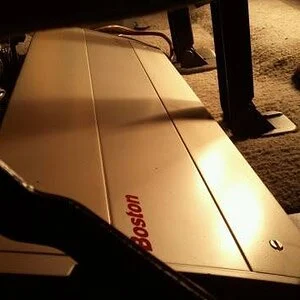
- The Passive Approach: This is the most straightforward method. By utilizing the existing capacitor/coil passive crossovers attached to the 6.5-inch drivers, the installer connects a dedicated 4-channel amplifier (ideally in the 100W to 150W RMS range). This allows the head unit’s 5-volt pre-outs to deliver a clean signal to the amplifier, which then distributes power to the components.
- The Active Approach: This is a more complex configuration that involves bypassing the physical passive crossovers. Instead, the installer utilizes the head unit’s internal crossover settings to manage frequencies. This requires precise tuning—typically setting crossovers at 3.5kHz with a 24dB slope—and necessitates running dedicated wiring to the tweeters.
Phase 3: Low-Frequency Integration
With the mid-range and high-frequency components addressed, the final phase involves the subwoofer. This is where the user must decide between a powered (self-contained) subwoofer or a passive subwoofer paired with a dedicated amplifier (or a 5-channel amplifier solution).
Supporting Data: The Case for Dedicated Amplification
The necessity of dedicated amplification is supported by the physics of power handling. High-fidelity speakers require "headroom"—the ability to reproduce musical transients without distortion.
When comparing a standard head unit’s 45W output to an external amplifier’s 100W–150W output, the difference is not just about volume; it is about dynamic range. A 45-watt amplifier struggling to drive a high-quality component set will often clip at high volumes, introducing distortion that ruins the sound stage and risks damaging the delicate voice coils of the speakers.
Additionally, the use of 5-volt pre-outs from a high-end head unit is a major advantage. High-voltage pre-outs ensure a better signal-to-noise ratio, minimizing the introduction of ground-loop noise and alternator whine into the audio signal chain. By feeding this clean signal into a high-quality amplifier, the installer ensures that the sound remains pure from the source to the speaker cone.
Official Technical Perspectives: Expert Recommendations
Industry professionals emphasize that the "passive" setup is generally the superior choice for those who are not professional fabricators. While active setups offer more granular control, the passive approach—when paired with a quality 4-channel amplifier—provides an excellent sound stage with significantly less risk of installation error.
Regarding subwoofers, experts suggest that the "easiest" route for most enthusiasts is the prefab self-powered subwoofer. These units are engineered for specific enclosures, ensuring that the driver and box volume are perfectly matched. However, for those with higher skill levels, a custom-built enclosure paired with a quality passive subwoofer and a 5-channel amplifier offers the best possible performance-to-cost ratio.
Key questions that every enthusiast must answer before purchasing equipment include:
- Skill Level: Are you comfortable with automotive electrical systems, cable routing, and interior trim removal?
- Fabrication Ability: Can you construct a custom subwoofer enclosure, or are you better served by a prefab solution?
- Budgetary Constraints: What is the total allocation for amplifiers, subwoofers, wiring kits, and potential sound-deadening materials?
Implications for the Future of DIY Audio
The trend toward "minimalist" installations—where enthusiasts attempt to push factory-style head units to their absolute limit—is slowly being replaced by a more informed approach. The implications for the DIY market are clear: success is dictated by the ability to balance hardware capability with electrical infrastructure.
The Impact of Proper Installation
When an installer opts for a dedicated amplifier rather than relying on the head unit, they are not merely "adding power." They are essentially cleaning up the electrical environment of the vehicle’s audio system. This prevents the head unit from overheating, reduces harmonic distortion, and provides the necessary current to stabilize the speaker’s impedance throughout the musical frequency range.
The "Total System" Mindset
The future of car audio lies in the "Total System" mindset. Instead of viewing the head unit, the amplifier, and the speakers as isolated components, the modern enthusiast must view them as an interconnected ecosystem. If one component is starved for power or improperly matched in terms of impedance, the entire system suffers.
Conclusion: A Roadmap for the Enthusiast
For the individual currently standing at the crossroads of their audio build, the advice is consistent: do not discard your current component speakers. They are the strongest link in your chain. By prioritizing a robust 4-channel amplifier, utilizing the head unit’s high-voltage pre-outs, and carefully selecting a subwoofer solution that aligns with your fabrication skills, you can achieve a professional-grade audio experience.
The path forward requires patience, a clear budget, and an honest assessment of one’s technical capabilities. Whether you choose the simpler passive configuration or the more involved active route, the result—provided the power delivery is sufficient—will be a night-and-day improvement over any factory or head-unit-only system. The music deserves better than an underpowered signal; with the right planning, your vehicle can become the high-fidelity environment you desire.