For months, San Francisco Mayor Daniel Lurie has championed the city as the ultimate “testbed for emerging tech,” a bold stance intended to solidify the Bay Area’s position as the global epicenter of innovation. Yet, as the reality of a massive, city-paralyzing traffic event unfolded this past July, the Mayor’s enthusiasm has hit a stark, asphalt-bound reality. The promise of autonomous technology, he suggests, must be balanced against the basic, non-negotiable requirement that a city’s infrastructure remain functional for all its citizens.
Following a harrowing series of incidents—most notably a July 4th holiday weekend gridlock where Waymo robotaxis became immobile, ran out of power, and blocked critical thoroughfares—Mayor Lurie has officially petitioned state regulators to overhaul the oversight framework for autonomous vehicles (AVs). The message is clear: while San Francisco welcomes innovation, it can no longer tolerate the "beta-testing" of life-altering traffic management on public streets.
The July 4th Crisis: A City at a Standstill
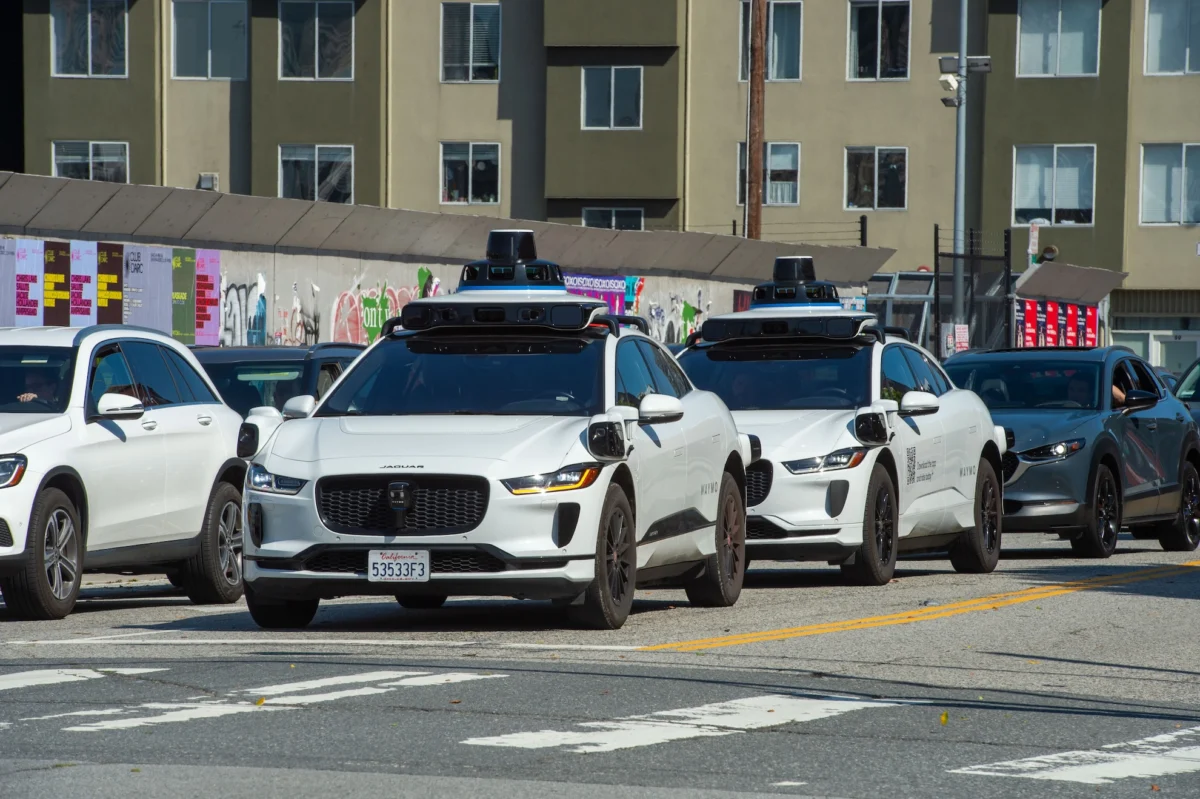
The tipping point arrived on Independence Day, when an estimated 100,000 spectators descended upon the San Francisco waterfront for the annual fireworks display. What should have been a festive celebration turned into a logistical nightmare. As traffic swelled, dozens of autonomous vehicles—specifically those operated by Waymo—became trapped in the dense congestion.
The problem was twofold: the sheer volume of human-driven traffic and the limitations of the AV software in handling extreme, non-standard urban conditions. As the vehicles became stuck, some experienced power depletion, effectively turning them into immovable obstacles. These “zombie” cars blocked municipal shuttles, emergency routes, and essential city traffic, creating a cascading effect of gridlock that left thousands of residents and visitors stranded for hours.
This was not an isolated incident. In his formal letter to the California Department of Transportation, Mayor Lurie highlighted a similar failure during a widespread power outage in December. In both instances, the technology—touted for its precision and safety—proved incapable of navigating, rerouting, or self-recovering when faced with extraordinary circumstances.
Chronology of Regulatory Friction
The tension between San Francisco’s municipal government and the state’s autonomous vehicle industry has been simmering for years, but the July 4th incident has significantly raised the stakes.
- The Early Expansion: Since the introduction of driverless testing permits, San Francisco has hosted a diverse array of AV companies, including Waymo, Nuro, and Zoox. These companies have operated under the assumption that the city is a living laboratory.
- December Power Outage: A major citywide utility failure tested the mettle of the AV fleets. Observers noted that when traffic lights went dark and typical navigation patterns were disrupted, robotaxis struggled to maintain mobility, leading to localized congestion.
- July 4th Fireworks: The Independence Day event saw the highest concentration of robotaxis ever to be immobilized at once. Despite Waymo having a representative stationed at the city’s emergency operations center, the sheer scale of the fleet meant that proactive measures were insufficient to prevent the total blockage of key corridors.
- The Mayor’s Letter: Roughly two weeks after the July 4th incident, Mayor Lurie bypassed local pleas and went directly to state regulators, demanding a structural shift in how AVs are permitted to operate during “extraordinary conditions.”
The “Core Operational Capabilities” Proposal
Mayor Lurie’s request to the California Department of Transportation is not a call for a ban, but a demand for accountability. He has proposed four "core operational capabilities" that any company seeking to deploy robotaxis in a high-density urban environment must demonstrate:
- Rapid Extraction: Vehicles must possess the ability to be immediately removed or relocated from active travel lanes during a gridlock event to ensure that public transit and emergency services remain unhindered.
- Adaptive Intelligence: Companies must prove their software can adapt in real-time to sudden shifts in traffic patterns, including the ability to dynamically adjust service areas and pickup/drop-off points when major events are occurring.
- Data Transparency: A requirement for real-time operations data sharing with local agencies. This includes the exact locations of immobile vehicles, the nature of service disruptions, and recovery status reports.
- Stress-Test Validation: Before being granted broad operational permits, companies must demonstrate through rigorous, standardized testing that their fleets can handle large-scale influxes of traffic and pedestrian activity without losing functional control.
Lurie argues that these requirements would not stifle progress but rather “strengthen” the industry by forcing it to mature beyond the controlled environments of low-traffic streets.
The Regulatory Landscape: A Complex Web
California maintains a unique, dual-track regulatory system. Companies must secure permits from both the Department of Motor Vehicles (DMV) for technical vehicle safety and the Public Utilities Commission (CPUC) for commercial passenger service. While this system is significantly more stringent than those in Texas or Arizona—where many AV companies have flocked to avoid California’s “red tape”—the density and economic viability of San Francisco keep the industry tethered to the Bay Area.
Currently, six companies hold driverless testing permits in the area, allowing them to operate without a human safety operator behind the wheel. Among these, Waymo stands as the undisputed titan, with an estimated fleet of 1,000 vehicles in the Bay Area alone.
The industry is also poised for further expansion. Amazon-owned Zoox continues to test its unique, carriage-style vehicles, and Uber is reportedly preparing a premium robotaxi service. Even Tesla, while not currently using fully driverless technology, is exerting influence through its charter transportation permits, utilizing human drivers assisted by advanced driver-assistance systems (ADAS) to compete in the same crowded streets.
Implications for the Future of Urban Transit
The rise of Waymo, which now reports over 500,000 paid rides weekly across 11 cities, has made it the primary target for critics of the current regulatory model. The company has attempted to be a good corporate citizen, voluntarily restricting its service areas during large events and embedding personnel within city emergency centers. However, as Mayor Lurie points out, these voluntary measures are no longer sufficient to manage a fleet of this scale.
The Conflict of Scale
The fundamental issue is one of scale. A dozen robotaxis in a city of 800,000 is a novelty; 1,000 robotaxis is a critical piece of infrastructure. When that infrastructure fails, it does not just inconvenience the passenger; it disrupts the flow of the entire city.
Critics of the current regulatory environment argue that the state has prioritized the rapid development of technology over the public’s right to reliable, unimpeded transit. By treating cities like San Francisco as perpetual "testbeds," regulators may have inadvertently created a system where the convenience of a few (the robotaxi riders) comes at the expense of the safety and efficiency of the many (the commuters and emergency responders).
A Path Toward "Strengthened" Innovation
The Mayor’s proposal suggests a middle path. By mandating that these vehicles function reliably during "extraordinary conditions," the city is pushing the industry toward a higher tier of engineering. If an AV cannot navigate a firework-crowded street without needing to be manually retrieved, it arguably isn’t yet ready for the challenges of an unpredictable urban environment.
As TechCrunch continues to monitor the situation, the industry’s response will be telling. Will companies view these new requirements as an impossible hurdle, or will they see them as the necessary roadmap to achieving public trust?
For now, the debate has shifted. It is no longer just about whether robots can drive; it is about whether they can play well with others in a city that is fundamentally designed for humans. For Mayor Lurie, the testbed is still open, but the terms of the experiment have permanently changed. As he noted in his letter, "California’s challenge now is not just whether autonomous vehicles can operate safely under normal conditions, but also whether they can perform reliably during extraordinary ones."
The ball is now in the court of the California Department of Transportation. Whether they choose to enforce these standards will determine if San Francisco remains the future of transportation, or a city permanently caught in a high-tech traffic jam.